
Long-eared owls are known for their upright posture, sharp hunting skills, and feather tufts that look like ears. While the true Long-eared Owl is one species, many related eared owls share similar shapes, habitats, and behaviors. These owls live in forests, grasslands, marshes, savannas, islands, and mountain regions around the world. Some are widespread, while others are rare or restricted to small island ranges. This guide covers 10 types of long-eared owls and close eared-owl relatives, focusing on their identification, habitat, diet, behavior, and nesting habits in a simple way for bird lovers and beginners.
1. Long-eared Owl
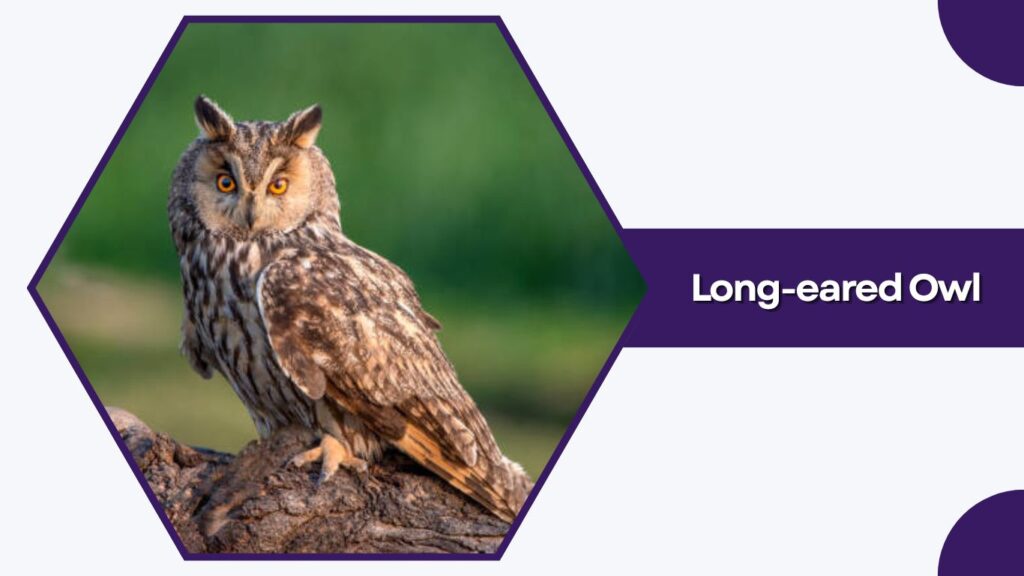
The Long-eared Owl is a slender, medium-sized owl known for its tall ear tufts, orange-yellow eyes, and excellent camouflage. It often roosts quietly in dense trees during the day and hunts mostly at night over open fields, grasslands, marsh edges, and farmland. This owl is found across much of the Northern Hemisphere, including North America, Europe, Asia, and parts of North Africa.
Identification
- Medium-sized owl with a slim body shape
- Long, dark ear tufts held close together
- Bright orange or yellow eyes
- Brownish-gray plumage with heavy streaking
- Pale facial patches that can look like eyebrows
- Long wings and a long tail
- Fully feathered legs and toes
- Often stretches its body to look like a tree branch
Habitat and Distribution
Long-eared Owls prefer dense vegetation near open hunting areas. They may live around open forests, shelterbelts, thickets, streamside tree belts, marsh edges, grasslands, farmland, and even desert oases where trees are available. Their range covers temperate North America, Europe, parts of Asia, and some areas of North and East Africa.
Behavior and Diet
This owl is mostly nocturnal and usually hunts in open habitats after dark. It relies on sharp hearing and low-light vision to catch prey from the ground or low vegetation. Its main food includes small mammals, especially voles and mice, but it may also eat small birds, snakes, and insects. During the non-breeding season, Long-eared Owls may roost in small groups.
Breeding and Nesting
Long-eared Owls usually do not build their own nests. Instead, they often use old stick nests made by crows, magpies, hawks, or other birds. Breeding can occur from February to July, and the female usually lays about five to six eggs. The female incubates the eggs, while the male provides food for her and the young owlets.
2. Short-eared Owl
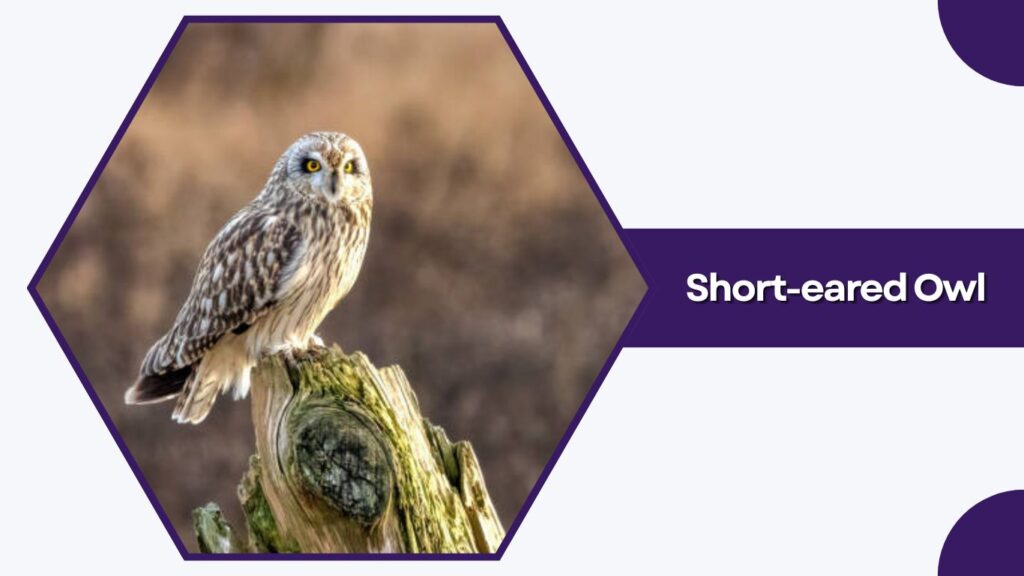
The Short-eared Owl is a medium-sized open-country owl with rounded wings, bright yellow eyes, and very small ear tufts that are often hard to see. Unlike many owls, it is often active around dawn, dusk, and sometimes during the day. It is one of the world’s most widespread owls and is commonly associated with grasslands, marshes, tundra, fields, and other open habitats.
Identification
- Medium-sized owl with a rounded head
- Very short ear tufts, often hidden
- Bright yellow eyes with dark eye patches
- Pale facial disk
- Mottled brown and buff upperparts
- Pale underwings visible in flight
- Long, broad wings with a buoyant flight style
- Often seen flying low over open fields
Habitat and Distribution
Short-eared Owls prefer open landscapes rather than dense forests. They live in grasslands, marshes, tundra, prairies, meadows, farmland, and coastal dunes. Their wide distribution includes parts of North America, Europe, Asia, South America, and many island regions. Because they depend on open ground, healthy grasslands and wetlands are important for feeding and nesting.
Behavior and Diet
This owl often hunts by flying low over fields with slow, moth-like wingbeats. It uses sharp hearing and eyesight to detect prey hidden in grass. Its diet mainly includes small mammals, especially voles and mice, but it may also eat small birds and other animals when available. It is one of the easier owls to observe because it may hunt in daylight.
Breeding and Nesting
Short-eared Owls nest on the ground, usually in grass or low vegetation. The female builds a simple nest by scraping a shallow depression and lining it with grass and feathers. Nest sites are often dry places such as small ridges, hummocks, or raised ground in marshy areas. This ground-nesting habit makes them sensitive to habitat disturbance.
3. Stygian Owl
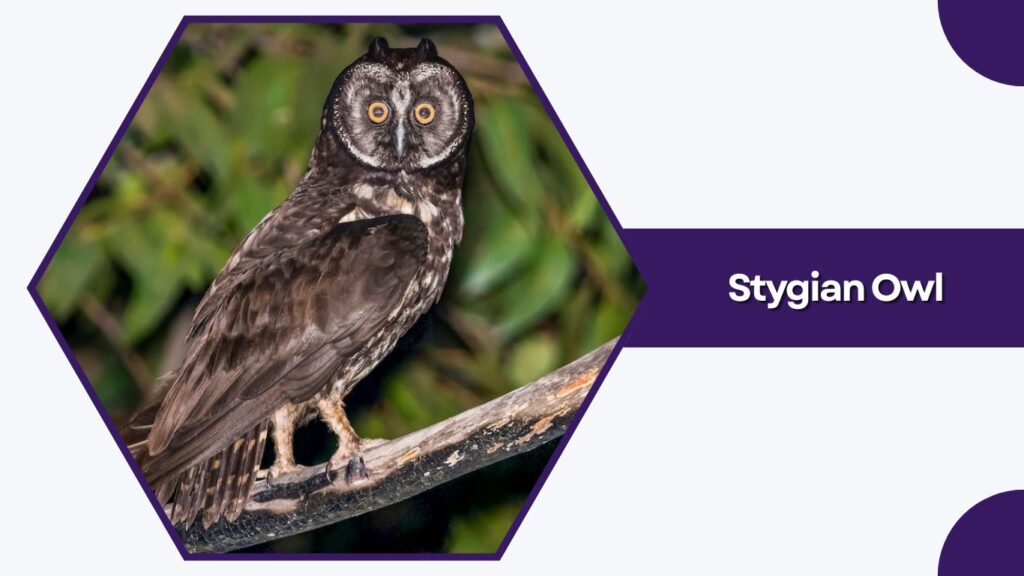
The Stygian Owl is a dark, medium-to-large owl with long ear tufts, yellow to orange-yellow eyes, and a mysterious appearance. Its name means dark or gloomy, which fits its deep brown plumage and nocturnal habits. This owl has a patchy range from Mexico through parts of Central and South America, including some Caribbean islands.
Identification
- Medium-to-large owl with a dark body
- Long, prominent ear tufts
- Yellow to orange-yellow eyes
- Dusky brown facial disk
- Dark sooty-brown upperparts
- Pale buff underparts with heavy dark barring
- Feathered legs and partly feathered toes
- Ear tufts may stand tall when alarmed
Habitat and Distribution
Stygian Owls use a variety of habitats, including pine forests, pine-oak forests, cloud forests, montane forest, thorn scrub, humid forest, semi-arid forest, and tropical rainforest. They are usually linked with wooded areas for daytime roosting, but they may hunt in more open habitats such as savannah-like areas. Their distribution is scattered from Mexico south to Argentina and also includes Cuba and Hispaniola.
Behavior and Diet
This owl is mostly nocturnal and usually roosts in dense vegetation during the day. At night, it often hunts from a perch, flying out when prey is detected. Its diet includes birds, bats, small mammals, insects, and amphibians. Compared with many owls, it may eat fewer rodents and more birds or bats in some areas.
Breeding and Nesting
Breeding behavior in the Stygian Owl is still not fully known. It probably does not build its own nest. Instead, it may use abandoned stick nests made by other birds, and some records suggest it may also nest on the ground. The female usually lays two eggs and incubates them, while both parents help feed the young.
4. Striped Owl

The Striped Owl is a medium-sized owl with long ear tufts, a bold facial pattern, and heavily streaked plumage. It is found from southern Mexico through Central America and into much of South America. This owl usually prefers open or semi-open habitats rather than dense forest, making grasslands, savannas, marsh edges, pastures, and wooded suburbs important parts of its range.
Identification
- Medium-sized owl with long, prominent ear tufts
- Brownish-white facial disk with a dark rim
- Brown to cinnamon-colored eyes
- Tawny-buff upperparts with dark streaking
- Pale tawny underparts with bold dark stripes
- Feathered legs and toes
- Blackish bill and claws
- Strongly marked appearance compared with many other eared owls
Habitat and Distribution
Striped Owls usually live in open or semi-open landscapes with scattered trees, shrubs, and grassy areas. They may also occur around marshland, pasture, farmland, and wooded suburban areas. Their range extends from southern Mexico to Panama and from northern South America to Uruguay and northern Argentina, mostly east of the Andes.
Behavior and Diet
This owl is mainly nocturnal and often becomes active around sunset. It may roost during the day in dense foliage, shrubs, or covered vegetation. When hunting, it flies low over open areas or waits from a perch before diving toward prey. Its diet includes small mammals, birds, bats, large insects, and some reptiles.
Breeding and Nesting
Striped Owls may nest on the ground in simple, rudimentary nests hidden in long grass or dense bushes. The female usually incubates the eggs, and the clutch often contains two to four eggs. Because this owl may use ground-level nesting sites, thick vegetation and quiet breeding areas are important for protecting eggs and young owlets.
5. Jamaican Owl
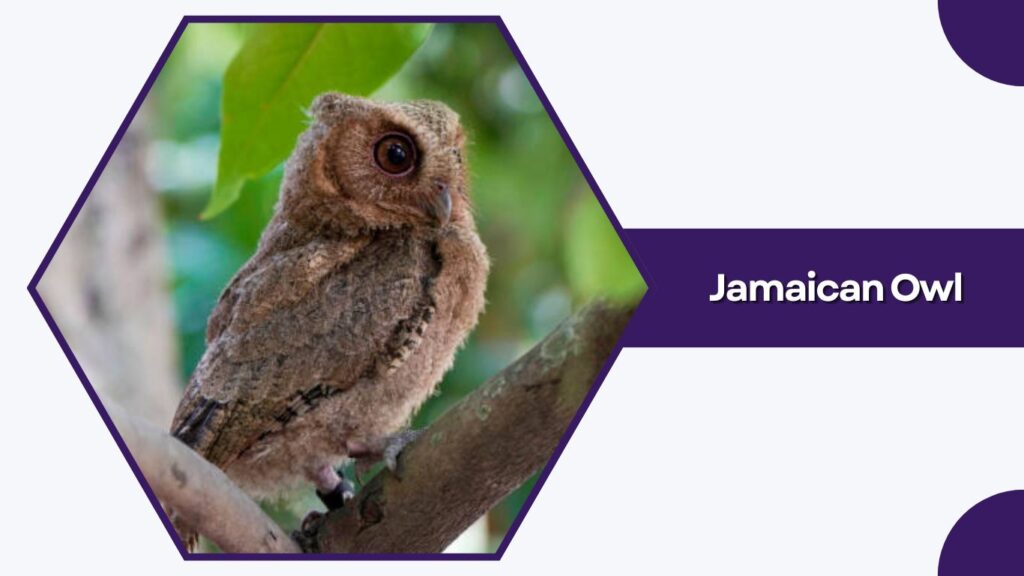
The Jamaican Owl is a medium-sized eared owl found only on the island of Jamaica. It has long ear tufts, dark eyes, and warm reddish-brown plumage that helps it blend into wooded habitats. This owl is mainly nocturnal and is usually seen or heard after dark. It lives in open woodland, forest edges, plantations, gardens, and lower mountain areas, making it one of Jamaica’s special endemic birds.
Identification
- Medium-sized owl with long ear tufts
- Dark brown eyes instead of bright yellow eyes
- Rufous or reddish-brown facial disk
- Face bordered with pale, black-flecked markings
- Brown to rufous upperparts with fine markings
- Rufous underparts with narrow dark streaks
- Long wings and a rounded eared-owl shape
- Usually active at night and often hidden by day
Habitat and Distribution
The Jamaican Owl is endemic to Jamaica, so it naturally occurs nowhere else in the world. It is found in open and semi-open habitats, including open woodland, forest edges, plantations, gardens, and wooded lower mountain slopes. Although it is considered fairly common in suitable areas, deforestation can reduce the amount of safe roosting, nesting, and hunting habitat available to this owl.
Behavior and Diet
This owl is entirely nocturnal, meaning it becomes active after sunset and hunts at night. It feeds on a mix of invertebrates and small vertebrates. Its diet includes large insects, spiders, frogs, lizards, rodents, and occasionally birds. Like many owls, it likely hunts from a perch, watching and listening before flying quickly toward prey.
Breeding and Nesting
Breeding details are not as well known as in some common owl species. Reported nesting can occur between March and October, while egg-laying has been recorded from December to June. The Jamaican Owl usually lays two eggs in a tree cavity or a concealed tree fork. Mature trees are important because they provide sheltered places for nesting and daytime roosting.
6. Abyssinian Owl
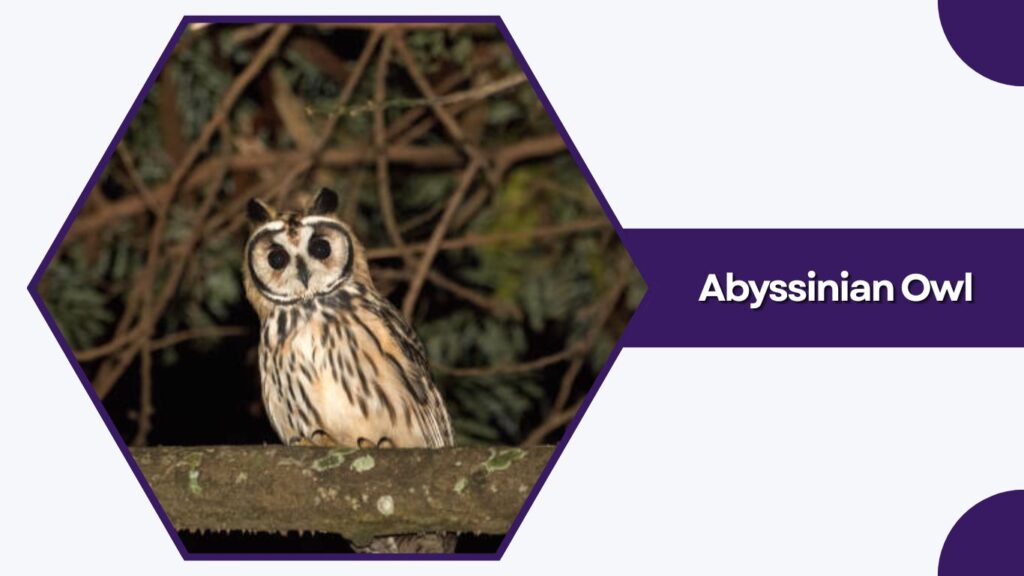
The Abyssinian Owl, also called the African Long-eared Owl, is a medium-sized eared owl found in mountainous parts of eastern Africa. It has prominent ear tufts, yellow eyes, and heavily marked plumage that helps it blend into forested highlands. This owl is secretive and not as well studied as many other owl species, but it is closely linked with montane forest, moorland, grassland, and highland habitats.
Identification
- Medium-sized owl with a long-eared appearance
- Prominent dark ear tufts
- Yellow eyes and a dark bill
- Brownish-gray upperparts with mottled markings
- Pale underparts with strong brown streaking and barring
- Rounded facial disk with dark edging
- Long wings and a slender body shape
- Often hidden in trees during the day
Habitat and Distribution
Abyssinian Owls are found in parts of eastern Africa, including Ethiopia, northern Kenya, Uganda, Rwanda, and nearby highland regions. They use montane forest, highland grassland, moorland, forested valleys, and areas with giant heath or groups of trees. Their strong connection to mountain habitats makes them different from many lowland owls.
Behavior and Diet
This owl is mostly nocturnal and is usually difficult to observe in the wild. It likely hunts from a perch or by flying over open highland areas near forest edges. Its diet is not fully known, but available accounts suggest it feeds mainly on small mammals such as rodents, while also taking birds, insects, and other small prey when available.
Breeding and Nesting
Breeding information for the Abyssinian Owl is limited. Males are reported to defend territories by calling, and the species usually breeds in old stick nests made by larger birds rather than building its own nest. Because it relies on wooded highland habitats, mature trees and quiet nesting areas are important for its breeding success.
7. Madagascar Owl
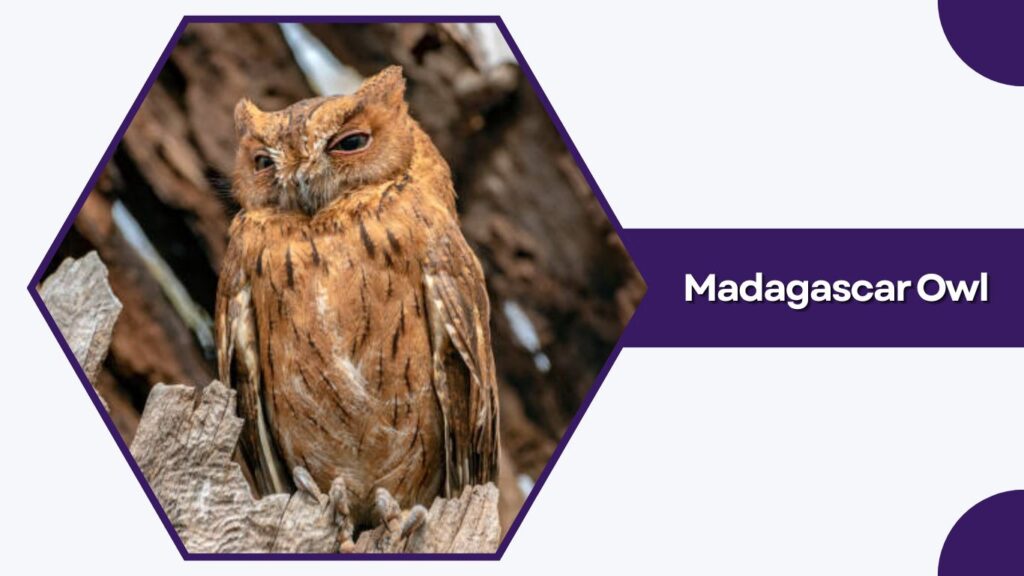
The Madagascar Owl, also called the Madagascar Long-eared Owl, is a medium-sized eared owl found only on the island of Madagascar. It has long ear tufts, dark brown markings, and a secretive nighttime lifestyle. This owl is closely related to other Asio owls and is sometimes compared with the Long-eared Owl because of its shape and appearance. It is currently listed as Least Concern, but it still depends on suitable wooded habitat.
Identification
- Medium-sized owl with a long-eared appearance
- Prominent dark ear tufts
- Dark brown upperparts with mottled markings
- Pale underparts with strong streaking
- Rounded facial disk with a dark border
- Dark bill and strong talons
- Long wings and a slender body shape
- Usually seen or heard at night
Habitat and Distribution
The Madagascar Owl is endemic to Madagascar, meaning it naturally lives nowhere else in the world. It is found across much of the island, including forested areas and wooded habitats. Some records also include Nosy Be. Because it needs trees for roosting and nesting, forest cover and mature woodland are important parts of its habitat.
Behavior and Diet
This owl is mainly nocturnal and usually becomes active after dark. During the day, it may stay hidden in trees, relying on its streaked brown plumage for camouflage. At night, it hunts quietly from perches or by flying through suitable habitat. Its diet likely includes small mammals, birds, insects, and other small animals, similar to many related eared owls.
Breeding and Nesting
Breeding details for the Madagascar Owl are not as widely documented as those of more common owls. Like many Asio owls, it may use tree sites or old nests rather than building a large nest of its own. Safe roosting trees, quiet nesting areas, and stable woodland habitat are important for successful breeding and protection of young owlets.
8. Marsh Owl
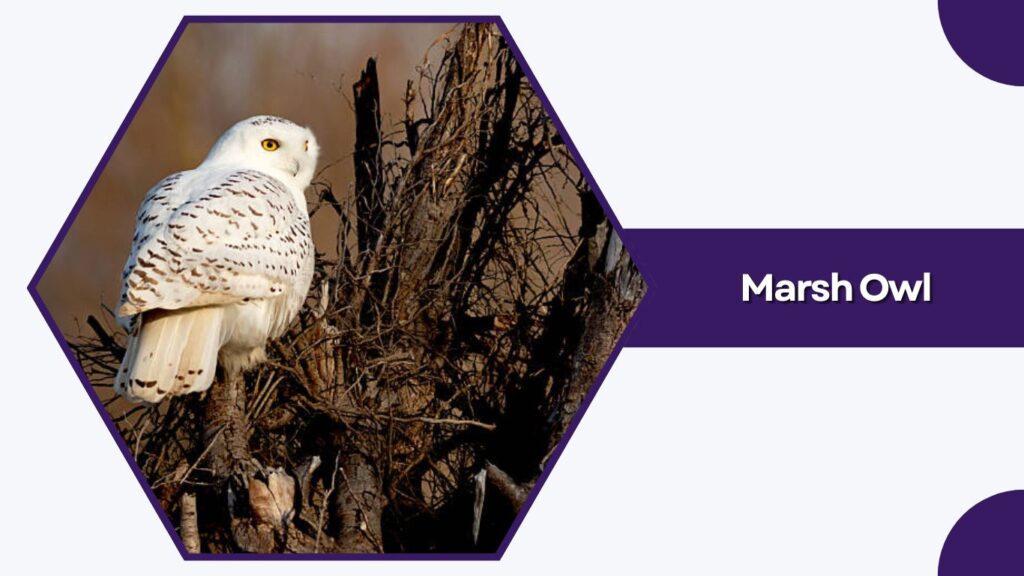
The Marsh Owl is a medium-sized eared owl known for living in open wetlands, grasslands, and marshy habitats. Unlike many owls that roost in trees, this species often rests on the ground among grass or low vegetation. It is mostly active at night or around dusk and dawn, hunting small animals over open land. The Marsh Owl is found mainly in parts of Africa, with some isolated populations elsewhere.
Identification
- Medium-sized owl with a dark brown body
- Small ear tufts that are not always visible
- Pale buff facial disk with a dark rim
- Dark brown eyes
- Mottled brown upperparts
- Pale underparts with darker markings
- Feathered legs and partly feathered toes
- Often seen low over grassland or resting on the ground
Habitat and Distribution
Marsh Owls prefer open habitats such as marshes, wet grasslands, short scrub, vleis, damsides, and moist open country. They are especially linked with southern African grasslands, but their range is fragmented. Populations are also recorded in places such as Morocco and Madagascar. Because they depend on open wetland and grassland habitats, agriculture, overgrazing, drainage, and frequent burning can affect local populations.
Behavior and Diet
This owl is mostly nocturnal and crepuscular, meaning it is often active at night, dusk, and dawn. It may also hunt during cloudy days. Marsh Owls usually hunt low over open ground, using sharp hearing and vision to detect prey. Their diet includes small rodents, insects, birds, frogs, lizards, bats, and other small animals.
Breeding and Nesting
Marsh Owls usually nest on the ground in a hollow hidden among grass or other vegetation. The nest may be lined with dry plant material and covered by surrounding grass for protection. The female can lay two to six white eggs, and incubation lasts about 27 to 28 days. Because the species nests on the ground, fires, grazing, and disturbance during breeding season can be serious threats.
9. Fearful Owl
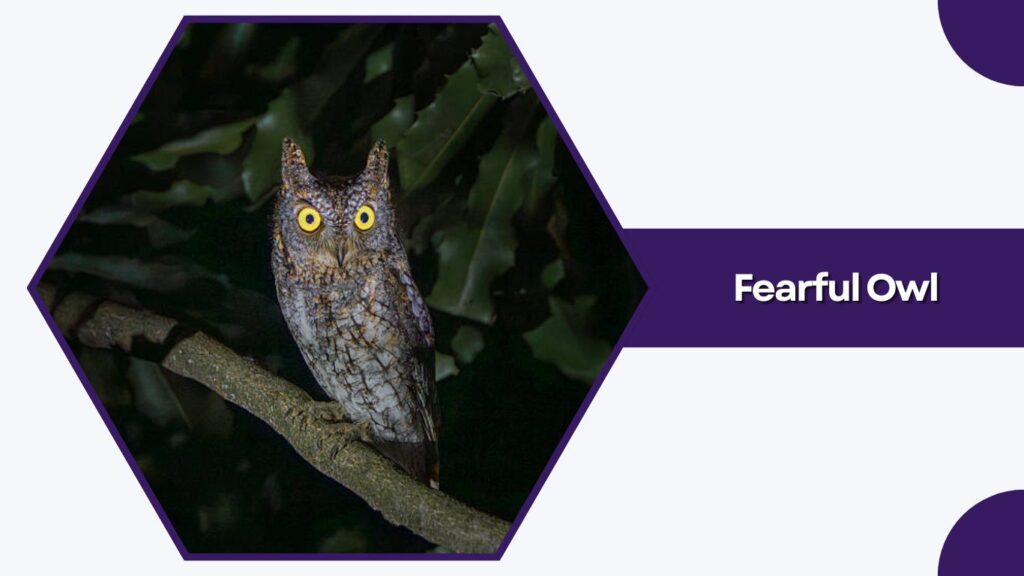
The Fearful Owl is a medium-sized forest owl from the Solomon Islands region. It is known for its dark, streaked plumage, rounded face, and powerful appearance. This owl is secretive and mostly active at night, so it is more often heard than seen. It lives mainly in tall lowland and hill forests, where large trees provide roosting and nesting places. It is also considered vulnerable because logging and forest loss threaten its limited island range.
Identification
- Medium-sized to large forest owl
- Rounded head without obvious long ear tufts
- Rufous facial disk with pale markings
- Distinct whitish eyebrow-like markings
- Mottled brown upperparts
- Deep ochre underparts with dark streaking
- Strong talons and powerful body shape
- Usually seen perched quietly inside forest cover
Habitat and Distribution
Fearful Owls are endemic to the Solomon Islands region, including islands such as Bougainville, Choiseul, and Santa Isabel. They mainly live in tall lowland and hill forests, especially old-growth forest, but they may also occur near secondary forest and woodland edges. They are usually recorded up to about 800 meters in elevation.
Behavior and Diet
This owl is nocturnal and spends the day hidden in forest trees. At night, it hunts from perches and likely uses its strong vision and hearing to locate prey. Its diet is unusual compared with many owls because it is known to feed heavily on cuscus, a tree-dwelling marsupial, though it may also take other small animals when available.
Breeding and Nesting
Fearful Owls generally nest in tree holes, cracks, or sheltered spaces in large trees. Some nests have also been found on epiphyte-covered branches of huge fig trees, including sites in primary forest and near forest edges or gardens. Because of this nesting behavior, mature trees are very important for their breeding success.
10. Northern White-faced Owl
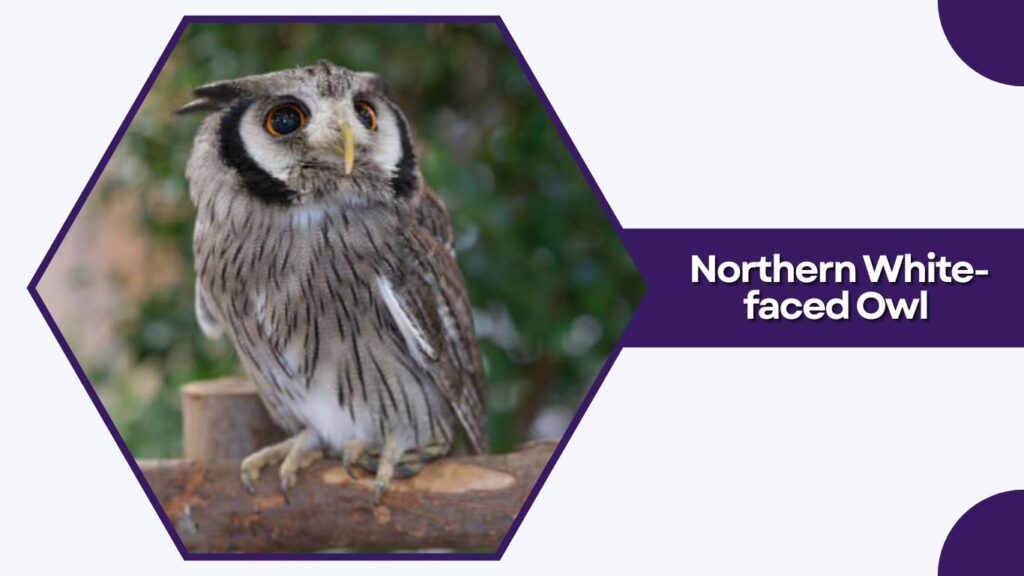
The Northern White-faced Owl is a small African owl with a pale face, dark facial border, and noticeable ear tufts. Although it is not a true “Long-eared Owl,” it has an eared-owl appearance and fits well in a broader group of owls with visible tufts. This species lives mainly in savannas, open woodlands, thornveld, and riverine woodland across parts of Africa south of the Sahara.
Identification
- Small owl with a greyish-brown body
- Prominent ear tufts with darker tips
- White facial disk bordered by black markings
- Orange to reddish-orange eyes
- Pale underparts with fine dark streaks
- Feathered legs and pale grey feet
- Short tail and compact body shape
- Often becomes very slim and upright when disturbed
Habitat and Distribution
Northern White-faced Owls prefer dry savannas, thorn-tree areas, open woodland, forest edges, clearings, and riverine woods. They avoid dense tropical rainforest and extreme desert habitats. Their range includes parts of Africa south of the Sahara, from western Africa eastward toward Sudan, Somalia, Uganda, and Kenya.
Behavior and Diet
This owl is mostly nocturnal and usually roosts during the day in tree trunks, dense foliage, thorny shrubs, cavities, or other hidden places. At dusk, it leaves the roost and may call from a perch before hunting. Its diet includes insects, moths, beetles, crickets, scorpions, spiders, small reptiles, birds, rodents, shrews, and other small mammals.
Breeding and Nesting
Northern White-faced Owls may use natural tree holes, hollows, crevices, or old stick nests made by larger birds. Nest sites are often above the ground and may be reused by the same pair. The female usually lays two to three white eggs, and incubation lasts about 30 days. Young owls leave the nest after several weeks but continue to receive care from their parents.
FAQs
Are long-eared owls the same as horned owls?
No, long-eared owls and horned owls are different birds, though both can have visible ear tufts. Long-eared owls are slimmer, more secretive, and often roost in dense trees. Horned owls are usually larger, stronger, and have broader bodies with powerful hunting behavior.
Why do long-eared owls have ear tufts?
The ear tufts are not real ears. They are feather tufts that help with camouflage, body expression, and communication. When the owl feels alert or threatened, it may raise the tufts and stretch its body to blend with branches or tree bark.
Where do long-eared owls usually live?
Long-eared owls often live in dense trees near open hunting areas. They may be found around forests, shelterbelts, thickets, grasslands, farmland edges, marshes, and wooded valleys. Many related eared owls also prefer open or semi-open habitats with nearby roosting cover.
What do long-eared owls eat?
Long-eared owls mainly eat small mammals, especially voles, mice, and other rodents. They may also catch small birds, insects, reptiles, and amphibians when available. Most hunt at night by flying quietly over open land or watching from a hidden perch.
Are long-eared owls rare?
Long-eared owls are not rare everywhere, but they can be difficult to find because they are secretive and mostly nocturnal. Some local populations decline when grasslands, wetlands, or wooded roosting sites are removed. Island and forest eared owls may face stronger habitat threats.