
Hawk-owls are fascinating birds that look and hunt more like hawks than typical round-faced owls. With slim bodies, long tails, strong flight, and sharp daytime or nighttime hunting skills, these owls stand out in forests, islands, and northern landscapes. Some, like the Northern Hawk-Owl, live across cold boreal regions, while others are rare island species found only in the Philippines. Many hawk-owls depend on mature trees, forest cover, and natural cavities for nesting. This guide explores 10 types of hawk-owls, highlighting their appearance, habitat, behavior, diet, and nesting habits in a simple, beginner-friendly way for bird lovers everywhere.
1. Northern Hawk-Owl
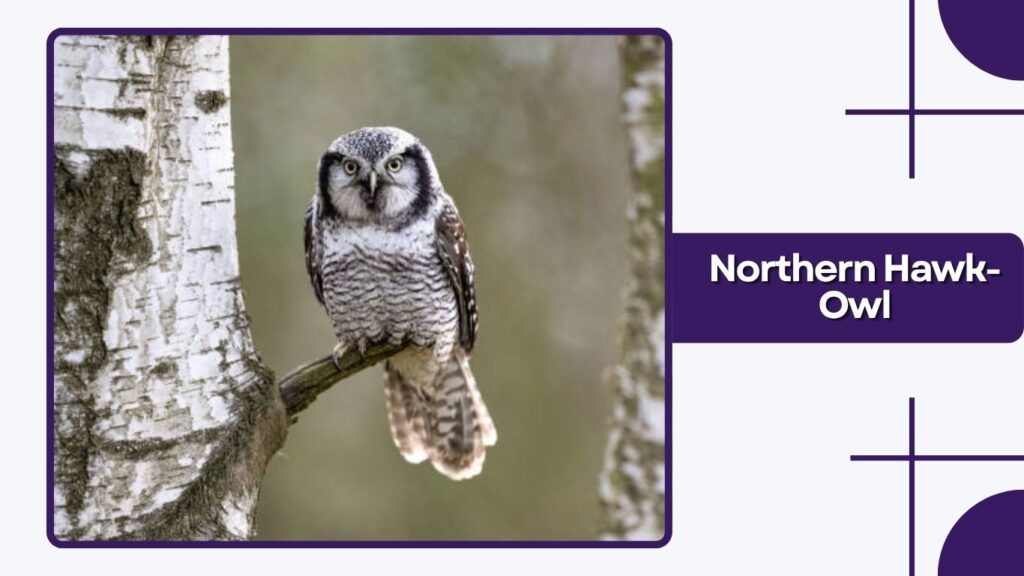
The Northern Hawk-Owl is a striking boreal owl known for its hawk-like hunting style and daytime activity. Unlike many owls, it often perches openly on treetops, scanning wide areas for prey. Its long tail, sharp flight, and alert posture make it look more like a small hawk than a typical round-bodied owl. It is mostly found in northern forests, especially open coniferous and mixed woodland areas.
Identification
- Medium-sized owl with a long, tapered tail
- White face bordered by dark markings
- Yellow eyes and a rounded facial disk
- Brown upperparts with pale spotting
- Underparts marked with horizontal brown barring
- Often seen perched high on exposed trees or poles
- More active in daylight than many other owl species
Habitat and Distribution
Northern Hawk-Owls live mainly in boreal forests across northern regions of North America, Europe, and Asia. They prefer open coniferous or mixed forests near bogs, marshes, burned forests, and clearings. These open areas give them space to hunt while nearby trees provide good lookout perches. In some winters, they may move farther south when food becomes scarce in their usual range.
Behavior and Diet
This owl is famous for hunting during the day, especially from exposed perches. It watches carefully, then flies low and fast to catch prey. Its diet mainly includes small mammals such as voles, mice, and lemmings, but it may also take small birds. Because it hunts in a hawk-like way, its name fits both its appearance and behavior.
Breeding and Nesting
Northern Hawk-Owls usually nest in natural tree cavities, broken tree tops, or old woodpecker holes. They often choose open forest areas where hunting is easier. During the breeding season, the female stays close to the nest while the male brings food. The young owls leave the nest before they can fly well, then continue to depend on their parents for food and protection.
2. Brown Hawk-Owl
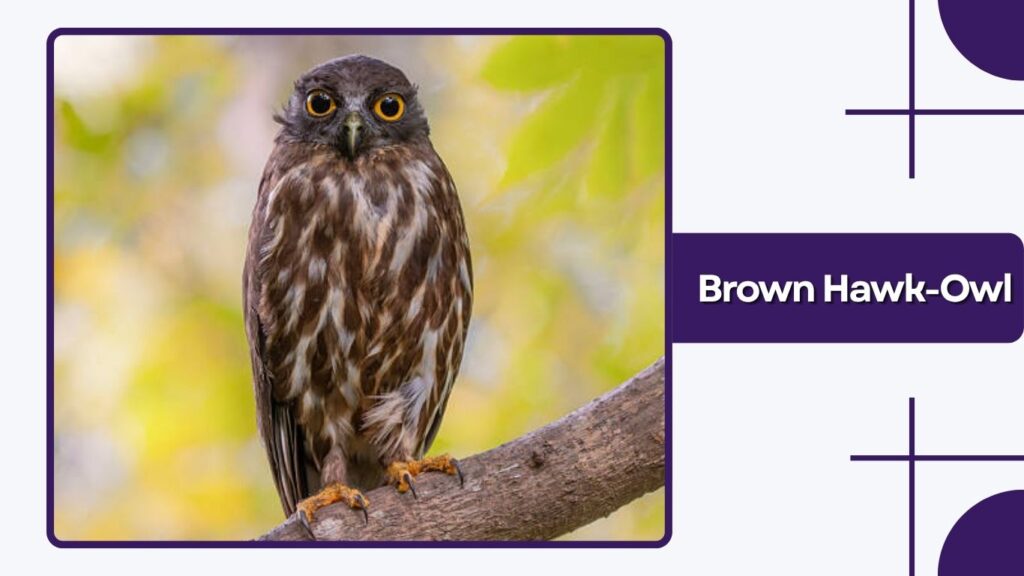
The Brown Hawk-Owl, also called the Brown Boobook, is a medium-sized owl with a slim body, rounded head, and hawk-like shape. It is mainly active at night and is found across parts of South Asia, Southeast Asia, and southern China. This owl usually stays hidden during the day and becomes active after dusk, using sharp eyesight and quiet flight to catch prey.
Identification
- Medium-sized owl with a slim, upright body
- Brown upperparts with pale spots or markings
- Whitish underparts with brown streaking or barring
- Large yellow eyes
- Rounded head without ear tufts
- Long wings and a hawk-like flight style
- Often roosts quietly in shaded trees during the day
Habitat and Distribution
Brown Hawk-Owls live in wooded habitats, including forests, plantations, mangroves, parks, and wooded areas near human settlements. They are resident birds in much of tropical South Asia and Southeast Asia, from the Indian subcontinent eastward toward southern China and western Indonesia. In denser forest regions, they may depend more strongly on good tree cover and suitable nesting cavities.
Behavior and Diet
This owl is mostly nocturnal, though it may sometimes move in cloudy daytime conditions. It usually hunts from a perch, watching for prey before flying out quickly. Its food includes large insects, frogs, lizards, small birds, bats, and small mammals. In many areas, insects make up an important part of its diet, especially during the breeding season.
Breeding and Nesting
Brown Hawk-Owls commonly nest in tree holes, where the female lays white eggs. In parts of India, breeding is often recorded from March to June, though timing can vary by region. Like many cavity-nesting owls, they depend on mature trees or natural hollows for safe nesting sites. Both parents help support the young after hatching.
3. Rufous Hawk-Owl
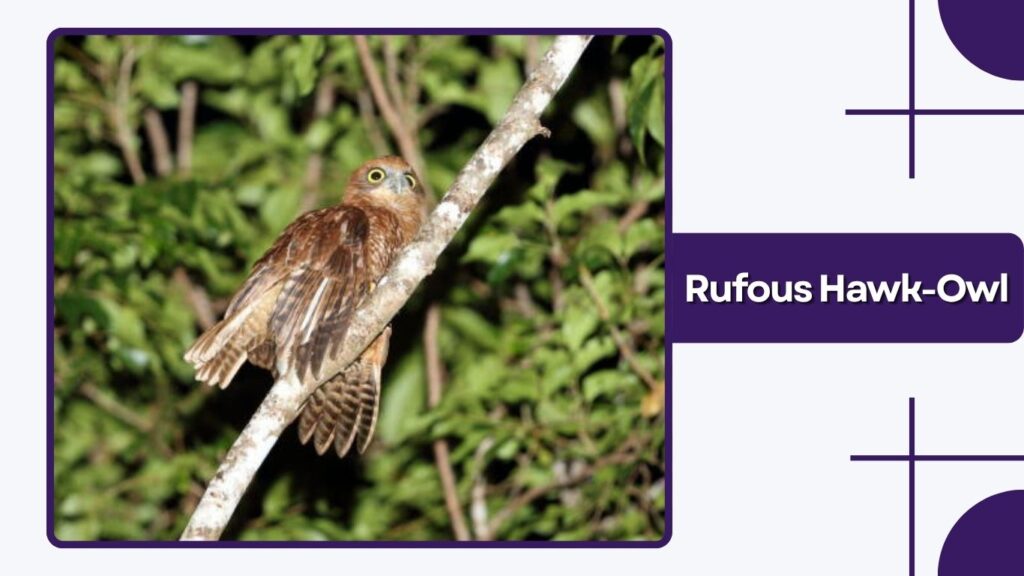
The Rufous Hawk-Owl is more commonly listed as the Rufous Owl or Rufous Boobook. It is a large tropical owl with rich reddish-brown plumage and a strong, hawk-like hunting style. This species belongs to the Ninox group and is found mainly in northern Australia, New Guinea, and nearby islands. It prefers warm forested habitats, especially rainforest edges and wooded areas with good cover.
Identification
- Large owl with reddish-brown or rufous plumage
- Golden-yellow eyes
- Dark face with strong, alert expression
- Light barring on the underparts
- Relatively long tail and broad wings
- Hooked pale bill with dark bristles near the base
- Often looks powerful and hawk-like when perched
Habitat and Distribution
Rufous Hawk-Owls are mainly tropical birds. Their range extends from New Guinea and the Aru Islands to northern Australia, including parts of Queensland and the Northern Territory. They are usually connected with rainforest, rainforest margins, gallery forests, and nearby wooded habitats. In some areas, they may also use sclerophyll forest, woodland edges, or vegetation close to water.
Behavior and Diet
This owl is mostly nocturnal and usually hunts after dark. It is a strong predator that can take a wide range of prey, including birds, mammals, flying foxes, possums, rats, and large insects. It often hunts from a concealed perch, then makes a quick attack when prey comes within reach. Its large size helps it capture prey bigger than many smaller boobook-type owls can manage.
Breeding and Nesting
Rufous Hawk-Owls generally nest in tree hollows or natural spaces in large trees. Mature forest is important because older trees are more likely to provide suitable nesting sites. During the breeding season, the adults become more vocal and protective around the nest. The young remain dependent on their parents for a long period after leaving the nest, learning to hunt while staying close to the breeding area.
4. Andaman Hawk-Owl
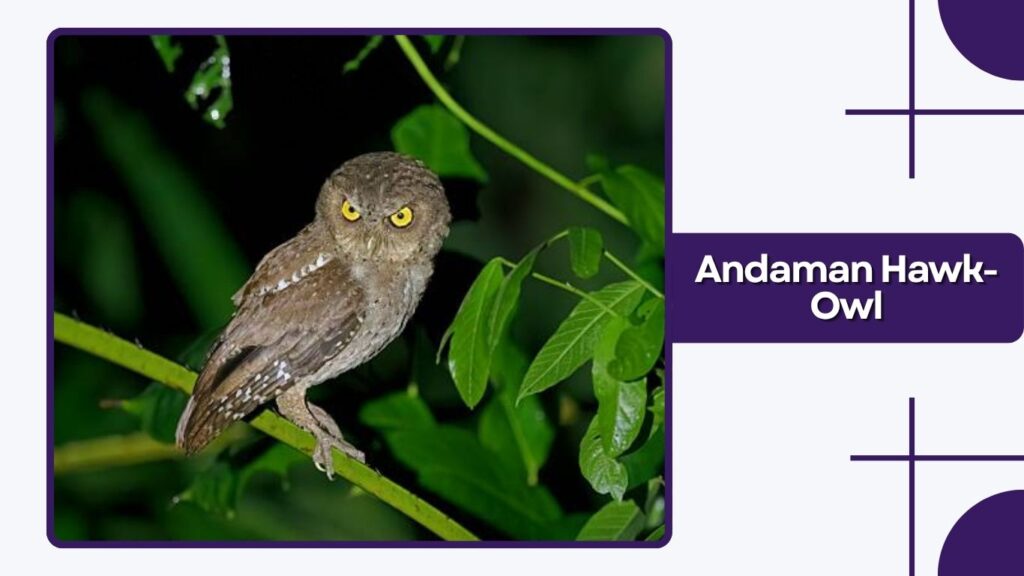
The Andaman Hawk-Owl, also known as the Andaman Boobook, is an island owl found only in the Andaman Islands of India. It belongs to the Ninox group of owls and is closely linked with forested island habitats. This species is not as widely known as many larger owls, but it is important because of its restricted range and dependence on local forest ecosystems.
Identification
- Medium-sized owl with a compact, boobook-like body
- Brown upperparts with darker markings
- Pale underparts with streaking or barring
- Rounded head without obvious ear tufts
- Large alert eyes
- Hawk-like shape when perched upright
- Usually active at night and difficult to spot in dense trees
Habitat and Distribution
Andaman Hawk-Owls are endemic to the Andaman Islands, meaning they naturally occur only there. Their main habitats include subtropical or tropical moist lowland forest and mangrove forest. Because they live in a limited island range, forest quality is especially important for their long-term survival. Some sources note that the species may tolerate degraded habitats, but habitat loss is still a concern.
Behavior and Diet
This owl is mainly nocturnal, becoming active after sunset. Like other boobook owls, it likely hunts from a perch, watching quietly before making a quick flight toward prey. Its diet is commonly reported to include insects, and it may also take small animals when available. In forest habitats, it helps control night-active insects and small prey populations.
Breeding and Nesting
Detailed breeding information for the Andaman Hawk-Owl is limited compared with better-studied owl species. It is likely to use tree cavities or natural hollows, as many Ninox owls depend on older trees for nesting. Forest conservation is therefore important not only for hunting space but also for safe nesting sites. Because the species has a small island range, loss of mature trees can reduce suitable breeding areas.
5. Philippine Hawk-Owl
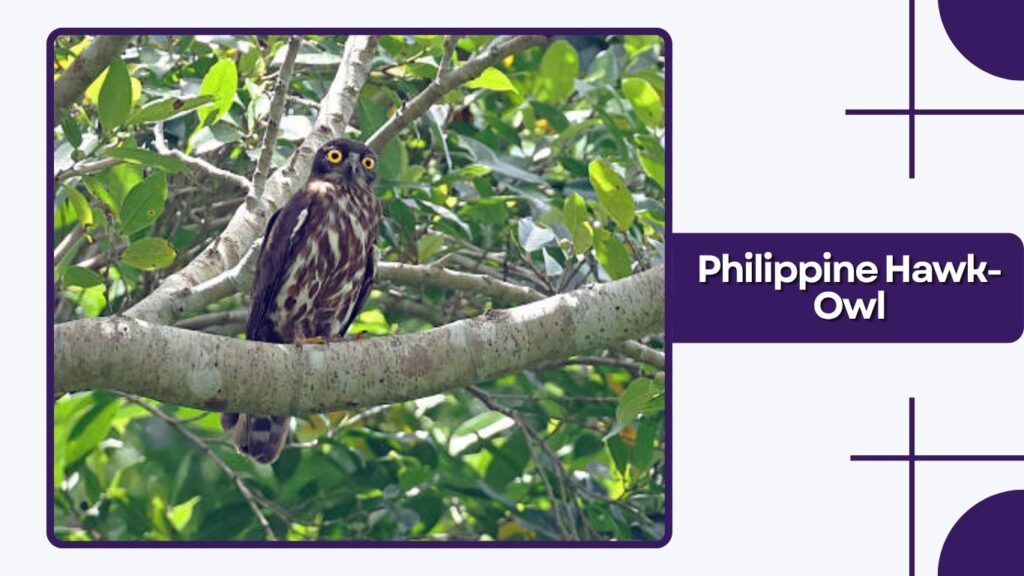
The Philippine Hawk-Owl is a small to medium-sized owl from the Ninox group. Today, many authorities treat the old “Philippine Hawk-Owl” as a complex of closely related island species, including the Luzon Boobook and other Philippine boobooks. It is endemic to the Philippines and is strongly connected with forest habitats, especially lowland and montane forests.
Identification
- Small to medium-sized owl with a rounded head
- No obvious ear tufts
- Brown upperparts with pale mottling
- Pale underparts with darker streaks or markings
- Large yellowish eyes
- Short, hooked bill
- Upright posture with a hawk-like look
- Usually heard more often than seen at night
Habitat and Distribution
Philippine Hawk-Owls are found only in the Philippines. Depending on taxonomy, the group includes several island forms or species spread across different islands, such as Luzon, Mindoro, Mindanao, Romblon, Cebu, Camiguin, and the Sulu Islands. Their natural habitats include tropical moist lowland forest and tropical moist montane forest.
Behavior and Diet
This owl is mainly nocturnal, becoming active after dusk. It usually hunts from trees, waiting quietly before flying out to catch prey. Its diet can include insects, frogs, small rodents, and small birds. Like many forest owls, it depends on quiet flight, sharp eyesight, and good cover to hunt successfully at night
Breeding and Nesting
Philippine Hawk-Owls usually depend on tree hollows or natural cavities for nesting. Breeding information is limited for some island forms, but related populations are reported to begin breeding around February, with fledglings recorded in March and May. Because they use forest trees for nesting, mature woodland and remaining forest patches are important for their survival.
6. Luzon Hawk-Owl
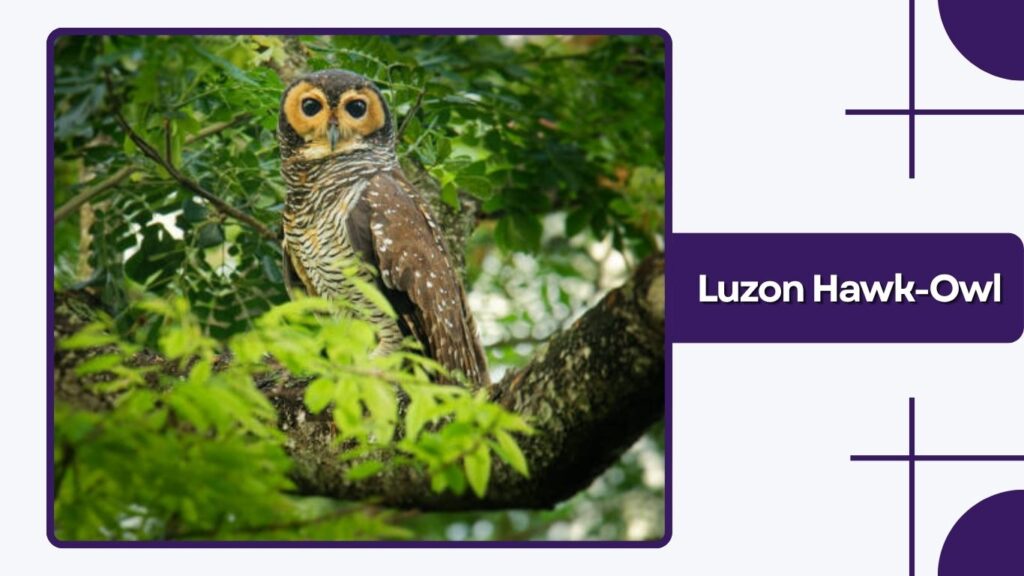
The Luzon Hawk-Owl, also known as the Luzon Boobook, is a small forest owl from the Philippines. It belongs to the Ninox group, which includes many hawk-like owls with rounded heads, strong eyes, and active hunting behavior. This owl is endemic to the Philippines and is mainly associated with forest habitats, where it hunts at night and rests quietly during the day.
Identification
- Small to medium-sized owl with a compact body
- Rounded head without ear tufts
- Brown upperparts with pale or whitish mottling
- Pale underparts with darker streaking
- Large, bright eyes
- Short hooked bill
- Upright posture when perched
- Usually difficult to see because it is active at night
Habitat and Distribution
Luzon Hawk-Owls are found in the Philippines, especially on Luzon and several nearby islands. They live mainly in forested areas, including lowland and montane forests. Some populations may also occur in secondary forest or disturbed woodland if enough trees remain. Because they depend on forest cover, habitat loss can reduce suitable feeding and nesting areas.
Behavior and Diet
This owl is mostly nocturnal. It usually becomes active after dusk, calling from trees and hunting from hidden perches. Its diet includes insects, frogs, small rodents, lizards, and small birds. Like other boobook owls, it often waits quietly, then makes a quick flight toward prey when it detects movement.
Breeding and Nesting
Luzon Hawk-Owls usually use tree hollows as nesting sites. Breeding is reported to begin around February, with fledglings seen from March to May. Mature trees are important because they provide natural cavities for nesting. After leaving the nest, young owls may remain close to their parents while they learn to hunt and survive in the forest.
7. Mindanao Hawk-Owl
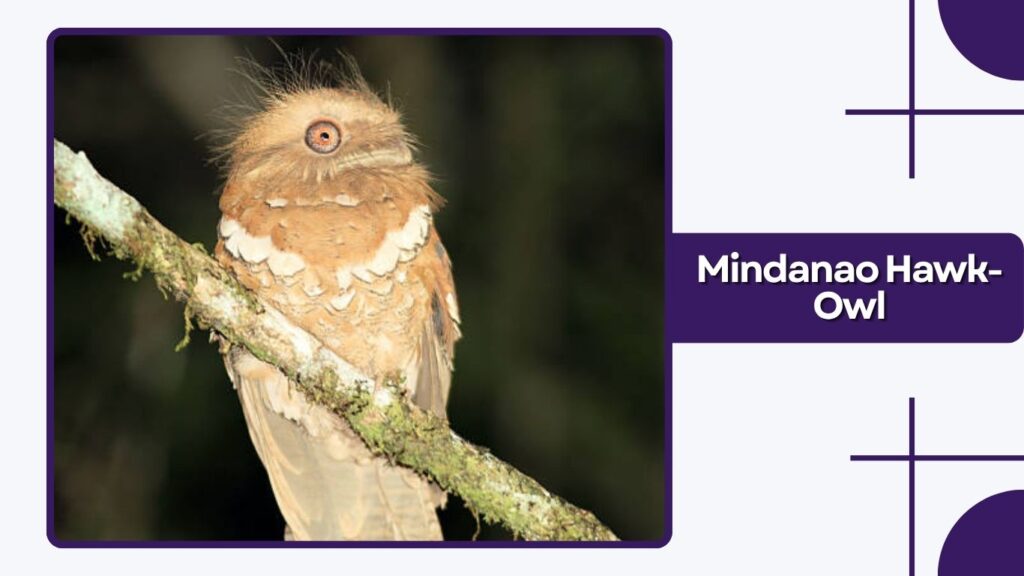
The Mindanao Hawk-Owl, also called the Mindanao Boobook, is a small owl endemic to the Philippines. It belongs to the Ninox group and was once treated as part of the Philippine Hawk-Owl complex, but it is now recognized as a separate species. This owl is mainly linked with tropical moist lowland forest on Mindanao and nearby islands.
Identification
- Small owl, about 18 cm long
- Rounded head without ear tufts
- Brown upperparts with mottled markings
- Whitish belly with darker streaking
- Rufous-brown markings on the breast
- Large alert eyes
- Upright, hawk-like posture when perched
- Often recognized by its call more than by sight
Habitat and Distribution
Mindanao Hawk-Owls are found on Mindanao and nearby Philippine islands, including Dinagat, Siargao, and Basilan. Their main habitat is tropical moist lowland forest, where they use dense trees for cover, calling, and hunting. Because their range is limited, forest loss is a major concern for this species.
Behavior and Diet
This owl is mainly nocturnal and becomes active after dusk. It likely hunts from a perch, waiting quietly before flying out to catch prey. Its diet is believed to include insects, and like other book owls, it may also take small mammals, reptiles, amphibians, and possibly small birds. Its quiet habits make it difficult to observe in the wild.
Breeding and Nesting
Breeding details of the Mindanao Hawk-Owl are not well studied. However, a nestling has been recorded in March, suggesting breeding activity around that period. Like many related Ninox owls, it probably depends on tree hollows or natural cavities for nesting. Protecting mature forest is important because older trees provide both shelter and possible nesting sites.
8. Mindoro Hawk-Owl
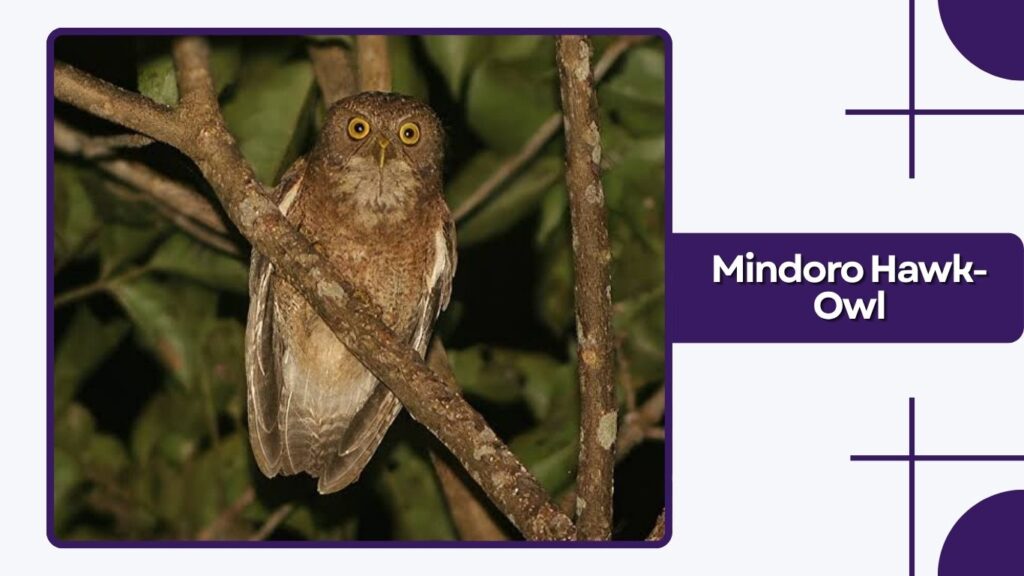
The Mindoro Hawk-Owl, also known as the Mindoro Boobook, is a small island owl from the Ninox group. It is endemic to Mindoro in the Philippines, meaning it naturally occurs only there. This owl is part of the former Philippine Hawk-Owl complex and is now treated as a separate species. Because it has a restricted island range and depends on forest habitat, it is considered vulnerable.
Identification
- Small to medium-sized owl with a rounded head
- No obvious ear tufts
- Dark brown overall plumage
- Fine barring on the head and belly
- Pale underparts with darker markings
- Large alert eyes
- Upright, hawk-like posture when perched
- Similar-looking male and female birds
Habitat and Distribution
Mindoro Hawk-Owls are found only on Mindoro Island in the Philippines. They live mainly in tropical moist lowland forest, including primary and secondary forest. Some records also place them near forest edges, clearings, and plantations, especially where enough tree cover remains. Their limited range makes habitat protection especially important.
Behavior and Diet
This owl is mainly nocturnal and is more often heard than seen. Like other boobook owls, it likely hunts from a perch at night, watching quietly before flying out to catch prey. Its diet is not fully studied, but it is believed to include insects, small mammals, reptiles, amphibians, and possibly small birds.
Breeding and Nesting
Breeding information for the Mindoro Hawk-Owl is still limited. It is presumed to nest in tree cavities, similar to other boobook owls. Mature trees are likely important because they can provide natural hollows for nesting and safe daytime roosting sites. Continued forest loss can reduce both hunting areas and suitable nesting places for this restricted-range owl.
9. Romblon Hawk-Owl
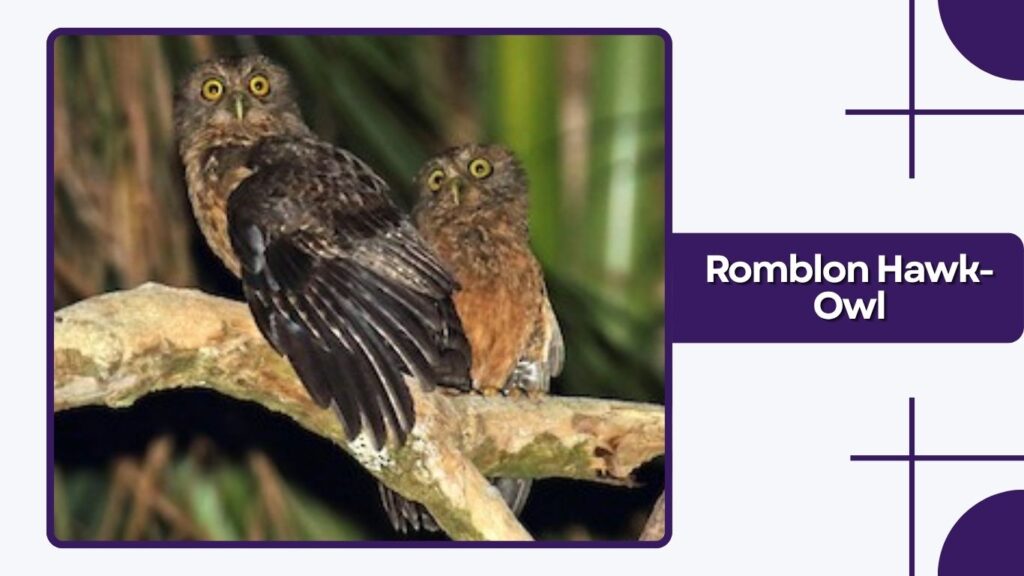
The Romblon Hawk-Owl, also called the Romblon Boobook, is an island owl found only in the Philippines. It belongs to the Ninox group and was once treated as part of the Philippine Hawk-Owl complex. It is now recognized as a separate species because of differences such as voice and island distribution. This owl is mainly connected with tropical moist lowland forest and is threatened by habitat loss.
Identification
- Medium-sized owl with a rounded head
- No visible ear tufts
- Brown upperparts with pale spotting
- Light underparts with darker streaking or barring
- Large alert eyes
- Upright, hawk-like posture when perched
- Similar-looking male and female birds
- Often easier to detect by call than by sight
Habitat and Distribution
Romblon Hawk-Owls are endemic to the Philippines and are mainly found on Tablas, Sibuyan, and Romblon islands. Their natural habitat is tropical moist lowland forest, but they may also use secondary forest where suitable tree cover remains. Because they live in a very limited island range, forest loss can quickly reduce their available habitat.
Behavior and Diet
This owl is mostly nocturnal and becomes active after sunset. Like other book owls, it likely hunts from a perch, waiting quietly before flying out to catch prey. Its diet is not fully studied, but it is believed to include insects, small mammals, reptiles, amphibians, and possibly small birds. Its secretive night habits make it difficult to observe in the wild.
Breeding and Nesting
Romblon Hawk-Owls are believed to nest in tree hollows, similar to many other Ninox owls. Some records suggest mating activity around February, though detailed breeding information is still limited. Mature trees are important because they provide safe nesting cavities and daytime roosting sites. Protecting remaining forest patches is important for this restricted-range owl.
10. Sulu Hawk-Owl
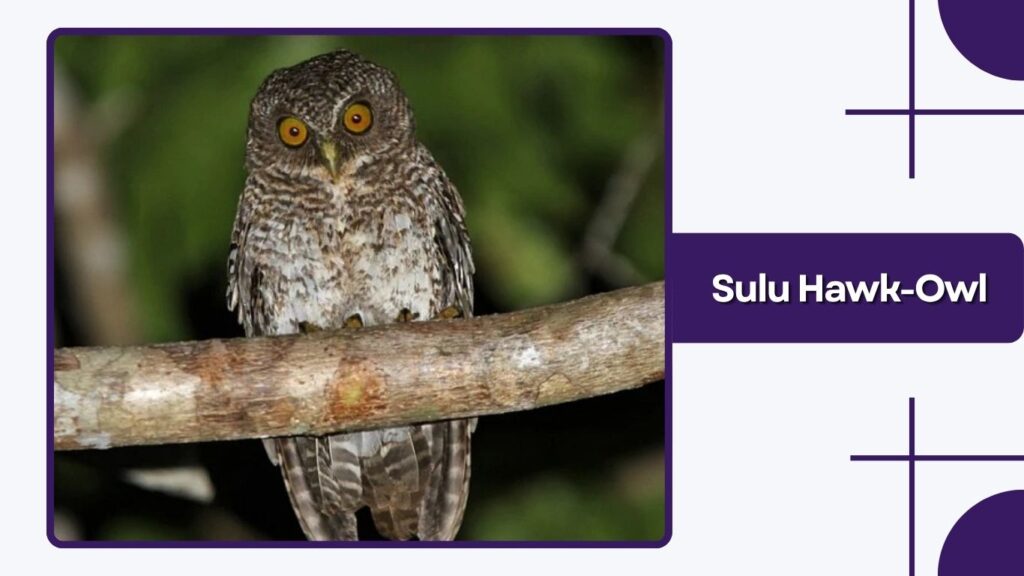
The Sulu Hawk-Owl, also known as the Sulu Boobook, is a small island owl found only in the Sulu Archipelago of the Philippines. It belongs to the Ninox group and was once treated as part of the Philippine Hawk-Owl complex. Today, it is recognized as a separate species. Because it has a limited range and depends on remaining forest habitats, it is considered vulnerable.
Identification
- Small to medium-sized owl with a rounded head
- No obvious ear tufts
- Brown upperparts with pale markings
- Pale underparts with heavy barring
- White throat patch and noticeable facial disk
- Alert eyes and compact body shape
- Upright, hawk-like posture when perched
- Often detected by its call at night
Habitat and Distribution
Sulu Hawk-Owls are endemic to the Sulu Islands in the Philippines. They are recorded from islands including Jolo, Siasi, Tawi-Tawi, Sanga-Sanga, Bongao, and Sibutu. Their main habitat is tropical moist lowland forest, but they may also use forest edges, mangroves, large village trees, and possibly limestone karst areas.
Behavior and Diet
This owl is mostly nocturnal and becomes active after sunset. Like other boobook owls, it likely hunts from a perch, waiting quietly before flying toward prey. Its diet is not fully documented, but it probably includes insects, small reptiles, amphibians, small mammals, and possibly small birds. Its secretive habits make it difficult to study in the wild.
Breeding and Nesting
Breeding information for the Sulu Hawk-Owl is limited. It likely nests in tree hollows or natural cavities, similar to related Ninox owls. Mature trees are important because they provide safe nesting and roosting places. Since the species has a small island range, protecting remaining forests, mangroves, and large old trees is important for its survival.
FAQs
Are hawk-owls true owls?
Yes, hawk-owls are true owls. Most belong to the genus Ninox, while the Northern Hawk-Owl belongs to Surnia. They are called hawk-owls because they often have longer tails, slimmer bodies, and a more hawk-like hunting style than many round-faced owls.
Why are they called hawk-owls?
They are called hawk-owls because their body shape, flight, and hunting behavior can look similar to hawks. Many have long tails, pointed wings, and an upright posture. Some species also hunt from exposed perches and fly quickly after prey, much like small hawks.
Where do hawk-owls live?
Hawk-owls live in different regions depending on the species. The Northern Hawk-Owl lives in boreal forests across northern parts of North America, Europe, and Asia. Many other hawk-owls, such as Philippine island species, live in tropical forests, lowland forests, and wooded island habitats.
What do hawk-owls eat?
Hawk-owls eat a variety of prey, including insects, small mammals, reptiles, amphibians, birds, and sometimes bats. Larger species can take bigger prey, while smaller island species often depend more on insects and small animals. Most hunt from perches and strike quickly when prey moves.
Are hawk-owls endangered?
Some hawk-owls are common in parts of their range, but several island species face threats. Forest loss, habitat degradation, and limited distribution make species like the Mindoro, Romblon, and Sulu Hawk-Owls more vulnerable. Protecting mature forests and nesting trees is important for their survival.