
Wood owls are some of the most mysterious birds of the night, known for their rounded heads, dark eyes, silent flight, and strong connection to wooded habitats. Many belong to the Strix group, which includes forest owls found across Asia, Africa, Europe, and the Americas. These owls often live in forests, parks, plantations, wetlands, and mountain woodlands, depending on the species. Some are common and widespread, while others are limited to specific regions. In this guide, you will learn about 15 types of wood owls, including their appearance, habitat, diet, and nesting behavior.
1. Spotted Wood Owl
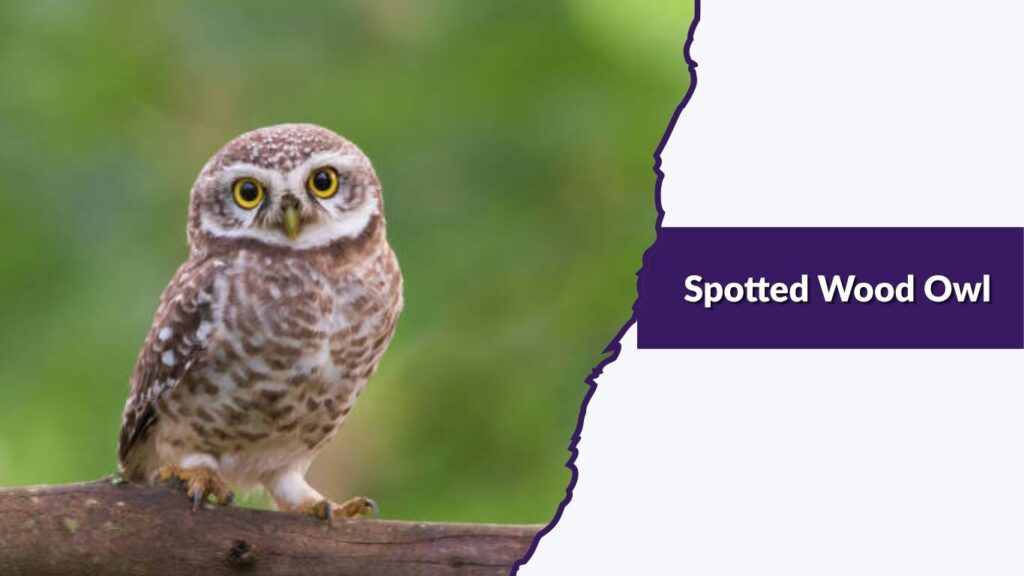
The Spotted Wood Owl is a large, attractive owl found in parts of Southeast Asia. It is known for its dark eyes, rusty-orange facial disc, spotted upperparts, and barred underparts. This owl belongs to the Strix genus and usually lives in forest edges, wooded parks, plantations, and open woodland areas.
Identification
- Large owl with no ear tufts
- Rusty-orange or buff facial disc
- Big dark brown eyes
- Brown upperparts covered with white spots
- Pale underparts with strong dark barring
- Rounded head and strong hooked bill
- Usually around 45–47 cm long
Habitat and Range
The Spotted Wood Owl is mainly found in Southeast Asia, including areas from southern Myanmar and Thailand to parts of the Malay Peninsula, Sumatra, Java, and western Philippines. It prefers forest edges, evergreen forest borders, logged forests, plantations, orchards, wooded parks, and sometimes mangrove or cultivated areas. It is usually seen in lowland areas, often below 800 meters.
Diet and Hunting Behavior
This owl is mostly nocturnal and hunts from a perch. It waits quietly on a branch, watches for movement, then drops or glides down to catch prey. Its diet includes small rodents, small birds, and large insects. It may also take bats or snakes occasionally. Like many forest owls, it relies on patience, sharp vision, and silent flight to surprise prey.
Nesting and Breeding
The Spotted Wood Owl usually nests in tree hollows, natural cavities, or large plant structures such as epiphytic ferns. In some areas, breeding happens between January and June. The female commonly lays two white eggs, though three may occur rarely. Young birds are covered in pale down with fine dark barring before they develop adult-like plumage.
2. Mottled Wood Owl
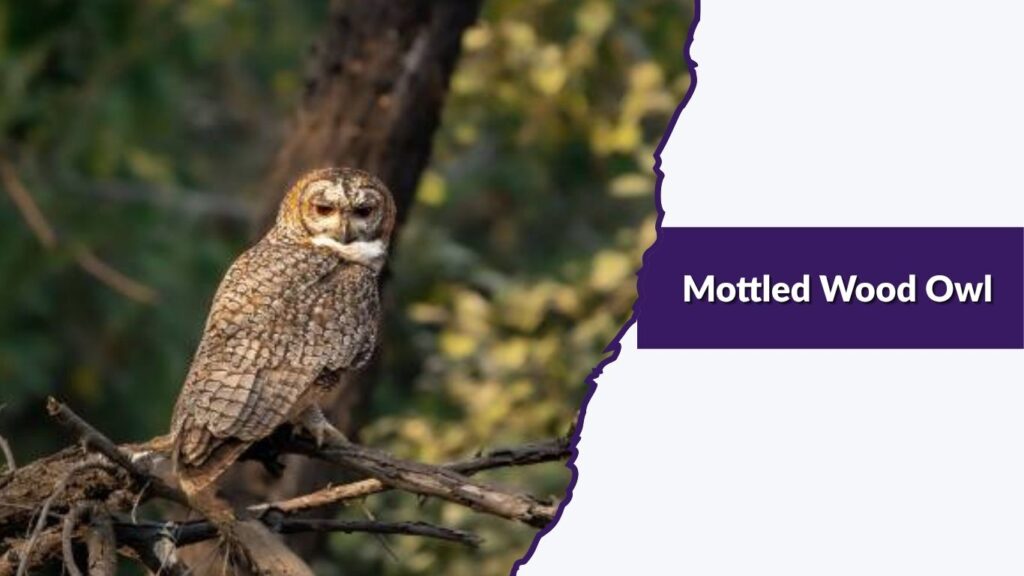
The Mottled Wood Owl is a large, round-headed owl of South Asia. It is best known for its heavily patterned plumage, dark eyes, and loud trembling calls heard around dawn and dusk. This owl often lives near open woodland, groves, farmland edges, and village trees rather than deep, dense forest.
Identification
- Large owl with a rounded head
- No visible ear tufts
- Dark brown to reddish-brown eyes
- Pale facial disc with fine dark barring
- Brown, white, and rufous mottled upperparts
- Strong horizontal barring on the chest and belly
- Thick body and broad wings
- Often seen roosting quietly in leafy trees
Habitat and Range
The Mottled Wood Owl is mainly found across India, with records also from nearby parts of South Asia. It prefers lowland habitats such as lightly wooded areas, gardens, village groves, dry deciduous woodland, and farmland edges. It may roost during the day in dense foliage, where its mottled feathers help it blend into branches and leaves.
Diet and Hunting Behavior
This owl hunts mostly at night from a perch. It feeds on rats, mice, other small mammals, birds, lizards, crabs, beetles, and large insects. Because it often lives close to farms and villages, it can help control rodent populations. Its hunting style is quiet and patient, using sharp hearing and silent flight to surprise prey.
Nesting and Breeding
The Mottled Wood Owl usually nests in tree hollows. Breeding records show that nests may be found from February to April, and the female commonly lays two to three white eggs. Pairs are also known for their duet calls, especially during the breeding season, which helps them defend territory and stay connected.
3. Brown Wood Owl
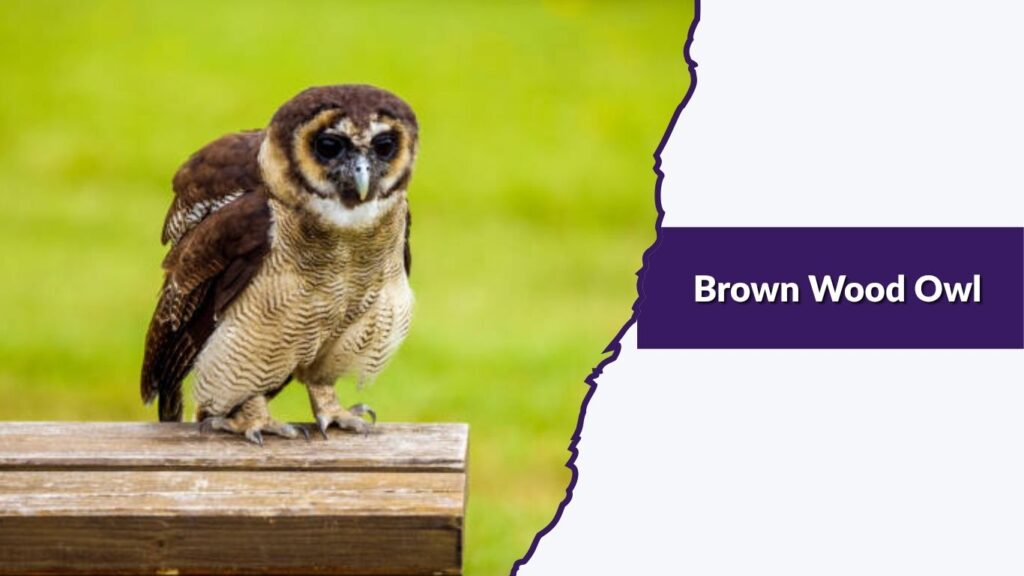
The Brown Wood Owl is a medium-large forest owl found across parts of South and Southeast Asia. It has a rounded head, dark eyes, rich brown upperparts, and pale underparts with brown markings. This owl is mostly nocturnal and is strongly linked with wooded habitats, especially dense lowland and hill forests.
Identification
- Medium-large owl with a rounded head
- No visible ear tufts
- Dark brown eyes
- Brown or rufous facial disc
- Pale border around the face
- Dark brown upperparts with faint pale spotting
- Buff underparts with brown streaking or barring
- Noticeable pale neckband
- Usually about 45–57 cm long
Habitat and Range
The Brown Wood Owl lives in forested areas from India, Bangladesh, Sri Lanka, Nepal, Bhutan, southern China, Myanmar, Thailand, Malaysia, Indonesia, and nearby regions. It prefers dense moist forest, lowland forest, hill forest, and wooded mountain slopes. It is usually a resident bird, meaning it stays within its range instead of making long seasonal migrations.
Diet and Hunting Behavior
This owl hunts mainly at night. It often waits quietly from a shaded perch, then drops down or glides toward prey. Its diet includes small mammals, birds, reptiles, bats, and large insects. In forest habitats, its silent flight and dark plumage help it move through trees with little notice.
Nesting and Breeding
The Brown Wood Owl usually breeds in natural tree cavities, large hollows, or sheltered forest sites. Like many Strix owls, it does not build a complex nest. Instead, it uses existing spaces in mature trees. Forest loss can affect this owl because it depends strongly on tree cover and suitable nesting areas.
4. Himalayan Wood Owl
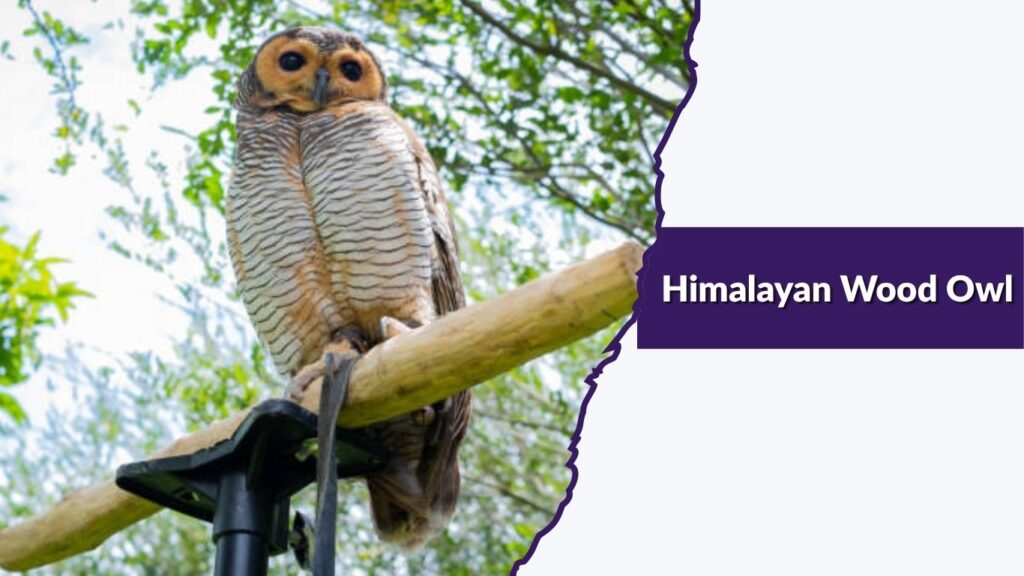
The Himalayan Wood Owl, also called the Himalayan Owl, is a medium-sized forest owl of Asia. It belongs to the true owl family and is closely linked with wooded mountain habitats, especially in the Himalayan region and nearby parts of East and Southeast Asia. It is usually nocturnal and more often heard than seen.
Identification
- Medium-sized owl with a rounded head
- No visible ear tufts
- Dark brown eyes
- Dark brown plumage with buff and black mottling
- Short, strongly barred tail
- Diffuse pale or whitish half-collar
- Pale greenish-yellow bill
- Usually about 35–40 cm long
Habitat and Range
The Himalayan Wood Owl is found in countries such as India, Nepal, Bhutan, China, Myanmar, Thailand, Laos, Vietnam, Korea, and Taiwan. It lives in forests, wooded ravines, oak forests, coniferous forests, montane forests, and sometimes degraded wooded areas or plantations. It may occur from low elevations up to mountain zones.
Diet and Hunting Behavior
This owl hunts mostly at night. Its food includes insects, small mammals, and small birds. It may take beetles, moths, grasshoppers, cicadas, rodents, and other small prey. Like many forest owls, it hunts quietly from a perch, listening and watching before dropping down on prey.
Nesting and Breeding
The Himalayan Wood Owl usually breeds in natural cavities, such as tree holes or rock crevices. Its breeding season is believed to run mainly from December to April. It is considered a resident bird, though individuals from higher elevations may move lower during winter.
5. African Wood Owl
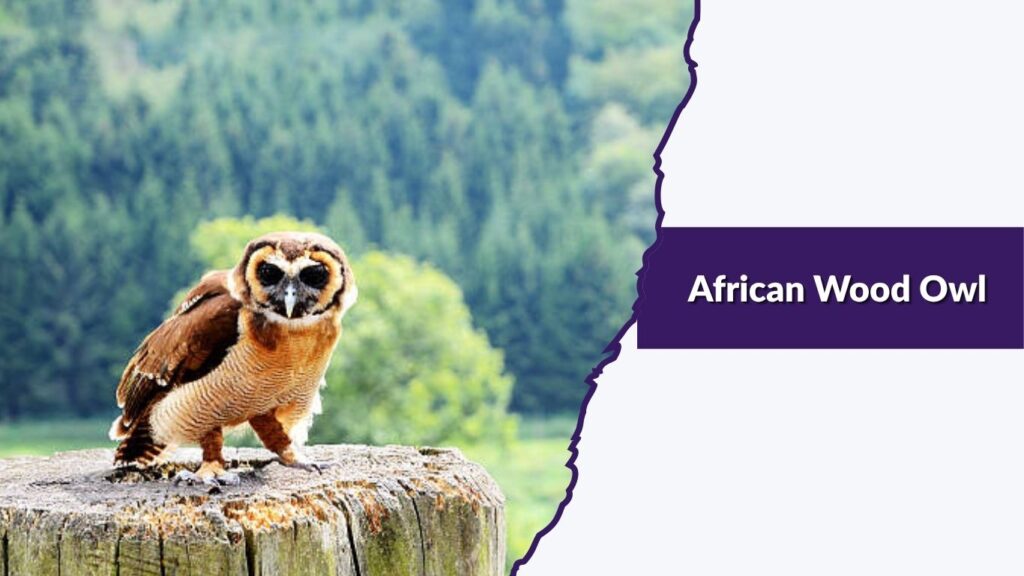
The African Wood Owl is a medium-sized forest owl found across much of sub-Saharan Africa. It has a rounded head, large dark eyes, brown plumage, and pale barred underparts. This owl is mainly nocturnal and is often heard at night before it is seen. It lives in forests, woodland, riverine areas, plantations, and sometimes well-treed gardens.
Identification
Key field marks of the African Wood Owl include:
- Medium-sized owl
- Rounded head with no ear tufts
- Large dark eyes
- Pale facial disc
- White eyebrow-like markings around the eyes
- Yellow bill
- Rich brown upperparts with pale spotting
- Pale belly with brown barring
- Usually about 30–36 cm long
Habitat and Range
The African Wood Owl occurs through a large part of sub-Saharan Africa. It is found from West Africa across to East Africa and south into southern Africa. It prefers wooded habitats, including dense forest, woodland edges, riverine forest, coastal forest, plantations, and wooded suburban areas near natural forest.
Diet and Hunting Behavior
This owl hunts mostly at night from a perch. It waits quietly, listens for movement, then swoops down to catch prey. Its diet includes insects, rodents, small birds, frogs, reptiles, small mammals, centipedes, and sometimes small snakes. Its silent flight and dark forest plumage help it hunt without being noticed.
Nesting and Breeding
The African Wood Owl usually nests in natural tree hollows rather than building its own nest. Breeding often takes place between July and October in parts of its range. The female may lay one to three eggs, and incubation is about 31 days. Young owls leave the nest after several weeks but may stay near their parents for some time.
6. Javan Wood Owl
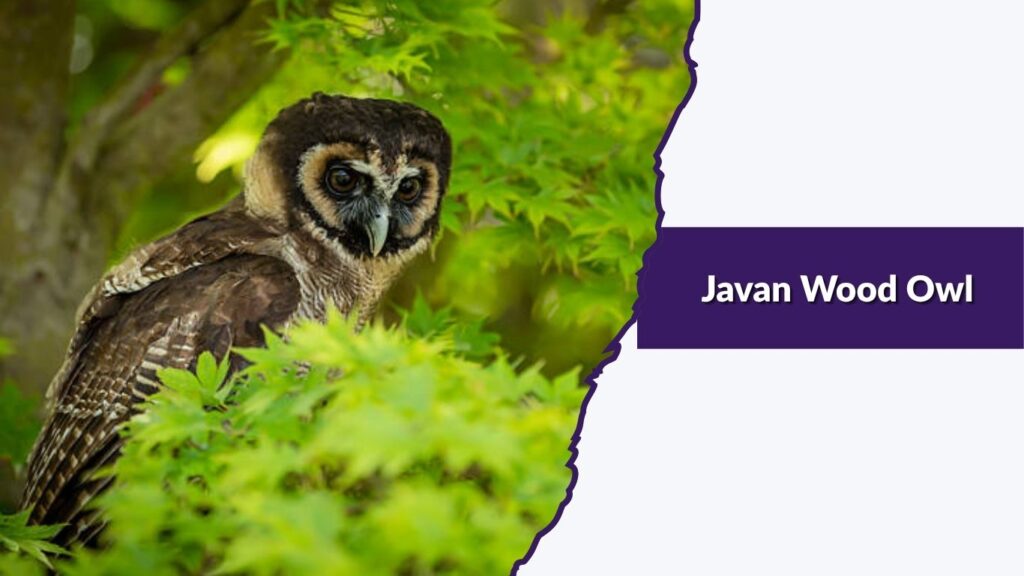
The Javan Wood Owl, also called Bartels’s Wood Owl, is usually treated as a Javan form of the Brown Wood Owl. It belongs to the Strix group, which includes rounded-headed owls with no visible ear tufts. This owl is strongly linked with forested habitat and is mainly nocturnal.
Identification
- Medium-large owl with a rounded head
- No visible ear tufts
- Large dark eyes
- Warm brown upperparts
- Pale underparts with strong brown barring
- Brown or rufous facial disc
- Pale edging around the face
- Noticeable owl-like “wood owl” shape
- Deep, forceful call with long pauses
Habitat and Range
The Javan Wood Owl is associated with Java, Indonesia. It is often listed as Strix leptogrammica bartelsi, though some taxonomic treatments use the name Bartels’s Wood Owl. Like other Brown Wood Owl forms, it is connected with dense forest and wooded areas where it can roost quietly during the day and hunt at night.
Diet and Hunting Behavior
This owl is nocturnal and hunts mostly under cover of darkness. Its prey likely includes small mammals, birds, reptiles, and other small forest animals, similar to the broader Brown Wood Owl group. It usually hunts from a perch, waiting silently before dropping or gliding down toward prey.
Nesting and Breeding
The Javan Wood Owl likely uses natural tree cavities or sheltered forest nesting sites, as is typical for many Strix wood owls. It does not build a complex nest. Mature trees are important because they provide roosting cover and possible nesting holes, so forest loss can reduce suitable breeding habitat.
7. Tawny Owl
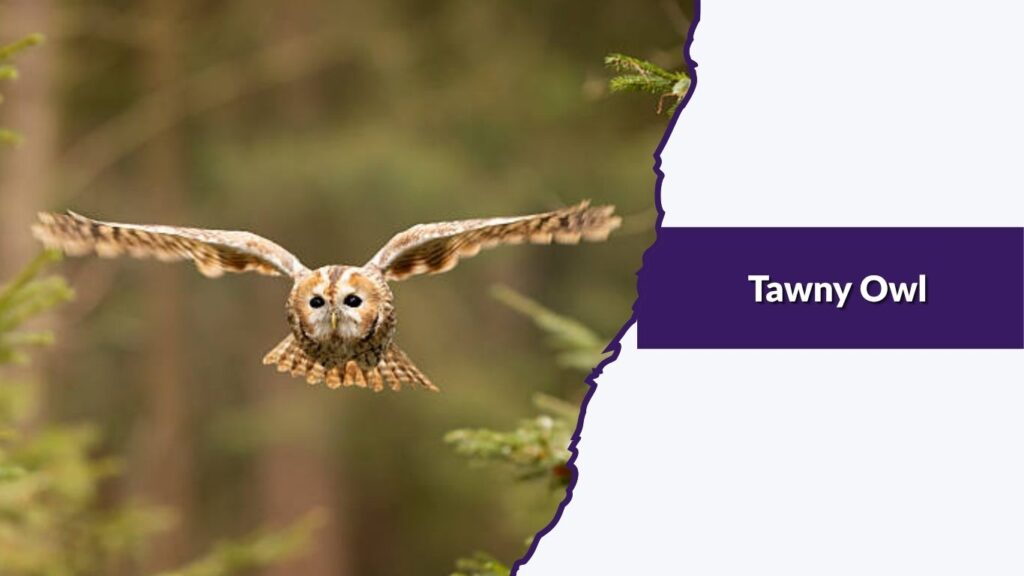
The Tawny Owl is a medium-sized woodland owl found across much of Europe and parts of Asia. It has a rounded head, dark eyes, mottled brown or grey-brown feathers, and no visible ear tufts. This owl is strongly linked with mature trees, but it can also live in parks, gardens, farmland, and suburban areas with enough cover.
Identification
- Medium-sized owl with a rounded head
- No visible ear tufts
- Large dark eyes
- Mottled brown, grey, buff, and cream plumage
- Broad wings and compact body
- Short tail compared with many other owls
- Length usually around 37–39 cm
- Wingspan about 94–104 cm
- Often recognized by its classic hooting call
Habitat and Range
The Tawny Owl prefers woodland, especially areas with old trees and natural cavities. However, it is also adaptable and may live in farmland, parks, large gardens, and suburban places where trees provide daytime roosting cover. In the UK, it is one of the most familiar woodland owls, though it is more often heard than seen.
Diet and Hunting Behavior
The Tawny Owl hunts mostly at night. It usually waits on a perch, listens carefully, then drops down suddenly to catch prey. Its diet includes small mammals, rodents, small birds, frogs, fish, insects, worms, and sometimes bats. In towns and gardens, it may take more birds than it does in deep woodland.
Nesting and Breeding
Tawny Owls prefer nesting in tree cavities when suitable holes are available. They may also use old crow or pigeon nests, squirrel dreys, tree forks, rabbit holes, and nest boxes. They do not build a detailed nest like many songbirds. Mature trees are important because they provide safe nesting and roosting places.
8. Maghreb Owl
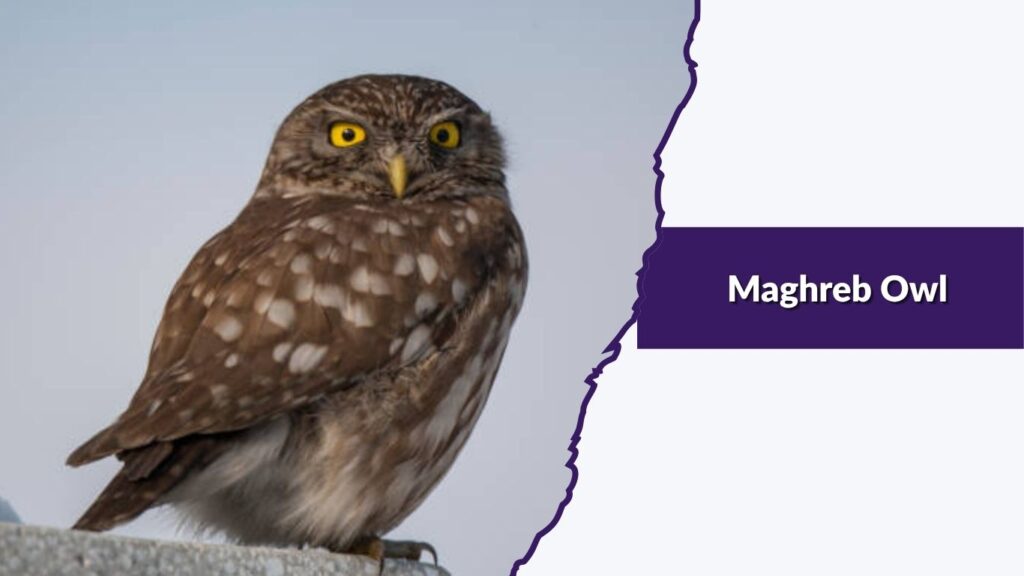
The Maghreb Owl is a medium-sized Strix owl from northwestern Africa. It was once often treated as a form of Tawny Owl, but many modern lists now recognize it separately as Strix mauritanica. It is mostly nocturnal and is usually connected with wooded places, rocky areas, and semi-open habitats across the Maghreb region.
Identification
- Medium-sized owl with a rounded head
- No visible ear tufts
- Large dark eyes
- Grey-brown to brown mottled upperparts
- Pale facial disc with darker markings
- Streaked and barred underparts
- Short tail and broad wings
- Similar to Tawny Owl but generally linked to North African range
- Often detected by its deep hooting call
Habitat and Range
The Maghreb Owl occurs in northwestern Africa, especially from Morocco through Algeria and Tunisia, with records extending toward Mauritania. It is considered a resident bird rather than a long-distance migrant. Its habitat may include wooded valleys, forests, groves, rocky slopes with trees, and dense vegetation where it can roost safely during the day.
Diet and Hunting Behavior
The Maghreb Owl hunts mainly at night. Like other Strix owls, it usually hunts from a perch, listening and watching before dropping down on prey. Its diet is likely made up of small mammals, birds, insects, reptiles, and other small animals found in wooded or semi-open North African habitats.
Nesting and Breeding
This owl likely nests in natural cavities, tree holes, rocky crevices, or sheltered sites, similar to other rounded-headed Strix owls. It does not build a complex nest. Mature trees, quiet roosting places, and safe nesting cavities are important for its breeding success. Older sources may still list it under Tawny Owl as Strix aluco mauritanica, so names can vary between references.
9. Ural Owl
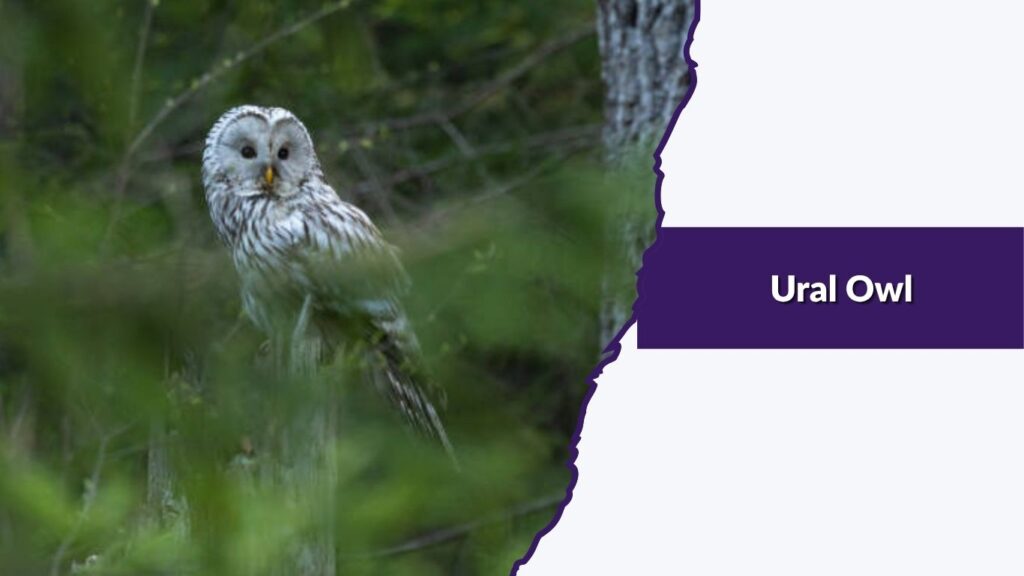
The Ural Owl is a large woodland owl with a long tail, rounded head, and dark eyes. It is found across parts of Europe and Asia, especially in forests, mountain woods, and northern taiga habitats. This owl is mostly nocturnal and is known for its calm appearance but strong nest defense.
Identification
- Large owl with a rounded head
- No visible ear tufts
- Dark eyes and yellowish bill
- Pale grey-brown facial disc
- Brown and white streaked body
- Long, rounded tail with dark bars
- Broad wings and strong body
- Usually about 50–62 cm long
- Females are usually larger than males
Habitat and Range
The Ural Owl lives in forests, wooded mountains, and open woodland edges. It occurs across Europe, Russia, China, and Japan, with strong links to mature forest where it can find safe roosting and nesting places. It may also use forest clearings and meadows for hunting.
Diet and Hunting Behavior
The Ural Owl is mostly a night hunter. It feeds mainly on rodents such as voles, rats, mice, shrews, and sometimes hares. It hunts by sitting quietly on a perch, listening for movement, and then flying down quickly to grab prey with its talons.
Nesting and Breeding
This owl often nests in hollow trees, broken trunks, rock holes, large nest boxes, or old nests made by other birds of prey. During breeding season, it can become very protective. Adults may strike intruders that approach the nest too closely, especially when young owlets are nearby.
10. Barred Owl
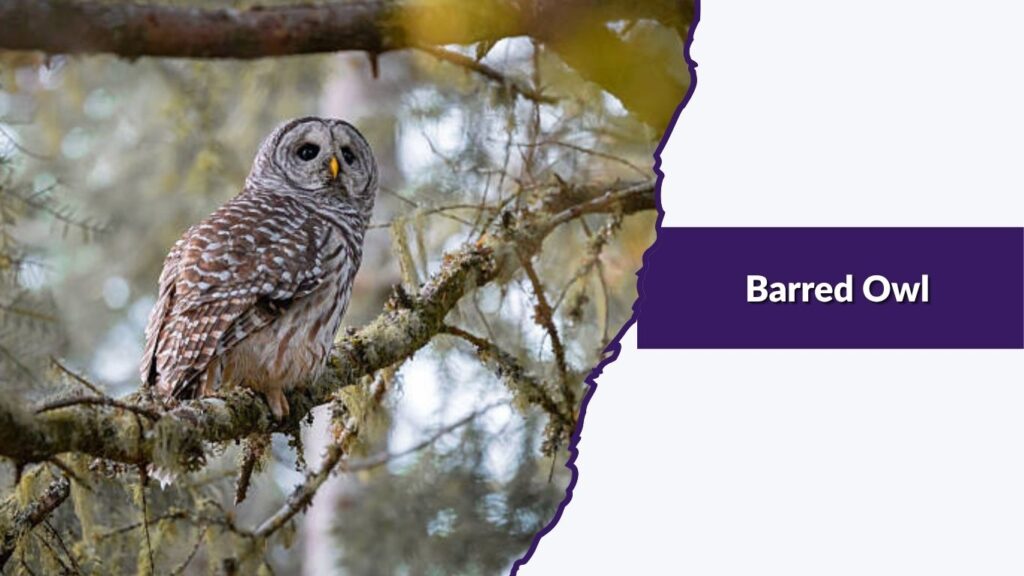
The Barred Owl is a large woodland owl of North America. It has a rounded head, dark eyes, no ear tufts, and brown-and-white barring across the body. This owl is famous for its deep hooting call, often described as sounding like “Who cooks for you?” It prefers mature forests, wooded swamps, and tree-filled wetlands.
Identification
- Large, stocky owl with a rounded head
- No visible ear tufts
- Large dark brown eyes
- Yellowish bill
- Brown-and-white barred upper chest
- Vertical brown streaks on the lower belly
- Broad wings and medium-length rounded tail
- Smaller than a Great Horned Owl but larger than many woodland owls
Habitat and Range
The Barred Owl is strongly connected with mature woodland, especially forests with large trees and cavities. It is often found in mixed forests, wooded swamps, river bottoms, and wet forest edges. It can also appear near suburbs when enough big trees and quiet cover are available.
Diet and Hunting Behavior
The Barred Owl hunts mostly at night, though it may sometimes be active during the day. It usually sits quietly on a perch, listens for movement, then drops down to catch prey. Its diet includes mice, voles, squirrels, chipmunks, rabbits, birds, amphibians, reptiles, insects, fish, and crayfish.
Nesting and Breeding
Barred Owls usually nest in natural tree cavities, but they may also use old hawk or crow nests and suitable nest boxes. Breeding commonly begins in early spring. The female often lays two or three white eggs, and young owls leave the nest several weeks after hatching.
11. Spotted Owl
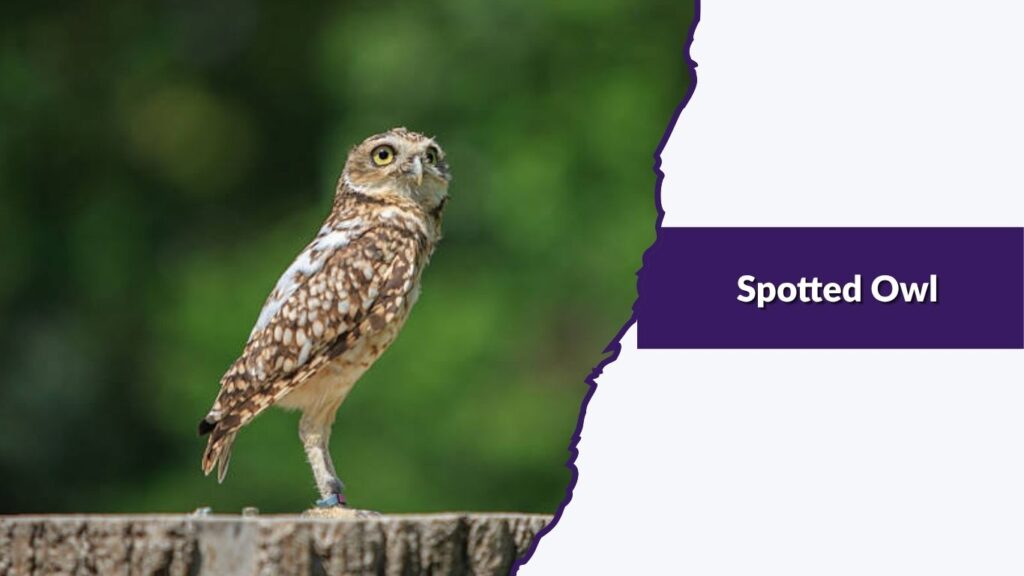
The Spotted Owl is a medium-sized woodland owl of western North America. It has dark eyes, a rounded head, brown plumage, and white spotting across the body. This owl is closely associated with mature forests, especially areas with dense canopy, large trees, and quiet nesting cover.
Identification
- Medium-sized owl with a rounded head
- No visible ear tufts
- Large dark brown eyes
- Brown body with white spots
- Pale facial disc with darker edging
- Barred tail
- Broad wings and compact body
- Usually seen perched quietly in shaded forest
Habitat and Range
The Spotted Owl lives mainly in western North America. Across its range, it uses mature forests with dense canopy and complex tree structure. Northern Spotted Owls are especially linked with old conifer forests, while other populations may also use mixed forests, canyon woodlands, and rocky forested areas.
Diet and Hunting Behavior
This owl hunts mostly at night from a perch. It listens carefully, waits for movement, and then glides down to catch prey. Important foods include flying squirrels and woodrats, but it may also eat mice, bats, small birds, insects, and even other small owls.
Nesting and Breeding
The Spotted Owl usually nests in natural tree cavities, broken-top trees, old stick nests, or sheltered forest sites. It does not build a detailed nest of its own. Large mature trees are important because they provide safe nesting places, roosting cover, and nearby hunting habitat. The Northern and Mexican Spotted Owl are listed as threatened under the U.S. Endangered Species Act.
12. Mottled Owl
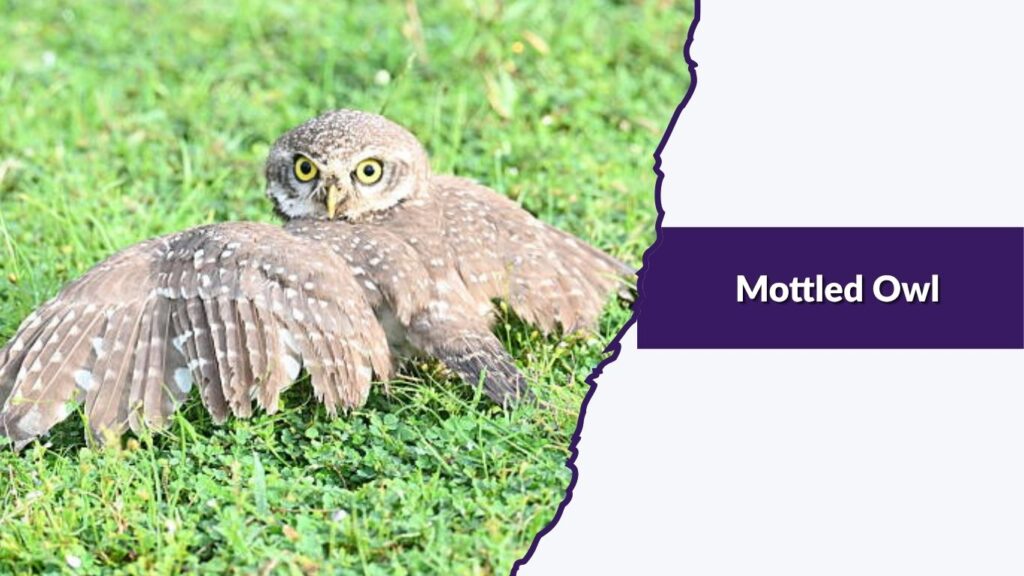
The Mottled Owl is a medium-sized owl found in Central and South America. It has a rounded head, dark eyes, no ear tufts, and mottled brown plumage that helps it blend into wooded habitats. It is mostly nocturnal and often lives in forests, woodland edges, plantations, and tree-filled areas near people.
Identification
- Medium-sized owl with a rounded head
- No visible ear tufts
- Large dark brown eyes
- Mottled brown head, back, and wings
- Whitish underparts with vertical brown streaks
- Pale facial disc with darker edging
- Greyish-yellow bill and feet
- Usually seen perched quietly in dense cover
Habitat and Range
The Mottled Owl ranges from Mexico through Central America and into South America, including areas toward Brazil and Argentina. It uses many wooded habitats, such as humid forest, dry thorn forest, pine-oak woodland, plantations, forest edges, and open countryside with scattered trees. It can occur from sea level to about 2,500 meters elevation.
Diet and Hunting Behavior
This owl hunts mainly at night from a perch. It waits along forest edges, clearings, or wooded openings, then swoops down silently when it detects prey. Its diet includes large insects, beetles, grasshoppers, cockroaches, small mammals, birds, snakes, lizards, salamanders, frogs, and sometimes bats.
Nesting and Breeding
The Mottled Owl usually nests in a tree hole, but it may also use an old nest made by another bird. In some parts of its range, breeding is recorded from February to May, while timing can vary by country and climate. The female commonly lays one or two white eggs, and both parents help care for the young.
13. Rufous-legged Owl
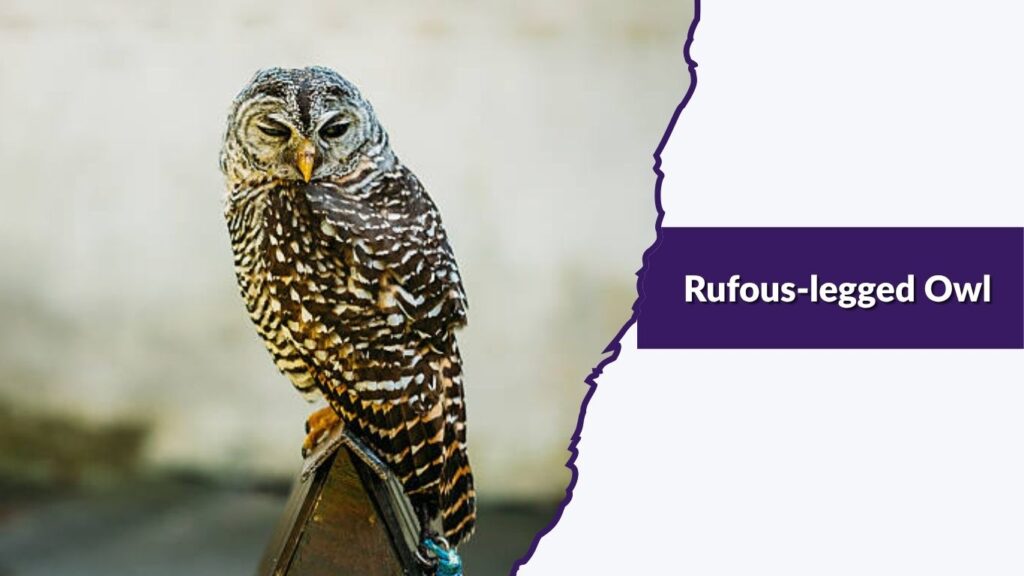
The Rufous-legged Owl is a medium-sized forest owl of southern South America. It has a rounded head, dark eyes, barred plumage, and warm rufous or cinnamon tones on the legs and lower body. This owl is mainly nocturnal and is strongly linked with humid native forests in Chile and Argentina.
Identification
- Medium-sized owl with a rounded head
- No visible ear tufts
- Dark brown eyes
- Grey-brown to dark brown upperparts
- Fine white barring on the back
- Heavily barred whitish and brown underparts
- Cinnamon or rufous tones on thighs and belly
- Barred tail with dark and ochre bands
- Usually around 38 cm long
Habitat and Range
The Rufous-legged Owl lives mainly in humid forests and sometimes forest-edge habitats. In Argentina, it is associated with the Andean-Patagonian forest zone, while in Chile it ranges from central-southern areas toward Patagonia and Tierra del Fuego. It is considered a forest specialist, especially in mature native forest and secondary forest formations.
Diet and Hunting Behavior
This owl hunts mostly at night with silent flight. It may rest during the day close to tree trunks, where its barred plumage helps it blend into bark and branches. Its diet includes insects, arachnids, frogs, small mammals, rodents, birds, and reptiles. One Chilean pellet study found arthropods most frequent by occurrence, while mammals contributed the most biomass.
Nesting and Breeding
The Rufous-legged Owl is believed to nest mainly in tree cavities, although its breeding details are not as well known as those of many common owls. Mature forest is important because it provides roosting cover, hunting areas, and natural holes for nesting. Habitat change, logging, and wildfire disturbance can affect local food availability and nesting conditions.
14. Fulvous Owl
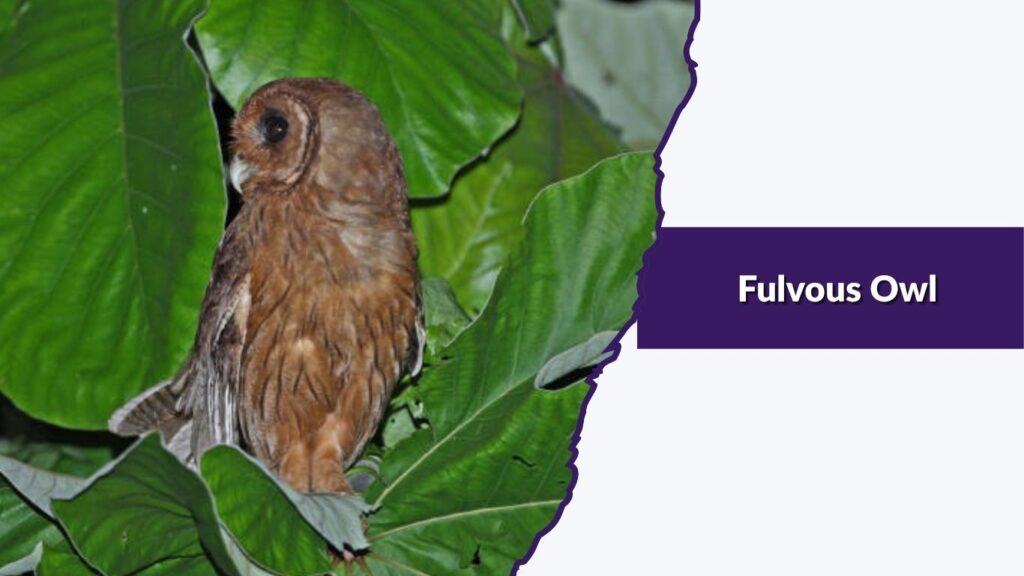
The Fulvous Owl is a medium-sized forest owl of the Central American highlands. It is also known as the Guatemala Barred Owl and is closely related to the Barred Owl. This owl prefers cool, moist mountain forests, especially cloud forest, pine-oak forest, and high-elevation evergreen woodland.
Identification
- Medium-sized owl with a rounded head
- No visible ear tufts
- Large dark eyes
- Warm dark brown or reddish-brown upperparts
- Lighter underparts with dark barring
- Pale brownish or ochre facial disc
- Yellowish bill and cere
- Feathered legs down to the toes
- Similar to Barred Owl but smaller and warmer in color
Habitat and Range
The Fulvous Owl is found in the highlands of southern Mexico, Guatemala, El Salvador, and Honduras. In Guatemala, it lives mainly in cloud forests above 1,800 meters, but it can also occur in high-elevation pine-oak and conifer forests. It is a resident owl and does not make long migrations.
Diet and Hunting Behavior
The Fulvous Owl is nocturnal and usually hunts from a perch. Its diet is not fully studied, but it likely eats rodents, large insects, small birds, frogs, and lizards. Like other Strix owls, it waits quietly, listens for prey, then drops down with silent flight.
Nesting and Breeding
Breeding details are still poorly known. The Fulvous Owl is believed to nest in tree cavities, and young birds have been observed in May. The clutch may contain two to five eggs, though two or three are more typical. Mature cloud forest is important because it provides nesting holes, roosting cover, and hunting areas.
15. Great Grey Owl
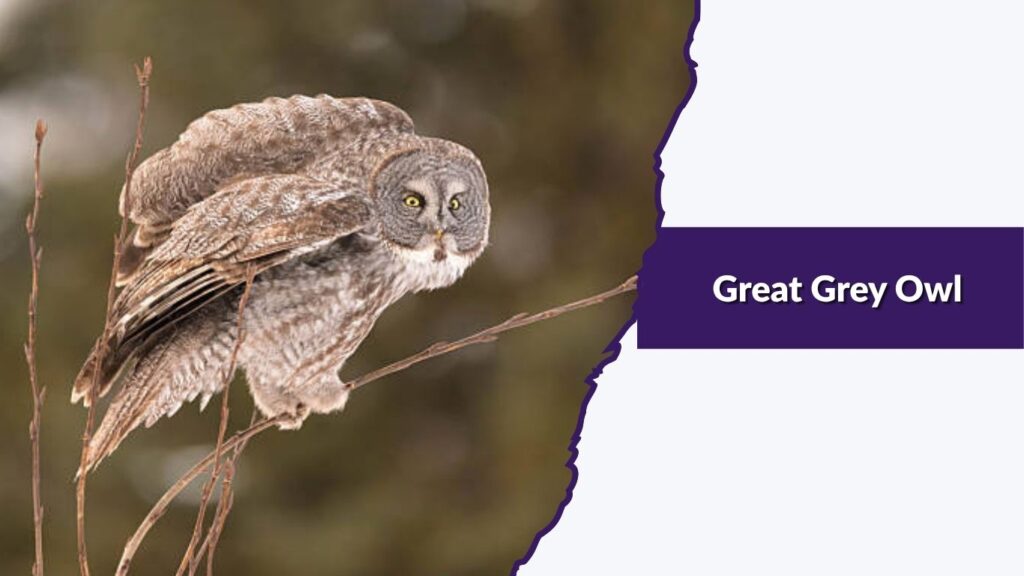
The Great Grey Owl is one of the tallest owls in the world, known for its huge rounded head, broad facial disc, yellow eyes, and soft grey plumage. Despite its large size, much of its bulk comes from feathers. It lives mainly in northern forests and hunts in open meadows, bogs, clearings, and forest edges.
Identification
- Very large owl with a huge rounded head
- No visible ear tufts
- Bright yellow eyes
- Large circular facial disc
- Grey, white, and brown streaked plumage
- Pale throat marks with a dark center
- Broad wings and long tail
- Fluffy body that looks heavier than it is
- Usually around 61–84 cm long
Habitat and Range
The Great Grey Owl is found across the Northern Hemisphere, especially in boreal forests of North America, Europe, and Asia. It prefers coniferous or mixed forests close to open hunting areas such as meadows, bogs, muskegs, and forest clearings. In some years, it may move farther south or to lower elevations when prey becomes scarce.
Diet and Hunting Behavior
This owl feeds mostly on small mammals, especially voles, mice, and shrews. It hunts from a perch, listening carefully for prey moving under grass or snow. When it detects movement, it drops down quickly and can break through snow to catch hidden prey. It is most active at night, dusk, and dawn, but may also hunt during daylight in winter or while feeding young.
Nesting and Breeding
The Great Grey Owl usually does not build its own nest. It may use old nests made by hawks, ravens, or other large birds, and it can also nest on broken tree tops or natural platforms. Large forest trees and nearby open hunting grounds are important for successful breeding. Females are usually larger than males, which is common among many owl species.
FAQs
Are wood owls the same as forest owls?
Wood owls are usually forest-loving owls from the Strix group, but the term can be used loosely. Many wood owls have rounded heads, dark eyes, no ear tufts, and strong ties to woodland habitats. However, not every forest owl is officially called a wood owl.
What do wood owls usually eat?
Wood owls mostly eat small mammals, birds, reptiles, amphibians, and large insects. Their exact diet depends on habitat and range. Species living near farms may catch rodents, while forest species may hunt squirrels, bats, frogs, beetles, lizards, and small birds.
Are wood owls active during the day?
Most wood owls are mainly nocturnal, meaning they hunt at night. Some may call, move, or hunt at dusk and dawn. A few species can be seen during daytime, especially if disturbed, feeding young, or hunting in low-light forest conditions.
Where do wood owls build their nests?
Many wood owls nest in natural tree cavities, broken trunks, old stick nests, or sheltered forest sites. They usually do not build detailed nests like songbirds. Mature forests are important because old trees often provide safe holes and hidden nesting spaces.
Are wood owls dangerous to humans?
Wood owls are not normally dangerous to humans. They avoid people and prefer quiet roosting areas. However, some species may defend their nest strongly during breeding season. It is best to observe owls from a distance and avoid disturbing nesting sites.