
Barn owls live across six continents, including North America, South America, Europe, Africa, Asia, and Australia. These distinctive birds prefer open grasslands, agricultural fields, meadows, and countryside where small mammals are plentiful. Although they are named after barns, they also inhabit hollow trees, cliffs, and abandoned buildings. Their geographical range depends on climate, food availability, and suitable nesting locations. Understanding where barn owls live reveals how these remarkable nocturnal hunters survive in different environments, from warm coastal regions to temperate farmlands and semi-arid landscapes around the world.
Where Do Barn Owls Live in the World?
Barn owls are among the most widely distributed birds of prey. They occur naturally across much of the world, including tropical, subtropical, and temperate regions. However, their populations are unevenly distributed because suitable habitat and food availability vary between locations.
Modern bird classifications recognize three major barn owl species: the American barn owl (Tyto furcata), Western barn owl (Tyto alba), and Eastern barn owl (Tyto javanica). Together, these birds inhabit most continents except Antarctica.
Worldwide Distribution of Barn Owls
Barn owls occur across several geographical regions, including:
- North America: Common in suitable parts of the United States, Mexico, and southern Canada.
- South America: Found across many open landscapes, from tropical lowlands to temperate grasslands.
- Europe: Widespread in western and southern Europe, including the United Kingdom.
- Africa: Present across extensive areas of open grassland, farmland, and savanna.
- Asia: Inhabit many regions, especially agricultural landscapes and warmer lowlands.
- Australia: Occupy open countryside, farmland, and lightly wooded environments.
Despite their extensive distribution, barn owls are generally uncommon in extremely cold polar regions, dense forests, and areas with prolonged deep snow.
Where Do Barn Owls Live in the United States?
American barn owls inhabit much of the United States, particularly southern and coastal regions. They are found in states such as California, Texas, Florida, Arizona, and many other areas containing open hunting grounds.
Their populations are generally more scattered in northern states, where harsh winters and habitat limitations can reduce their numbers.
Barn Owls in Western United States
Western states provide several suitable environments for barn owls. California is particularly well known for its barn owl populations, which inhabit agricultural valleys, grasslands, ranches, and suburban edges.
In Arizona, Utah, and neighboring states, barn owls also occupy open desert environments, provided they have access to small mammals and protected nesting sites.
Barn Owls in Eastern United States
Eastern barn owl populations are associated with open farmland, coastal grasslands, marshes, and agricultural landscapes.
They occur in southeastern states such as Florida and Georgia, while populations in some northeastern and Midwestern states are smaller or more localized. Habitat loss has contributed to declines in several of these areas.
Where Do Barn Owls Live in the UK?
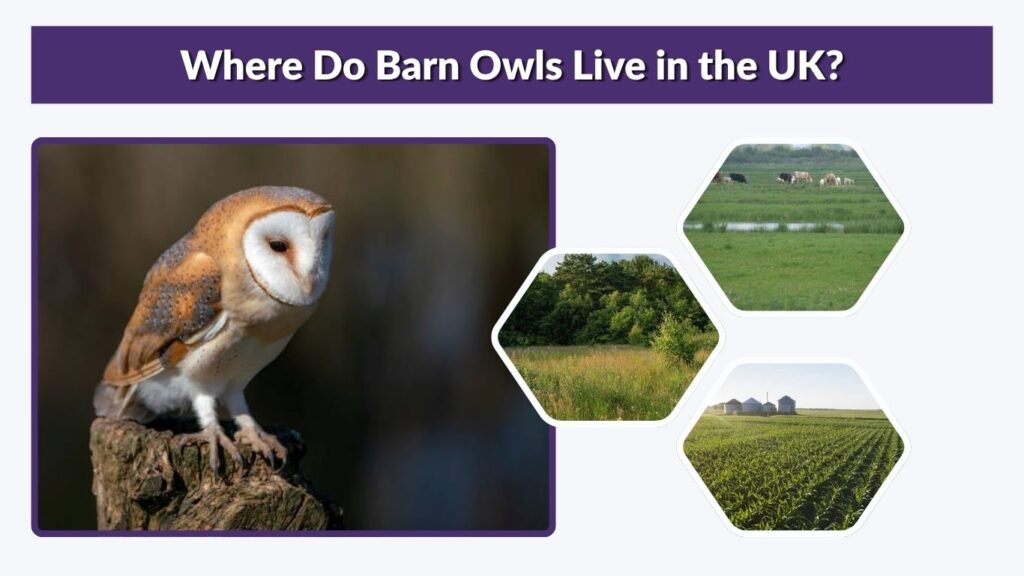
Barn owls are widely distributed throughout much of England, Wales, and suitable parts of Scotland. They are particularly associated with lowland farmland, rough grasslands, and countryside containing traditional agricultural buildings.
Eastern England, including East Anglia, Lincolnshire, and Yorkshire, supports important barn owl populations.
In Scotland, barn owls are less widespread in mountainous areas and regions experiencing severe winter conditions. Their distribution in Ireland is more limited, with important breeding areas in the southwest.
British barn owls often remain within familiar home ranges throughout the year, using established nesting and roosting sites.
Where Do Barn Owls Live in Canada?
Barn owls are relatively rare in Canada because much of the country experiences long, cold winters.
Their breeding range is concentrated in southern British Columbia and historically in extreme southern Ontario. These locations provide relatively mild climates, agricultural fields, and suitable nesting structures.
In Ontario, barn owls are endangered, and breeding records are exceptionally scarce. Habitat loss, winter weather, and changes in agricultural practices have contributed to their decline.
Where Do Barn Owls Live in Australia?
The Eastern barn owl inhabits parts of Australia, particularly open landscapes in the eastern regions.
These birds occupy agricultural fields, open woodland, dry grasslands, heathland, and lightly wooded countryside. Their distribution depends strongly on small-mammal populations and the availability of sheltered roosting locations.
During daylight, Australian barn owls may rest inside hollow logs, caves, or concealed branches. They usually emerge after dark to hunt rats, mice, and other small animals.
Where Do Barn Owls Live in Their Natural Habitat?
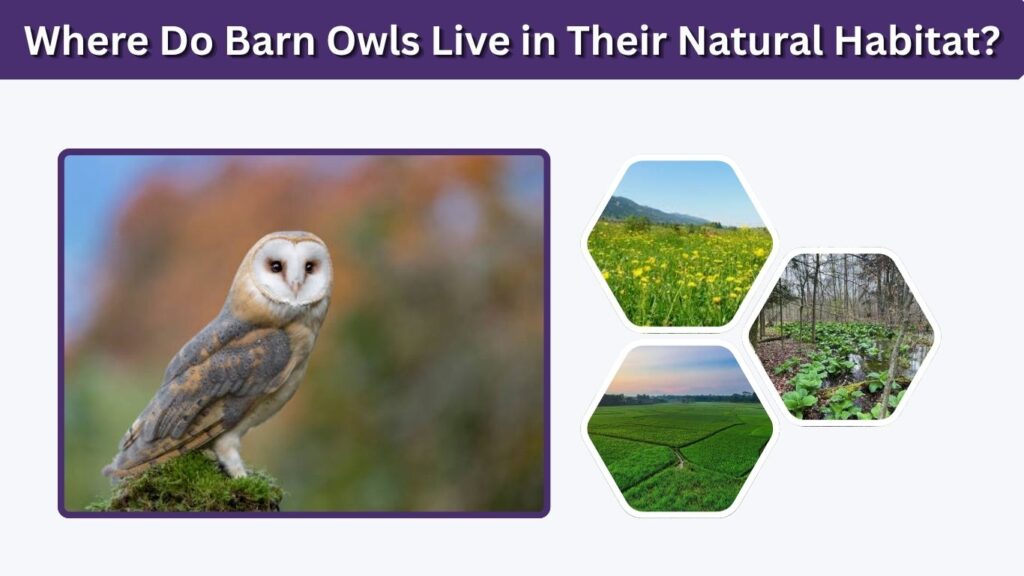
Barn owls prefer landscapes that combine open hunting areas with protected places for shelter. They are adaptable and may occupy both natural and human-modified environments.
Grasslands and Meadows
Grasslands provide excellent hunting opportunities because their vegetation supports mice, voles, and other small mammals.
Barn owls frequently fly low over these areas while using their exceptional hearing to locate prey hidden among grasses.
Farmland and Agricultural Areas
Agricultural landscapes are particularly important for barn owls. Field margins, grassy ditches, and uncultivated patches provide hunting grounds, while farm buildings may supply nesting opportunities.
Traditional farmland containing a mixture of grassland and sheltered structures can support breeding pairs.
Wetlands and Open Woodlands
Barn owls also inhabit marsh edges, riverbanks, and open woodland boundaries. They generally avoid extensive dense forests but can use scattered trees and woodland edges for shelter.
Where Do Barn Owls Live and Nest?
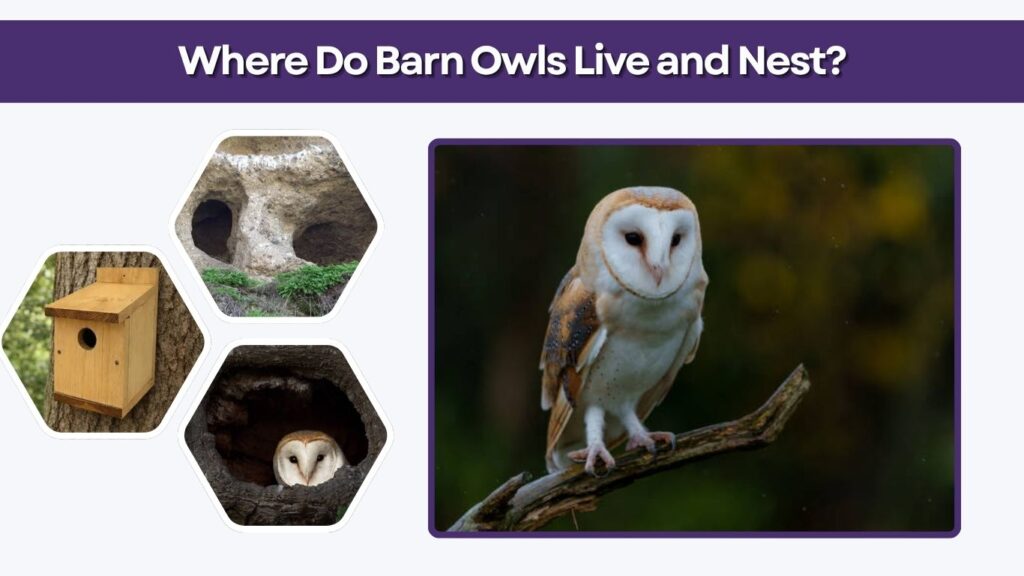
Barn owls nest in sheltered cavities rather than building traditional nests from sticks and branches. Their breeding locations must provide protection from predators, wind, and heavy rainfall.
Natural Nesting Sites
Natural barn owl nesting locations include hollow trees, rock cavities, cliff crevices, and occasionally caves.
These places provide protected surfaces where females can lay eggs and raise young. Suitable nesting sites are usually located near productive hunting grounds.
Barns, Buildings, and Nest Boxes
Barn owls also use old farm buildings, church towers, abandoned structures, and specially designed nest boxes.
In many agricultural regions, nesting boxes help compensate for the disappearance of hollow trees and traditional barns. However, the surrounding habitat must still contain sufficient food.
Where Do Barn Owls Live During the Day?
Barn owls are primarily nocturnal, meaning they spend much of the day resting in quiet, sheltered locations. Their daytime resting places are called roosts.
During daylight, barn owls commonly remain inside hollow trees, barns, roof spaces, caves, or concealed vegetation.
These locations protect them from unfavorable weather and reduce disturbance. Barn owls may use several roosting locations within their home range, and some return to familiar sites repeatedly.
Although they usually hunt at night, barn owls sometimes become active during daylight, particularly when feeding chicks or facing food shortages.
Where Do Barn Owls Live in the Winter?
Most adult barn owls remain within their established home ranges during winter rather than undertaking regular long-distance migrations.
They may switch between roosting sites, choosing warmer and more sheltered locations during cold weather.
Winter conditions can be particularly challenging because heavy snow, prolonged rainfall, and freezing temperatures reduce hunting opportunities.
Deep snow makes small mammals difficult to locate, while wet weather interferes with efficient hunting. Consequently, barn owl survival during winter depends heavily on reliable prey populations and suitable shelter.
Young barn owls may disperse considerable distances after leaving their nesting areas.
Why Do Barn Owls Choose Certain Places to Live?
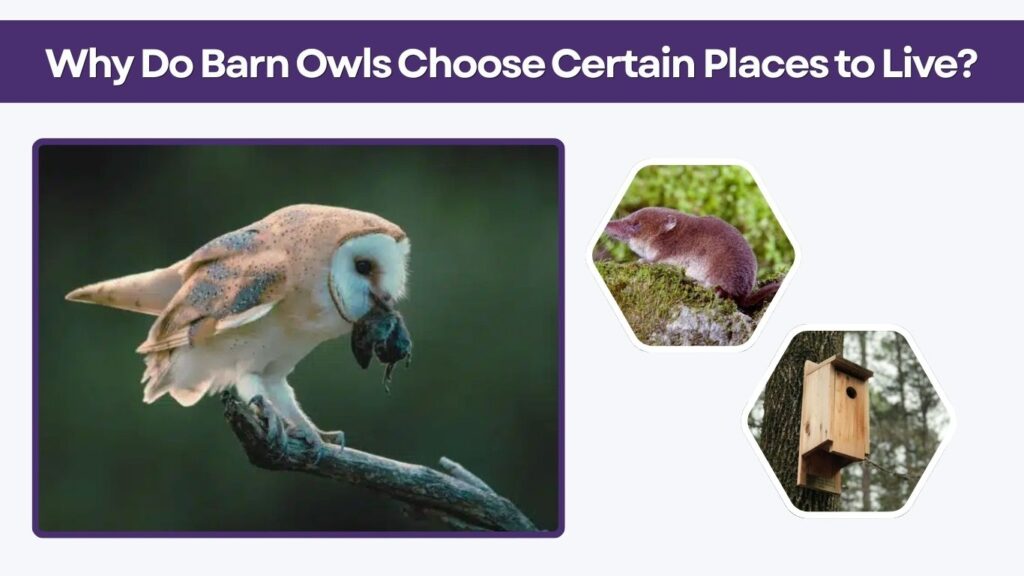
Barn owls select habitats primarily according to food availability, nesting opportunities, and environmental conditions.
Open grasslands with abundant rodents are especially attractive because these birds depend heavily on small mammals.
A landscape may offer excellent nesting cavities but still be unsuitable if nearby hunting areas lack prey. Similarly, productive grasslands without safe nesting locations may not support successful breeding.
Habitat protection is therefore essential. Preserving rough grasslands, mature trees, and safe nesting structures helps maintain local barn owl populations.
FAQs
1. Where Do Most Barn Owls Live?
Barn owls occur across much of the world, especially in open grasslands, farmlands, and warmer temperate regions. Their distribution is particularly extensive across the Americas, Europe, Africa, Asia, and Australia.
2. Do Barn Owls Live in Hawaii?
Yes. Barn owls were introduced to Hawaii in the 1950s and now occur throughout the Hawaiian Islands. They are not native and can threaten native seabirds through predation.
3. Do Barn Owls Live in Cities?
Barn owls sometimes inhabit suburban and urban environments, particularly where abandoned buildings, open fields, parks, or grassland provide nesting sites and hunting opportunities.
4. Do Barn Owls Stay in One Place Their Whole Lives?
Adult barn owls often remain within familiar home ranges and reuse suitable nesting or roosting sites. However, young birds may disperse long distances when establishing their own home ranges.
5. Where Is the Best Place to See a Barn Owl?
Open countryside, grasslands, and agricultural areas are excellent places to observe barn owls. Watching from a respectful distance around dusk or dawn offers a good chance of seeing them hunting over fields.