
Barn owl habitat includes open grasslands, farmlands, meadows, wetlands, and rural landscapes where these remarkable birds can find food and shelter. Known for their heart-shaped faces and silent flight, barn owls prefer environments with abundant small mammals and safe nesting locations. They inhabit many regions worldwide, from agricultural countryside to semi-arid landscapes. Understanding the natural habitat of barn owls helps explain their hunting behavior, nesting preferences, and survival needs. Protecting these environments is essential for maintaining healthy barn owl populations and supporting wildlife conservation efforts.
What Is the Natural Habitat of a Barn Owl?
The natural habitat of a barn owl primarily consists of open landscapes with suitable hunting grounds and sheltered nesting places. These birds prefer areas where they can fly close to the ground while searching for small mammals. Unlike many woodland owls, barn owls generally avoid dense forests because thick vegetation limits their preferred hunting behavior.
Common Characteristics of Barn Owl Habitat
A typical barn owl habitat contains open vegetation, abundant prey, and accessible nesting cavities. Rough grasslands are particularly important because they support populations of voles, mice, and shrews.
Barn owls also use scattered trees, hedgerows, agricultural buildings, and rocky cavities for shelter. The combination of productive hunting areas and protected nesting locations makes a landscape suitable for breeding and year-round survival.
Types of Habitats Where Barn Owls Live
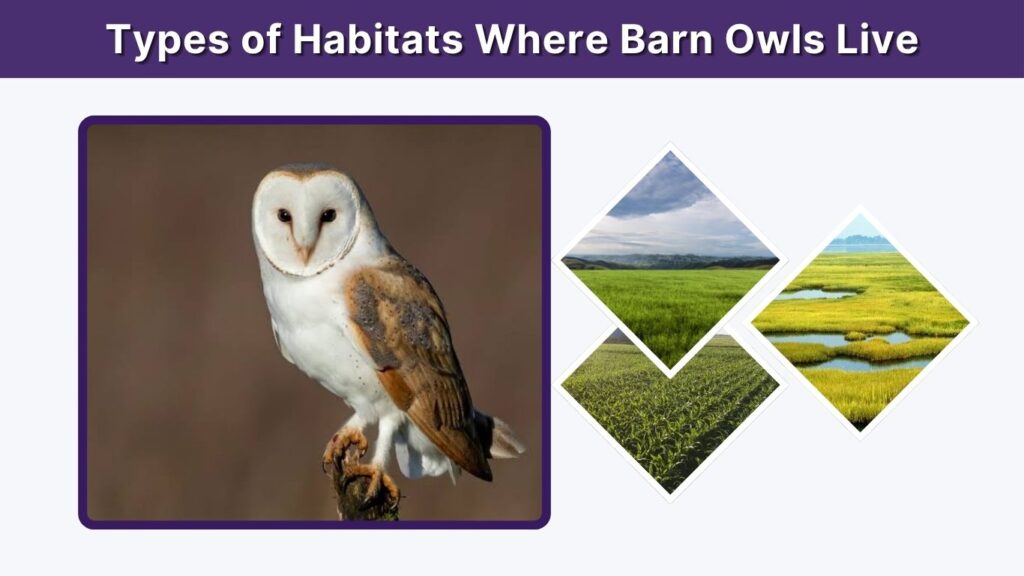
Barn owls occupy several habitat types depending on regional climate, vegetation, and prey availability. Although they are adaptable birds, open or partially open environments are generally more suitable than heavily forested landscapes.
1. Grasslands and Open Meadows
Grasslands are among the best habitats for barn owls. Tall grasses provide shelter and breeding conditions for small mammals, creating reliable hunting opportunities.
Barn owls frequently glide over meadows during the evening and early morning, listening for prey moving beneath vegetation.
2. Agricultural Fields and Farmlands
Farmlands provide both feeding and nesting opportunities. Barn owls hunt along field boundaries, grassy margins, ditches, and uncultivated strips.
Traditional agricultural landscapes with old buildings and rough grass patches can be particularly valuable. However, intensive farming may reduce suitable habitat.
3. Wetlands and Marshy Areas
Wetlands, marsh edges, and riverbanks can support barn owls when they contain open vegetation and small mammals.
These habitats provide productive hunting grounds, especially along grassy banks and areas bordering agricultural land.
4. Semi-Arid Landscapes and Shrublands
In some regions, barn owls inhabit dry grasslands, open shrublands, and semi-arid environments. They survive where prey remains available and suitable nesting cavities exist.
They can tolerate relatively dry conditions but generally avoid landscapes lacking sufficient food and shelter.
Where Do Barn Owls Live Around the World?
Barn owls are among the most geographically widespread groups of owls. They occur across the Americas, Europe, Africa, Asia, and Australia, although their distribution varies with climate and habitat availability.
Modern classifications recognize American, Western, and Eastern barn owls as separate species. Their habitats are broadly similar, but their geographical ranges differ.
American Barn Owl Habitat
The American barn owl (Tyto furcata) inhabits grasslands, agricultural landscapes, marshes, and open countryside throughout suitable parts of the Americas.
In the United States, it occurs in places such as California and other regions with productive hunting grounds. Canadian breeding populations are much more restricted, mainly occurring in southern areas.
Western and Eastern Barn Owl Habitat
The Western barn owl (Tyto alba) lives across Europe, Africa, and parts of western Asia. In Britain, it commonly occupies lowland farmland and open grassland.
The Eastern barn owl (Tyto javanica) occurs across parts of southern and southeastern Asia and Australasia, using open agricultural and grassland habitats.
Barn Owl Nesting Habitat and Roosting Sites
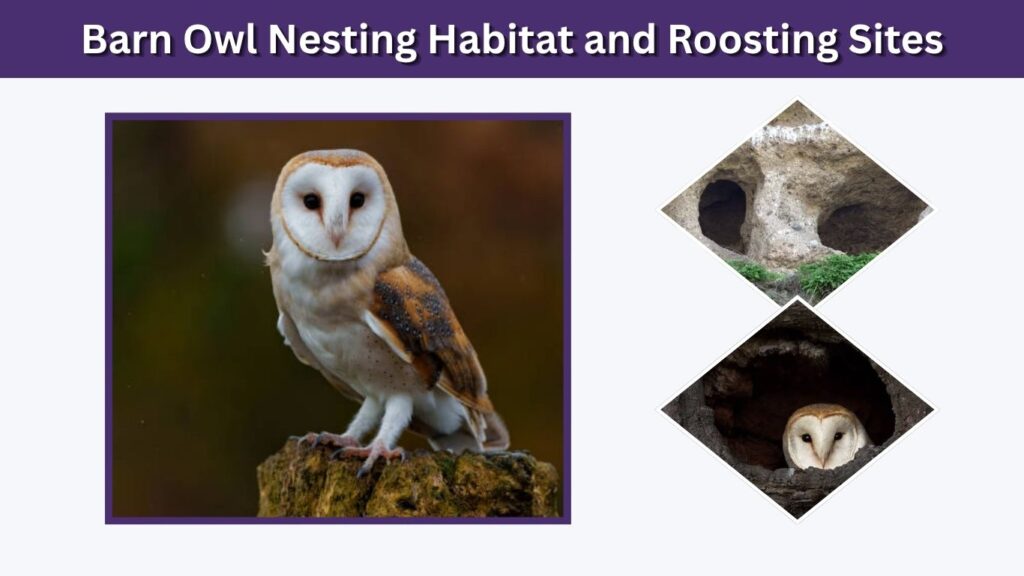
Barn owls require sheltered places for breeding, raising chicks, and resting during daylight. Their nesting habitat often differs from their hunting habitat, although the two must be close enough for efficient feeding.
These birds generally use existing cavities rather than constructing elaborate nests from branches and twigs.
Natural Nesting Locations
In natural environments, barn owls nest inside hollow trees, rock crevices, cliff cavities, and other protected spaces.
Large trees near grasslands are especially useful because they offer shelter while keeping hunting grounds accessible. Suitable cavities must provide enough room for adults and developing chicks.
Barns, Buildings, and Nest Boxes
Barn owls frequently occupy old barns, abandoned buildings, farm structures, and specially designed nest boxes.
These locations provide protection from weather and disturbance. Well-positioned nest boxes can replace some lost natural nesting opportunities, particularly in agricultural landscapes where mature hollow trees are scarce.
Barn Owl Hunting Habitat and Diet
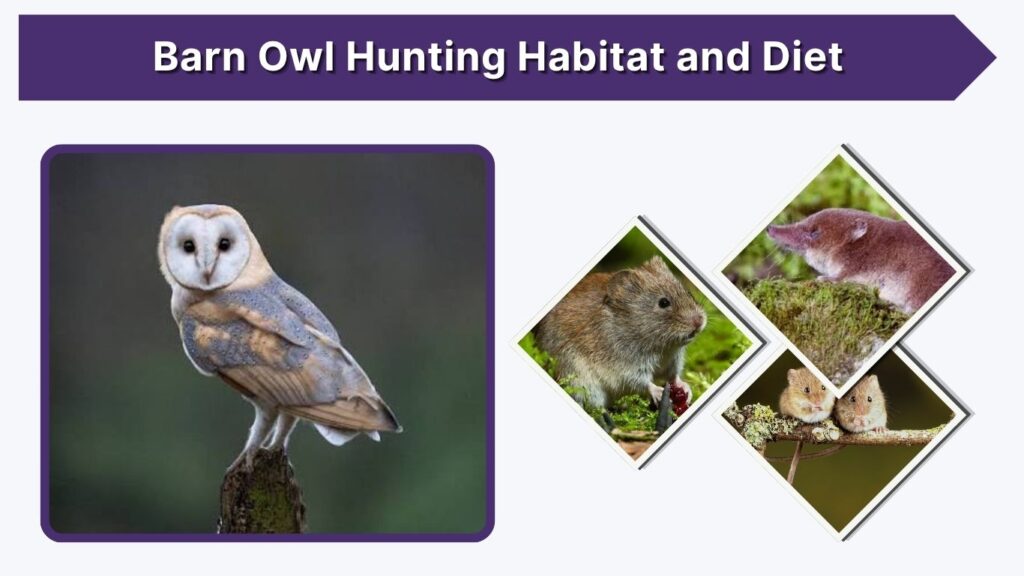
The hunting habitat of barn owls consists mainly of open areas that support abundant small mammals. Their exceptional hearing helps them detect prey even when vegetation partially hides it.
They usually hunt after sunset, around dawn, or during the night. However, daylight hunting also occurs, particularly when adults are feeding hungry chicks or food is difficult to obtain.
What Do Barn Owls Eat in Their Habitat?
Barn owls primarily feed on voles, mice, shrews, and rats. Their diet depends on which prey animals are locally abundant.
Rough grasslands are especially valuable because they provide cover and food for rodents. Barn owls often fly slowly and silently over these areas before dropping onto prey detected through sound.
This hunting behavior helps regulate small-mammal populations within agricultural and natural ecosystems.
What Are the Ideal Barn Owl Habitat Requirements?
A suitable barn owl habitat must provide dependable food, protection from disturbance, and safe breeding opportunities. Simply installing a nesting box is not enough when the surrounding landscape lacks suitable hunting grounds.
Important barn owl habitat requirements include:
- Open hunting grounds: Grasslands, meadows, and field margins where owls can hunt efficiently.
- Abundant small mammals: Healthy populations of voles, mice, and other suitable prey.
- Protected nesting sites: Hollow trees, sheltered buildings, and appropriately positioned nest boxes.
- Rough grass vegetation: Tall, tussocky grasses with a layer of dead vegetation that supports small mammals.
- Reduced human disturbance: Quiet nesting locations away from frequent disruption.
- Limited road hazards: Hunting and nesting areas situated away from busy, high-speed roads.
Research summarized by the Barn Owl Trust suggests that, in British agricultural landscapes, approximately 14–47 hectares of rough grassland within 2 km of nesting sites may be needed, depending on the farming landscape. Requirements vary by region and habitat quality.
Barn Owl Habitat Loss and Major Threats
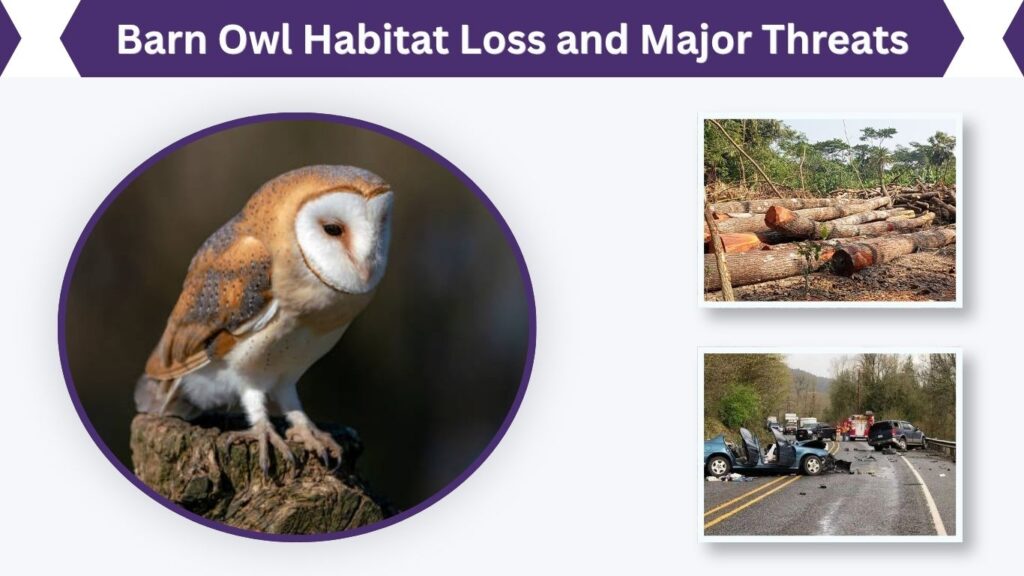
Barn owl habitat loss is a significant conservation concern in many regions. Agricultural intensification, urban development, and changes in land management can reduce the availability of hunting and nesting sites.
When rough grasslands are converted into intensively managed fields, populations of small mammals may decline. Removing old trees or renovating traditional barns without retaining nesting spaces can also eliminate important breeding locations.
Additional threats include road collisions, secondary poisoning from rodenticides, and prolonged unfavorable weather. These pressures can affect survival even where some suitable habitat remains.
How Can We Protect Barn Owl Habitats?
Protecting barn owl habitat requires maintaining both productive hunting grounds and safe nesting opportunities. Landowners can support local populations by preserving rough grassland, retaining mature trees, and allowing grassy field margins to develop naturally.
Installing properly designed nest boxes in suitable locations can also help. However, boxes should not be placed near dangerous roads or in landscapes without sufficient prey.
Reducing rodenticide use and conserving existing nesting sites further improves survival opportunities. Effective habitat management benefits barn owls while supporting other grassland wildlife.
FAQs
1. What Is the Typical Habitat of a Barn Owl?
The typical barn owl habitat includes open grasslands, meadows, agricultural fields, and rural landscapes. These areas provide small mammals for hunting and suitable locations for nesting.
2. Do Barn Owls Live in Forests?
Barn owls generally avoid dense forests, but they may use woodland edges, scattered trees, and open wooded habitats. They prefer landscapes with enough open space for hunting.
3. What Climate Do Barn Owls Prefer?
Barn owls occupy tropical, subtropical, and temperate climates. They can survive in various temperatures, but prolonged snow cover and severe weather can make hunting difficult.
4. Where Do Barn Owls Build Their Nests?
Barn owls typically nest in hollow trees, barns, abandoned buildings, rock cavities, and nest boxes. They use existing sheltered spaces rather than building traditional stick nests.
5. Why Is Grassland Important for Barn Owls?
Grassland supports voles, mice, and other small mammals that form the majority of a barn owl’s diet. Rough grasslands therefore provide important hunting opportunities and help support successful breeding.