Snowy owls are powerful Arctic predators that primarily eat small mammals, especially lemmings and voles. However, their diet changes with prey availability, season, and location. These adaptable hunters may also capture rabbits, squirrels, ducks, fish, and other birds. They usually swallow small prey whole but tear larger animals into manageable pieces. Below are ten important foods snowy owls eat, along with details about their hunting habits, feeding frequency, and natural predators.
What Do Snowy Owls Eat?
Snowy owls are carnivores, meaning they eat animals rather than plants. Lemmings form a major part of their diet during the Arctic breeding season, but the owls are opportunistic hunters. When rodents become scarce, they switch to birds and larger mammals. Their varied diet helps them survive in tundra, grasslands, coastal areas, and agricultural fields.
10 Foods Snowy Owls Eat in the Wild
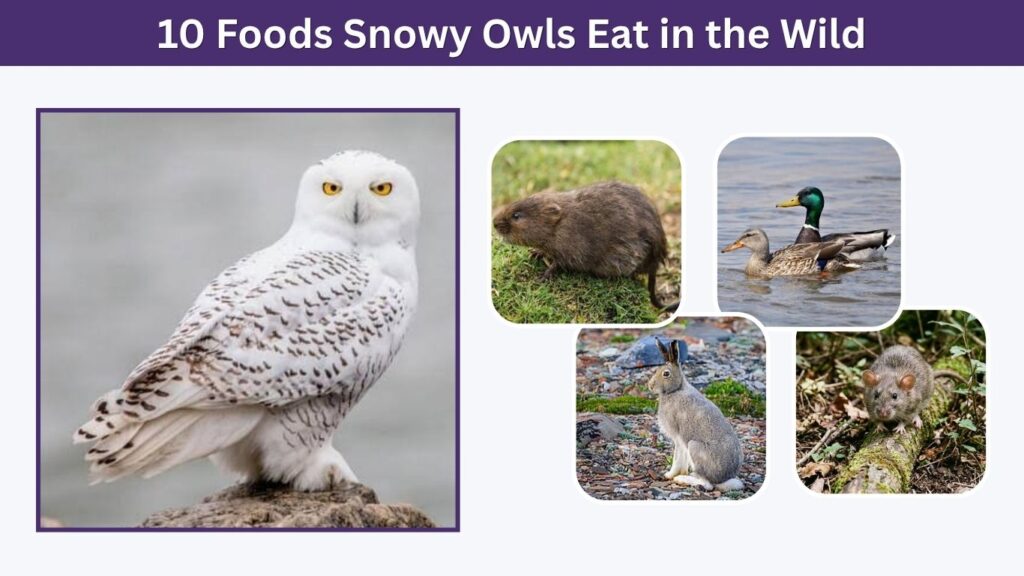
Snowy owls are adaptable carnivores that hunt whatever suitable prey is available. Lemmings and other small rodents form most of their diet, especially in the Arctic tundra. However, they also capture rabbits, ground squirrels, ducks, shorebirds, and fish. Their diet changes according to the season, habitat, prey population, and the owl’s individual hunting ability.
1. Lemmings
Lemmings are among the snowy owl’s most important foods. These small rodents are plentiful across parts of the Arctic tundra and provide the protein and fat necessary for survival and reproduction. A snowy owl may consume several lemmings in one day.
Lemming numbers naturally rise and fall. During years when they are abundant, snowy owls may lay larger clutches of eggs and successfully raise more chicks. When lemming populations decline, fewer owls breed, and some travel farther south in search of food.
2. Voles
Voles are small, thick-bodied rodents that resemble field mice. Snowy owls frequently eat them during winter migrations and whenever lemmings are unavailable. Voles inhabit tundra, grasslands, marshes, farms, and open fields.
The owl often watches for movement from a low perch or while sitting directly on the ground. After locating a vole, it flies low over the landscape and seizes the animal with its powerful talons.
3. Mice
Snowy owls eat deer mice, house mice, and other small mouse species. Mice can become particularly important when these owls move south into farmland, airports, coastal dunes, or open countryside during winter.
Although one mouse provides less energy than a rabbit or large bird, mice may be easy to capture when they are abundant. Snowy owls can detect subtle movements and sounds, even when prey is partly hidden by grass or snow.
4. Arctic Ground Squirrels
Arctic ground squirrels are larger and more substantial meals than lemmings or mice. They live in open tundra and meadow habitats where snowy owls can spot them from a distance.
These squirrels are mainly available during the warmer months because they hibernate through much of the Arctic winter. Adult snowy owls can capture young or smaller squirrels, while inexperienced owlets may struggle with such relatively large and defensive prey.
5. Rabbits and Arctic Hares
Snowy owls occasionally eat rabbits and Arctic hares, particularly young or smaller individuals. These mammals provide a large, energy-rich meal, but they are more challenging to overpower than rodents.
A snowy owl generally attacks with its talons and uses its strong grip to subdue the animal. Although it can kill surprisingly large prey, it does not regularly hunt fully grown hares. Smaller mammals remain easier and safer to capture.
6. Ptarmigan
Ptarmigan are medium-sized birds that live in Arctic and subarctic environments. Their seasonal camouflage helps them blend into tundra vegetation or snow, but snowy owls can still locate and capture them.
Snowy owls may target adults, chicks, or vulnerable birds resting on the ground. Ptarmigan becomes especially valuable when rodent numbers are low because one bird supplies considerably more food than a single lemming.
7. Ducks and Waterfowl
Snowy owls sometimes hunt ducks, geese, grebes, and other waterfowl. They may wait beside ponds, marshes, or coastal areas and attack birds as they rest, feed, or take flight.
Young ducks are generally easier to catch, but a strong adult snowy owl can occasionally kill a fairly large bird. Wintering owls near shorelines may regularly patrol areas where waterfowl gather in open water.
8. Shorebirds and Seabirds
Shorebirds, gulls, terns, and small seabirds may become part of a snowy owl’s diet in coastal regions. The owls can capture birds on the ground, at nesting colonies, or occasionally during flight.
Eggs and chicks may also be taken when accessible. Coastal prey is particularly useful during periods when small mammals are scarce. Some snowy owls winter near beaches, dunes, and harbors because these habitats support many potential prey species.
9. Fish
Snowy owls can eat fish, although fish are not a primary part of their diet. An owl may capture a fish near shallow water, take an injured one from the shoreline, or steal it from another bird.
Compared with specialized fishing birds, snowy owls are not particularly adapted to catching aquatic prey. Fish consumption is therefore occasional and depends on opportunity rather than being a normal daily feeding habit.
10. Insects and Other Small Animals
Large insects, small reptiles, and other accessible animals may occasionally be eaten, especially by young or hungry snowy owls. However, insects provide relatively little energy for such a large bird.
Snowy owls may also scavenge carrion when live prey is difficult to obtain. Their diet can include almost any appropriately sized animal they can safely capture, but mammals and birds remain their most important foods.
What Do Snowy Owls Eat in the Tundra?
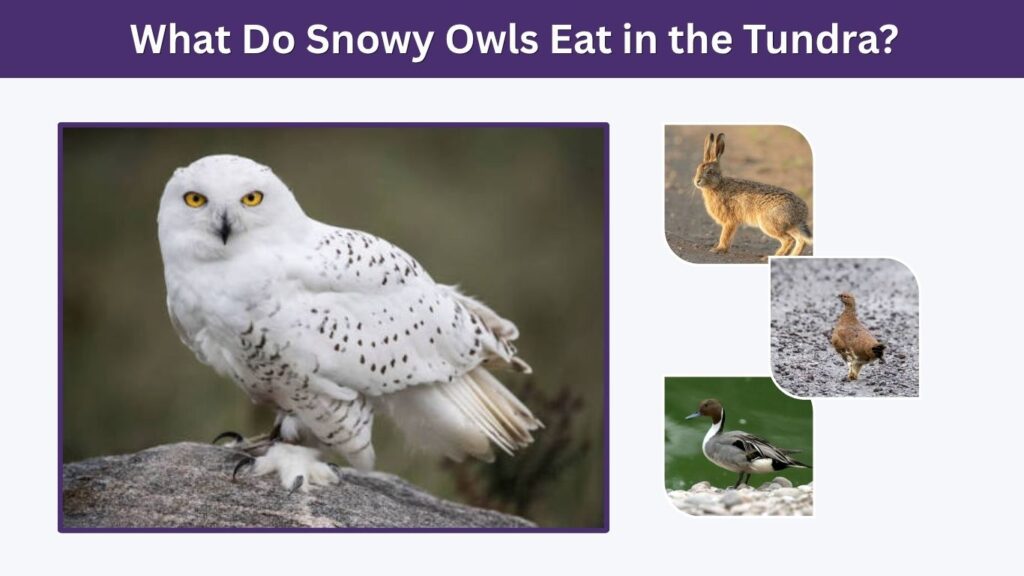
The Arctic tundra offers seasonal food supplies that can change dramatically from year to year. Snowy owls respond by moving between areas and switching prey. During good rodent years, they depend heavily on lemmings. When rodents are scarce, they hunt birds, ground squirrels, hares, and other available animals to meet their nutritional needs.
Summer Diet
During the short Arctic summer, snowy owls primarily eat lemmings, voles, and other small mammals. Ground squirrels, young hares, ptarmigan, waterfowl, and nesting shorebirds may supplement their diet.
Summer food abundance is particularly important for breeding pairs. Both parents must feed themselves while supplying growing owlets with enough meat. The male commonly brings food to the female and chicks, while the female protects the nest and divides prey among the young.
Winter Diet
In winter, some snowy owls remain in the Arctic, while others travel south. Their diet may then include mice, voles, rats, rabbits, ducks, gulls, and shorebirds. Agricultural areas, airports, marshes, and coastlines often provide the broad open spaces they prefer for hunting.
Wintering owls do not depend on a single prey species. They search for whichever suitable animals are locally abundant and relatively easy to capture.
How Do Snowy Owls Hunt and Eat?
Unlike many woodland owls, snowy owls often hunt across open landscapes during daylight. Arctic summers provide nearly continuous daylight, so these owls are comfortable hunting both day and night. Their white plumage, excellent vision, sensitive hearing, silent flight, sharp talons, and strong feet make them highly effective predators.
Hunting From a Perch
A snowy owl may sit on a low mound, fence post, rock, building, or other raised position while scanning the ground. Once it detects prey, it flies rapidly toward the animal and grabs it with its talons.
These owls also hunt from the ground or fly low over open habitat. Their broad wings allow controlled flight, while specialized feather edges help reduce sound during an attack.
Eating Small and Large Prey
Small animals such as lemmings, mice, and voles are usually swallowed whole. Larger animals are torn apart with the beak and eaten in smaller pieces. A parent may remove difficult parts before giving food to young owlets.
Snowy owls cannot digest all the bones, fur, teeth, and feathers they swallow. These materials are compressed into pellets and later coughed up. Scientists examine the pellets to learn what local snowy owls have eaten.
How Often Do Snowy Owls Eat?
The amount a snowy owl eats depends on its size, activity, weather, breeding status, and prey availability. An adult may eat several small rodents per day. A breeding pair raising chicks must capture far more food because each growing owlet requires frequent meals.
Snowy owls sometimes store extra prey near a nest or hunting area. This food cache helps the family during storms or temporary periods when hunting becomes difficult.
What Animals Eat Snowy Owls?
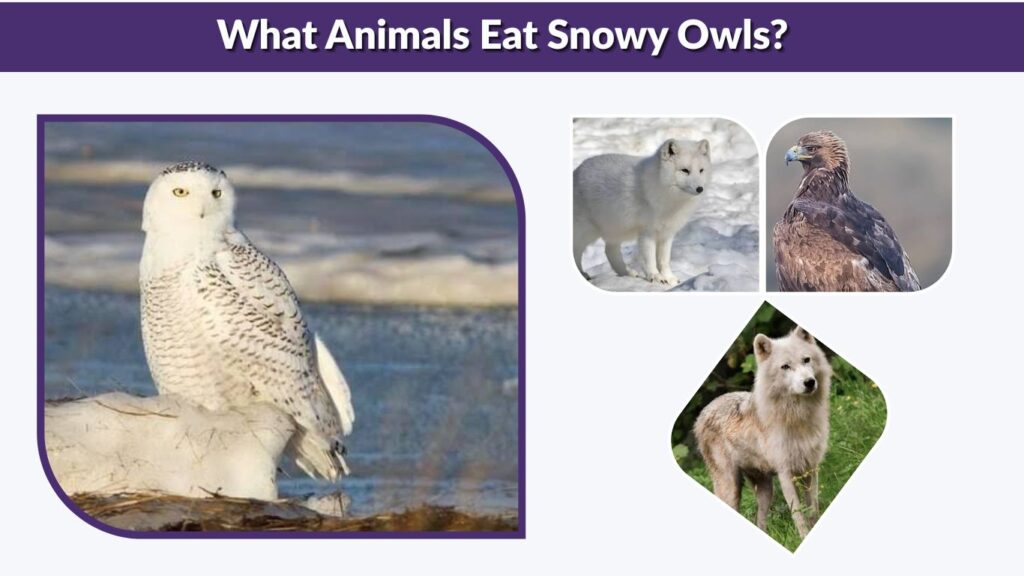
Healthy adult snowy owls have few regular predators because they are large, powerful, and well armed. Eggs, nestlings, and injured adults are much more vulnerable. Predation usually occurs around ground nests, where approaching mammals or birds can threaten young owls before they are able to fly.
Arctic Foxes
Arctic foxes may eat snowy owl eggs or chicks if they reach an unprotected nest. Adult owls aggressively defend their nesting area by calling, diving, and striking intruders. Snowy owls do not normally eat adult Arctic foxes, although they might attack a very small fox cub in unusual circumstances.
Wolves and Other Mammals
Arctic wolves are not regular snowy owl predators, but they could capture an injured, grounded, or inexperienced owl. Other foxes and opportunistic mammals may raid nests when the adults are absent.
Polar bears do not normally hunt snowy owls. An accidental encounter is possible, but owls are too small, mobile, and difficult to catch to be meaningful polar bear prey.
Eagles and Other Large Birds
Golden eagles and other powerful raptors may occasionally kill snowy owls, particularly younger or weakened individuals. Great horned owls can also compete with snowy owls in southern wintering areas and may attack them.
Gulls, jaegers, and other birds are more likely to threaten eggs or small chicks than healthy adults. Snowy owls strongly defend their nests against aerial intruders.
Do Snowy Owls Eat Plants?
Snowy owls do not normally eat grass, fruit, seeds, shrubs, or other plant material. Their digestive systems and hunting adaptations are designed for a carnivorous diet. They obtain water and many essential nutrients from the animals they consume. If plant matter appears in a pellet or stomach sample, it was probably swallowed accidentally with prey.
FAQs
Do snowy owls eat lemmings?
Yes. Lemmings are one of their most important prey animals, particularly during the Arctic breeding season. Their abundance can influence how many eggs snowy owls lay.
Do snowy owls eat rabbits?
Snowy owls can eat rabbits and hares, especially young or smaller individuals. Fully grown Arctic hares are less common prey because they are large and difficult to overpower.
Do snowy owls eat fish?
They occasionally eat fish, particularly near shallow water or coastlines. However, fish are opportunistic prey and not a major component of their usual diet.
Do snowy owls eat Arctic foxes?
Snowy owls do not normally eat adult Arctic foxes. An owl might possibly attack a very young cub, while adult Arctic foxes may raid snowy owl nests for eggs or chicks.
What is a snowy owl’s favorite food?
Lemmings are generally considered their most important food. Nevertheless, snowy owls readily switch to voles, mice, birds, rabbits, squirrels, and other prey when lemmings are scarce.