
The snowy owl (Bubo scandiacus) is one of the Arctic’s most recognizable birds, famous for its white plumage, yellow eyes, and powerful hunting skills. Unlike many owls, snowy owls regularly hunt during daylight and spend much of their lives in wide-open landscapes rather than forests. They survive freezing temperatures with exceptionally dense feathers and follow changing prey supplies across enormous distances. These 15 snowy owl facts explore their appearance, habitat, diet, hunting behavior, nesting habits, adaptations, and other fascinating features.
Snowy Owl Appearance and Size Facts
Snowy owls have several physical features that separate them from other owls. They are large, heavily feathered birds built for cold Arctic conditions, with rounded heads and powerful bodies. Their coloration also provides useful clues about age and sex because males generally become whiter as they mature, while females retain more dark markings.
1. Snowy Owls Are Among North America’s Heaviest Owls
Snowy owls have thick bodies and exceptionally dense feathers. Adults are roughly 20–28 inches long, with large individuals having wingspans approaching 5 feet.
Their insulating plumage adds considerable bulk and weight. Cornell notes that snowy owls are typically heavier than both Great Horned Owls and the taller Great Gray Owl.
2. Males and Females Look Different
Several features help distinguish the sexes:
- Adult males become increasingly white with age.
- Older males can appear almost completely white.
- Females retain dark brown or black barring.
- Females are generally larger than males.
- Young birds of both sexes have heavier dark markings.
- All snowy owls have striking yellow eyes.
The whitest adult snowy owls are males, while heavily barred adults are typically females.
3. Even Their Feet Are Covered With Feathers
Snowy owl feathers extend down their legs and over much of their feet and toes.
This dense covering acts like natural insulation, reducing heat loss when the bird stands on snow or frozen ground. The thick plumage is one of several adaptations that allow snowy owls to remain active in temperatures that would challenge many other birds.
Snowy Owl Habitat and Arctic Adaptation Facts
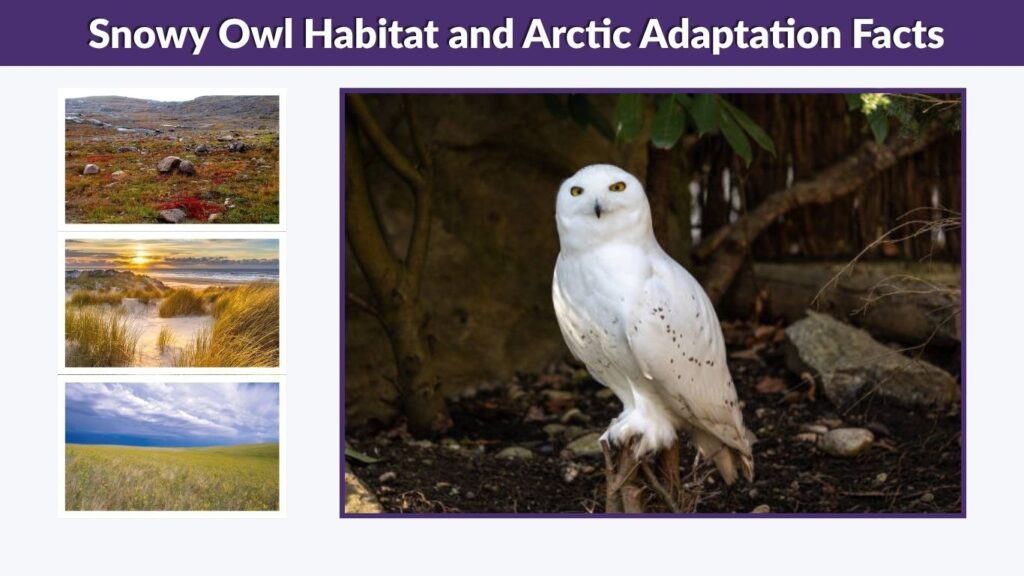
Snowy owls are birds of open country. Their breeding habitat is Arctic tundra, where trees are scarce and low vegetation provides long views across the landscape. During winter, birds traveling south often choose places that resemble tundra, such as open farmland, beaches, marshes, dunes, and even large airports.
4. Snowy Owls Breed on Arctic Tundra
Their breeding range stretches through Arctic regions of North America, Greenland, Europe, and Asia.
Instead of living deep inside forests, snowy owls prefer treeless landscapes where they can watch for prey from the ground or low elevated points.
This explains why wintering birds frequently settle in large open fields, coastal areas, and other landscapes with unobstructed views.
5. Their White Plumage Provides Excellent Camouflage
A snowy owl resting against snow can be surprisingly difficult to notice.
White plumage helps the bird blend into its Arctic surroundings, while the darker markings on females and younger owls can break up the body’s outline against rocks, vegetation, and patchy snow.
Camouflage can help both when avoiding danger and when waiting for prey.
6. Snowy Owls Have Several Cold-Weather Adaptations
Important Arctic adaptations include:
- Extremely dense body feathers
- Feather-covered legs and feet
- Large body size
- Pale camouflage
- Powerful wings
- Excellent vision
- Sensitive hearing
- Ability to hunt during daylight
Their substantial body size also helps reduce heat loss relative to smaller birds.
Snowy Owl Diet and Hunting Facts
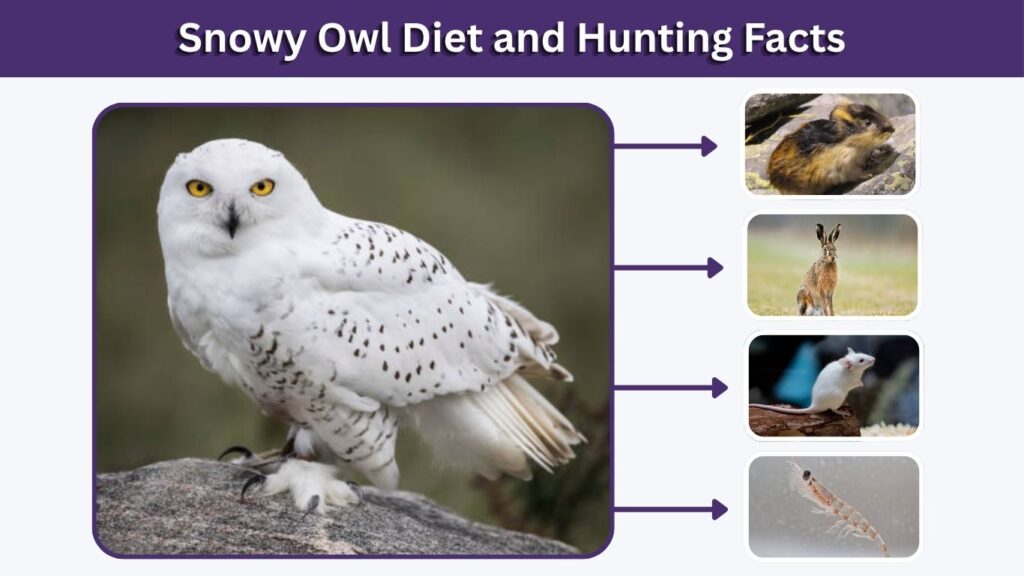
Snowy owls are formidable predators. Lemmings are especially important on Arctic breeding grounds, but these owls are capable of changing their diet when rodents become scarce. They hunt mammals and birds ranging from tiny voles to comparatively large waterfowl. Snowy owls usually watch from a perch or the ground before launching a rapid attack.
7. Lemmings Are One of Their Favorite Foods
Lemmings can dominate the diet of snowy owls during productive Arctic seasons.
When these small rodents are abundant, snowy owls may concentrate in areas containing especially high populations. The availability of lemmings can even influence where the owls breed and how many eggs a female produces.
Cornell reports that an individual snowy owl may consume more than 1,600 lemmings in a year.
8. Snowy Owls Eat More Than Rodents
Their diet can include rabbits, hares, voles, squirrels, ptarmigan, ducks, grebes, geese, seabirds, and other suitable prey.
Coastal snowy owls may depend more heavily on birds than individuals living in rodent-rich tundra.
They have even been observed taking fish, demonstrating how flexible these Arctic predators can be when hunting opportunities change.
9. Snowy Owls Can Hunt in Daylight
Snowy owls are not strictly nocturnal.
During Arctic summers, daylight can continue around the clock, so these owls must be capable of hunting in bright conditions.
They may hunt during both day and night, depending on season, location, and prey activity. This flexibility makes their hunting behavior different from that of many familiar forest-dwelling owls.
Snowy Owl Nesting and Baby Facts
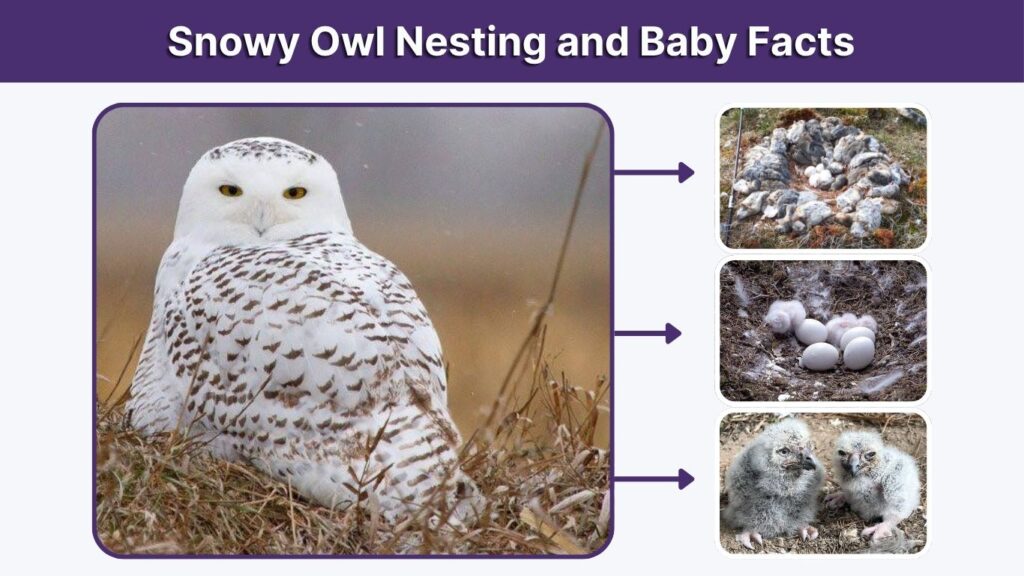
Snowy owls have a breeding strategy closely connected to Arctic food supplies. They nest directly on the ground rather than building nests in trees. Females select elevated areas that provide visibility over the surrounding tundra, while males help defend territories and supply food during nesting. Successful breeding years can produce surprisingly large clutches.
10. Snowy Owls Build Their Nests on the Ground
Their nesting habits include:
- Choosing open tundra
- Selecting a mound, ridge, or hummock
- Scraping a shallow depression into the ground
- Adding little or no nest material
- Choosing locations with wide visibility
- Using some nesting areas repeatedly
The female creates the nest scrape and performs the incubation.
11. Snowy Owls Can Lay Many Eggs
Clutch size changes depending strongly on food availability.
Audubon reports that females commonly lay about 3–11 eggs. During years when lemmings are exceptionally abundant, snowy owls may produce larger clutches, while poor food years may result in smaller clutches or no nesting at all.
12. Snowy Owl Chicks Do Not Hatch Together
The female begins incubating before the final egg is laid.
As a result, eggs hatch at different times rather than simultaneously. One chick may therefore be noticeably larger and more developed than its younger siblings.
Young birds may leave the immediate nest area after only a few weeks, although they cannot fly strongly until later.
Snowy Owl Behavior and Movement Facts
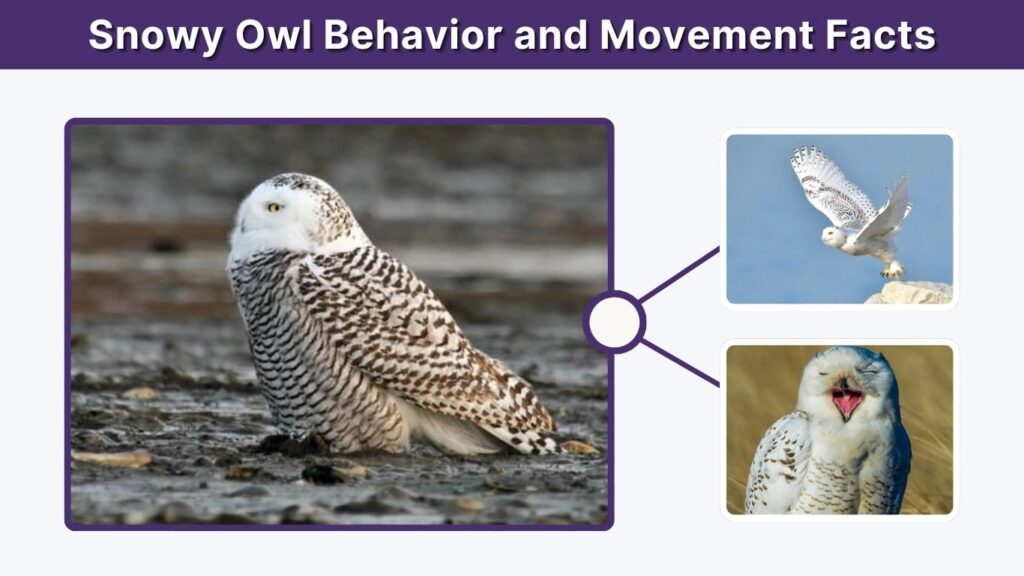
Snowy owls have highly flexible movement patterns. Rather than making exactly the same north-south migration every year, they often travel according to prey availability. Some remain relatively far north through winter, while others journey hundreds or thousands of miles. This unpredictable behavior produces occasional winters when unusually large numbers appear much farther south than expected.
13. Snowy Owl Migration Is Unpredictable
Large southward movements are often called irruptions.
During these years, snowy owls may appear across southern Canada and parts of the United States in much greater numbers than usual.
Their movements are complex rather than simply representing escape from harsh weather. Food supplies, breeding success, age, and other ecological conditions can influence where individual birds travel.
14. Some Snowy Owls Return to the Same Winter Area
Although they can travel extraordinary distances, some banded snowy owls have returned to the same wintering location in later years.
Snowy owls can also defend winter territories against other individuals.
Young birds may disperse particularly far, and tracking studies have demonstrated that siblings from the same nest can eventually travel in completely different directions.
15. Snowy Owls Face Several Threats
Challenges can include:
- Changes to Arctic ecosystems
- Climate-related habitat changes
- Vehicle collisions
- Aircraft strikes
- Power-line collisions
- Human disturbance
- Changes in prey availability
- Loss or alteration of important winter habitat
Because snowy owls often rest in highly visible open areas, photographers and birdwatchers should observe from a respectful distance rather than repeatedly approaching or flushing the bird.
FAQs
Snowy owls stand apart from many other owl species because of their Arctic habitat, daytime hunting, white plumage, ground nests, and nomadic movements. Their behavior is strongly influenced by prey abundance, particularly populations of lemmings. These five questions cover additional basic and fun facts about snowy owls for adults, students, and children.
What Is the Scientific Name of a Snowy Owl?
The snowy owl’s scientific name is Bubo scandiacus.
What Are Three Fun Facts About Snowy Owls?
They can hunt during daylight, their feet are heavily covered with feathers, and older males can become almost completely white.
What Do Snowy Owls Eat?
They primarily eat mammals such as lemmings and voles but can also catch rabbits, waterfowl, seabirds, and other prey.
Where Do Snowy Owls Live?
They breed on Arctic tundra across the Northern Hemisphere. In winter, some move south into open fields, beaches, marshes, grasslands, and similar habitats.
How Long Can a Snowy Owl Live?
Snowy owls can survive for many years. Cornell records the oldest known wild individual as a female that was at least 23 years and 10 months old when recaptured and released during banding.