
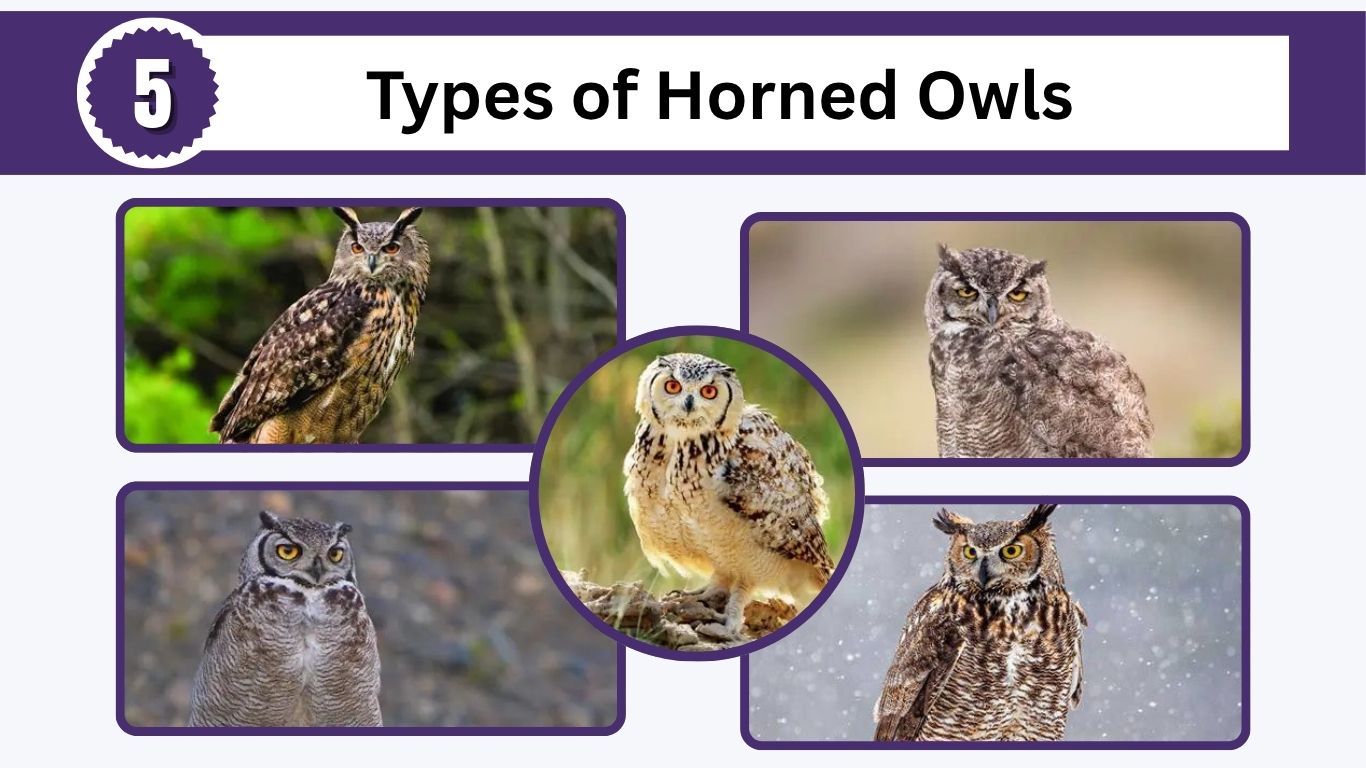
Horned owls are powerful birds of prey known for their tall ear tufts, sharp talons, deep calls, and strong hunting skills. These “horns” are not real horns but feather tufts that help give them a fierce look. Different horned owls live in forests, deserts, mountains, grasslands, and open woodlands. Each species has its own size, color, range, and hunting style.
What Are Horned Owls?
Horned owls are owls with noticeable feather tufts on the top of the head. These tufts can look like horns or ears, but they are not used for hearing. Most horned owls are strong nighttime hunters and feed on mammals, birds, reptiles, and other small animals.
Horned owls belong mostly to the eagle-owl group and related owl species. They usually have large eyes, rounded wings, sharp claws, and excellent night vision. Their silent flight helps them approach prey without warning.
| Horned Owl Type | Main Range | Key Feature |
|---|---|---|
| Great Horned Owl | North and South America | Large body and powerful talons |
| Lesser Horned Owl | South America | Smaller size and long ear tufts |
| Magellanic Horned Owl | Southern South America | Cold-climate horned owl |
| Eurasian Eagle-Owl | Europe and Asia | One of the largest owls |
| Pharaoh Eagle-Owl | North Africa and Middle East | Desert-loving horned owl |
1. Great Horned Owl
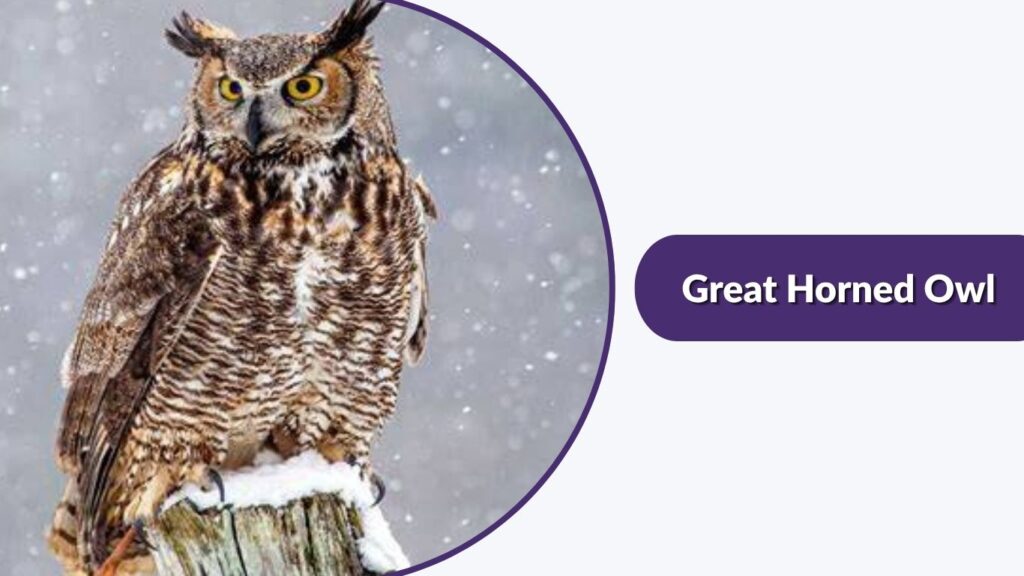
The Great Horned Owl is one of the most famous horned owls in the world. It is large, strong, and highly adaptable. This owl lives in forests, deserts, wetlands, farmlands, cities, and mountains. Its long feather tufts give it a bold and serious appearance.
Identification
- Large owl with strong body
- Long feather tufts on the head
- Yellow eyes with a deep stare
- Brown, gray, and barred feathers
- White throat patch
- Powerful feet and sharp talons
Habitat and Range
Great Horned Owls are found across North America and parts of Central and South America. They can live in many habitats as long as food and nesting sites are available. They often use old nests made by hawks, crows, or other large birds instead of building their own.
Diet and Hunting
This owl is a top predator. It eats rabbits, rats, mice, squirrels, birds, snakes, frogs, and even skunks. Great Horned Owls hunt mostly at night, but they may also be active at dusk or dawn. Their strong talons allow them to catch prey larger than many other owls can handle.
2. Lesser Horned Owl
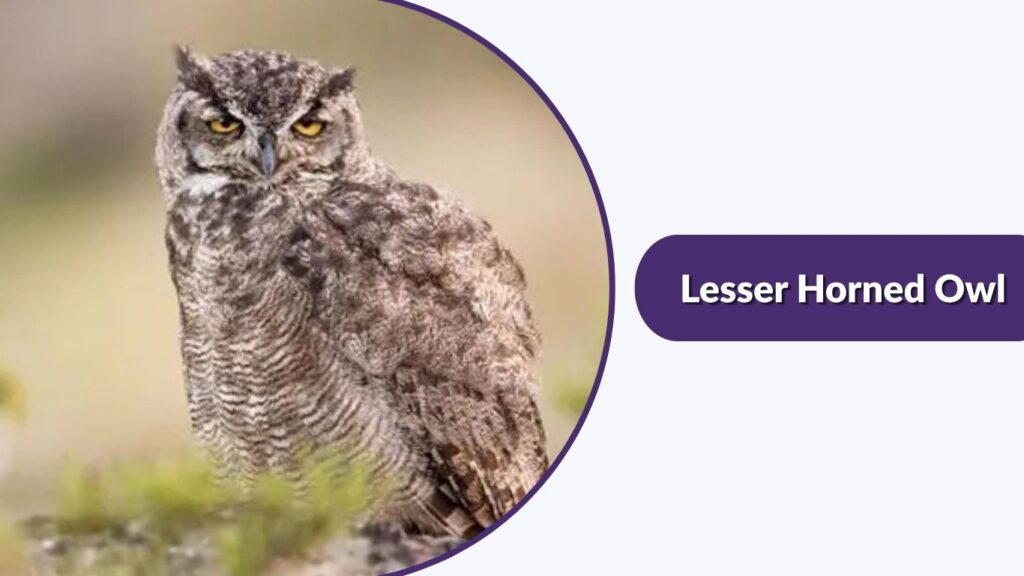
The Lesser Horned Owl is a smaller horned owl found in South America. It looks similar to the Great Horned Owl but is usually smaller and lighter. This owl has long ear tufts, dark markings, and a strong hunting style.
Identification
The Lesser Horned Owl has a rounded head with visible feather tufts. Its body is brownish with streaks and bars that help it blend into trees and branches. Its yellow eyes are bright and alert, giving it a sharp expression. Compared with larger horned owls, it has a slimmer and more compact body.
Habitat and Range
This owl lives in open woodlands, savannas, forest edges, scrublands, and grassland areas in parts of South America. It often chooses places where trees are available for resting and nesting, but open ground is nearby for hunting. Its camouflage helps it stay hidden during the day.
Diet and Hunting
The Lesser Horned Owl feeds on small mammals, birds, reptiles, amphibians, and large insects. It hunts mainly at night, using silent flight and sharp hearing to find prey. It may perch quietly and wait for movement before flying down quickly to catch its target.
3. Magellanic Horned Owl
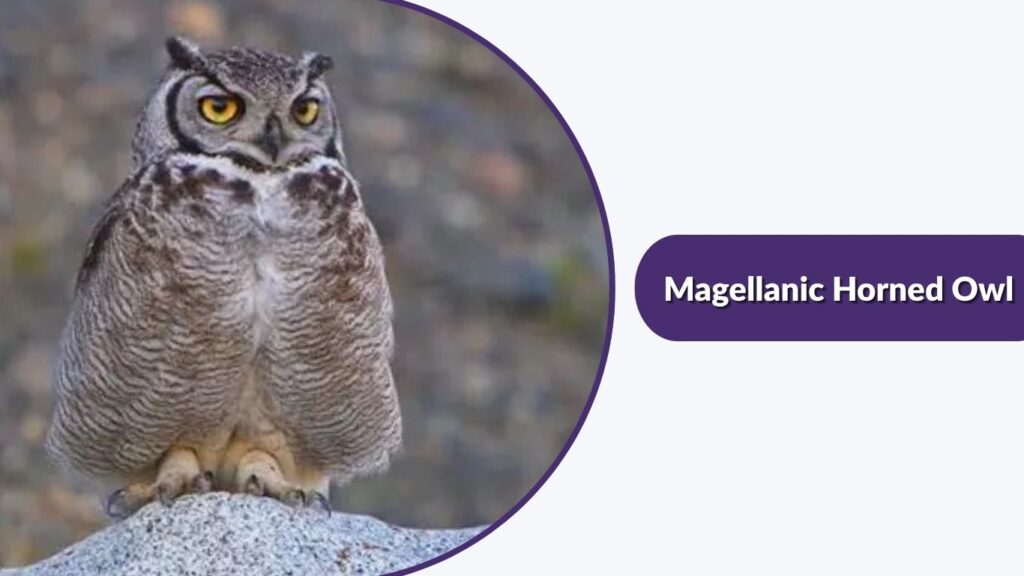
The Magellanic Horned Owl is a large horned owl from southern South America. It was once often considered a form of the Great Horned Owl, but it is now commonly treated as a separate species. It is well adapted to cooler climates and rugged landscapes.
Identification
This owl has strong ear tufts, yellow eyes, and heavily marked feathers. Its plumage is usually gray-brown or dark brown with bold barring. The body is powerful, and the face looks intense because of its dark facial markings. Its thick feathers help it survive in colder areas.
Habitat and Range
Magellanic Horned Owls live in southern Argentina, Chile, Patagonia, and nearby regions. They may be found in forests, open country, rocky slopes, shrublands, and mountain areas. They can survive in harsh environments where temperatures are lower and prey may be scattered.
Diet and Hunting
This owl hunts mammals, birds, and reptiles. Rodents are an important food source, but it may also catch rabbits, small birds, and other animals. It usually hunts at night from a perch or by flying low over open land. Its strong talons make it an effective predator.
4. Eurasian Eagle-Owl
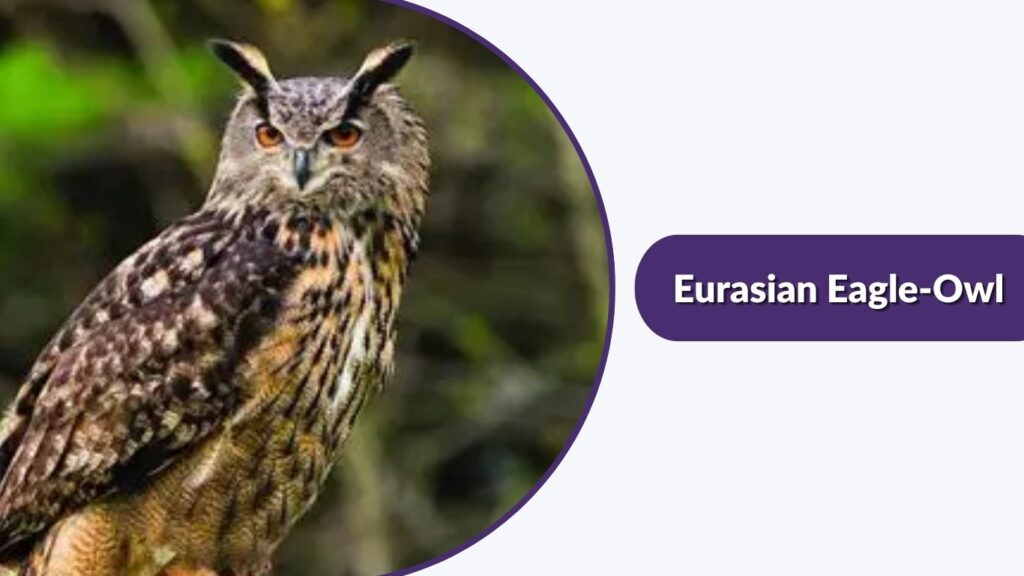
The Eurasian Eagle-Owl is one of the largest owl species in the world. It has huge orange eyes, long ear tufts, and a massive wingspan. Because of its size and strength, it is often considered one of the most powerful horned owls.
Identification
- Very large owl with broad wings
- Bright orange eyes
- Long and clear ear tufts
- Brown, black, and buff feather pattern
- Heavy body and strong legs
- Deep, booming call
Habitat and Range
Eurasian Eagle-Owls live across many parts of Europe and Asia. They prefer rocky cliffs, forests, mountains, open landscapes, and remote valleys. They often nest on cliff ledges, rocky shelves, or sheltered ground sites. In some areas, they may also live near farmland or woodland edges.
Diet and Hunting
This owl has a wide diet. It can eat rabbits, hares, rats, birds, reptiles, amphibians, and even other raptors. Its size allows it to catch larger prey than many smaller owls. It hunts mostly at night by watching from a high perch and flying silently toward prey.
5. Pharaoh Eagle-Owl
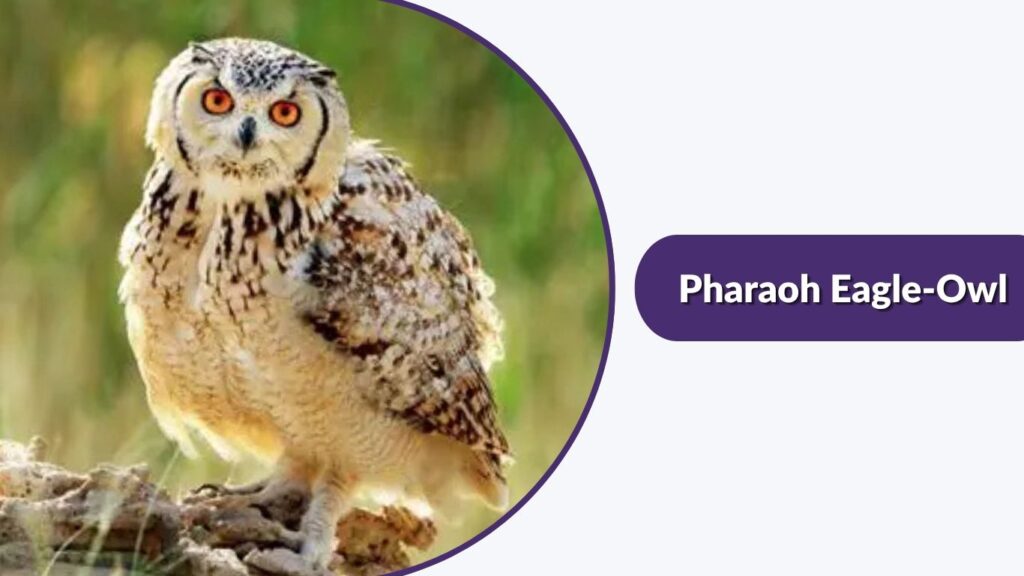
The Pharaoh Eagle-Owl is a horned owl of dry and desert regions. It lives in parts of North Africa and the Middle East. This owl has pale sandy colors that help it blend into rocky deserts, cliffs, and dry open landscapes.
Identification
The Pharaoh Eagle-Owl has orange-yellow eyes, strong ear tufts, and pale brown or sandy feathers. Its markings are softer than some forest owls, which helps it stay hidden among rocks and desert soil. It has a strong body, broad wings, and sharp talons for catching prey in open habitats.
Habitat and Range
This owl is found in deserts, rocky hills, dry wadis, cliffs, and semi-arid landscapes. It often rests in shaded rock crevices during the day. Its pale color works as camouflage in sandy and stony environments. It can survive in dry places where water and vegetation are limited.
Diet and Hunting
The Pharaoh Eagle-Owl feeds on rodents, birds, reptiles, insects, and small mammals. It hunts mainly after sunset when desert temperatures become cooler. It may perch on rocks or low cliffs and watch for movement. Once prey is detected, it flies down quickly and grabs it with its talons.
Horned Owl Behavior
Horned owls are mostly nocturnal, meaning they are active at night. They rely on sharp eyesight, strong hearing, and silent flight. Their feather edges reduce noise, helping them surprise prey. Many species are territorial and use deep calls to warn other owls away.
Most horned owls do not build detailed nests. They may use old nests, tree cavities, cliffs, ledges, or sheltered ground areas. The female usually incubates the eggs, while the male brings food. Young owls stay with their parents until they can fly and hunt.
Are Horned Owls Dangerous?
Horned owls are wild predators, but they usually avoid people. They can be dangerous if someone gets too close to their nest or tries to handle them. Their talons are strong enough to injure small animals and even humans.
These owls are important for nature because they control rodents and other prey animals. Instead of disturbing them, people should observe them from a safe distance.
FAQs
Are horned owls’ horns real?
No, horned owls do not have real horns. The “horns” are feather tufts on the top of the head. These tufts may help with display, camouflage, and body language, but they are not ears and do not work like horns.
What do horned owls eat?
Horned owls eat many kinds of prey, including mice, rats, rabbits, squirrels, birds, snakes, lizards, frogs, and insects. Larger species can catch bigger animals. Their diet depends on habitat, prey availability, and owl size.
Where do horned owls live?
Horned owls live in forests, deserts, mountains, grasslands, cliffs, farmlands, and open woodlands. Some species are highly adaptable, while others prefer specific habitats such as deserts, rocky areas, or cold southern regions.
Are horned owls active during the day?
Most horned owls are active at night. They usually rest during the day in trees, rocks, cavities, or hidden places. However, some may be seen at dusk, dawn, or during daylight if disturbed or feeding young.
What is the largest horned owl?
The Eurasian Eagle-Owl is one of the largest horned owls in the world. It has a massive wingspan, strong talons, and bright orange eyes. Its size allows it to hunt larger prey than many smaller owl species.