
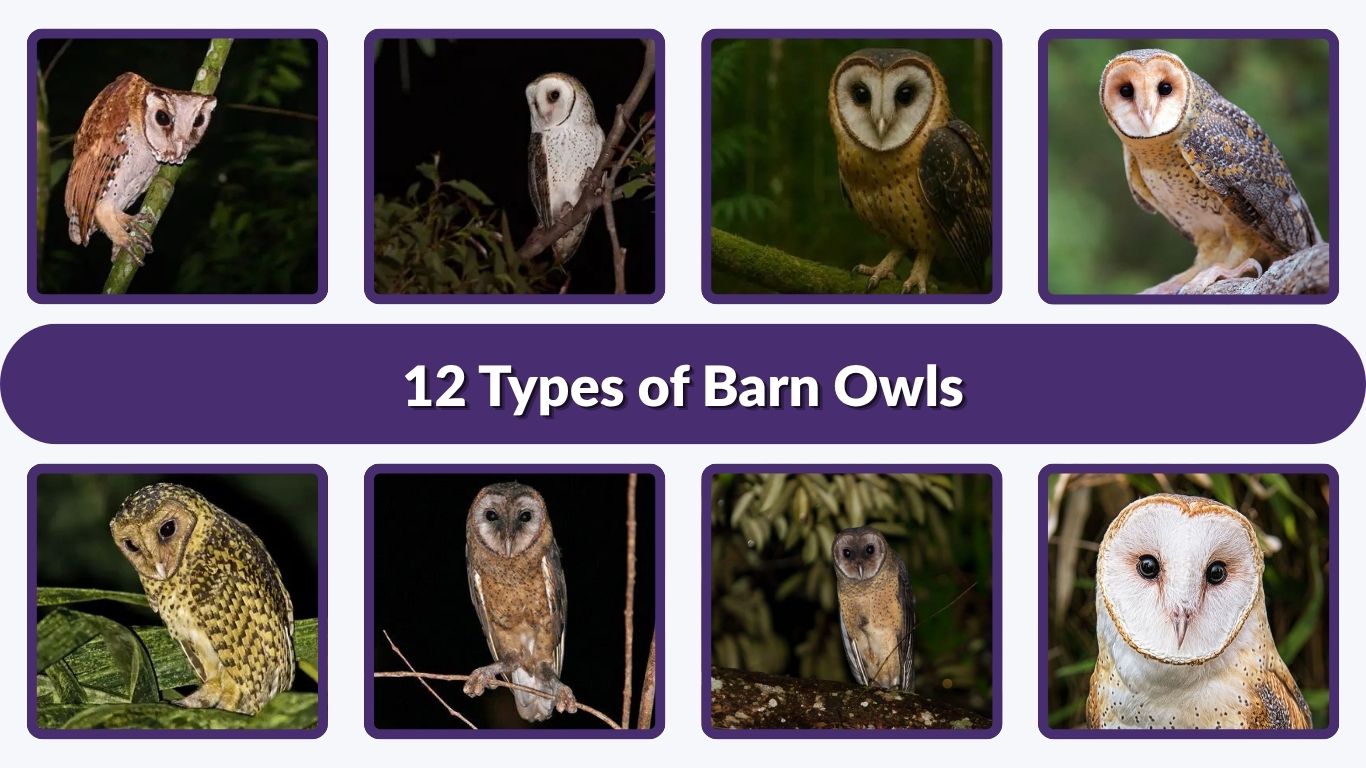
Barn owls are some of the most beautiful and mysterious owls in the world. They are known for their heart-shaped faces, silent flight, and excellent hunting skills. From the Common Barn Owl to rare masked owls, each type has unique features, habitats, and behaviors. This guide explores 12 types of barn owls and their key facts.
1. Common Barn Owl
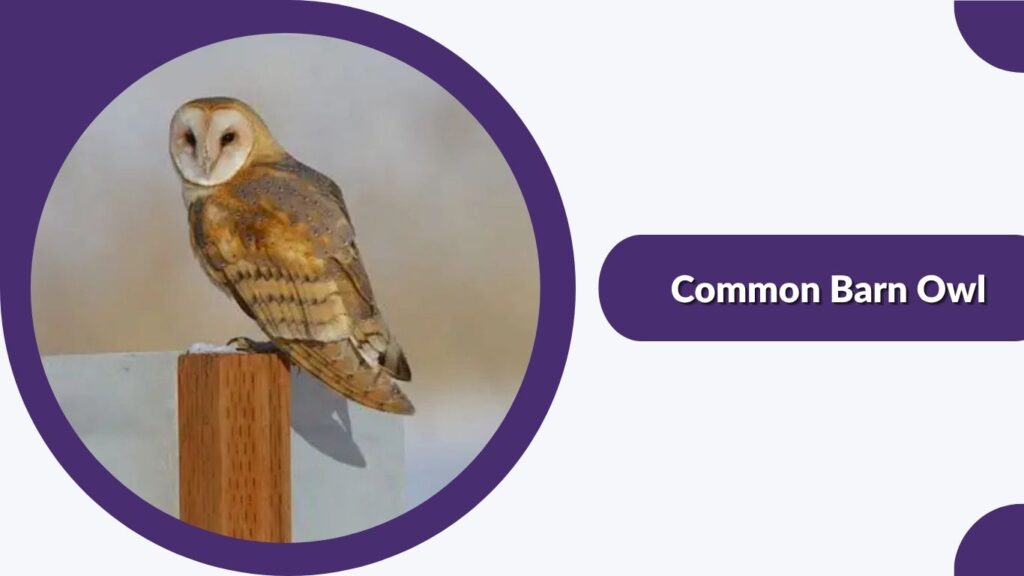
The Common Barn Owl is one of the most recognizable owl species in the world. It has a pale heart-shaped face, long wings, and quiet flight. This owl is often seen near farms, grasslands, barns, and open fields where it hunts small animals at night.
Identification
- Heart-shaped white or pale face
- Golden-brown back with gray markings
- White or light-colored underparts
- Long legs compared with many other owls
- Dark eyes that stand out on the pale face
- Soft feathers that help it fly silently
Habitat and Range
Common Barn Owls live in many parts of the world. They are found in open countryside, farmland, grasslands, marshes, and near human buildings. Old barns, church towers, tree cavities, and abandoned structures are common nesting places. They prefer open hunting areas where small mammals are easy to find.
Diet and Hunting Behavior
The Common Barn Owl mainly eats small rodents such as mice, rats, voles, and shrews. It hunts mostly at night by flying low over fields. Its excellent hearing helps it locate prey even in darkness. After catching prey with its sharp talons, it usually swallows smaller animals whole.
Life Cycle and Nesting
Common Barn Owls do not build complex nests. They often lay eggs in sheltered places such as barns, hollow trees, or nest boxes. The female usually incubates the eggs while the male brings food. Young owlets depend on their parents for several weeks before learning to fly and hunt.
2. American Barn Owl
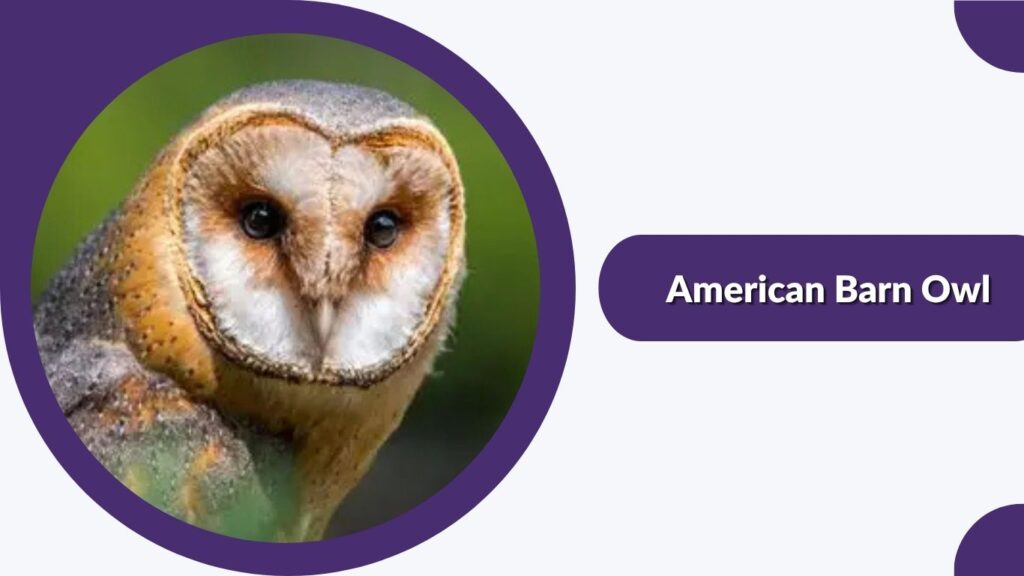
The American Barn Owl is a pale, elegant owl found across many parts of North, Central, and South America. It is closely related to the Common Barn Owl but is often treated as a separate type. This owl is famous for its silent flight, ghostly appearance, and strong hunting skills.
Identification
- Pale heart-shaped facial disc
- Light golden-brown wings and back
- White or creamy underside
- Long legs with sharp talons
- Dark eyes and slim body shape
- Quiet, floating flight at night
Habitat and Range
American Barn Owls live in open habitats where hunting is easy. They are often found around farms, grasslands, deserts, marshes, and open woodlands. They may also nest near buildings, barns, silos, cliffs, and tree cavities. These owls usually avoid dense forests because they need open space to hunt.
Diet and Hunting Behavior
The American Barn Owl mainly feeds on small mammals. Mice, rats, voles, and pocket gophers are common prey. It hunts mostly after sunset, using its sharp hearing to detect movement in grass or soil. Its soft feathers help reduce flight noise, making it easier to surprise prey.
Life Cycle and Nesting
This owl nests in quiet, hidden places such as barns, cavities, and nest boxes. The female lays several eggs and incubates them while the male brings food. The chicks hatch at different times, so they may vary in size. Young owls stay in the nest until they are ready to fly.
3. Western Barn Owl
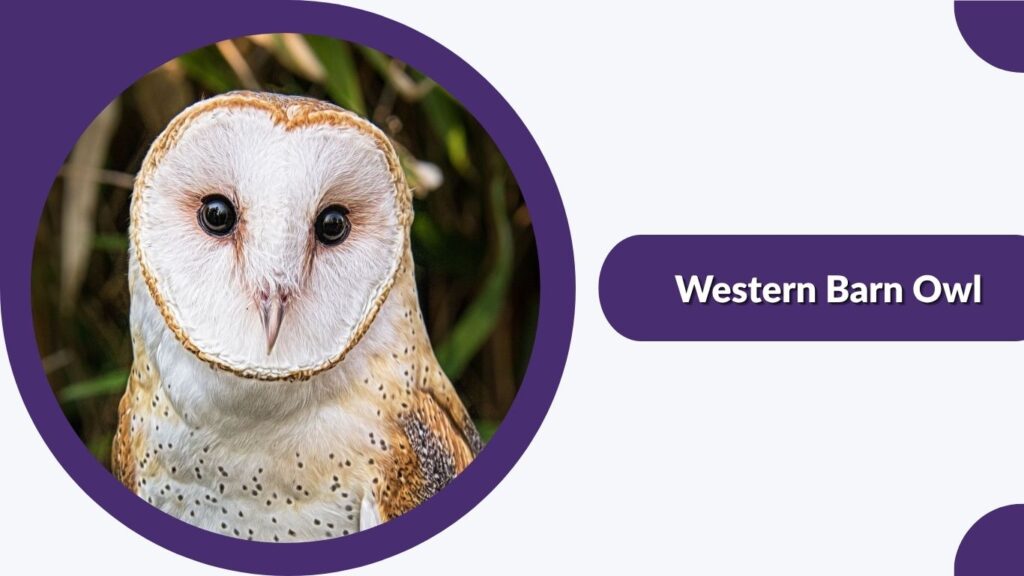
The Western Barn Owl is a widespread barn owl type found in Europe, Africa, and parts of western Asia. It has a pale face, golden upperparts, and a soft, silent flight. This owl is strongly connected with farmland, old buildings, grasslands, and open countryside.
Identification
- Pale heart-shaped face
- Golden-buff upper body
- Light underparts with small spots
- Long wings and slim body
- Dark eyes on a pale facial disc
- Smooth, silent flight pattern
Habitat and Range
Western Barn Owls prefer open areas rather than thick forests. They are common in farmland, meadows, grasslands, marsh edges, and rural villages. They often use barns, towers, ruins, cliffs, and hollow trees for nesting. Their range is wide, but they need good hunting grounds and safe nesting sites.
Diet and Hunting Behavior
This owl mostly eats rodents and other small animals. Voles, mice, rats, shrews, and small birds may be part of its diet. It hunts by flying low over open fields and listening carefully for prey. Its hearing is very sensitive, allowing it to catch animals even in poor light.
Life Cycle and Nesting
Western Barn Owls may breed when food is available. They do not build a neat nest but lay eggs on dry material in a safe shelter. The female incubates the eggs, and the male provides food. Chicks grow quickly and begin practicing wing movements before leaving the nest.
4. Eastern Barn Owl
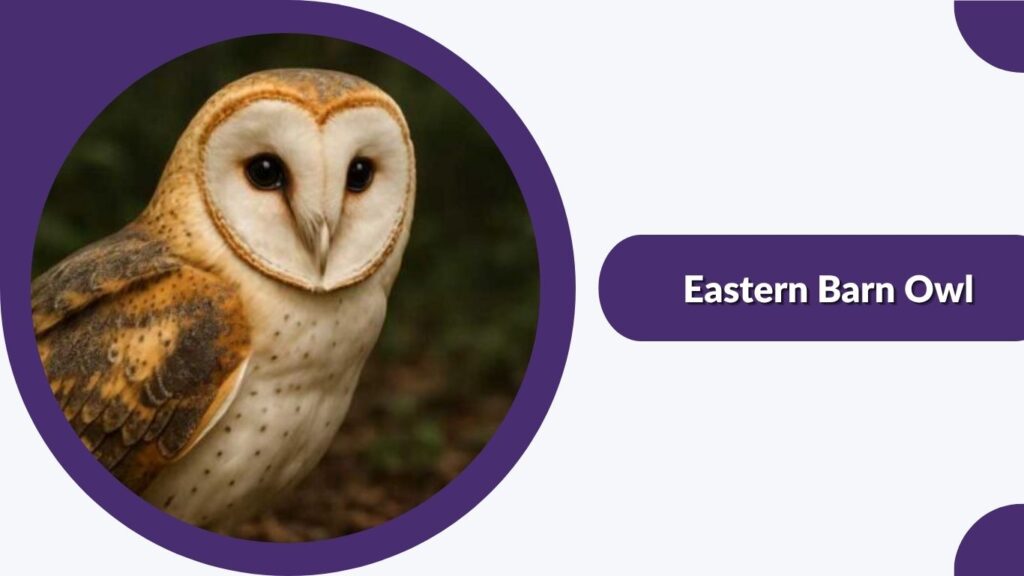
The Eastern Barn Owl is found across parts of Asia, Australia, and nearby regions. It has the classic barn owl look, with a heart-shaped face, pale body, and long wings. This owl is active at night and depends heavily on open land for hunting small animals.
Identification
- White or pale heart-shaped face
- Brown and gray upperparts
- Light-colored chest and belly
- Long legs and narrow wings
- Dark eyes with a calm expression
- Pale body that looks ghostly at night
Habitat and Range
Eastern Barn Owls live in grasslands, farmlands, open woodlands, wetlands, and rural areas. They may nest in tree hollows, caves, buildings, and nest boxes. They are often seen near fields or open areas where rodents are common. They avoid very dense forests because hunting is harder there.
Diet and Hunting Behavior
The Eastern Barn Owl mostly hunts small mammals such as mice, rats, and other rodents. It may also eat small birds, reptiles, frogs, or insects when available. It hunts silently at night and uses excellent hearing to locate prey. Its low, slow flight helps it search wide open areas.
Life Cycle and Nesting
This owl uses sheltered nesting places instead of building a large nest. The female lays eggs and keeps them warm while the male brings food. When the chicks hatch, they are covered in white down. They grow inside the nest for several weeks before learning to fly and hunt.
5. Australian Masked Owl
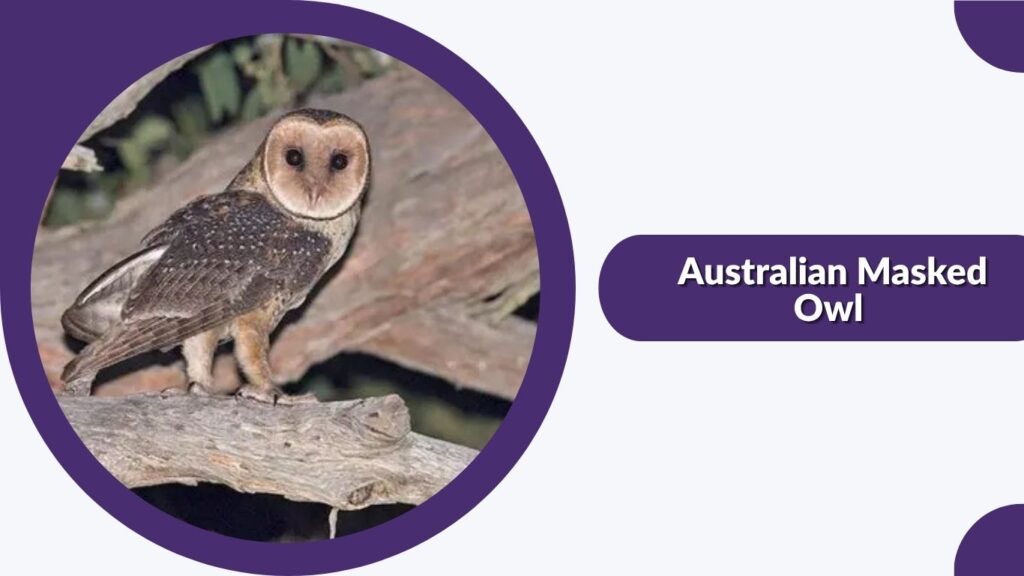
The Australian Masked Owl is a large owl with a strong body, dark eyes, and a bold facial disc. It is sometimes confused with barn owls because of its face shape, but it is generally heavier and more powerful. This owl is native to Australia and is mostly active at night.
Identification
- Large heart-shaped facial disc
- Dark eyes and strong hooked beak
- Brown upperparts with pale markings
- Creamy or buff underparts
- Strong legs and large talons
- Heavier body than many barn owls
Habitat and Range
Australian Masked Owls live in forests, woodlands, open country, and areas near farmland. They need large tree hollows, caves, or sheltered spaces for nesting. They are often found where good cover is close to open hunting areas. Habitat loss can reduce their nesting options in some places.
Diet and Hunting Behavior
This owl feeds on small to medium-sized animals. Its diet includes rodents, small birds, reptiles, rabbits, and marsupials. It hunts at night by listening carefully and flying quietly through suitable habitat. Because it is larger than many barn owls, it can take bigger prey.
Life Cycle and Nesting
Australian Masked Owls usually nest in large hollow trees or caves. The female lays eggs in a protected site and stays with them during incubation. The male helps by bringing food. Young owls remain dependent on their parents for food and protection until they are strong enough to leave.
6. Tasmanian Masked Owl
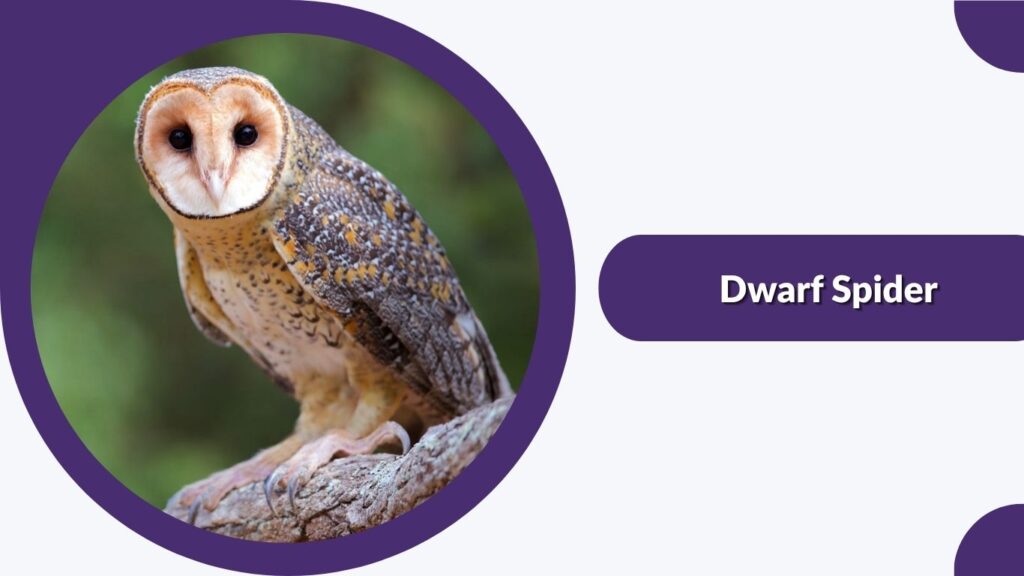
The Tasmanian Masked Owl is one of the largest barn owl relatives. It lives mainly in Tasmania and is known for its powerful build, dark eyes, and large facial disc. This owl is secretive, nocturnal, and strongly linked with old forests that provide nesting hollows.
Identification
- Very large owl with strong body
- Broad heart-shaped facial disc
- Dark eyes and pale face
- Brown upperparts with speckled markings
- Strong feet and sharp talons
- Pale underparts with darker spotting
Habitat and Range
Tasmanian Masked Owls are found in forests, woodland edges, farmland, and open areas near trees. They need large old trees with hollows for nesting. These nesting sites are important because suitable hollows take many years to form. They may hunt in open land but often depend on nearby forest cover.
Diet and Hunting Behavior
This owl eats mammals, birds, and other small animals. Rodents, rabbits, small marsupials, and birds may be taken. It hunts mostly at night, using strong hearing and silent flight to locate prey. Its large size allows it to catch prey that smaller barn owls may not handle.
Life Cycle and Nesting
The Tasmanian Masked Owl nests in deep tree hollows or other protected spaces. The female incubates the eggs while the male provides food. Chicks remain in the nest for a long period as they grow. After fledging, young owls may still depend on adults before becoming independent.
7. Sulawesi Masked Owl
The Sulawesi Masked Owl is a rare and interesting owl found on Sulawesi and nearby islands in Indonesia. It belongs to the barn owl family but has a darker, stronger appearance than the Common Barn Owl. This owl is nocturnal and usually stays hidden in forested habitats.
Identification
- Large heart-shaped facial disc
- Dark eyes and strong hooked beak
- Brown upperparts with pale markings
- Light underparts with spotting
- Long legs and sharp talons
- Stronger body than many barn owls
Habitat and Range
Sulawesi Masked Owls live mainly in forests, woodland edges, and nearby open areas. They may also use plantations or disturbed habitats if enough food and shelter are available. Because they are secretive at night, they are not often seen by people. Safe nesting places and healthy forest cover are important for their survival.
Diet and Hunting Behavior
This owl hunts mostly at night. It feeds on small mammals, birds, reptiles, and large insects. Like other barn owl relatives, it uses sharp hearing to find prey in darkness. It may hunt from a perch or fly quietly through forest edges while searching for movement below.
Life Cycle and Nesting
Sulawesi Masked Owls likely nest in tree hollows or other protected natural spaces. The female usually stays close to the eggs while the male helps bring food. Young owls grow slowly and remain dependent on their parents until they can fly and hunt on their own.
8. Minahasa Masked Owl
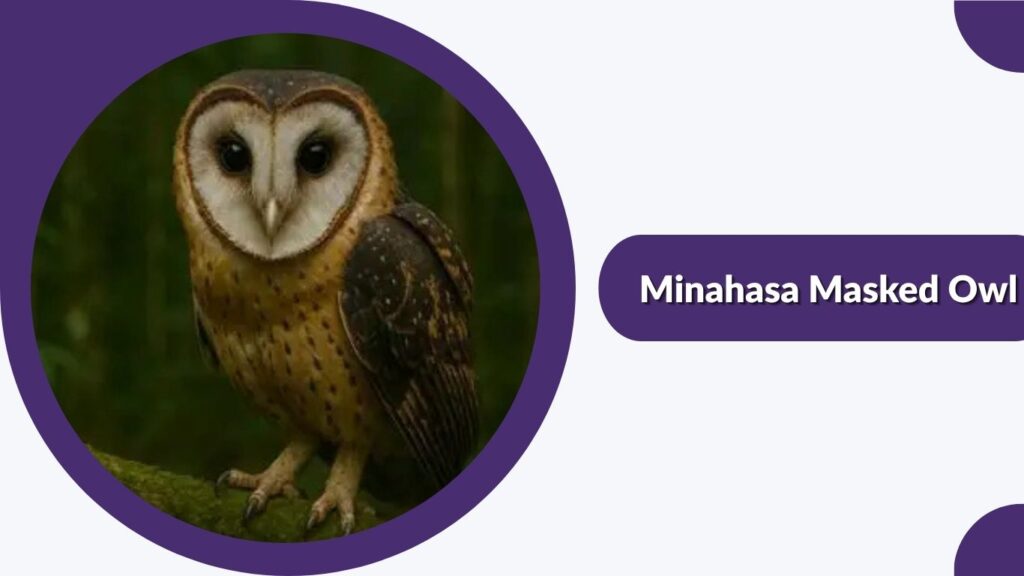
The Minahasa Masked Owl is another barn owl relative from Sulawesi, especially linked with the Minahasa region. It has a mysterious look, with a pale facial disc and dark eyes. This owl is not commonly seen because it is active at night and often stays inside forest habitats.
Identification
- Pale heart-shaped face
- Dark round eyes
- Brown and gray upperparts
- Speckled or marked underparts
- Long legs with strong claws
- Quiet flight during hunting
Habitat and Range
Minahasa Masked Owls are usually connected with forested areas, woodland edges, and rural landscapes near trees. They need safe hiding places during the day and open or semi-open hunting areas at night. Their range is limited, so habitat quality is very important. Forest loss can make it harder for them to find nesting sites.
Diet and Hunting Behavior
This owl feeds on small animals found in its habitat. Rodents, small birds, lizards, frogs, and insects may be part of its diet. It hunts silently after dark and depends on hearing as much as eyesight. Its soft wing feathers help reduce noise, allowing it to surprise prey.
Life Cycle and Nesting
Minahasa Masked Owls probably nest in tree cavities, hollow trunks, or other sheltered spots. The female lays eggs in a hidden site and keeps them warm. The male helps by bringing food. Once the chicks hatch, both parents protect and feed them until they become strong enough to leave.
9. Taliabu Masked Owl
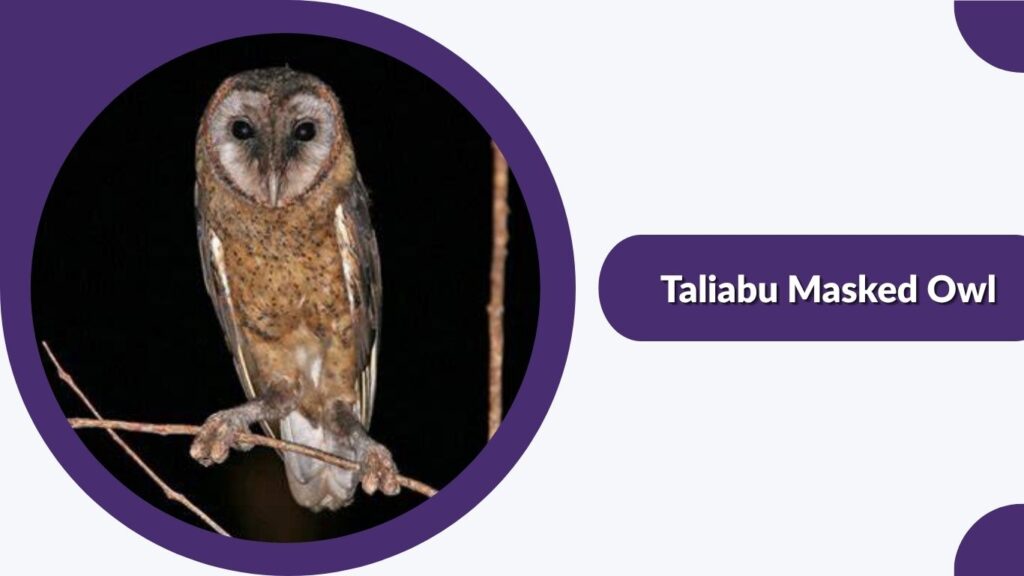
The Taliabu Masked Owl is a little-known owl from Taliabu Island in Indonesia. It is part of the masked owl group and has a barn owl-like face with a stronger, darker body. Because of its limited range, it is considered an important island owl.
Identification
- Heart-shaped facial disc
- Dark eyes and pale face
- Brown upperparts with markings
- Pale chest with spots
- Long legs and sharp talons
- Strong body shape for hunting
Habitat and Range
Taliabu Masked Owls are mainly found on Taliabu Island. They are associated with forests, woodland areas, and nearby open hunting grounds. Island species often depend on specific habitats, so changes in forest cover can affect them quickly. They usually rest in quiet places during the day and become active at night.
Diet and Hunting Behavior
This owl likely feeds on small mammals, birds, reptiles, and insects. It hunts after sunset, using silent flight and strong hearing to detect prey. It may search along forest edges where animals are easier to catch. Its sharp talons help it hold prey firmly once captured.
Life Cycle and Nesting
Taliabu Masked Owls probably use tree hollows or natural cavities for nesting. Like many barn owl relatives, they do not build a detailed nest. The eggs are laid in a safe sheltered place. The chicks remain hidden while they grow, depending on the adults for warmth, food, and protection.
10. Manus Masked Owl
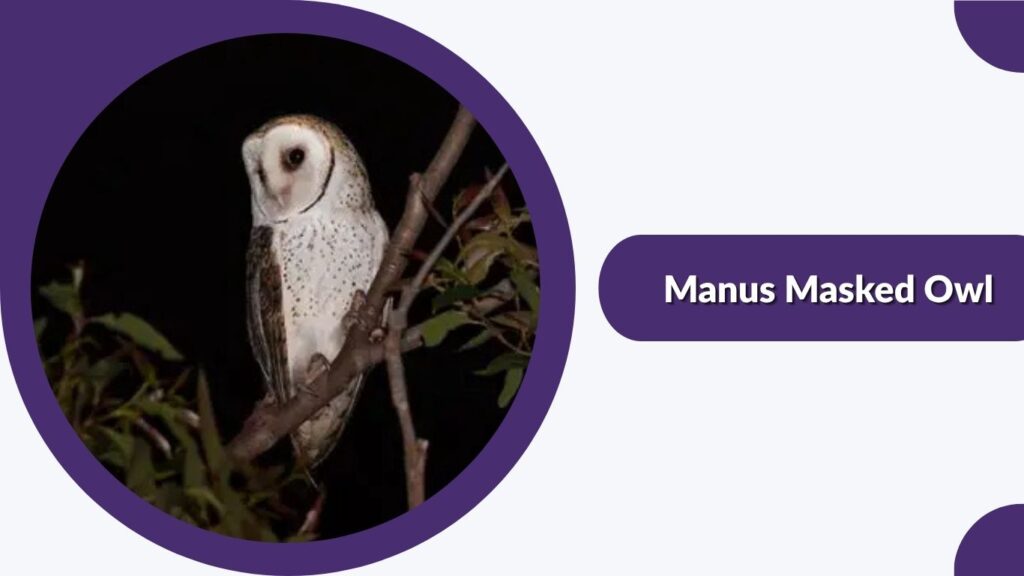
The Manus Masked Owl is a barn owl relative found on Manus Island and nearby areas in Papua New Guinea. It has a strong body, dark eyes, and a pale facial disc. This owl is secretive and mostly active at night, making it difficult to observe in the wild.
Identification
- Broad heart-shaped facial disc
- Dark eyes and strong beak
- Brown upperparts with pale spots
- Light underparts with darker markings
- Strong feet and curved talons
- Silent flight at night
Habitat and Range
Manus Masked Owls live in island forest habitats, woodland edges, and possibly nearby open areas. They need safe resting places during the day and good hunting areas at night. Since their range is limited, local habitat protection is important. They are usually heard more often than seen because they remain hidden.
Diet and Hunting Behavior
This owl hunts small animals such as rodents, birds, reptiles, and large insects. It relies on quiet flight and sharp hearing to find prey in low light. It may hunt from perches or glide slowly through hunting areas. Its powerful feet help it catch and control prey quickly.
Life Cycle and Nesting
Manus Masked Owls likely nest in tree hollows, cavities, or other protected places. The female cares for the eggs while the male brings food. After hatching, the young owls grow inside the nest and depend on their parents. They leave the nest only when their wings are strong enough for flight.
11. Golden Masked Owl
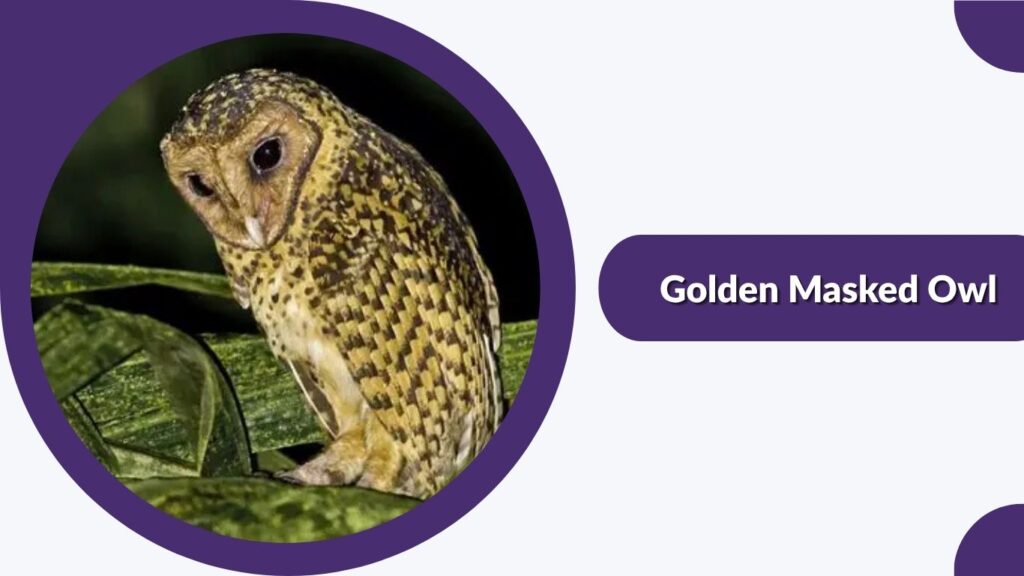
The Golden Masked Owl is a beautiful owl known for its warm golden-brown color and masked facial disc. It is found in parts of Papua New Guinea and nearby islands. This owl is not commonly seen because it is nocturnal and often lives in forested environments.
Identification
- Golden-brown upperparts
- Pale heart-shaped facial disc
- Dark eyes and sharp beak
- Light underparts with markings
- Long legs and strong talons
- Soft feathers for quiet flight
Habitat and Range
Golden Masked Owls are usually linked with forests, woodland areas, and island habitats. They need trees or natural cavities for shelter and nesting. They may hunt along forest edges or open patches where prey is easier to find. Because they have a limited range, healthy habitat is important for their long-term survival.
Diet and Hunting Behavior
This owl hunts mainly at night. Its diet may include rodents, small birds, reptiles, and insects. It uses excellent hearing to detect prey in darkness and flies quietly to avoid warning its target. Like other masked owls, it is a skilled hunter with strong feet and sharp claws.
Life Cycle and Nesting
Golden Masked Owls likely choose hidden nesting sites such as tree hollows or natural cavities. The female keeps the eggs warm while the male helps provide food. After the chicks hatch, they stay in the nest and grow under parental care. They slowly develop flight skills before becoming independent.
12. Oriental Bay Owl
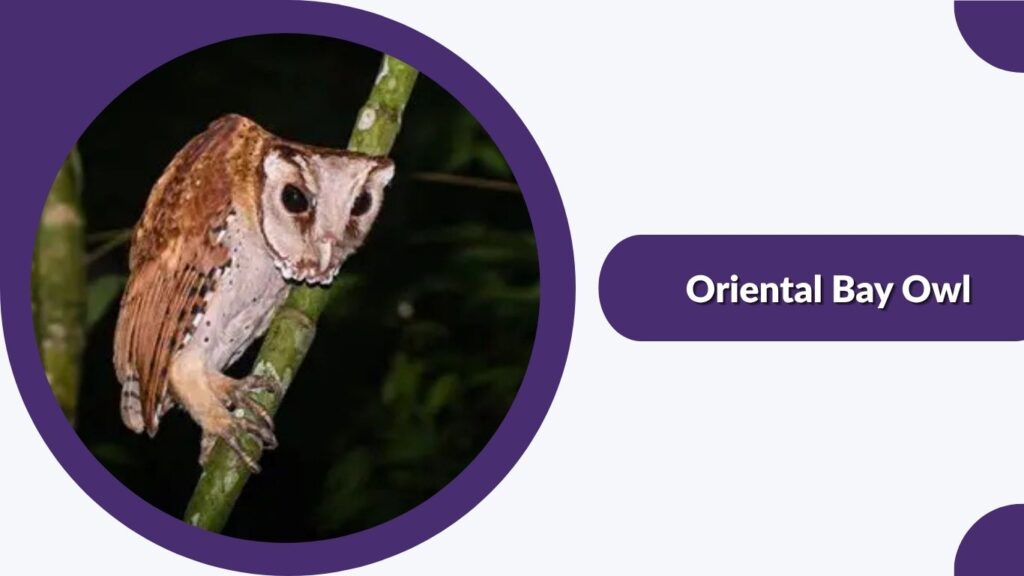
The Oriental Bay Owl is a small, unusual-looking barn owl relative found in South and Southeast Asia. It has a unique face, dark eyes, and rounded wings. Unlike larger masked owls, this species looks more delicate but is still a skilled nighttime hunter.
Identification
- Small owl with a heart-shaped face
- Dark eyes and pale facial disc
- Chestnut-brown upperparts
- Light underparts with markings
- Shorter body than masked owls
- Rounded wings and quiet flight
Habitat and Range
Oriental Bay Owls live in forests, dense woodlands, bamboo areas, and sometimes plantations. They prefer habitats with thick cover where they can rest during the day. At night, they move through forest edges and clearings to hunt. Their secretive nature makes them hard to find, even where they are present.
Diet and Hunting Behavior
This owl feeds on insects, small mammals, birds, frogs, and reptiles. It hunts at night using silent flight and sharp senses. Because it is smaller than many barn owl relatives, it often catches smaller prey. It may hunt from a hidden perch and quickly drop down when prey appears.
Life Cycle and Nesting
Oriental Bay Owls nest in tree hollows or other protected spaces. They do not build large nests. The female lays eggs in a hidden cavity, while the male helps bring food. The chicks stay inside the nest until they grow feathers, gain strength, and begin learning to fly.