The Madagascar red owl (Tyto soumagnei) is a rare reddish-orange owl found only on the island of Madagascar. For decades, scientists knew remarkably little about this secretive nocturnal bird, and it was even feared lost before being rediscovered in 1993. Its heart-shaped facial disc makes it resemble a barn owl, but its rich rusty plumage and dark spotting make identification easier. Today, researchers know more about its habitat, diet, behavior, nesting habits, and conservation needs, although many aspects of its life remain poorly understood.
What Is the Madagascar Red Owl?
The Madagascar red owl is an endemic member of the barn owl family, Tytonidae. Its scientific name is Tyto soumagnei. Unlike widespread barn owls, this species occurs naturally only in Madagascar. It is sometimes called the red owl or Soumagne’s owl. Its unusual reddish coloration and secretive forest lifestyle make it one of Madagascar’s more distinctive owls.
Madagascar Red Owl Identification
Important identification features include:
- Rich orange, reddish-brown, or cinnamon-colored plumage
- Small dark spots scattered across the body and wings
- Pale, heart-shaped facial disc
- Dark or blackish eyes
- Pale gray bill
- Short tail
- Grayish feet and strong talons
- No prominent ear tufts
- Body length of roughly 27–30 cm
One documented adult measured 27.5 cm long and weighed 323 grams. Males and females look broadly similar, while young birds can appear somewhat brighter.
Why Is the Owl Red?
The word “red” refers to the owl’s warm reddish-orange or cinnamon plumage rather than a bright scarlet color. Its upperparts are generally darker, while its underside can appear lighter.
Small dark markings cover much of the plumage. Combined with its heart-shaped face, the coloration gives the Madagascar red owl an appearance somewhat like a smaller, rust-colored barn owl.
Where Does the Madagascar Red Owl Live?
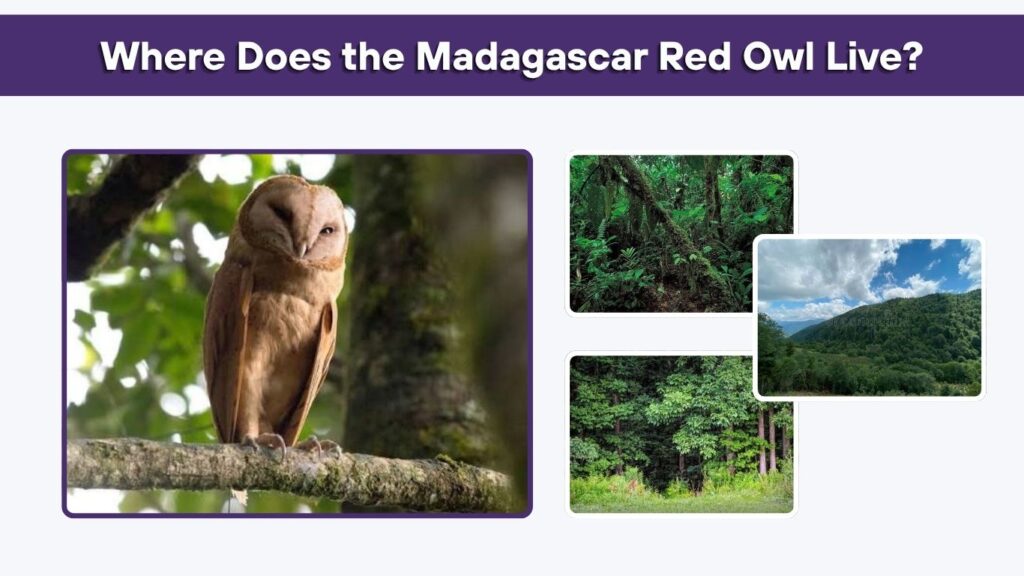
The Madagascar red owl is restricted to Madagascar, making it an island-endemic species. It was once believed to occur mainly in eastern and northeastern rainforest, but later observations expanded its known distribution farther south. Researchers have recorded the species from sea level to about 2,000 meters in elevation, suggesting it can use a broader range of environments than once assumed.
Madagascar Red Owl Habitat
Habitats and locations associated with the species include:
- Humid tropical rainforest
- Forest edges
- Secondary forest
- Tree-covered landscapes
- Rice-field margins
- Open areas close to forest
- Rock ledges and cave entrances used for roosting
- Some human-modified landscapes
The owl appears closely associated with forest, even though it can hunt along forest edges and in more open areas.
Geographic Range
Historical records came mainly from Madagascar’s eastern humid forests. For many years, the species seemed extremely restricted.
Later records, including observations in south-central Madagascar, demonstrated that its distribution was wider than scientists had previously realized. The Madagascar red owl has also been recorded at important protected sites such as the Torotorofotsy wetlands landscape.
Its secretive nighttime behavior probably contributed to the lack of historical sightings.
What Does the Madagascar Red Owl Eat?
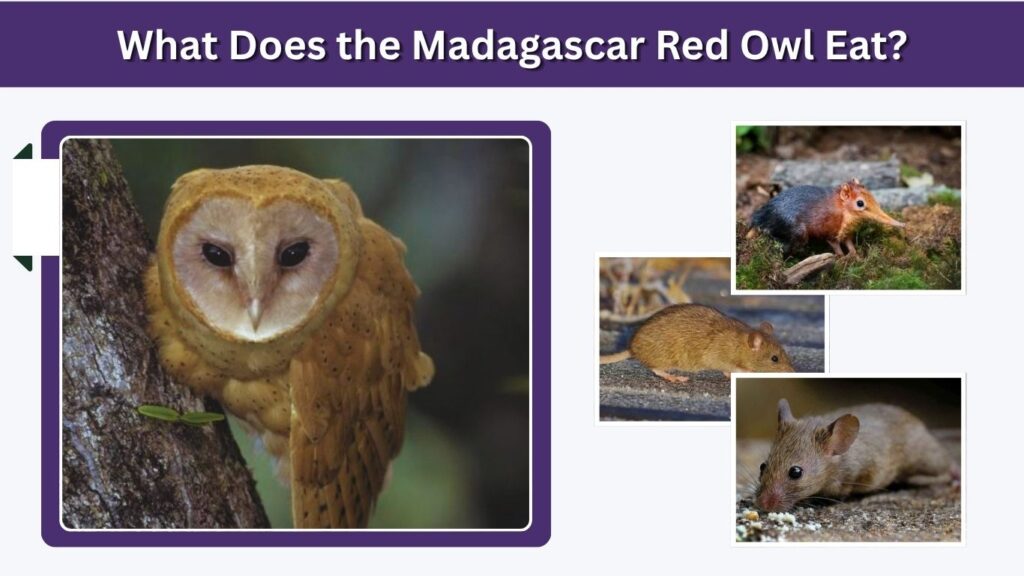
The Madagascar red owl is a carnivore and hunts mainly small animals at night. Studies of pellets collected near nesting or roosting sites have provided some of the best evidence about its diet. Small mammals appear particularly important, including several species native to Madagascar. This feeding pattern distinguishes it somewhat from Madagascar’s barn owls.
Madagascar Red Owl Diet
Recorded prey includes:
- Native small mammals
- Small rodents
- Tenrec-like insectivorous mammals
- Introduced rats
- Reptiles
- Amphibians
- Insects
One detailed dietary study found that the owl fed almost entirely on small mammals, with many prey species native to Madagascar.
How Does It Hunt?
The Madagascar red owl hunts at night, apparently searching forest edges and nearby open habitats for prey.
Like other members of the barn owl family, it has adaptations that make nocturnal hunting effective. Its facial disc helps channel sound toward its ears, while soft flight feathers allow relatively quiet movement.
Researchers studying prey remains have found evidence that individuals may hunt outside dense primary forest, including along disturbed or human-modified areas close to forest.
Madagascar Red Owl Behavior and Sound
Because the red owl is difficult to observe, many details of its everyday behavior remain uncertain. Available observations indicate that it is primarily nocturnal and generally occurs alone or in pairs. During daylight hours, it rests in protected locations where vegetation, rock formations, or tree structures provide shelter from disturbance and Madagascar’s wet tropical weather.
Nocturnal Behavior
The owl becomes active after dark and spends daylight hours roosting.
Researchers have recorded individuals using rock ledges and cave entrances as daytime resting places. There are even observations of owls sheltering beneath large leaves, possibly to gain additional protection from heavy rainfall.
Its nocturnal habits help explain why the species remained poorly documented for such a long period.
What Does a Madagascar Red Owl Sound Like?
The species produces a powerful screech rather than the familiar “hoot” many people associate with owls.
Recorded calls include a screech lasting around 1.5 seconds. Individuals have also been reported making repeated “wok”-like calls followed by a louder alarm note. Calls may help birds maintain contact or respond to nearby red owls.
Madagascar Red Owl Nesting and Life Cycle
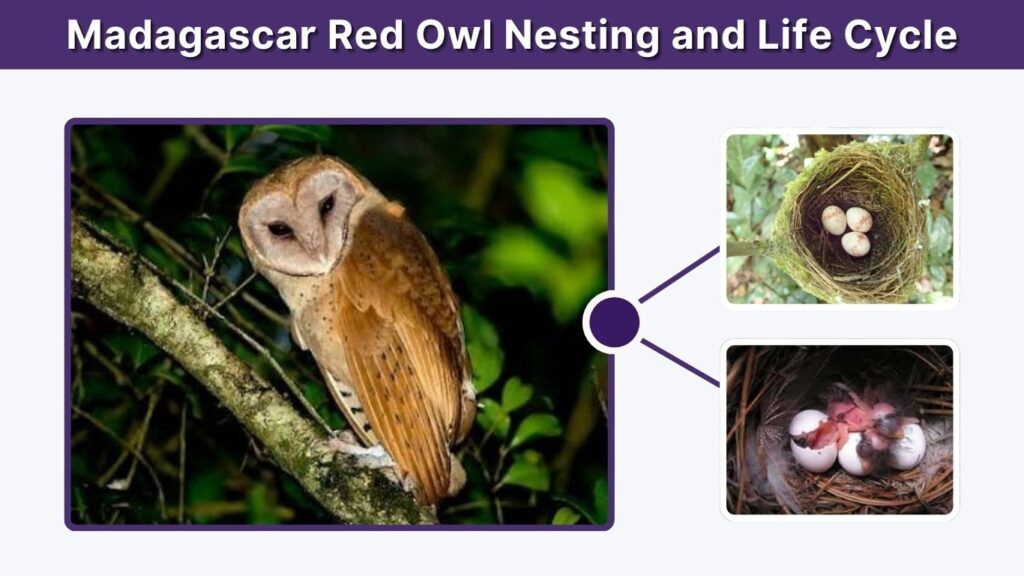
Very little is known about Madagascar red owl reproduction because so few nests have been studied. This makes it difficult to establish typical clutch size, breeding season, or parental behavior with confidence. Researchers therefore avoid assuming that everything known about related barn owls also applies directly to this rare Madagascar species.
Nesting and Young
One of the best-documented nests was located inside a tree cavity about 23 meters above the ground.
That nest contained two recently hatched chicks. They reportedly hatched during September and fledged approximately ten weeks later. The young remained around the nesting area for several months after hatching.
Natural tree cavities may therefore be particularly important breeding resources, especially within mature forest.
How Long Does a Madagascar Red Owl Live?
The exact Madagascar red owl lifespan is unknown.
Because the species is elusive and relatively few individuals have been monitored for long periods, researchers currently lack sufficient evidence to provide a reliable average lifespan.
This is one of several important areas where further field research is still needed.
Is the Madagascar Red Owl Endangered?
The Madagascar red owl faces conservation pressure primarily because of habitat loss and degradation. BirdLife currently lists the species as Vulnerable, meaning it faces a significant extinction risk in the wild even though it is not presently categorized as Endangered. Madagascar’s continuing loss and fragmentation of native forest remain major concerns for this owl and many other endemic birds.
Main Threats
Important conservation concerns include:
- Clearing of native forest
- Agricultural expansion
- Slash-and-burn farming
- Uncontrolled fires
- Commercial logging
- Forest fragmentation
- Declining habitat for native prey
- Limited knowledge of population size and distribution
Habitat destruction affects the owl directly by reducing nesting and roosting sites and indirectly by changing populations of the small mammals it hunts.
Why Forest Protection Matters
Protecting Madagascar’s native forests preserves more than individual red owls. It also maintains tree cavities, roosting areas, hunting habitat, and populations of native prey.
The species has been recorded in protected landscapes, which provides important opportunities for monitoring and habitat conservation. However, additional surveys remain valuable because researchers are still refining their understanding of the owl’s true distribution.
Is the Madagascar Red Owl Real or Fake?
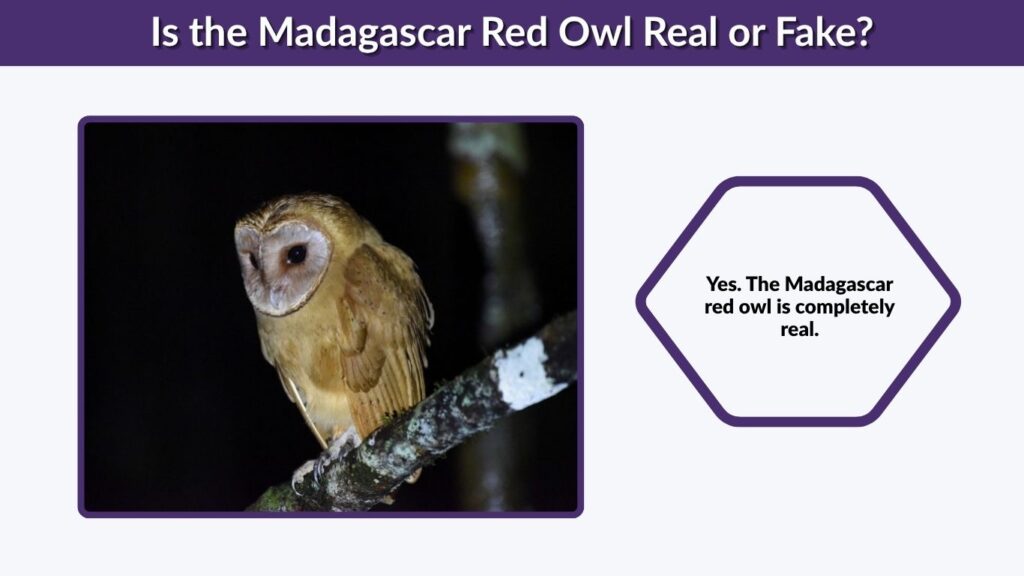
Yes. The Madagascar red owl is completely real. Its scientific name is Tyto soumagnei, and it has been documented through museum specimens, field observations, photographs, nesting studies, and modern conservation assessments. Confusion about whether it exists may come from its unusual color, rarity, and decades-long absence from scientific observation.
The Famous Rediscovery
The species was described scientifically in the nineteenth century but then became exceptionally difficult to locate.
Only a handful of early specimens and observations were known. In July 1993, researchers confirmed the species again in northeastern Madagascar after decades with almost no reliable records. That rediscovery significantly renewed scientific interest in the owl.
Later surveys showed that the species was not restricted quite as narrowly as once believed.
Madagascar Red Owl vs Madagascar Long-Eared Owl
These are different species.
The Madagascar red owl is Tyto soumagnei and belongs to the barn owl family. The Madagascar owl, also historically called the Madagascar long-eared owl, is Asio madagascariensis. It has prominent ear tufts, brown patterned plumage, and belongs to the typical owl family rather than Tytonidae.
Interesting Madagascar Red Owl Facts
The rarity of this owl makes even basic observations scientifically valuable. Its history also shows how easily secretive forest species can escape detection, particularly when they are active mainly at night.
Quick Facts
- Scientific name: Tyto soumagnei
- Family: Tytonidae
- Found only in Madagascar
- Mainly nocturnal
- Plumage is reddish-orange to cinnamon
- Facial disc is heart-shaped
- Feeds heavily on small mammals
- Uses tree cavities for nesting
- Rediscovered in 1993
- Current conservation category: Vulnerable
- Males and females look similar
- Exact lifespan remains unknown
The species’ combination of restricted distribution, unusual coloration, and secretive habits makes it one of Madagascar’s most distinctive nocturnal birds.
FAQs
Many searches about the Madagascar red owl focus on whether the bird is real, where it lives, what it eats, and why it is considered rare. Researchers have answered some of these questions through field studies and pellet analysis, but considerable gaps remain. These FAQs summarize the most important facts currently known about this unusual Madagascar owl.
Is there really a Madagascar red owl?
Yes. The Madagascar red owl, Tyto soumagnei, is a scientifically recognized species endemic to Madagascar. It was rediscovered in northeastern Madagascar in 1993 after decades of very few confirmed observations.
What does a Madagascar red owl eat?
It eats mainly small mammals, including native rodents and other small Malagasy mammals. Studies have also recorded reptiles, amphibians, insects, and introduced rats in its diet.
Where does the Madagascar red owl live?
It occurs only in Madagascar. The species inhabits humid forest and uses forest edges and nearby disturbed habitats for hunting. Records extend from sea level to roughly 2,000 meters elevation.
Is the Madagascar red owl endangered?
It is currently classified as Vulnerable, rather than Endangered. Forest loss, fires, agricultural expansion, and other forms of habitat degradation remain major conservation concerns.
Is the Madagascar red owl the same as the long-eared owl?
No. The Madagascar red owl is Tyto soumagnei. The Madagascar owl or Madagascar long-eared owl is Asio madagascariensis, a separate species with noticeable ear tufts and different plumage.