The Jamaican Owl is a distinctive nocturnal bird found naturally only on the island of Jamaica. Known locally as the Patoo or Brown Owl, it has warm brown plumage, large dark eyes, prominent ear tufts, and a heavily streaked breast. Modern classifications generally call it Asio grammicus, although older sources use Pseudoscops grammicus. This guide explores Jamaican Owl identification, size, habitat, call, diet, breeding, young, conservation, local folklore, and the differences between Jamaica’s brown owl and its familiar white Barn Owl.
What Is a Jamaican Owl?
The Jamaican Owl is a small-to-medium-sized member of the typical owl family, Strigidae. It is endemic to Jamaica, meaning its natural range is restricted to this Caribbean island. Its reddish-brown coloration, black eyes, short ear tufts, and streaked underparts give it an appearance quite different from Jamaica’s pale, heart-faced Barn Owl.
Quick Jamaican Owl Facts
- Common name: Jamaican Owl
- Scientific name: Asio grammicus
- Older scientific name: Pseudoscops grammicus
- Local names: Patoo, Brown Owl
- Family: Strigidae
- Range: Jamaica only
- Length: Roughly 29–36 cm, depending on source and measurement
- Activity: Mainly nocturnal
- Clutch: Usually 1–2 eggs
- Conservation status: Least Concern
- Main foods: Rodents, insects, frogs, lizards, and some birds
Why Is the Scientific Name Sometimes Different?
Many older references call the species Pseudoscops grammicus. Phylogenetic research later showed that it is embedded within the genus Asio, and the IOC moved it to Asio grammicus. BirdLife materials may still show the older genus, so both names can appear in otherwise reliable sources.
What Does a Jamaican Owl Look Like?
The Jamaican Owl is predominantly light brown, tawny, or brownish-orange. Its crown and upperparts contain dark wavy markings, while the breast and belly have long brown streaks. Large dark eyes dominate the face, and short but obvious feather tufts rise above the head. These “ears” are feathers, not the owl’s actual ears.
Jamaican Owl Habitat and Range
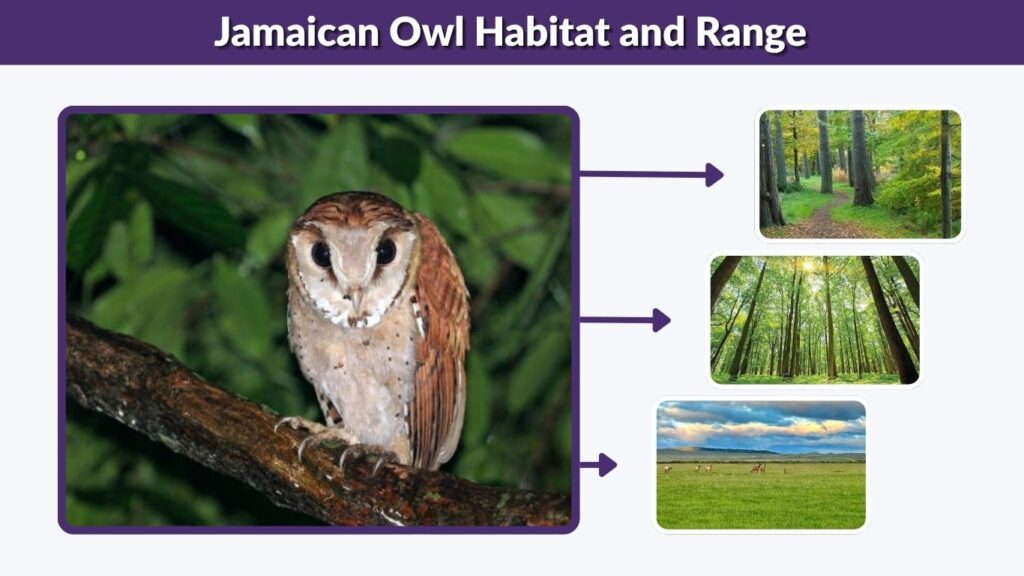
Unlike widespread owl species, the Jamaican Owl has an exceptionally restricted global range because it occurs naturally only in Jamaica. Within the island, however, it is adaptable and can occupy several wooded and semi-open environments. Suitable trees are important for daytime roosting and nesting, while nearby open areas provide productive hunting grounds after sunset.
Where Do Jamaican Owls Live?
Jamaican Owls can occur in:
- Forests
- Woodlands
- Forest edges
- Wooded pastures
- Wetlands with trees
- Montane forest
- Parks
- Gardens
- Semi-open country with suitable roosting trees
Can You See Jamaican Owls in the Daytime?
Yes, although daytime sightings are less common because the species is primarily nocturnal. During daylight hours, an owl may remain quietly perched in dense vegetation or within a large tree. Its brown, streaked feathers provide effective camouflage, so even a relatively exposed bird can be surprisingly difficult to notice.
Is the Jamaican Owl Found Anywhere Else?
No natural breeding population is known outside Jamaica. This makes the species an important part of the island’s endemic birdlife. Its limited geographic distribution also means that maintaining healthy Jamaican forests, woodland edges, and mature nesting trees is particularly important for its long-term survival.
Jamaican Owl Call, Behavior, and Diet
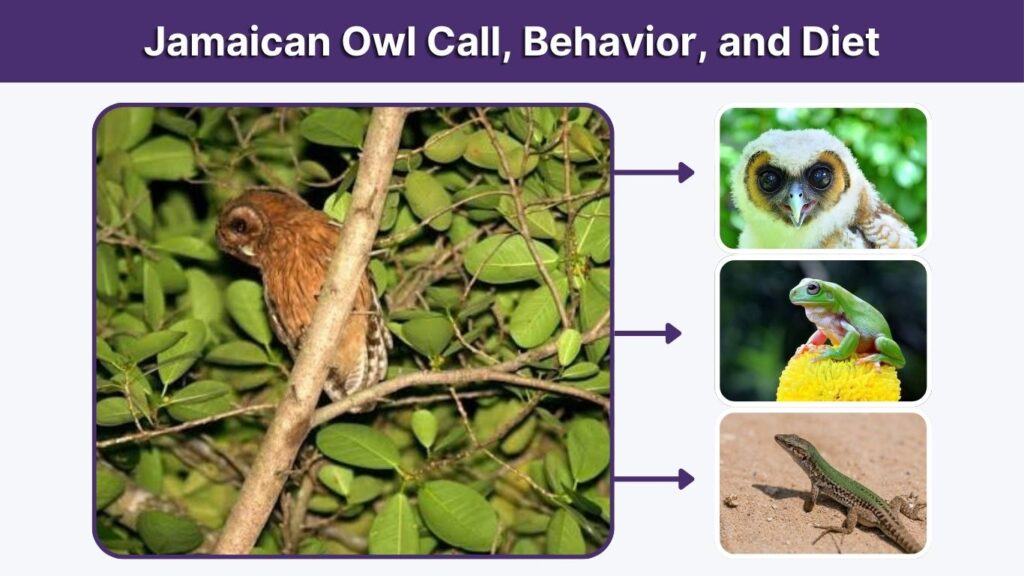
The Jamaican Owl becomes most active around dusk and throughout the night. It relies on sensitive hearing, excellent low-light vision, and quiet flight to find prey. Its vocalizations can be easier to detect than the bird itself, especially in dense vegetation. During the evening, adults may call, preen, stretch, and prepare to hunt.
What Does a Jamaican Owl Call Sound Like?
The Jamaican Owl produces deep, rough vocalizations rather than a classic gentle “hoot.” BirdsCaribbean describes its call as deep and rasping, somewhere between a soft “wow” and a bark. Historical descriptions also mention guttural notes and occasional higher, wavering calls. Young owls can produce piercing begging sounds while waiting for food.
What Do Jamaican Owls Eat?
Research suggests that the Jamaican Owl is a flexible predator. Its known prey includes:
- Black rats and other rodents
- Large insects and other invertebrates
- Frogs
- Lizards
- Small birds
- Greater Antillean Grackles and other passerines
Pellet studies have confirmed both Black Rat and bird remains, supporting the idea that the species is a generalist hunter rather than a specialist on one prey type.
Why Are Jamaican Owls Useful?
By consuming rats, mice, insects, and other small animals, owls help regulate prey populations naturally. Jamaica’s environmental agency has specifically highlighted the ecological role of owls in helping keep rodent numbers in balance. This makes them beneficial predators around farms, wooded communities, and other habitats.
Jamaican Owl Breeding and Baby Owls
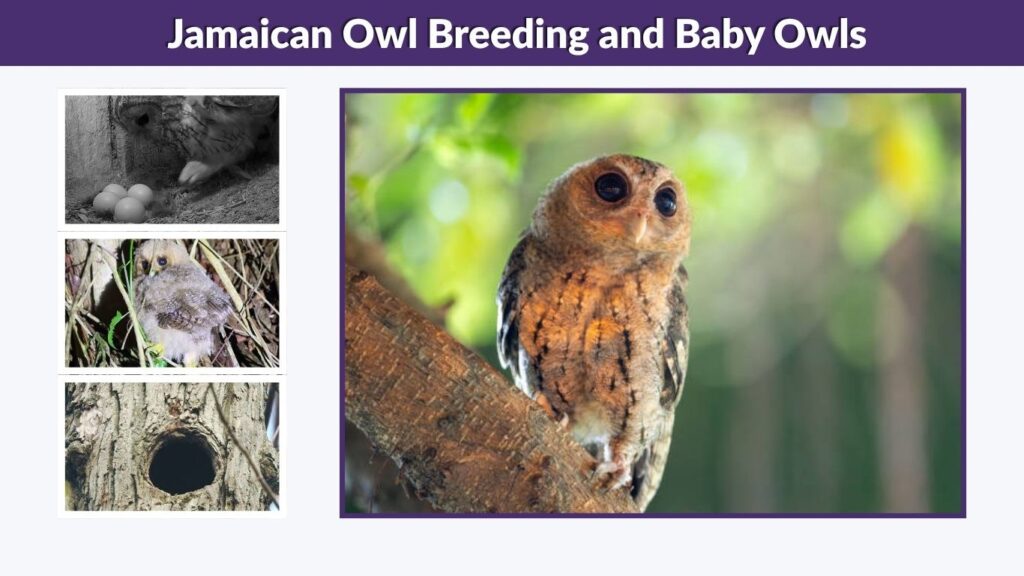
Details of Jamaican Owl breeding are less extensively documented than those of many North American and European owls. However, observations show that pairs use sheltered sites in mature trees, including cavities and locations around large bromeliads. Their breeding strategy involves a very small clutch, followed by an extended period in which young remain dependent on their parents.
Jamaican Owl Nesting Facts
- Usually lays about 1–2 eggs
- May nest in tree cavities or sheltered areas around bromeliads
- Depends on mature trees for suitable nesting sites
- Chicks initially have pale, fluffy down
- Young continue receiving food from the adults after leaving the nest
- One source reports that pairs often rear one chick successfully
What Does a Baby Jamaican Owl Look Like?
A young Jamaican Owl is much fluffier and paler than an adult. Juveniles initially have soft whitish or buff down, large dark eyes, and a rounder overall appearance. As they mature, the reddish-brown adult plumage, streaking, facial pattern, and recognizable ear tufts gradually become more prominent.
How Long Do Jamaican Owls Live?
A dependable average lifespan for wild Jamaican Owls is not well established in widely available species accounts. It is therefore better to avoid assigning them the lifespan of other Asio owls. Survival likely varies with food supply, nesting habitat, storms, human disturbance, disease, and other environmental factors.
Jamaican Patoo, Barn Owl, and White Owl Differences
Searches for “Jamaican Patoo,” “Jamaican Barn Owl,” and “white owl in Jamaica” often mix different birds together. Jamaica has two regularly recognized resident owls: the endemic Jamaican Owl and a Barn Owl. They can be separated easily once their facial shape, plumage, and ear tufts are compared.
Are There Owls in Jamaica?
Yes. The two principal resident owls are:
- Jamaican Owl: Brown, dark-eyed, ear-tufted and endemic to Jamaica.
- Barn Owl: Much paler, with a white heart-shaped face and no prominent ear tufts.
Older Jamaican references often use Tyto alba for the Barn Owl, while modern taxonomic work recognizes the Jamaican population within Tyto furcata.
What Is the White Owl in Jamaica?
A mostly white owl seen flying at night in Jamaica is far more likely to be a Barn Owl than a Jamaican Owl. Barn Owls have pale underparts and a distinctive heart-shaped white face. At night their light plumage can make them appear almost completely white, particularly when illuminated by headlights or outdoor lights.
What Does “Patoo” Mean in Jamaica?
“Patoo” is a Jamaican name associated with owls and is specifically listed as a local name for the Jamaican Owl in several bird references. Usage can vary, which sometimes creates confusion with other nocturnal birds. The Jamaican Owl itself is also widely called the Brown Owl.
Jamaican Owl Folklore and Conservation
Owls have a complicated place in Jamaican folklore. In some traditions, their nighttime calls and appearance have been associated with death or bad luck. These are cultural beliefs rather than biological realities, and unfortunately they have sometimes contributed to owls being harmed. Both Jamaican Owls and Barn Owls are protected wildlife in Jamaica.
Is the Jamaican Owl a Symbol of Long Life?
There is no strong ornithological evidence that the Jamaican Owl is traditionally defined primarily as a symbol of long life in Jamaica. Folklore varies among communities, but published Jamaican accounts more often mention associations with omens, death, or bad luck. These beliefs should not be confused with the owl’s real ecological role.
Conservation Status
The Jamaican Owl is currently treated as Least Concern and is described as widespread in Jamaica. Nevertheless, being restricted to a single island makes habitat protection important. Preserving mature trees, avoiding unnecessary persecution, and reducing threats to nesting and roosting areas all support the species.
FAQs
The Jamaican Owl attracts many questions because its local names overlap with terms used for other nighttime birds. Its endemic status also makes it especially interesting to visitors and birdwatchers. These answers summarize the most important identification, range, call, and conservation details.
What is the scientific name of the Jamaican Owl?
The modern IOC classification uses Asio grammicus. The species was previously placed in the monotypic genus Pseudoscops, so Pseudoscops grammicus remains common in older field guides and some conservation databases. Both names refer to the same endemic Jamaican owl.
Are there Barn Owls in Jamaica?
Yes. Barn Owls occur in Jamaica alongside the endemic Jamaican Owl. They are larger and much paler, with a characteristic white, heart-shaped facial disc. Older Jamaican sources frequently call them Tyto alba, while newer taxonomic research places the Jamaican population within Tyto furcata.
What does the Jamaican Owl eat?
The Jamaican Owl has a varied diet that includes rodents, large insects, frogs, lizards, and birds. Scientific examination of owl pellets found remains of Black Rats and Greater Antillean Grackles, confirming that it can take both mammals and passerine birds as prey.
Is a Jamaican Owl the same as a screech owl?
No. “Jamaican Screech Owl” is not the standard name of a separate native species. Confusion may arise because Barn Owls produce loud screeching calls. The endemic Jamaican Owl is Asio grammicus, while Jamaica’s resident Barn Owl belongs to the genus Tyto.
Is the Jamaican Owl endangered?
The Jamaican Owl is currently categorized as Least Concern, and it remains widespread on the island. However, it exists naturally nowhere else, so protection still matters. Habitat loss, persecution, loss of mature nesting trees, and other local pressures could affect populations even when the species is not globally threatened.