
The lesser horned owl is a powerful nocturnal bird of prey native to South America. Also known as the Magellanic horned owl, this striking species has prominent ear tufts, bright yellow eyes, mottled plumage, and a deep hooting call. Although it resembles the great horned owl, it is generally smaller and is now recognized as a separate species. From the Andes to Patagonia, the lesser horned owl survives in diverse landscapes by hunting rodents and other small animals under the cover of darkness.
What Is a Lesser Horned Owl?
The lesser horned owl (Bubo magellanicus) belongs to the family Strigidae, which includes typical owls. Another widely used name for the species is the Magellanic horned owl. It was historically treated as a form of the great horned owl but is now recognized as a distinct species.
Identification
A lesser horned owl can be recognized by several physical characteristics:
- Scientific name: Bubo magellanicus
- Large rounded head
- Prominent feathered ear tufts or “horns”
- Bright yellow eyes
- Dark-bordered facial disc
- Gray-brown to brown mottled plumage
- Pale underparts with narrow dark barring
- Strong feet and sharp talons
- Broad, rounded wings
- Approximately 45 cm (18 inches) long in many individuals
The coloration varies between birds, but the barred underside and prominent ear tufts are useful identification features.
Why Is It Called the Lesser Horned Owl?
The word “lesser” mainly reflects its comparison with the larger great horned owl. Although it is not a particularly small owl, it usually has a more compact build, smaller feet, and somewhat shorter ear tufts than its larger relative.
The term “horned” refers to feather tufts above the eyes. These structures are feathers rather than actual horns and are not the owl’s ears.
Lesser Horned Owl vs Great Horned Owl
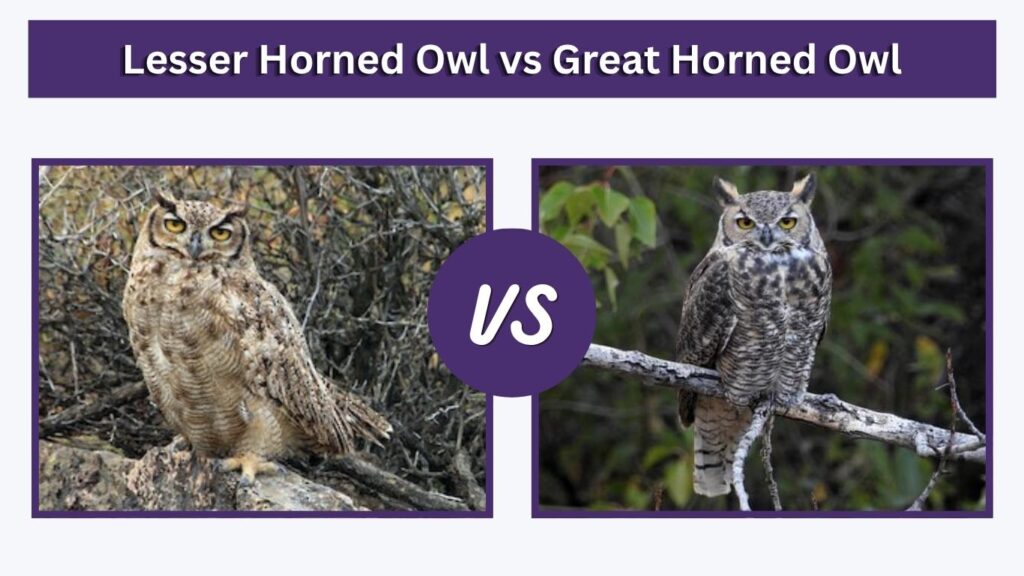
The lesser horned owl and great horned owl can look remarkably similar. This resemblance is one reason they were historically classified together.
Modern classifications separate Bubo magellanicus from the great horned owl, Bubo virginianus, with differences in vocalizations, proportions, genetics, and geographic distribution helping distinguish them.
Size and Appearance
The great horned owl is generally larger and more powerfully built. It tends to have heavier feet and a stronger-looking bill.
The lesser horned owl generally shows finer barring on its underside, while the great horned owl often has broader markings. Individual plumage can vary considerably, however, so appearance alone is not always reliable.
Geographic Range
Great horned owls occur throughout much of North and South America.
The lesser horned owl has a more southern distribution. Its range extends through parts of the central Andes and south through Chile and western Argentina to Tierra del Fuego.
Therefore, someone seeing a horned owl in North America is generally not looking at Bubo magellanicus.
Differences in Their Calls
Vocalization is one of the important differences between the species.
The lesser horned owl call typically contains deep hoots followed by a distinctive vibrating or guttural ending. The great horned owl’s familiar hooting pattern differs and generally lacks this characteristic finishing sound. Vocal differences have played an important role in separating the two species taxonomically.
Lesser Horned Owl Habitat and Range
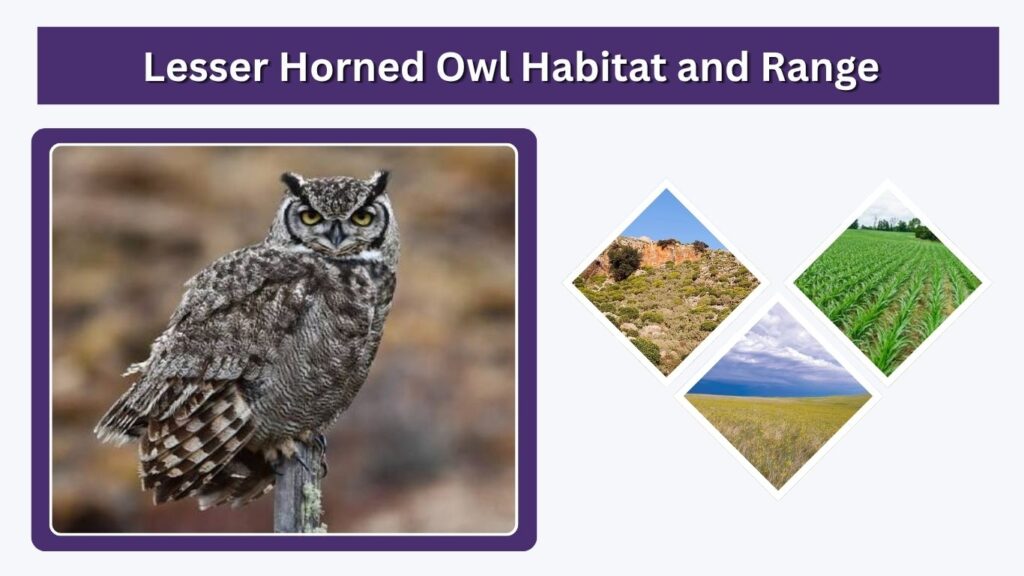
The lesser horned owl is highly adaptable and occupies several types of landscapes across southern South America.
It can live from mountainous areas to open countryside as long as suitable hunting grounds and protected resting or nesting locations are available.
Where Do Lesser Horned Owls Live?
The species occurs from approximately central Peru and western Bolivia south through Chile and western Argentina to Tierra del Fuego.
Habitats can include open woodland, shrubland, grassland, farmland, rocky country, and other relatively open environments.
During daylight, the owl typically chooses sheltered areas where its mottled feathers help it remain difficult to detect.
Are Lesser Horned Owls Found in North America?
The Magellanic or lesser horned owl is primarily a South American species.
The name “lesser horned owl” has occasionally been used informally or historically for other ear-tufted owls, including the long-eared owl. This can cause confusion when reading older material. In current major bird taxonomies, Bubo magellanicus is the species officially called the Lesser Horned Owl.
Lesser Horned Owl Diet
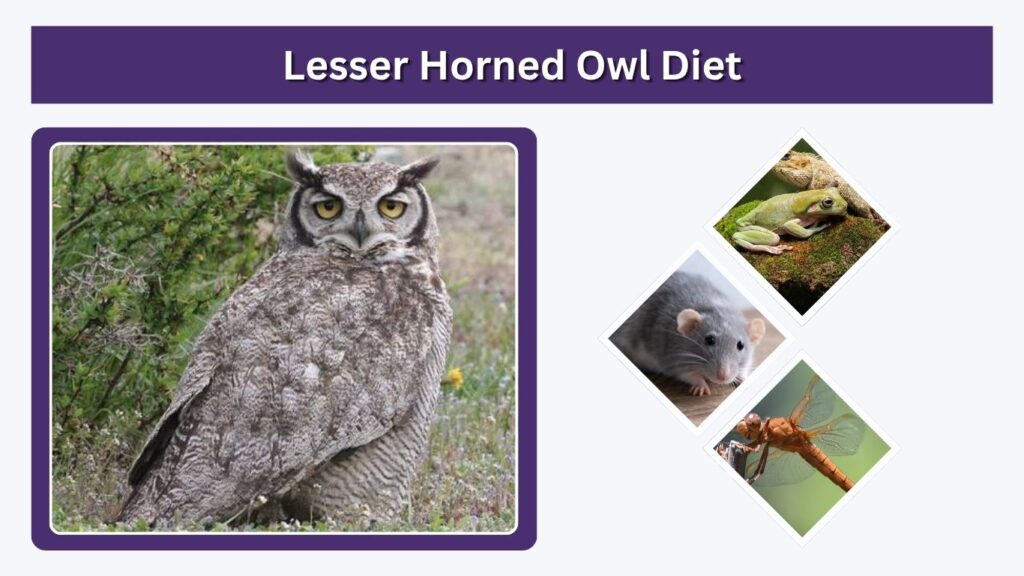
Like other large owls, the lesser horned owl is a predator equipped with excellent night vision, powerful feet, sharp talons, and quiet flight.
It generally hunts over open terrain after sunset, although prey availability can influence exactly what it eats.
What Does a Lesser Horned Owl Eat?
Rodents and other small mammals can form an important part of its diet. Depending on location and available prey, it may also capture birds, reptiles, insects, spiders, and other small animals.
Its diet can be surprisingly flexible. For example, research in central Chile during severe drought conditions found an unusually high proportion of invertebrates in examined prey remains, demonstrating the species’ ability to adjust to locally available food.
How Does It Hunt?
A lesser horned owl often searches for prey from a perch or while flying over open ground.
Its sensitive hearing helps locate animals moving through vegetation or across the ground. Once prey is detected, the owl approaches rapidly and grabs it with powerful talons.
Its muted brown and gray feathers also provide camouflage when resting during daylight hours.
Lesser Horned Owl Call
The call is one of the most distinctive characteristics of the species and can sometimes be more useful for identification than plumage.
What Does a Lesser Horned Owl Sound Like?
The typical call consists of deep, resonant hooting notes followed by a lower vibrating or purring sound.
In parts of South America, the owl is known as tucúquere, a name associated with the sound of its vocalization.
Owls may call to communicate with mates, maintain territories, or signal their presence to neighboring birds. Calling is most noticeable after dark when the birds become active.
Breeding and Nesting
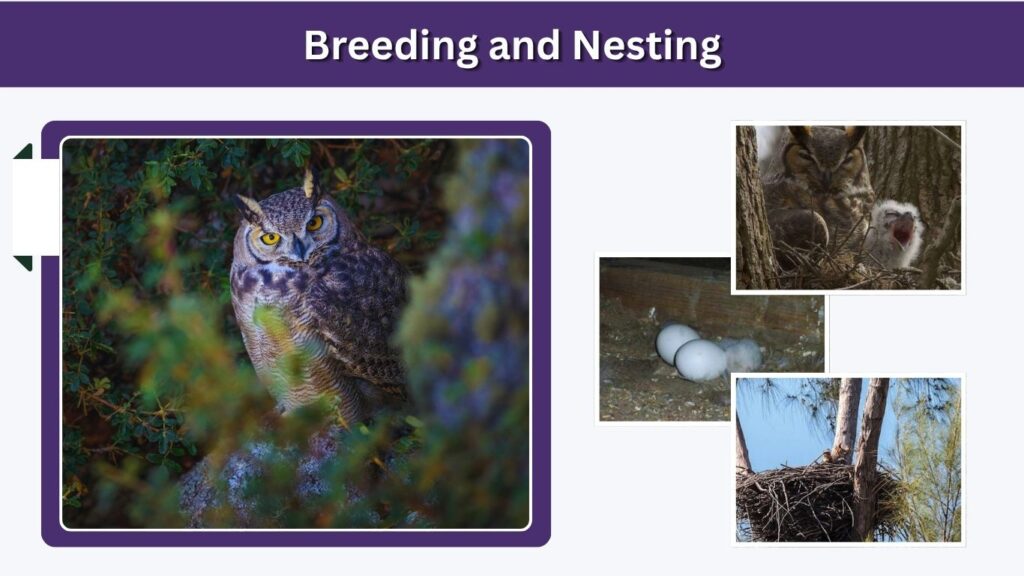
Lesser horned owls do not necessarily construct elaborate nests. They may use naturally protected locations that provide security for their eggs and young.
Where Do Lesser Horned Owls Nest?
Reported nesting sites include cliffs and rocky areas. Females generally handle incubation while males provide food during the nesting period. Clutches of around two or three eggs have been reported.
After hatching, young owls depend heavily on their parents until they develop the strength, flight skills, and hunting ability needed for independence.
Are Lesser Horned Owls Small Horned Owls?
Despite the word “lesser,” this species should not be considered a truly tiny owl.
At roughly 45 cm long, it is a substantial predatory bird. The name mainly makes sense when comparing it with larger horned owls.
Several genuinely smaller owl species also possess noticeable ear tufts, so the phrase small horned owl can describe several unrelated birds rather than one specific species.
Is an Albino Great Horned Owl a Lesser Horned Owl?
No. An albino great horned owl is not a lesser horned owl.
Albinism is a pigmentation condition that can make an individual bird unusually white or pale. It does not change the bird into another species.
Therefore, an unusually white great horned owl remains a great horned owl, while the lesser horned owl is the separate species Bubo magellanicus.
FAQs
Is the lesser horned owl the same as the Magellanic horned owl?
Yes. Lesser horned owl and Magellanic horned owl are common names used for Bubo magellanicus.
How big is a lesser horned owl?
A typical lesser horned owl is approximately 45 cm or about 18 inches long, although individual size varies.
Where is the lesser horned owl found?
It occurs primarily along the Andes and southern South America, including parts of Peru, Bolivia, Chile, Argentina, and Tierra del Fuego.
What does a lesser horned owl eat?
Its diet includes rodents and other small mammals as well as birds, reptiles, insects, spiders, and other available prey.
What is the main difference between a lesser horned owl and a great horned owl?
The lesser horned owl is generally smaller and differs in proportions, geographic distribution, and especially vocalizations. These differences support its recognition as a separate species from the great horned owl.