
The Eastern Barn Owl (Tyto javanica) is a medium-sized nocturnal owl recognized by its pale heart-shaped face, dark eyes, long legs, and quiet flight. Its range extends from South and Southeast Asia through Australasia and parts of the southwestern Pacific, including Australia. Eastern Barn Owls usually inhabit open landscapes where mice, rats, and other small animals are abundant. Although they resemble Western and American Barn Owls closely, modern classifications recognize the Eastern Barn Owl as a separate species.
What Is an Eastern Barn Owl?
The Eastern Barn Owl belongs to the barn owl family Tytonidae. Its currently accepted scientific name is Tyto javanica. ITIS recognizes it as a valid species and lists several subspecies, including the Australian form Tyto javanica delicatula.
Older references may use names such as Tyto alba delicatula or Tyto delicatula. Taxonomic revisions later placed these populations within Tyto javanica.
| Feature | Eastern Barn Owl |
| Scientific name | Tyto javanica |
| Family | Tytonidae |
| Size | Up to about 39 cm |
| Activity | Mainly nocturnal |
| Diet | Mostly small mammals |
| Common call | Long, rough hissing screech |
| Main range | South/SE Asia to Australasia and SW Pacific |
| Australian subspecies | T. j. delicatula |
Eastern Barn Owl Identification
Eastern Barn Owls have the classic barn owl shape but are very different from round-headed, ear-tufted owls.
How to Identify an Eastern Barn Owl
Look for:
- Distinctive heart-shaped facial disc
- Large dark eyes
- Pale white or cream face
- Golden, orange-gray, and brown upperparts
- White or pale underparts
- Fine dark spotting
- Long legs
- No visible ear tufts
- Relatively long, rounded wings
The Australian Museum describes the species as a medium-sized owl with a white facial disc, orange-gray body, and pale underparts.
Its pale plumage can make an Eastern Barn Owl appear almost ghostlike when flying at night.
Eastern Barn Owl Size and Weight
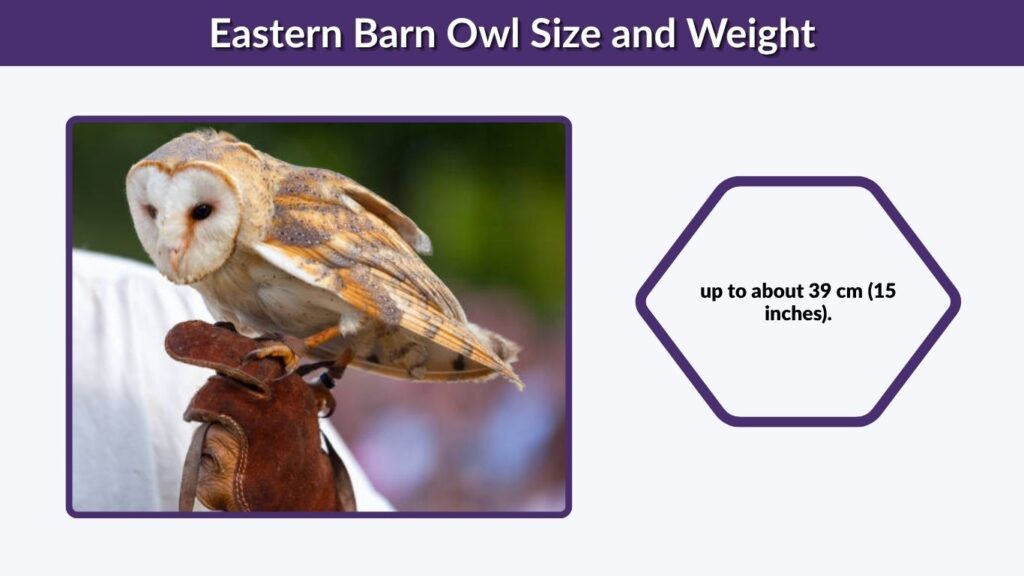
Eastern Barn Owls are medium-sized owls. The Australian Museum reports a body length of up to about 39 cm (15 inches).
Females generally appear somewhat larger and heavier-bodied than males, although there can be overlap between the sexes.
Their wings make them appear considerably larger in flight than when perched. Long, broad wings are especially useful for slow hunting flights over grassland and agricultural fields.
Eastern Barn Owl Range and Distribution
The Eastern Barn Owl range is extensive. Current taxonomic treatments place the species from South and Southeast Asia eastward through Australasia and into parts of the southwestern Pacific.
Its broader distribution includes regions of:
- The Indian subcontinent
- Southeast Asia
- Indonesia
- Australia
- New Guinea
- Melanesia
- Some Pacific islands
Habitat availability within this range is more important than simply being inside the species’ geographical boundaries. Eastern Barn Owls favor landscapes that provide both suitable nesting sites and abundant small prey.
Eastern Barn Owl in Australia
The Eastern Barn Owl is widespread in Australia, where the commonly recognized subspecies is Tyto javanica delicatula. ITIS specifically lists this Australian form under the Eastern Barn Owl.
Australian Eastern Barn Owls occur in agricultural country, woodland, grassland, and even some highly modified landscapes. Research in north-western Victoria has documented them breeding and hunting in agricultural and woodland environments.
They can also occur surprisingly close to cities when suitable roosting habitat is available. Eastern Barn Owls have, for example, been documented roosting in palm trees in highly urbanized Sydney.
Eastern Barn Owl in India
Eastern Barn Owls occur across parts of South Asia, including the Indian subcontinent, under the modern Tyto javanica treatment. Their range continues east through Southeast Asia and Indonesia.
Older field guides may still refer to Asian barn owls simply as Barn Owls or use earlier scientific classifications. This is one reason searches for Eastern Barn Owls in India can produce several different scientific names.
Eastern Barn Owl Habitat
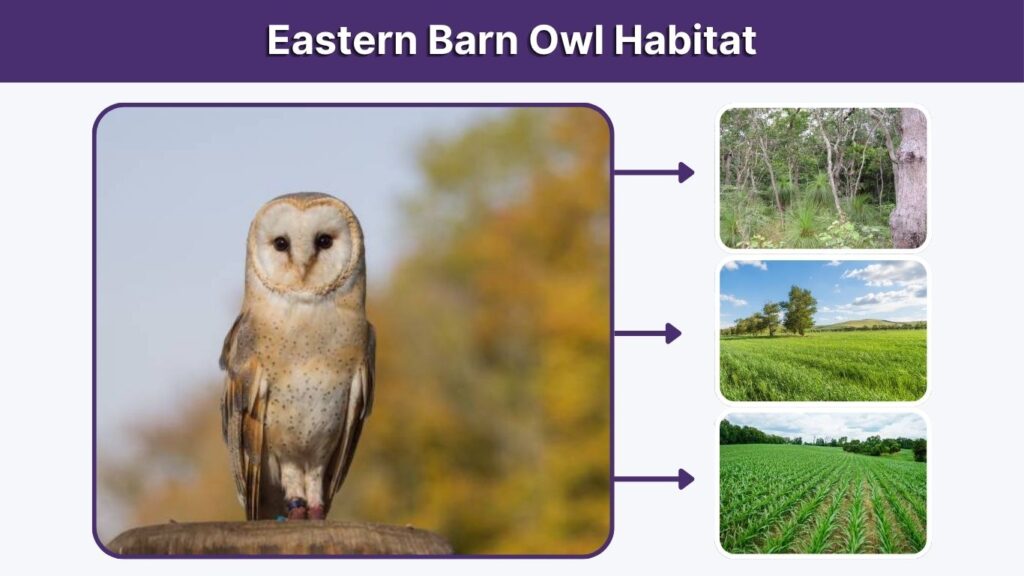
Eastern Barn Owls prefer open and semi-open habitats where they can hunt close to the ground.
Common habitats include:
- Grasslands
- Farmland
- Agricultural fields
- Pastures
- Open woodland
- Forest edges
- Plantations
- Villages
- Wetland edges
- Lightly wooded countryside
They can occur from lowlands into mountainous areas where suitable open hunting habitat exists.
For nesting and daytime roosting, they use sheltered locations such as tree hollows, buildings, barns, cavities, and similar protected spaces.
Eastern Barn Owl Call and Sound
The Eastern Barn Owl does not typically make the classic “hoo-hoo” call many people associate with owls.
Instead, its characteristic vocalization is a long, rough, hissing or rasping screech. The Australian Museum describes the common call as lasting about 12 seconds.
What Does an Eastern Barn Owl Sound Like at Night?
Depending on the situation, you may hear:
- Long hissing screeches
- Harsh rasping calls
- Shorter screeches
- Hisses around the nest
- Begging calls from young owls
Eastern Barn Owls are generally rather quiet, so their sudden screech at night can be startling.
Research on Australian birds also documents screeching associated with territorial and breeding behavior.
What Do Eastern Barn Owls Eat?
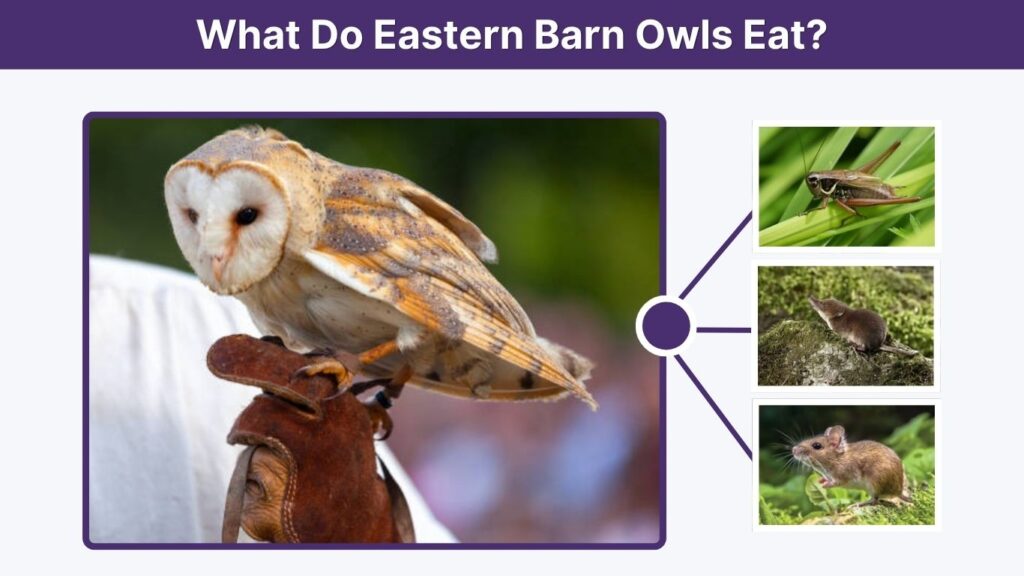
The Eastern Barn Owl diet consists mainly of small mammals, particularly rodents. The Australian Museum identifies rats and mice among its major foods.
Depending on location and prey availability, its diet can include:
- Mice
- Rats
- Other small rodents
- Small marsupials
- Small birds
- Insects
- Other small vertebrates
Australian pellet studies show that diet composition can vary substantially between habitats and regions.
How Do Eastern Barn Owls Hunt?
Eastern Barn Owls usually hunt at night by flying slowly over open ground and listening for small animals below.
A 2025 Australian study documented nocturnal hunting in both open fields and denser roadside or verge habitats.
Their combination of sensitive hearing, silent flight, long wings, and strong feet makes them highly effective hunters in darkness.
Eastern Barn Owl Babies and Chicks
A baby Eastern Barn Owl is called a chick or nestling.
Newly hatched chicks look very different from adults. They initially have pale down rather than developed adult feathers and remain dependent on their parents for food.
As they develop, juveniles gradually acquire:
- A recognizable heart-shaped facial disc
- Developed flight feathers
- Longer legs
- More adult-like body coloration
Even after fledging, young Eastern Barn Owls may continue depending on their parents while learning to hunt.
Eastern Barn Owl Breeding
Breeding varies with climate and food availability.
A detailed 2025 study of Eastern Barn Owls in north-western Victoria found clutches of 3–6 eggs, usually four or five. Incubation averaged about 33 days, and young spent approximately 46–57 days in the nest.
When prey becomes particularly abundant, barn owls can respond rapidly with increased breeding activity. Australian populations are especially known for responding to changes in rodent abundance.
Where Do Eastern Barn Owls Nest?
Nesting locations can include:
- Hollow trees
- Barns
- Old buildings
- Natural cavities
- Nest boxes
- Other sheltered structures
They do not typically construct elaborate stick nests.
Adolescent Eastern Barn Owls
An adolescent or juvenile Eastern Barn Owl may already look similar to an adult once its flight feathers have grown.
Young birds can still be distinguished by developmental features and behavior. They may spend considerable time around their nesting area, call repeatedly for food, and remain dependent on their parents after beginning to fly.
In the Victorian breeding study, post-fledging dependence lasted approximately 3–5 weeks.
Eastern Barn Owl Predators and Threats
Adult barn owls have relatively few predators compared with small birds, but eggs and chicks are more vulnerable.
Possible natural threats include larger birds of prey and other animals capable of entering nest cavities.
Human-related threats can also be important. One concern is secondary poisoning from rodenticides: an owl may consume rodents that have eaten anticoagulant poison. This is especially relevant because rodents form such an important part of the Eastern Barn Owl’s diet. Australian conservation organizations continue to highlight rodenticide exposure as a risk to owls and other predatory wildlife.
Eastern Barn Owl vs Western Barn Owl
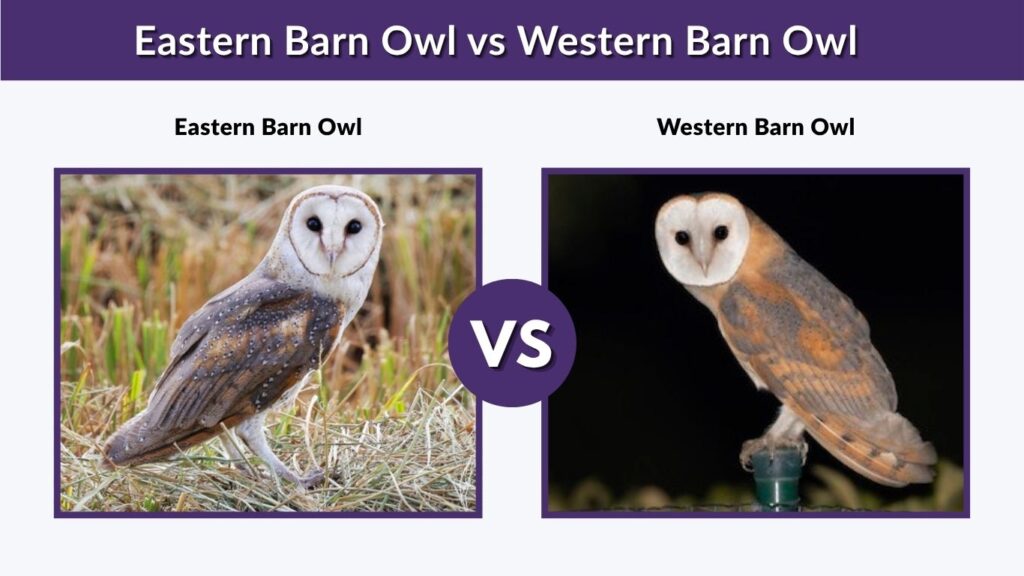
Eastern and Western Barn Owls look extremely similar because they belong to the same broader barn-owl complex.
| Feature | Eastern Barn Owl | Western Barn Owl |
|---|---|---|
| Scientific name | Tyto javanica | Tyto alba |
| Main range | South/SE Asia, Australasia | Europe, Africa, western Asia |
| Australia | Yes | No |
| Southeast Asia | Yes | Generally no |
| Face | Heart-shaped | Heart-shaped |
| Activity | Nocturnal | Nocturnal |
| Main prey | Small mammals | Small mammals |
Modern taxonomy separates Eastern Barn Owls from Western Barn Owls, although older references often treated these populations together under Tyto alba.
Is an Eastern Grass Owl an Eastern Barn Owl?
No. The Eastern Grass Owl is a different species, Tyto longimembris.
Both belong to the family Tytonidae and can look somewhat similar, but they have different habitat preferences and physical characteristics. NSW wildlife authorities list Eastern Barn Owl (Tyto javanica) and Eastern Grass Owl (Tyto longimembris) separately.
FAQs
What is the scientific name of the Eastern Barn Owl?
The currently accepted scientific name is Tyto javanica. ITIS recognizes it as a valid species in the barn owl family Tytonidae.
How big is an Eastern Barn Owl?
Eastern Barn Owls are medium-sized birds. The Australian Museum reports that they can reach approximately 39 cm, or around 15 inches, in body length.
What does an Eastern Barn Owl sound like?
Its best-known call is a long, rough, hissing screech rather than a traditional owl hoot. The common call may last approximately 12 seconds.
Where do Eastern Barn Owls live?
They range from South and Southeast Asia through Indonesia and Australasia into parts of the southwestern Pacific. They typically favor open landscapes such as farmland, grassland, plantations, and open woodland.
What do Eastern Barn Owls eat?
They mainly prey on small mammals, particularly mice and rats. Their exact diet changes with location and prey availability, and they may also consume other small vertebrates and insects.