The American barn owl is a pale, medium-sized owl found across the Americas. It has a white heart-shaped face, dark eyes, long legs, and broad wings adapted for quiet nighttime hunting. Instead of hooting, it produces harsh screams, hisses, and purring calls. It usually hunts mice, voles, rats, and shrews over grasslands, farms, marshes, and other open environments. Although commonly associated with old barns, it also nests in tree cavities, cliffs, caves, silos, and properly designed nest boxes.
What Is an American Barn Owl?
The American barn owl belongs to the barn owl family, Tytonidae. It was once treated as part of the widespread barn owl species Tyto alba. In 2024, the Clements taxonomy divided that group into three species: American barn owl, Eastern barn owl, and Western barn owl. Under this classification, the American barn owl’s scientific name is Tyto furcata.
| Feature | Description |
| Scientific name | Tyto furcata |
| Family | Tytonidae |
| Length | 12.6–15.8 inches |
| Wingspan | 39.4–49.2 inches |
| Weight | 14.1–24.7 ounces |
| Main food | Small mammals |
| Activity | Primarily nocturnal |
| Range | North, Central, and South America |
Older books and wildlife regulations may still list American populations under Tyto alba. This reflects an earlier classification rather than a different-looking bird.
Identification
- White, heart-shaped facial disc
- Large, dark brown or black eyes
- Smoothly rounded head without ear tufts
- Gray, cinnamon, buff, and gold upperparts
- White, cream, or cinnamon-colored underparts
- Long legs equipped with sharp talons
- Broad, rounded wings and a short tail
- Crow-sized body with a slender appearance
- Females generally larger and more heavily spotted than males
American barn owls measure approximately 32–40 centimetres long, weigh around 400–700 grams, and have wingspans of roughly 100–125 centimetres. Their light underparts can make them appear almost completely white when seen flying at night.
American Barn Owl Range and Habitat
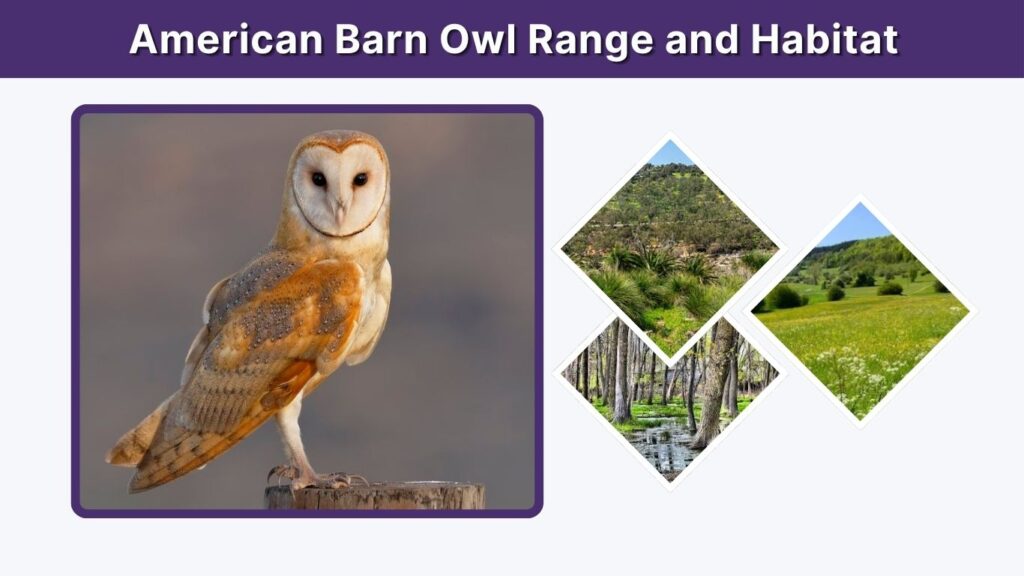
The American barn owl occurs throughout much of the Americas. Its range includes parts of North America, Mexico, Central America, South America, the Caribbean, and the Galápagos Islands. It generally remains within suitable areas throughout the year rather than performing predictable long-distance seasonal migrations.
Preferred Habitat
American barn owls favor open environments where low vegetation makes small mammals easier to detect. Common habitats include:
- Grasslands and meadows
- Agricultural fields
- Ranchlands and pastures
- Marshes and wetland edges
- Deserts and open scrub
- Brushy fields
- Woodland edges
- Suburban areas near undeveloped land
They need quiet cavities for daytime roosting and breeding. Suitable sites include hollow trees, caves, cliff crevices, barns, church towers, silos, attics, haystacks, and artificial nest boxes. Some South American populations occur at elevations reaching approximately 13,000 feet in the Andes.
American Barn Owls in California
American barn owls occur regularly in California, including southern California. Agricultural valleys, open grasslands, coastal plains, ranches, and suburban areas bordering undeveloped land can provide suitable hunting habitat.
They may also live around Los Angeles where open fields, freeway margins, parks, wetlands, or agricultural areas remain nearby. However, dense urban development without rodent-rich hunting areas or safe cavities is less suitable. California wildlife records recognize the barn owl as a regularly occurring species in the state.
What Do American Barn Owls Eat?
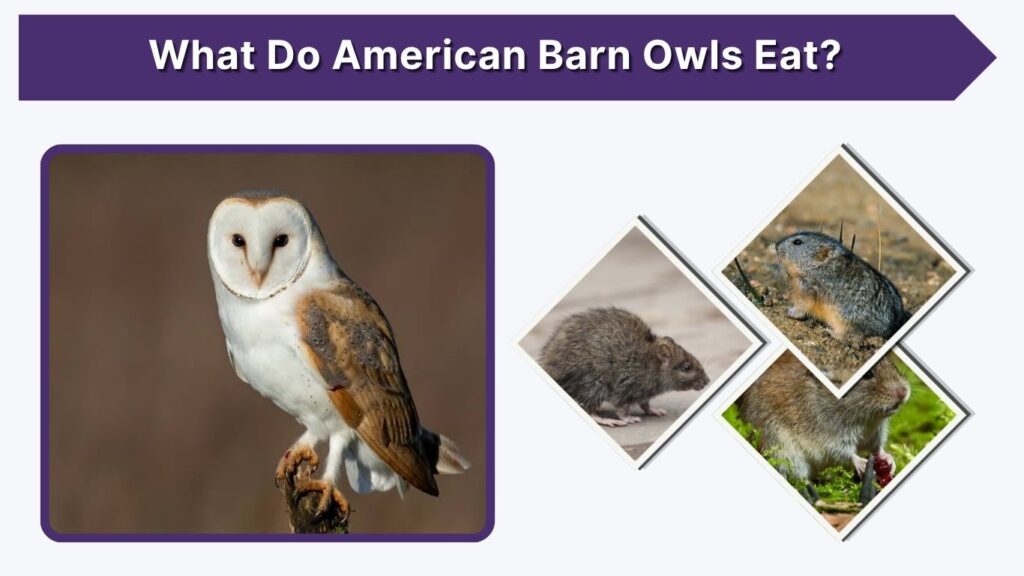
American barn owls mainly eat small mammals active at night. Their exact diet changes by location and prey availability.
Common prey includes:
- Mice
- Voles
- Small rats
- Shrews
- Lemmings
- Young rabbits
- Bats
They occasionally catch birds, amphibians, reptiles, insects, fish, scorpions, or crayfish. Nesting pairs may store numerous prey animals inside or near the nest so that food is available when their chicks hatch.
Pellets and Digestion
An American barn owl often swallows small prey whole. Meat and organs are digested, but fur, bones, teeth, and claws cannot pass through the digestive system easily.
The owl compresses these materials into an oval pellet and later coughs it up. It may produce about two pellets daily. Researchers examine the bones inside pellets to identify prey species and learn about the surrounding ecosystem.
American Barn Owl Sound
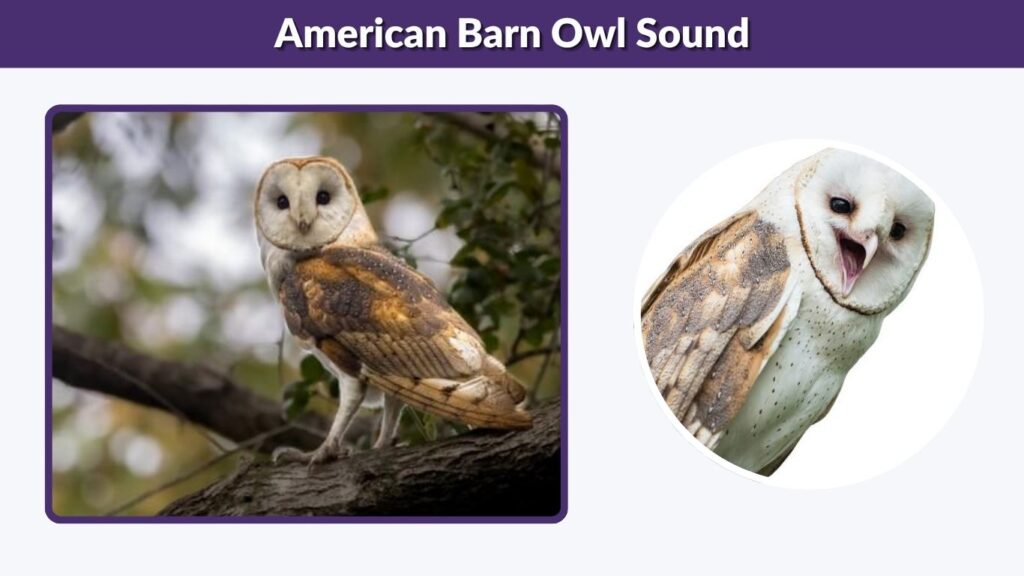
The American barn owl does not make the familiar hooting call associated with Great Horned, Barred, and many other owls. Its best-known sound is a long, harsh scream lasting approximately two seconds.
The male produces this scream most frequently, sometimes calling repeatedly while flying. Other sounds include:
- Loud defensive hissing
- Soft purring courtship calls
- Chirps and twitters
- Snoring-like calls from hungry young
- Bill snapping when threatened
- Wing clapping during display flights
A loud scream coming from an attic, barn, or field at night can sound alarming, but it is normal American barn owl communication.
Adaptations for Nighttime Hunting
American barn owls are highly specialized for locating small animals in darkness.
Heart-Shaped Facial Disc
The heart-shaped arrangement of facial feathers channels sound toward the owl’s ears. Its ear openings are positioned asymmetrically, allowing it to compare the timing and intensity of sounds reaching each side of its head.
This enables the owl to locate prey using sound alone, including mice concealed beneath vegetation or snow. Laboratory observations have shown that barn owls can capture prey in complete darkness.
Silent Flight
Soft flight feathers and specialized wing edges reduce noise as air moves across the wings. Silent flight allows the owl to approach prey without warning it and prevents wing noise from masking faint movements below.
Its broad wings also support slow, buoyant flight. The owl commonly flies low over fields, moving back and forth while listening for rodents before dropping feet-first onto its target.
Beak, Legs, and Talons
Long legs allow an American barn owl to reach into grass while keeping its body and wings above vegetation. Strong feet and curved talons seize prey, while the sharply hooked beak tears larger food into smaller pieces.
American Barn Owl Nesting and Life Cycle
American barn owls do not construct a traditional nest from sticks. The female often lays eggs on shredded pellets and accumulated debris inside an existing cavity.
Nesting locations include:
- Hollow trees
- Barn lofts
- Church steeples
- Cliff openings
- Caves
- Houses and silos
- Riverbank cavities
- Artificial nest boxes
A clutch may contain 2–18 eggs, although smaller clutches are more typical. Incubation lasts approximately 29–34 days, and young remain in the nest for around 50–55 days. Because eggs are laid at intervals, chicks hatch on different days and may vary noticeably in size.
The female performs most incubation and early brooding, while the male supplies food. In productive habitats, a pair may raise more than one brood in a year.
American Barn Owl Nest Box Plans
A nest box can provide a breeding site where large tree cavities and old buildings are scarce. Cornell’s NestWatch recommends placing barn owl boxes in or near open hunting habitat, approximately 8–25 feet above the ground and at least 100 feet from another box.
Its published design uses an entrance approximately 4½ inches across, an internal depth of around 16 inches, and a floor measuring roughly 12⅜ by 22¾ inches. Boxes may be installed on poles or inside barns, silos, granaries, and similar structures.
A well-designed box should include drainage, ventilation, durable untreated material, secure mounting, and protection from climbing predators. Avoid disturbing an occupied box, especially during early nesting. Rodenticides should not be used nearby because owls may be poisoned after eating contaminated rodents.
American Barn Owl vs European Barn Owl
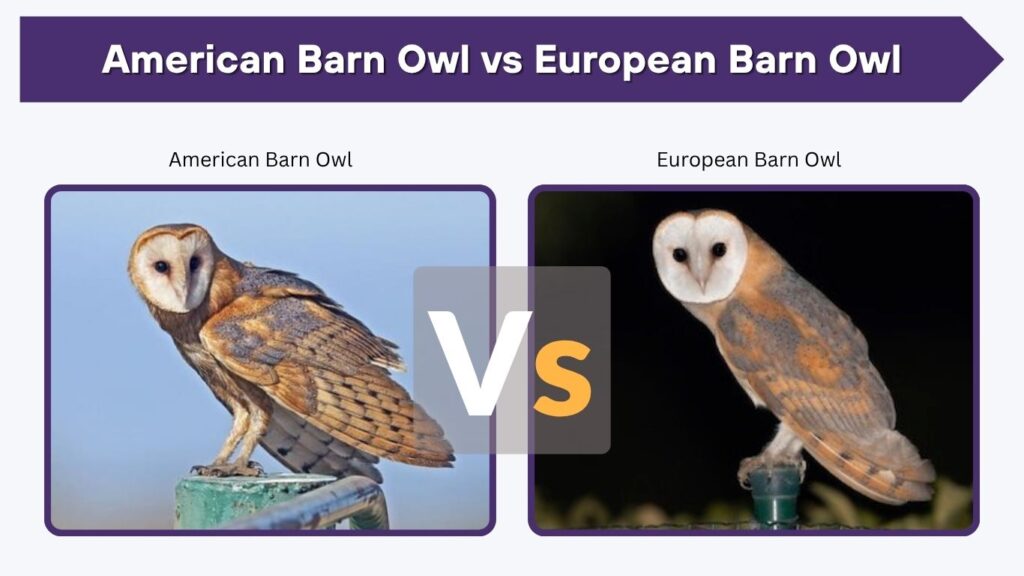
The “European barn owl” is part of the Western barn owl species, Tyto alba. The American barn owl is classified as Tyto furcata. The two are closely related and have similar heart-shaped faces, dark eyes, hunting behavior, and calls.
| Feature | American barn owl | Western barn owl |
| Scientific name | Tyto furcata | Tyto alba |
| Main range | The Americas | Europe, Africa, and western Asia |
| Appearance | Variable; often relatively large | Highly variable by region |
| Taxonomic status | Recognized as a species in 2024 | Retained the original T. alba name |
Geographic location is usually the easiest way to separate them because their natural ranges do not normally overlap.
Can You Keep an American Barn Owl as a Pet?
American barn owls are wild predators, not domesticated pets. They require whole-prey diets, large flight spaces, specialized veterinary care, and permits for most forms of possession.
In the United States, barn owls are included among birds protected under the Migratory Bird Treaty Act. Capturing, possessing, transporting, buying, or selling a protected owl generally requires legal authorization. An injured or orphaned owl should be reported to a licensed wildlife rehabilitator.
FAQs
What is the scientific name of the American barn owl?
Its current scientific name under the 2024 Clements classification is Tyto furcata. Older sources commonly classify American populations as Tyto alba or Tyto alba furcata because the global barn owl complex was previously treated as one species.
What does an American barn owl sound like?
Its primary call is a harsh, drawn-out scream rather than a hoot. It also hisses when defending a nest, produces softer purring calls during courtship, snaps its beak when alarmed, and makes chirping or snoring-like sounds around its young.
How large is an American barn owl?
An adult is approximately 12.6–15.8 inches long, weighs about 14.1–24.7 ounces, and has a wingspan of roughly 39.4–49.2 inches. Females are typically larger and may have more spotting on their underparts.
Where do North American barn owls live?
They inhabit open landscapes across much of the United States, Mexico, and parts of southern Canada. They are most often associated with grasslands, farms, marshes, deserts, ranches, and suburban edges containing suitable cavities or buildings for nesting.
Are American barn owls dangerous?
They normally avoid people and are not considered a public danger. However, a cornered or handled owl can defend itself with powerful talons and its beak. Keep a respectful distance from adults, chicks, and active nests.