The marsh owl (Asio capensis) is a medium-sized African owl recognized by its dark brown plumage, rounded head, small ear tufts, and preference for open wetlands and grasslands. Also called the African marsh owl, it spends much of the day concealed in vegetation and becomes active around dusk and at night. Marsh owls hunt rodents and other small animals by flying low over grass. Their unusual calls, ground-nesting habits, and daytime activity make them particularly interesting among African owls.
What Is a Marsh Owl?
The marsh owl belongs to the typical owl family, Strigidae, and its scientific name is Asio capensis. It is closely associated with open landscapes rather than dense forests. Although its common name suggests that it lives only in marshes, the species also occupies moist grasslands, cultivated land, savannas, moors, and other open habitats with enough vegetation for hiding and nesting.
Marsh Owl Identification
Important identification characteristics include:
- Medium-sized body measuring about 31–38 cm long
- Rounded head with very small ear tufts
- Dark brown to earth-brown upperparts
- Pale buff facial disc surrounded by a darker rim
- Dark brown eyes
- Brown chest and paler lower belly
- Feathered legs and toes
- Broad wings suited to low hunting flights
- Noticeable dark patches around the wrists in flight
- Females generally somewhat darker than males
Marsh owls can weigh roughly 225–485 grams, although individual size varies. Their tiny ear tufts are often flattened and may be almost impossible to see.
Marsh Owl vs Barn Owl
Marsh owls and barn owls may use some of the same open habitats, but they look noticeably different. The marsh owl is considerably darker across its back and chest and has a rounded facial appearance.
Barn owls usually have a much paler, strongly heart-shaped face. Marsh owls are also usually quiet while flying, whereas barn owls are well known for producing loud screeching calls.
Where Do Marsh Owls Live?
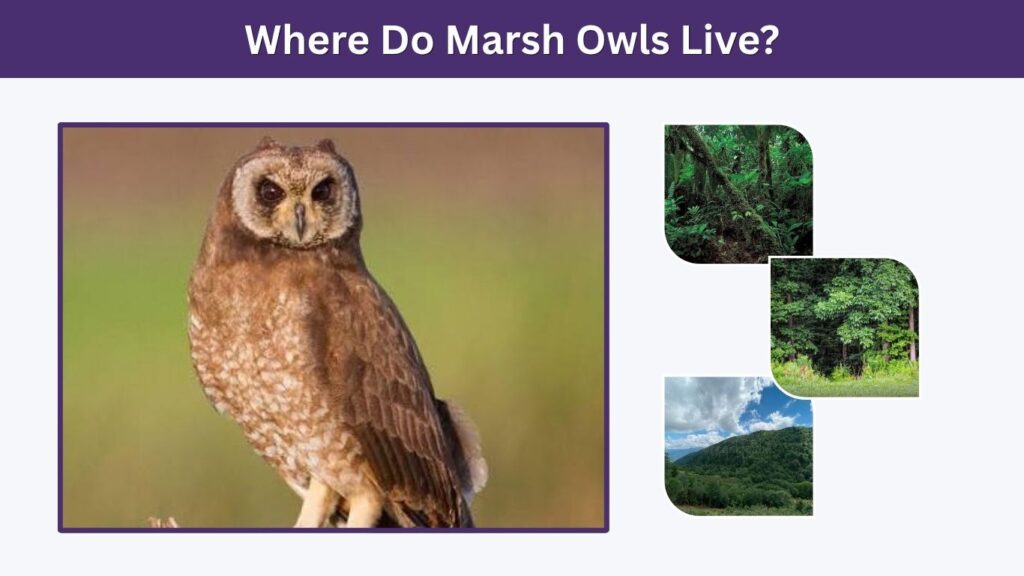
The marsh owl occurs mainly in Africa, with populations scattered across suitable open habitats. It can occupy environments from low-lying coastal marshes to high-elevation grasslands. Suitable habitat generally combines short vegetation for hunting with taller grass or weeds where the owl can hide, roost, and build its ground nest.
Marsh Owl Habitat
Typical habitats include:
- Freshwater marshes
- Coastal wetlands
- Moist grasslands
- Savannas
- Montane grasslands
- Moorland
- Agricultural fields
- Rice fields
- Drainage strips
- Grasslands near human settlements
The species has been reported from sea level to elevations approaching 3,000 meters. During daylight, marsh owls commonly remain concealed on the ground among tall grass or other thick vegetation.
Marsh Owl in South Africa
The marsh owl in South Africa is particularly associated with wetlands and open grasslands. Suitable habitat can occur around natural marshes, protected grasslands, agricultural areas, and highveld environments.
South African birdwatchers sometimes see them flying low over open vegetation around sunset. They may also become active before sunset or remain active after sunrise, particularly under cloudy conditions.
Marsh Owl in Other Parts of Africa
The species is not restricted to South Africa. Records extend through various parts of sub-Saharan Africa, and populations also occur farther north.
For example, marsh owls are documented in Zambia and high-altitude grassland habitats in Malawi. The species is also known from Morocco. Its distribution can be local because suitable wet grassland habitat is often patchy.
What Does a Marsh Owl Eat?
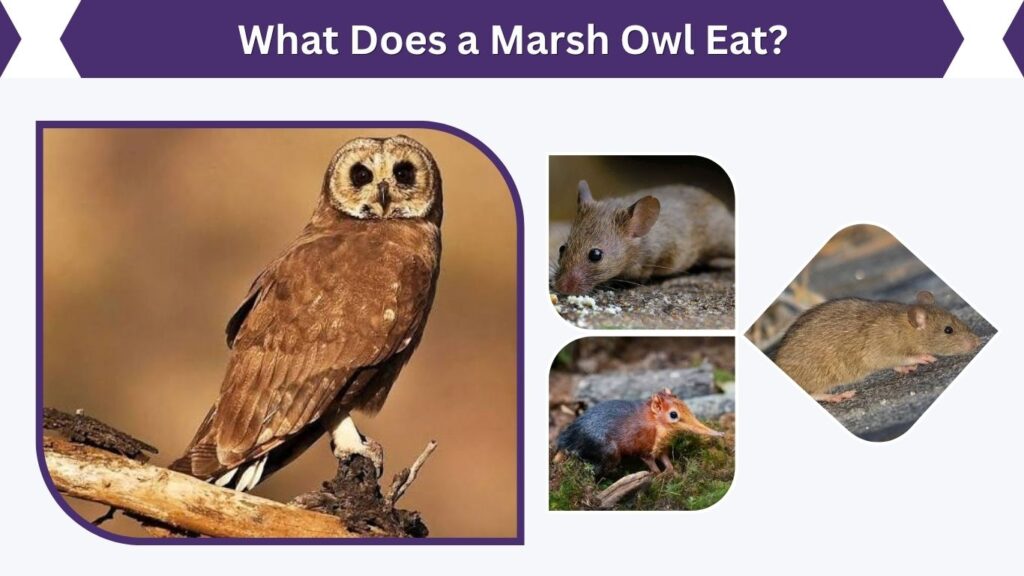
Marsh owls are carnivorous predators that hunt mainly over open ground. Small rodents form an important part of the diet, making these owls useful natural predators in grassland and agricultural ecosystems. Their food selection can change according to prey availability, and they may switch to birds, insects, or other small animals when rodents become less abundant.
Marsh Owl Diet
Prey can include:
- Mice
- Voles
- Rats
- Shrews
- Small birds
- Young hares
- Bats
- Frogs
- Lizards
- Grasshoppers
- Beetles
- Scorpions
- Other small vertebrates
Small mammals normally make up an important portion of the diet, although birds can become more significant when rodents are difficult to find.
How Does a Marsh Owl Hunt?
A marsh owl usually hunts by flying slowly and relatively close to the ground. Its flight may alternate between steady wingbeats, gliding, quick turns, and brief hovering.
Once prey is detected, the owl drops toward the ground and captures it with its powerful talons. Flying insects can sometimes be taken directly from the air.
The owl’s low hunting style is well suited to grasslands where rodents move underneath or between patches of vegetation.
Marsh Owl Behavior
Marsh owls are mostly active around twilight and during the night, but they are not strictly nocturnal. Observers may see them flying before sunset, after sunrise, or even during cloudy daytime conditions. During the brighter parts of the day, they usually remain hidden in a shallow resting place among grass and other vegetation.
Daytime Roosting
Unlike many tree-roosting owls, marsh owls frequently rest directly on the ground.
Dense grass provides camouflage and protection. Their brown plumage blends well with dry or dark vegetation, making a motionless bird difficult to notice.
Outside the breeding season, several marsh owls may sometimes share the same general roosting area. This communal behavior can result in multiple birds being found relatively close together.
Defensive Behavior
Marsh owls can become defensive around nesting areas. Adults may attempt to distract predators or other intruders by behaving as though they are injured.
Such distraction displays encourage a potential threat to move away from the nest or young birds. Their choice of well-hidden ground vegetation provides additional protection.
Marsh Owl Sound and Call
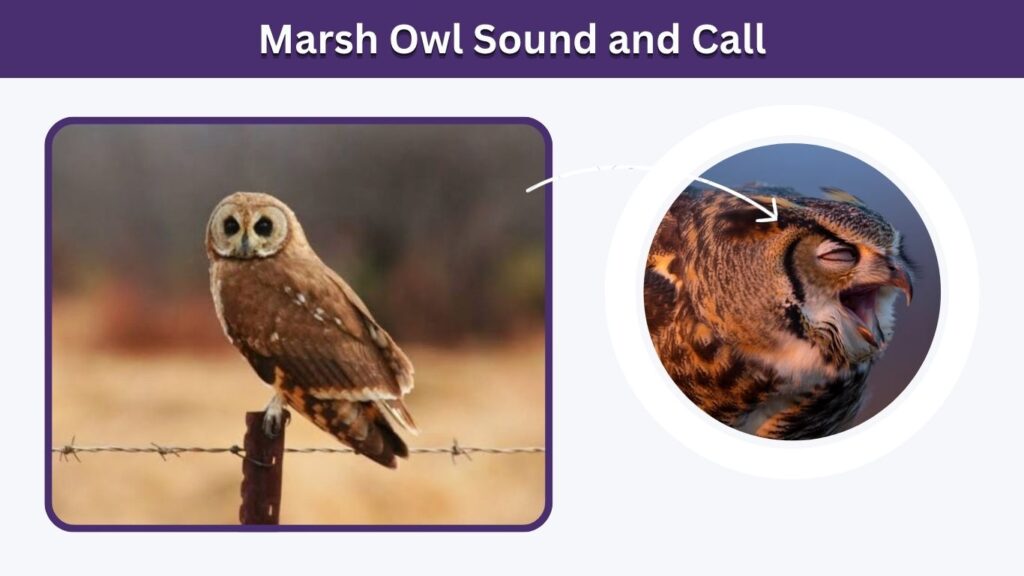
The marsh owl sound is different from the classic deep hooting associated with many owl species. In fact, marsh owls are generally not highly vocal. Their unusual creaking and croaking sounds can therefore be useful identification clues, especially when the birds are flying over grassland after dark.
What Does a Marsh Owl Call Sound Like?
One characteristic call is a hoarse, drawn-out grating sound. It has been compared to the noise made when a dry branch is slowly bent and broken.
Marsh owls may also produce a series of harsher, croaking calls while flying. These sounds can be heard during territorial or breeding activity.
The species generally calls less frequently than many other owls, so long periods of silence are normal.
Communication During Breeding
A male may fly over its territory while calling and sometimes performing wing-clapping displays.
These aerial displays help advertise the territory and communicate with potential mates or rivals. Calls are also important after the chicks leave the immediate nest because adults can use vocalizations and movement sounds to locate their young among dense vegetation.
Marsh Owl Nesting and Life Cycle
One unusual feature of the marsh owl is its ground-nesting behavior. Rather than relying on a tree cavity, the female selects a concealed place within tall vegetation. Nesting often occurs toward the end of the wet season, although timing can differ across the species’ large geographic range and according to local rainfall and environmental conditions.
Marsh Owl Nest
The nest is usually a shallow depression hidden among tall grass or weeds, sometimes beside a bush.
The female may pull vegetation over the site, creating a partial canopy. A short pathway through the surrounding vegetation can function as an entrance to the nesting area.
Dry leaves may be added to the depression, but the nest remains relatively simple compared with the constructed nests of many other birds.
Eggs and Incubation
A female generally lays several white eggs, with around three being typical, although clutches of roughly two to six have been reported.
The female handles incubation, which lasts about 27–28 days for each egg. During this period, the male supplies her with food.
Because eggs are laid at intervals and incubation begins early, chicks within the same nest can differ in age and size.
Baby Marsh Owls
Young marsh owls leave the immediate nest while they are still covered partly in down and before they can fly properly.
They spread into nearby vegetation, where their parents continue bringing food. Juveniles begin fledging at approximately one month of age and continue developing their adult plumage afterward.
Both parents remain involved in caring for their offspring until the young become increasingly independent.
Marsh Owl Conservation Status
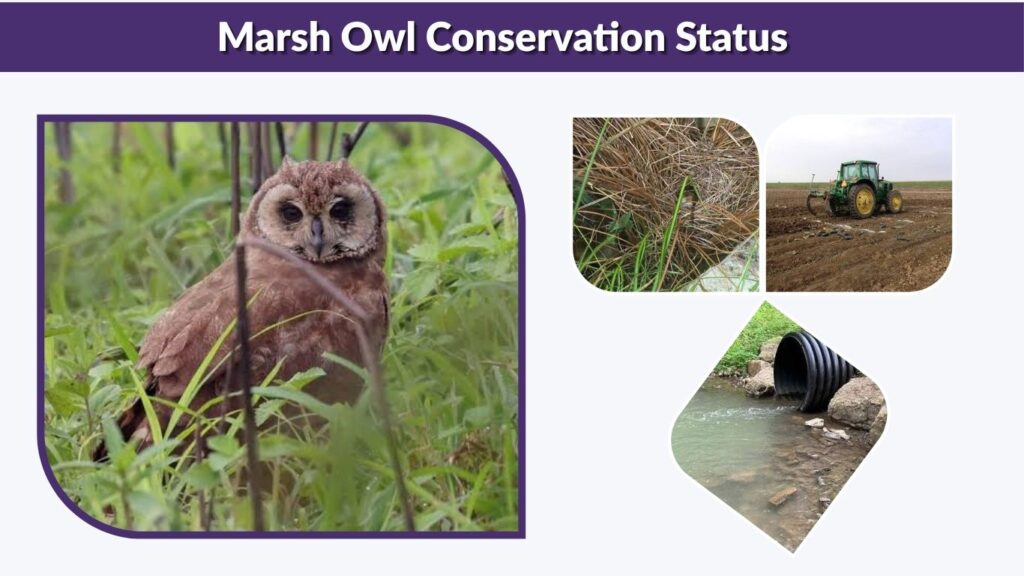
Although marsh owls depend heavily on grassland and wetland ecosystems that can be altered by human activity, the species currently has a broad enough distribution that it is not considered globally threatened. BirdLife lists the Marsh Owl (Asio capensis) as Least Concern. However, conserving wetlands and natural grasslands remains important for maintaining healthy local populations.
Threats to Marsh Owl Habitat
Potential pressures on local populations include:
- Wetland drainage
- Conversion of grassland to intensive agriculture
- Frequent or poorly timed fires
- Loss of tall nesting vegetation
- Urban development
- Disturbance around ground nests
- Reduction of natural prey populations
Ground nests can be particularly vulnerable when grass is cut, burned, heavily grazed, or disturbed during breeding periods.
Why Marsh Owls Are Important
Marsh owls help regulate populations of rodents and other small animals. This predatory role can be particularly valuable around farms and grasslands.
Protecting wetlands also benefits many other organisms, including waterbirds, insects, amphibians, small mammals, and native plants.
Interesting Marsh Owl Facts
The marsh owl differs from many familiar owl species because of its habitat preferences, ground-based lifestyle, and unusual activity patterns. Its adaptations allow it to hunt efficiently across open African landscapes while remaining remarkably difficult to detect when resting.
Quick Facts
- Scientific name: Asio capensis
- Also called the African marsh owl
- Family: Strigidae
- Length: approximately 31–38 cm
- Primarily crepuscular and nocturnal
- Sometimes active during daylight
- Small ear tufts are often difficult to see
- Frequently roosts on the ground
- Mainly hunts rodents
- Builds nests on the ground
- Can roost communally
- Global conservation status: Least Concern
FAQs
The marsh owl’s habit of living in open grassland rather than dense woodland makes it unusual compared with many other owls. Its small ear tufts, ground nests, low hunting flights, and creaking call can all help distinguish it. The following questions address some of the most common searches about this African owl.
Where does the marsh owl live?
Marsh owls live mainly in Africa. They favor marshes, moist grasslands, savannas, agricultural land, moorland, and other open environments containing both short hunting vegetation and taller areas for roosting and nesting.
What does a marsh owl eat?
Marsh owls mainly eat small rodents such as mice, rats, and voles. They can also capture birds, shrews, bats, frogs, lizards, insects, scorpions, and other small animals.
What does a marsh owl sound like?
Its characteristic call is a hoarse, creaking or grating sound. Marsh owls can also make croaking calls during flight. They are generally less vocal than many other owl species.
Are marsh owls found in South Africa?
Yes. Marsh owls occur in South Africa and are particularly associated with wetlands, moist grasslands, and other suitable open habitats.
Is the marsh owl endangered?
No. The marsh owl is currently classified globally as Least Concern. Nevertheless, local populations can be affected by wetland destruction, grassland conversion, disturbance, and loss of nesting habitat.