
The Burrowing Owl is a small, long-legged owl famous for living in underground burrows instead of tree cavities. Found mainly across open landscapes of North and South America, this unusual owl is often active during both day and night. Its bright yellow eyes, upright posture, and ground-dwelling habits make it easy to recognize. From insects and rodents to reptiles and small birds, Burrowing Owls are adaptable hunters. Learning about their habitat, diet, nesting, sounds, lifespan, and behavior reveals why this tiny owl is so remarkable.
What Is a Burrowing Owl?
The Burrowing Owl (Athene cunicularia) is one of the world’s most distinctive small owls. Unlike many owl species that spend much of their time in trees, Burrowing Owls are strongly associated with the ground. They use underground burrows for nesting, resting, hiding from harsh weather, and protecting their young while hunting across surrounding open areas.
Burrowing Owl Identification
Several characteristics can help identify a Burrowing Owl:
- Scientific name: Athene cunicularia
- Body length: About 7.5–10 inches
- Wingspan: Roughly 20–24 inches
- Weight: Usually around 4.5–9 ounces
- Eyes: Large and bright yellow
- Legs: Noticeably long and lightly feathered
- Plumage: Brown with white or pale spots
- Underparts: Light-colored with brown barring or spotting
- Head: Rounded with no obvious ear tufts
Adults often stand upright near the entrance of their burrows, making their long legs particularly noticeable.
What Does a Burrowing Owl Look Like?
Burrowing Owls have compact bodies, rounded heads, and relatively flat facial features. Their brown-and-white coloration helps them blend into dry grasslands and bare soil.
Juvenile birds are generally less heavily marked than adults and may show smoother buff-colored underparts. Males and females look similar, although females may appear slightly darker in some populations.
Burrowing Owl Habitat and Range
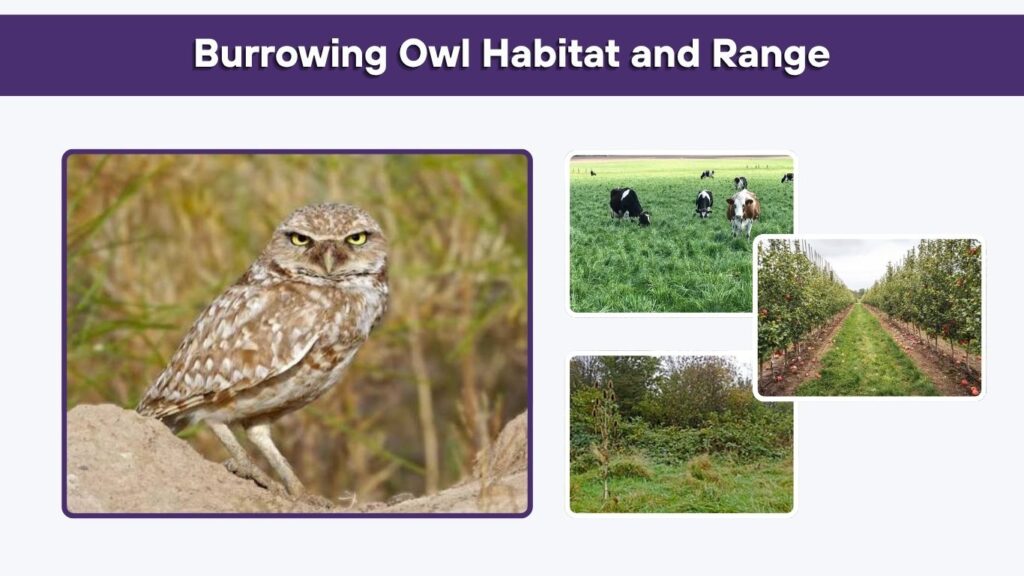
Burrowing Owls depend on open habitats where vegetation remains low enough for them to detect prey and predators. Grasslands containing populations of burrowing mammals are particularly valuable because existing tunnels provide ready-made nesting sites. They can also survive in agricultural and developed landscapes when suitable open ground, food, and undisturbed burrows remain available nearby.
Where Do Burrowing Owls Live?
Burrowing Owls occur across parts of North, Central, and South America. Depending on the population, they may be found in grasslands, prairies, deserts, open scrubland, pastures, agricultural fields, and other relatively treeless landscapes.
In the United States, populations occur in areas such as Florida, California, Arizona, Texas, Colorado, and several western states. Some northern populations migrate seasonally, while others remain within the same general region throughout the year.
Burrowing Owl Burrows and Nest Sites
These owls use several types of underground shelters:
- Abandoned prairie dog burrows
- Ground-squirrel burrows
- Badger-created tunnels
- Tortoise burrows in suitable areas
- Naturally occurring ground cavities
- Human-made artificial burrows
- Burrows enlarged or modified by the owls
Although Burrowing Owls often depend on burrows created by mammals, some populations are capable of digging or expanding their own tunnels.
What Do Burrowing Owls Eat?
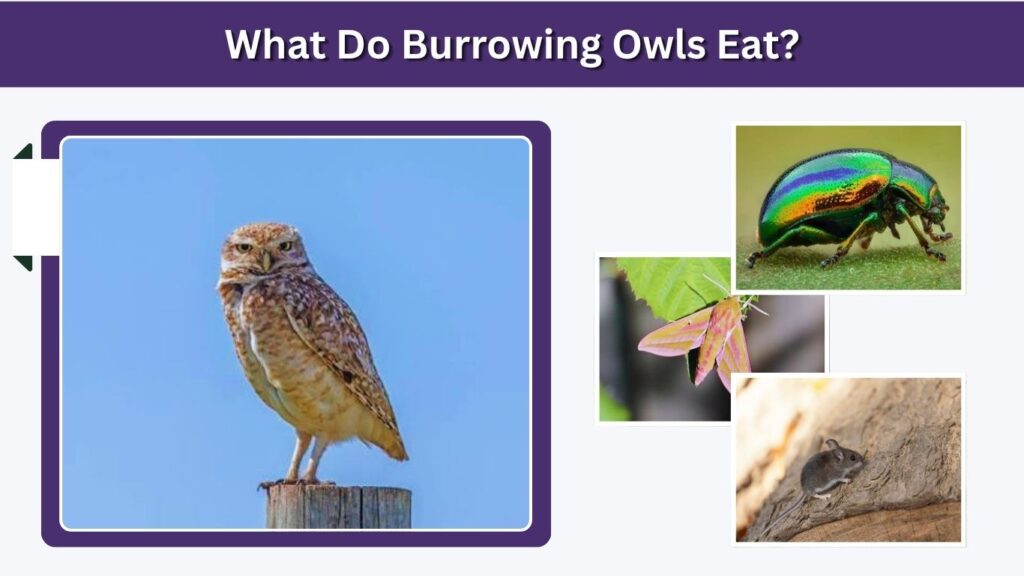
Burrowing Owls are opportunistic predators, meaning they take advantage of many different foods depending on availability. Their diet can change with season, location, and time of day. Insects may dominate during warmer months, while rodents and other vertebrates become especially important when large insects are less abundant or when adults need substantial food for growing chicks.
Burrowing Owl Diet
Common Burrowing Owl prey includes:
- Beetles
- Grasshoppers
- Crickets
- Moths
- Spiders
- Scorpions
- Mice
- Voles
- Small rats
- Lizards
- Snakes
- Frogs
- Small birds
Large insects can make up a significant portion of the number of prey captured, while small mammals often provide more calories per individual meal.
How Do Burrowing Owls Hunt?
Burrowing Owls hunt in several ways. They may stand on the ground or use fence posts and other low perches to watch for movement before quickly attacking prey.
They can also run across the ground after insects or fly low over open vegetation while searching for rodents. Hunting activity may occur during daylight, dusk, nighttime, or early morning, depending on prey availability and environmental conditions.
Burrowing Owl Behavior, Sounds, and Adaptations
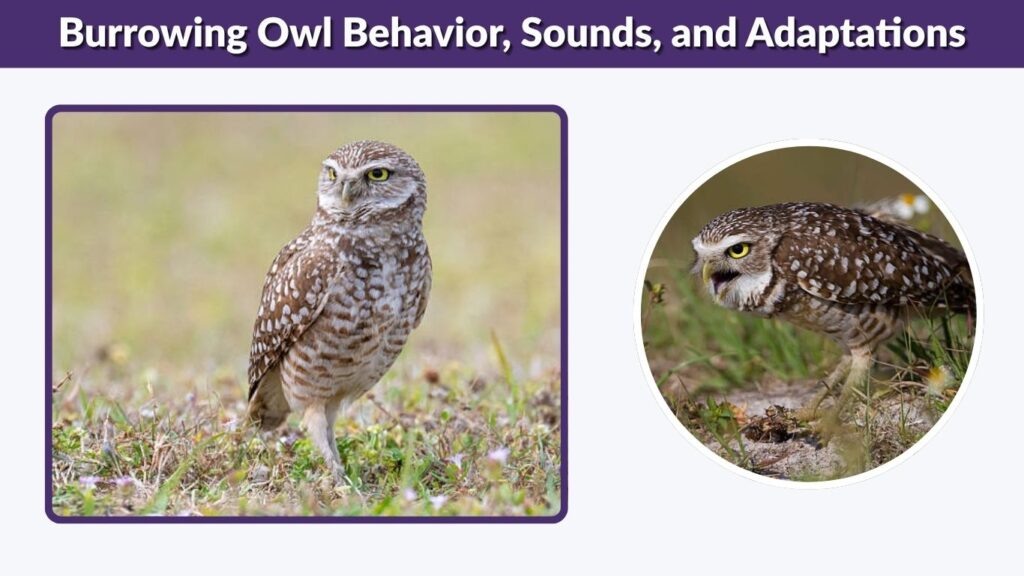
One feature that surprises many people is how active Burrowing Owls can be during daylight. They frequently stand outside their burrows while watching the surrounding area. However, they also hunt extensively after sunset. Their behavior combines characteristics associated with typical owls with specialized adaptations that allow them to survive in open, ground-level habitats.
Burrowing Owl Sounds and Calls
Burrowing Owls produce several different vocalizations rather than relying on a single traditional owl hoot. Males often give repeated cooing calls while advertising territories or communicating with mates.
Adults may also make chattering, clucking, or alarm sounds when danger approaches. Young owls can produce defensive noises from inside a burrow, helping discourage potential predators from entering.
Burrowing Owl Adaptations
Important survival adaptations include:
- Long legs for standing and moving across the ground
- Excellent eyesight for detecting prey from a distance
- Strong talons for capturing insects and vertebrates
- Brown plumage that provides camouflage
- Ability to use underground shelters
- Flexible daytime and nighttime hunting behavior
- Broad diet that changes with prey availability
- Low, maneuverable flight over open ground
These characteristics help Burrowing Owls occupy environments very different from those preferred by many tree-dwelling owls.
Burrowing Owl Nesting and Reproduction
Breeding usually begins when a male establishes a territory containing a suitable burrow. Pairs may remain close to the same nesting area when conditions are favorable. Underground nests provide protection from sun, wind, and many predators, although young owls still face considerable risks while developing and beginning to explore outside their burrow.
Burrowing Owl Eggs and Babies
Females may lay several white eggs inside an underground nest chamber, with clutch size varying considerably according to region and food availability. The female performs most incubation while the male supplies much of the food early in the nesting period.
After hatching, Burrowing Owl babies remain underground until they become strong enough to appear near the burrow entrance. As they grow, young birds spend increasing amounts of time outside while practicing running, wing movements, and eventually flight.
Young Burrowing Owls
Juveniles do not become independent immediately after leaving the nest. Their parents continue providing food while the young birds improve their hunting skills.
Groups of growing chicks can sometimes be seen standing together around several burrow openings. Eventually, juveniles disperse and establish their own territories or join seasonal movements depending on the population.
Burrowing Owl Lifespan and Predators
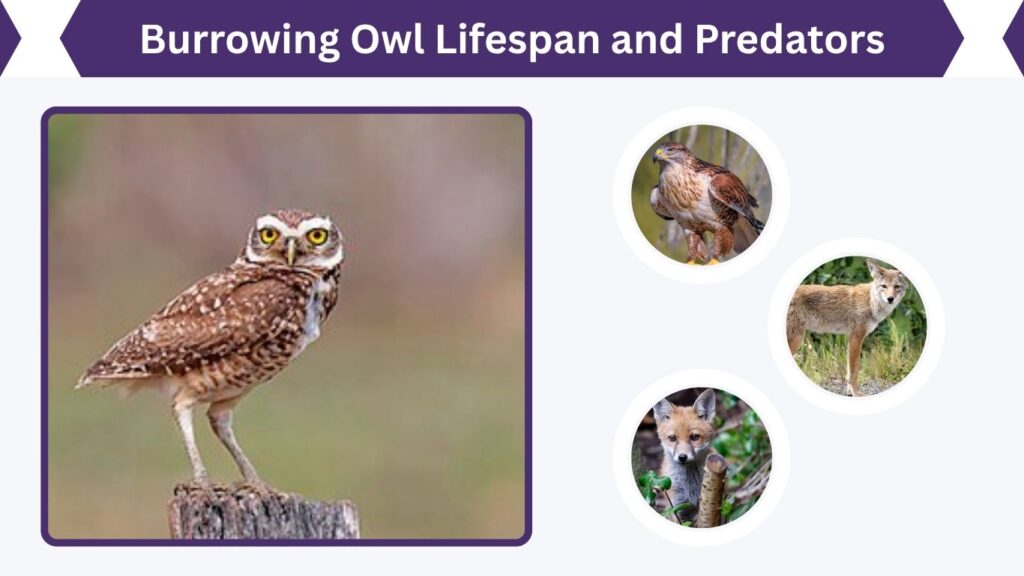
Life on open ground exposes Burrowing Owls to predators that tree-nesting species may encounter less frequently. Eggs, chicks, and inexperienced juveniles are especially vulnerable. Adults rely on vigilance, camouflage, flight, and access to underground shelters for protection. Survival also depends heavily on habitat quality, food abundance, weather, disease, vehicle traffic, and human disturbance.
How Long Do Burrowing Owls Live?
A Burrowing Owl may live for several years in the wild, with around 6–8 years often considered a reasonable lifespan under favorable conditions. Some individuals can survive considerably longer.
Mortality is highest among young birds, especially during their first year when they are learning to hunt and avoid predators.
Burrowing Owl Predators
Natural predators may include:
- Hawks
- Falcons
- Eagles
- Larger owls
- Coyotes
- Foxes
- Badgers
- Domestic cats
- Snakes, particularly around nests
Their underground retreats provide important protection, but predators may still attack birds standing or hunting away from their burrows.
Burrowing Owl Conservation and Threats
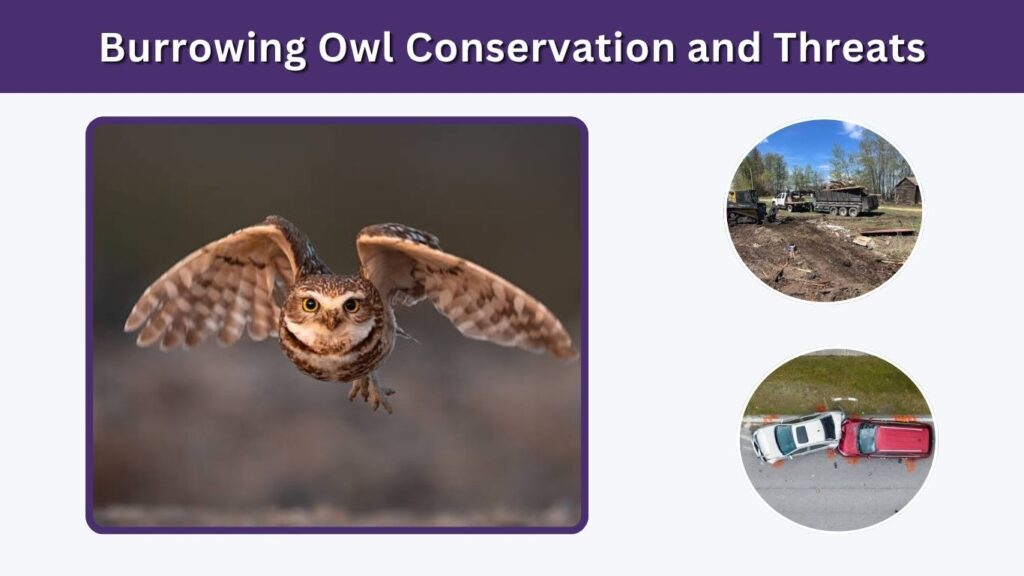
Burrowing Owls remain widespread across the Americas, but populations have declined in some regions. The disappearance of open grasslands and burrowing mammals can remove both feeding areas and nesting sites. Because their survival is closely connected to healthy open ecosystems, changes to prairie, farmland, desert, and grassland habitats can significantly affect local populations.
Why Are Burrowing Owls Declining?
Habitat conversion for housing, roads, intensive agriculture, and other development can eliminate nesting territories. Control programs targeting prairie dogs and ground squirrels may also reduce the number of suitable burrows available.
Other threats include vehicle collisions, pesticides, predation by domestic animals, disturbances around active nests, and declining prey populations. Artificial burrows and protected grassland areas can help support populations where natural nesting sites are limited.
Interesting Facts About Burrowing Owls
Burrowing Owls have unusual behaviors that distinguish them from most familiar owl species. Their willingness to spend much of the day in open areas, dependence on underground shelters, and ability to run after prey have helped them become highly specialized inhabitants of grasslands and other open environments.
Fun Burrowing Owl Facts
- Burrowing Owls spend considerable time on the ground.
- They can be active during both daylight and nighttime.
- Their unusually long legs help them run after prey.
- They frequently reuse burrows created by other animals.
- Adults commonly stand outside burrow entrances to watch for danger.
- They eat both insects and small vertebrates.
- Some populations migrate while others remain resident year-round.
- Their bright yellow eyes are one of their easiest identification features.
FAQs
Do Burrowing Owls actually live underground?
Yes. Burrowing Owls use underground burrows for nesting, shelter, resting, and raising their young. Many use tunnels originally created by animals such as prairie dogs and ground squirrels.
What does a Burrowing Owl eat?
Burrowing Owls eat insects, spiders, scorpions, rodents, reptiles, amphibians, and occasionally small birds. Their exact diet varies according to local prey and season.
Can Burrowing Owls fly?
Yes. Burrowing Owls are capable fliers even though they spend considerable time walking, running, and standing on the ground. They often fly low when hunting or moving between perches.
Are Burrowing Owls active during the day?
Yes. They are often visible during daylight, especially near their burrows. However, they also hunt at dusk and during the night, particularly when searching for small mammals.
Are Burrowing Owls endangered?
Their conservation status varies according to location. The species remains widespread globally, but populations have declined in several regions because of habitat loss, declining burrowing-mammal populations, development, and other environmental pressures.