
Great horned owls are powerful, adaptable birds of prey found across much of the Americas. Their lifespan depends on whether they live in the wild or captivity, along with factors such as food availability, disease, predators, injuries, and human activity. Many wild great horned owls survive for more than a decade, while protected individuals can live considerably longer. Their ability to occupy forests, deserts, wetlands, farmland, and even suburban areas also contributes to their success. Here is a closer look at how long great horned owls live and where they spend their lives.
How Long Does a Great Horned Owl Live?
Great horned owls can live surprisingly long lives compared with many smaller birds. Their position near the top of the food chain means adult owls have relatively few natural predators.
However, young owls face greater risks, and many do not survive their first year.
Average Lifespan in the Wild
In the wild, a great horned owl may live around 10 to 15 years, although some individuals survive for 20 years or longer.
Once an owl reaches adulthood, its chances of surviving for many additional years improve significantly.
Wild lifespan depends on several factors, including:
- Availability of prey
- Habitat quality
- Disease and parasites
- Severe weather
- Collisions with vehicles
- Electrocution
- Injuries
- Human disturbance
Healthy adults living in productive habitats can remain in the same general territory for many years.
How Long Can a Great Horned Owl Live?
Exceptional wild individuals can survive beyond 20 years.
Banding records have shown that some great horned owls reach ages well above what many people expect from wild birds.
Longevity is possible because these owls are strong predators, highly adaptable, and capable of hunting many different types of prey.
How Long Do Great Horned Owls Live in Captivity?
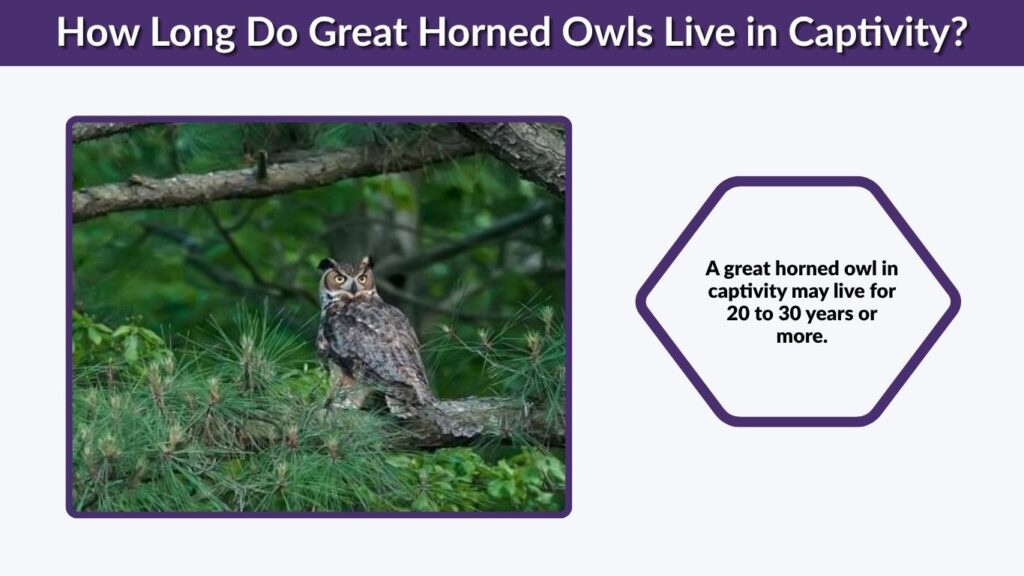
Great horned owls generally live longer in captivity than they do in the wild because many natural risks are removed.
Owls cared for by licensed wildlife facilities receive regular food, veterinary treatment, shelter, and protection from predators and traffic.
Captive Great Horned Owl Lifespan
A great horned owl in captivity may live for 20 to 30 years or more under excellent conditions.
Some individuals can exceed the normal lifespan of wild owls because they are protected from:
- Starvation
- Vehicle collisions
- Severe weather
- Territorial conflicts
- Hunting injuries
- Certain diseases and parasites
Captivity does not guarantee a long life, but proper professional care can greatly reduce many common causes of mortality.
What Affects a Great Horned Owl’s Lifespan?
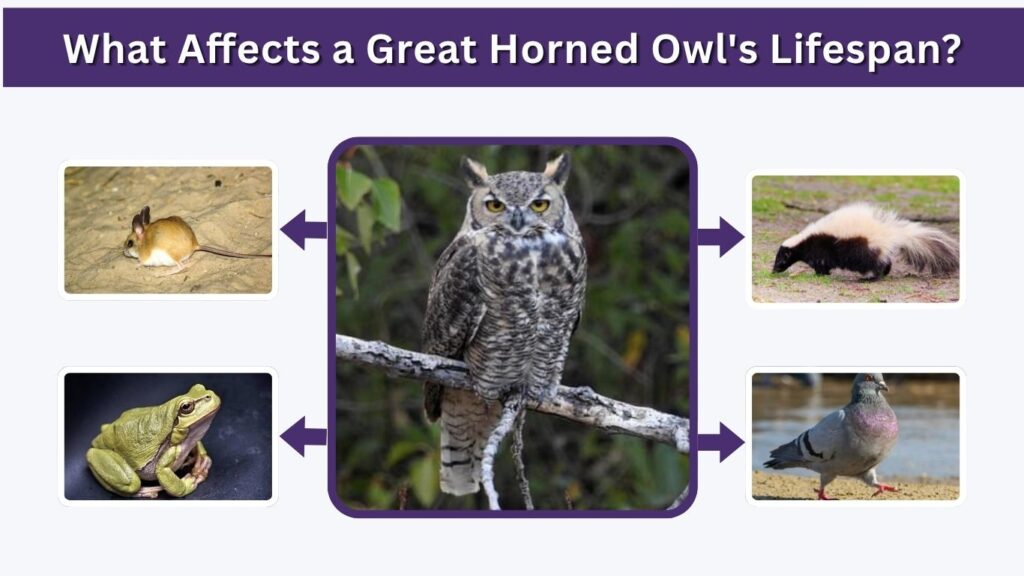
Lifespan varies significantly among individual owls. Genetics play a role, but environmental conditions are often more important.
Great horned owls survive best when they have secure nesting sites, plentiful prey, and relatively low exposure to human-related hazards.
Food Availability
Great horned owls are opportunistic predators and eat a broad range of animals.
Their prey may include:
- Mice
- Rats
- Rabbits
- Squirrels
- Skunks
- Ducks
- Pigeons
- Snakes
- Frogs
- Other birds
Their ability to change prey species when one food source becomes scarce gives them an advantage over more specialized predators.
Injuries and Accidents
Adult great horned owls are powerful, but hunting can still be dangerous.
They may be injured by large prey, territorial fights, fences, cars, power lines, or other human structures.
Wing injuries are especially serious because an owl depends on flight for hunting and escaping danger.
Disease and Parasites
Like other wild birds, great horned owls can suffer from infectious diseases, parasites, and other health problems.
Healthy adults may tolerate minor infections, but disease combined with poor nutrition or injury can become life-threatening.
Where Does a Great Horned Owl Live?
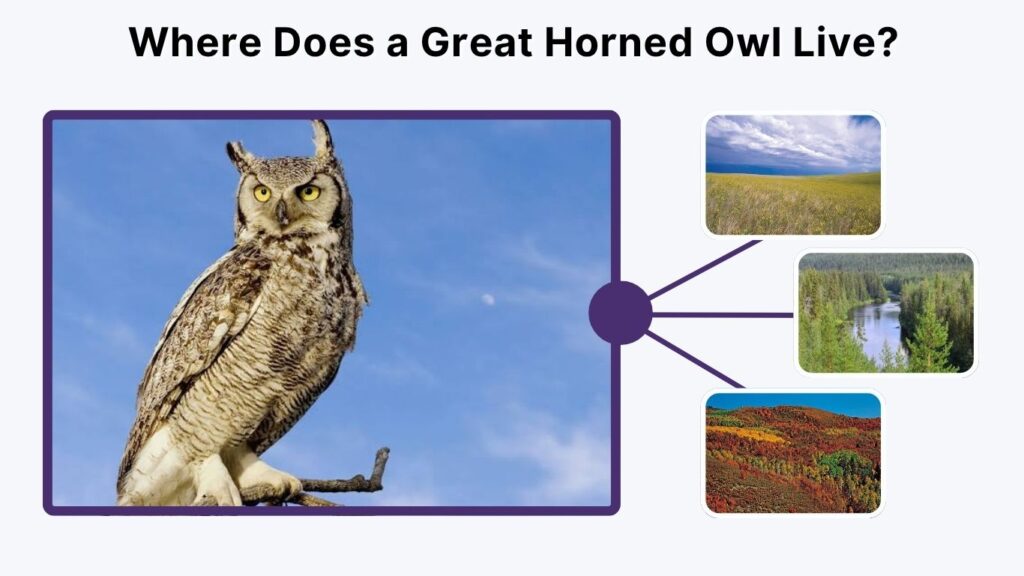
Great horned owls have one of the widest habitat ranges of any owl in the Americas.
They are found across much of North America and extend into Central and South America.
Their adaptability allows them to live in places ranging from cold northern forests to hot desert environments.
Great Horned Owl Habitat
Great horned owls can live in:
- Forests
- Woodlands
- Deserts
- Grasslands
- Wetlands
- Farmland
- Mountain areas
- Coastal environments
- Suburban neighborhoods
- Urban parks
Rather than depending on one specific ecosystem, they choose areas that provide prey, nesting opportunities, and places to perch.
What Biome Does the Great Horned Owl Live In?
Great horned owls occur in several different biomes.
Their broad ecological tolerance is one reason the species is so widespread.
Forest Biomes
Great horned owls frequently inhabit deciduous, mixed, and coniferous forests.
Forests provide tall trees for roosting and nesting, along with abundant prey such as squirrels, rabbits, rodents, and birds.
They often prefer forest edges where open hunting areas occur near trees.
Desert Biomes
Great horned owls can also survive in desert regions.
In deserts, they may use:
- Large cacti
- Rock ledges
- Desert trees
- Cliffs
- Abandoned nests
They hunt rodents, rabbits, reptiles, and other animals adapted to dry environments.
Grasslands and Agricultural Areas
Open landscapes can provide excellent hunting opportunities.
Great horned owls often perch in trees, utility structures, or other elevated locations overlooking fields.
Farms can support large populations of mice, rats, rabbits, and other prey.
Where Do Great Horned Owls Live in North America?
Great horned owls are widely distributed across the United States and Canada.
They are present in many regions throughout the year rather than making long seasonal migrations.
Great Horned Owls in the United States
These owls can occur in almost every U.S. state.
They live in regions as different as:
- Arizona deserts
- Florida wetlands
- Midwestern farmland
- Rocky Mountain forests
- Pacific coastal areas
- Northeastern woodlands
Their habitat flexibility allows them to remain successful across dramatically different climates.
Great Horned Owls in Canada
Great horned owls are also widespread across southern and central portions of Canada and occur farther north where suitable habitat is available.
They can tolerate extremely cold temperatures thanks to their dense feathers.
Woodlands mixed with open hunting areas are particularly suitable habitats.
Do Great Horned Owls Live Near People?
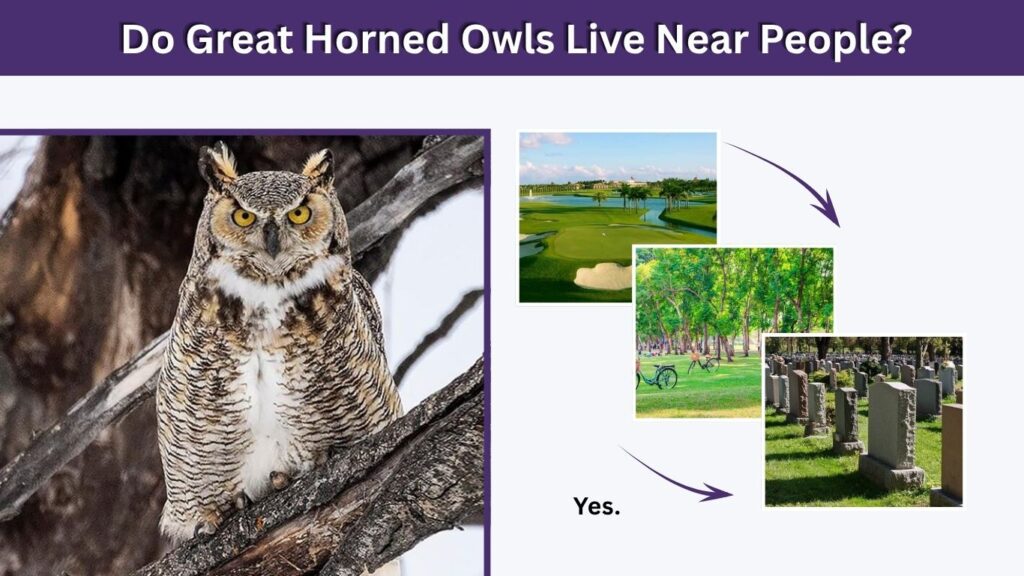
Yes. Great horned owls can live surprisingly close to human communities.
Suburbs often provide a mixture of mature trees, parks, open spaces, and prey animals that make excellent owl habitat.
Great Horned Owls in Cities and Suburbs
They may be found in:
- Large parks
- Golf courses
- Cemeteries
- Wooded neighborhoods
- School grounds
- Greenbelts
- Botanical gardens
People may hear their deep hooting at night without realizing that an owl is nesting or roosting nearby.
Great horned owls usually avoid close interaction with humans even when living in developed environments.
Where Do Great Horned Owls Nest?
Great horned owls generally do not build their own nests.
Instead, they use existing structures that provide enough room for adults, eggs, and growing chicks.
Common Nesting Locations
Great horned owls may nest in:
- Old hawk nests
- Abandoned crow nests
- Large tree cavities
- Cliff ledges
- Broken tree tops
- Caves
- Artificial platforms
- Abandoned buildings
They usually select locations that provide some protection and easy access to nearby hunting territory.
Will Great Horned Owls Use an Owl Box?
Great horned owls are less likely to use conventional enclosed owl boxes designed for species such as barn owls or screech owls.
Because of their large size, they generally prefer open nests or large platforms.
Properly designed nesting platforms may sometimes attract great horned owls where suitable natural nests are limited.
Do Great Horned Owls Stay in the Same Area?
Many great horned owls are territorial and remain within the same general area throughout the year.
A breeding pair may defend a territory containing good hunting habitat and suitable nesting locations.
How Large Is Their Territory?
Territory size varies depending on habitat quality and food availability.
Where prey is abundant, an owl may need a relatively compact hunting area. In areas with fewer prey animals, it may travel farther each night.
Great horned owls usually hunt alone even when they maintain long-term pair bonds.
Life Cycle of a Great Horned Owl
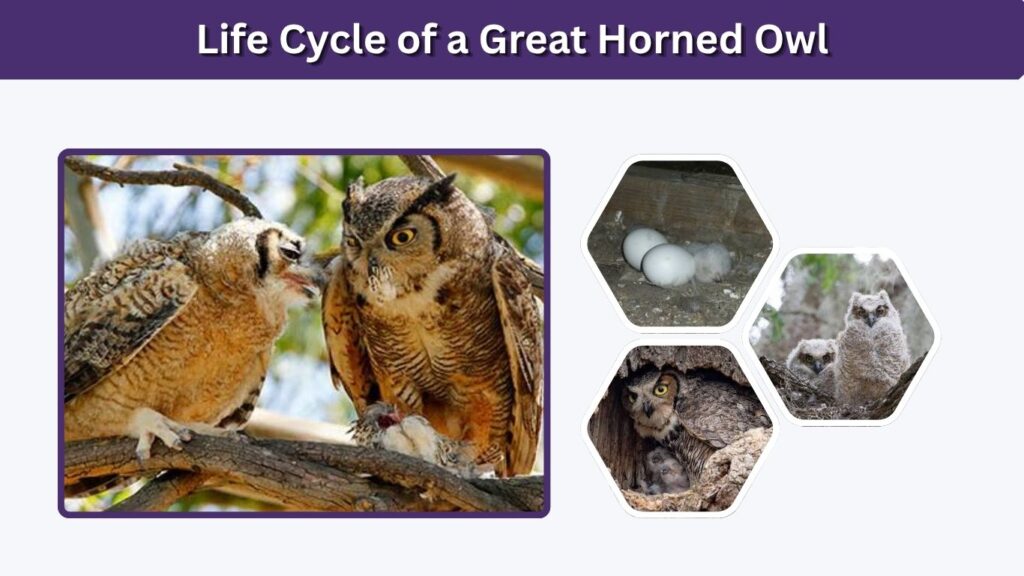
Understanding the owl’s life cycle helps explain why reaching adulthood is so important for overall lifespan.
Young owls face much greater risks than established adults.
Eggs and Nestlings
Females commonly lay a small number of eggs during winter or early spring, depending on location.
The female performs most incubation while the male brings food.
After hatching, owlets depend completely on their parents.
Fledglings
Young owls eventually leave the nest before they are fully independent.
They may climb among nearby branches and practice flying while their parents continue feeding them.
This stage is risky because fledglings are still learning how to fly and hunt.
Adulthood
Once independent, young great horned owls must find productive habitat and eventually establish territories.
Adult birds that successfully secure good territories can survive for many years.
FAQs
How Long Does a Great Horned Owl Live in the Wild?
Great horned owls often live around 10 to 15 years in the wild, although some individuals survive for more than 20 years.
How Long Can a Great Horned Owl Live in Captivity?
With professional care, captive great horned owls may live for 20 to 30 years or longer because they receive regular food, veterinary attention, and protection from many wild hazards.
Where Does a Great Horned Owl Live?
Great horned owls live throughout much of the Americas in forests, deserts, wetlands, grasslands, farmland, mountains, suburbs, and urban parks.
Do Great Horned Owls Live in Deciduous Forests?
Yes. Deciduous forests provide suitable trees for nesting and roosting as well as abundant prey. Great horned owls also use many other forest and open habitats.
Do Great Horned Owls Stay in One Place?
Many great horned owls remain within the same general territory year-round. Established pairs may occupy productive areas for several breeding seasons when food and nesting sites remain available.