A great horned owl baby, commonly called an owlet, begins life covered in soft white down and depends completely on its parents for food and protection. As it grows, the owlet develops darker feathers, stronger legs, and the distinctive appearance of an adult great horned owl. Young owls may leave the nest before they can fly confidently, so finding one on the ground does not always mean it has been abandoned. This guide covers baby great horned owl stages, diet, size, sounds, behavior, nesting, and development.
What Is a Baby Great Horned Owl Called?
A baby great horned owl is called an owlet. Great horned owls (Bubo virginianus) are large birds of prey found throughout much of North America. Their young hatch helpless and require constant parental care during their earliest weeks. Parents provide warmth, protection, and food until the owlets are strong enough to leave the nest and gradually become independent.
Baby Great Horned Owl Identification
Young great horned owls can be identified by several features:
- Soft white or pale gray down
- Large round head
- Bright yellow eyes as they mature
- Strong feet and developing talons
- Short wings during early growth
- Darker feathers appearing with age
- Broad facial disk
- Developing ear tufts later in life
Very young owlets look fluffy and rounded, while older juveniles increasingly resemble adult owls.
What Does a Newborn Great Horned Owl Look Like?
Newly hatched great horned owls are small, weak, and covered with pale down.
Their eyes are initially closed or only partly developed, and they cannot regulate their body temperature effectively. This means the female must spend considerable time keeping them warm.
Over the following weeks, the chicks grow quickly because they receive protein-rich prey from their parents.
What Are Great Horned Owl Babies Called?
The correct general term is owlets.
The term may be used for young owls from hatching until they become juveniles. As they grow and leave the nest, they are often called fledglings, even though they may still rely on their parents for food.
Great Horned Owl Baby Stages
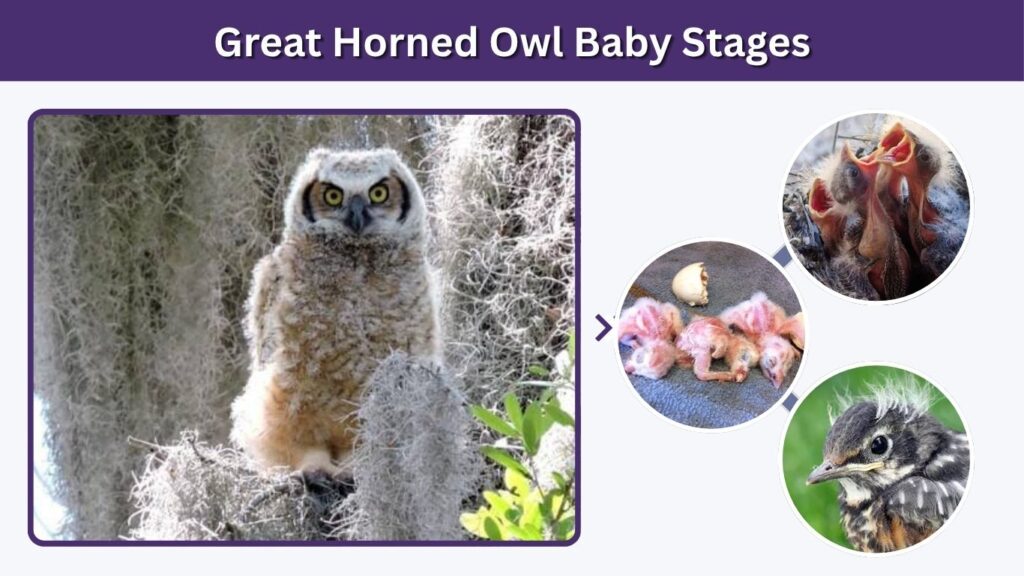
Great horned owl babies develop rapidly from helpless hatchlings into strong young predators. Their appearance and behavior change noticeably during the first several weeks. Development varies somewhat according to food supply, weather, individual health, and nesting conditions.
Stage 1: Newly Hatched Owlet
Newborn owlets are:
- Covered with pale down
- Unable to fly
- Completely dependent on parents
- Small and vulnerable
- Unable to hunt
- Mostly confined to the nest
During this stage, adults bring food and tear prey into manageable pieces for the chicks.
Stage 2: Growing Nestling
As the owlets grow, their eyes open fully and they become increasingly alert.
Feathers begin replacing soft down, and the young birds become more active inside the nest. They may stand upright, stretch their wings, and investigate their surroundings.
Their feet and talons also grow rapidly, preparing them for climbing, perching, and eventually hunting.
Stage 3: Branching
Before becoming strong fliers, young great horned owls may climb onto nearby branches.
This stage is sometimes called branching.
Owlets may:
- Climb around the nest tree
- Flap their wings repeatedly
- Jump between short distances
- Balance on nearby branches
- Continue begging for food
Parents usually remain nearby and continue feeding them.
Stage 4: Fledgling
Eventually, the young owl begins making short flights.
Early flights may be awkward, and fledglings sometimes end up on low branches or the ground.
They are still dependent on their parents during this stage and continue improving their flying and hunting abilities over time.
What Do Baby Great Horned Owls Eat?
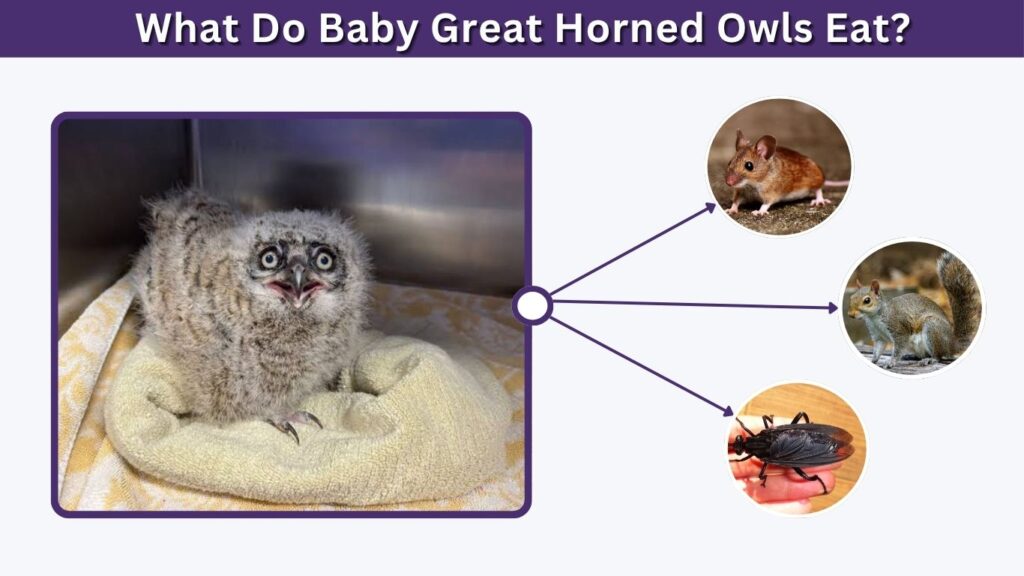
Great horned owl babies eat animal prey brought to the nest by their parents. These owls are powerful predators with an extremely varied diet. Adults usually capture prey and bring it back to the nest, where it is torn into smaller pieces for young chicks.
Common Foods for Owlets
Their diet may include:
- Mice
- Rats
- Voles
- Rabbits
- Squirrels
- Small birds
- Reptiles
- Amphibians
- Large insects
- Other small animals
The exact diet depends on what prey is available locally.
How Are Baby Great Horned Owls Fed?
Very young owlets cannot tear apart large prey by themselves.
The adult female commonly stays close to the young while the male supplies much of the food during the earliest stages. Adults tear prey into smaller pieces and offer it directly to the chicks.
As owlets become larger, they gradually become capable of handling bigger pieces of prey themselves.
How Much Do Baby Great Horned Owls Eat?
Growing owlets require frequent protein-rich meals because their bodies develop quickly.
Food requirements increase as chicks grow larger. A nest containing several owlets can require adults to capture considerable prey each night.
Food availability can strongly influence growth and survival.
Great Horned Owl Baby Sounds
Baby great horned owls can be surprisingly noisy. Rather than producing the deep hooting associated with adults, owlets often make high-pitched begging sounds when hungry or communicating with their parents.
What Does a Baby Great Horned Owl Sound Like?
Owlets may produce:
- High-pitched screeches
- Hissing sounds
- Squeals
- Begging calls
- Chirping or rasping noises
Begging calls can continue for long periods, especially around dusk and nighttime when adults are actively hunting.
Why Do Baby Great Horned Owls Scream?
A loud call does not necessarily indicate that the owlet is injured.
Young owls may call because they:
- Are hungry
- Are trying to locate parents
- Want attention
- Feel threatened
- Are communicating with siblings
- Are waiting for food
Older fledglings can continue begging loudly even after leaving the nest.
Great Horned Owl Nest and Babies
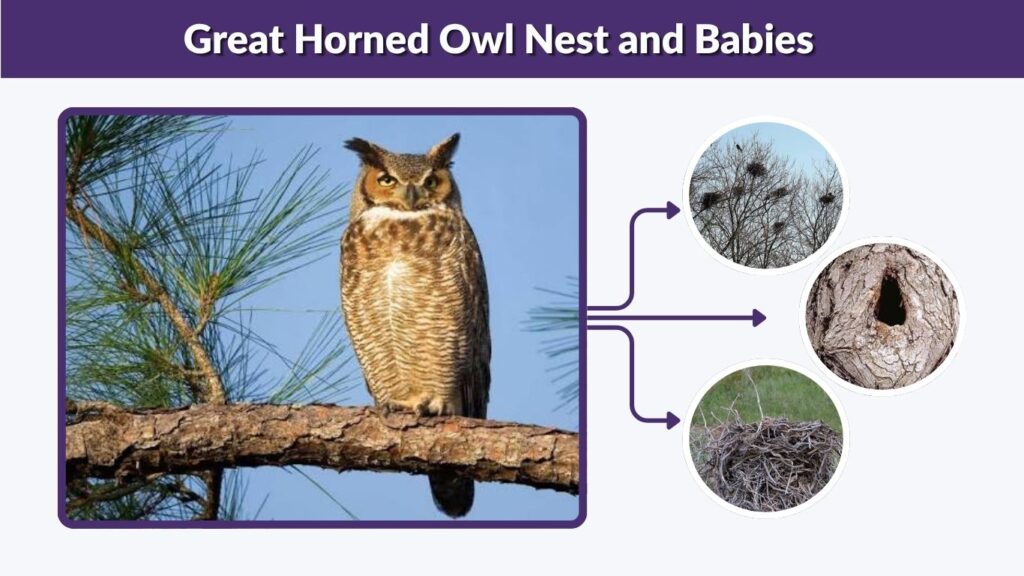
Great horned owls usually do not build elaborate nests of their own. Instead, they often use nests originally constructed by other large birds or take advantage of natural nesting locations. Once eggs hatch, adults fiercely defend the nest and young.
Where Do Great Horned Owls Nest?
Common nesting locations include:
- Old hawk nests
- Crow nests
- Large tree cavities
- Broken tree tops
- Cliff ledges
- Abandoned large bird nests
- Occasionally artificial structures
Nest height and structure vary widely depending on the habitat.
How Many Babies Do Great Horned Owls Have?
A great horned owl nest commonly contains two eggs, although clutch size can vary.
Not every egg necessarily hatches, and survival depends on weather, food availability, predators, and other environmental factors.
The young often hatch at slightly different times, meaning one owlet may initially be noticeably larger than another.
When Do Great Horned Owl Babies Leave the Nest?
Young great horned owls generally begin leaving the immediate nest area when they are several weeks old.
They may climb onto nearby branches before achieving strong flight. Even after fledging, parents continue feeding and supervising them while they develop hunting skills.
Independence occurs gradually rather than immediately after leaving the nest.
Baby Great Horned Owl on the Ground
Seeing a fluffy young owl sitting on the ground can be alarming. However, an older fledgling may leave the nest before becoming an expert flier. Parents may still be watching and feeding the young bird nearby.
Is the Baby Owl Abandoned?
Not necessarily.
A young owl on the ground may be:
- A healthy fledgling
- Learning to fly
- Resting after an unsuccessful flight
- Waiting for its parents
- Climbing back toward a tree
Adult great horned owls can remain nearby even if humans cannot immediately see them.
What Should You Do?
If the owl appears healthy and is in a relatively safe location, keeping people and pets at a distance may allow the parents to continue caring for it.
However, contact a licensed wildlife rehabilitator or local wildlife authority if the bird:
- Is visibly injured
- Is bleeding
- Cannot stand
- Was attacked by a cat or dog
- Is in immediate danger from traffic
- Appears extremely weak
- Is clearly a very young nestling rather than a fledgling
Do not attempt to keep a wild great horned owl as a pet.
Great Horned Owl Baby Behavior
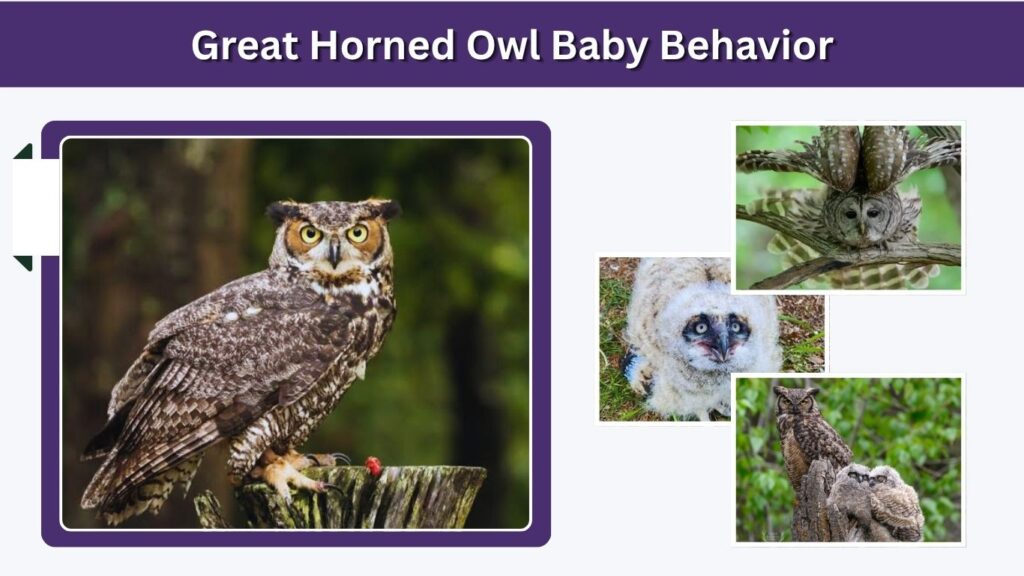
Young great horned owls are curious and increasingly active as they develop. Early life focuses on eating and sleeping, but older owlets begin practicing many behaviors that will eventually help them survive independently.
Common Baby Owl Behaviors
You may see owlets:
- Stretching their wings
- Flapping repeatedly
- Climbing branches
- Begging for food
- Watching moving animals
- Playfully grabbing objects
- Practicing balancing
- Interacting with siblings
- Sleeping for long periods
These behaviors gradually develop coordination, strength, and hunting skills.
Do Parents Stay With Baby Owls?
Yes. Both parents contribute to raising young.
One adult may remain closer to the nest while the other hunts, particularly during the earliest weeks. As the owlets grow, both parents can spend more time away searching for food.
Parental care continues after fledging until the juveniles become increasingly independent.
Great Horned Owl Baby Size and Growth
Great horned owlets grow surprisingly quickly because they receive a high-protein diet. Their body mass increases dramatically during the nestling period, while feathers, wings, talons, and muscles develop simultaneously.
How Big Is a Baby Great Horned Owl?
Size depends heavily on age.
Newborn chicks are small compared with adults, but older nestlings can look almost adult-sized before becoming fully independent.
Young birds may appear especially large because fluffy down adds considerable visual bulk.
Females ultimately become larger than males, although determining the sex of a young owlet visually can be difficult.
FAQs
1. What is a baby great horned owl called?
A baby great horned owl is called an owlet. Older young that have begun leaving the nest and flying are commonly called fledglings.
2. What do baby great horned owls eat?
Owlets eat animal prey brought by their parents, including rodents, rabbits, birds, reptiles, insects, and other small animals.
3. What does a baby great horned owl sound like?
Baby great horned owls often make high-pitched screeches, squeals, hisses, or begging calls instead of the deep hoots typically associated with adults.
4. When do great horned owl babies leave the nest?
They begin leaving the nest and moving onto nearby branches after several weeks. They continue relying on their parents even after beginning to fly.
5. What should I do if I find a baby great horned owl on the ground?
If it is an alert fledgling and not in immediate danger, its parents may still be caring for it. If it is injured, very young, or threatened by traffic or predators, contact a licensed wildlife rehabilitator or local wildlife authority.