Masked owls are mysterious night hunters known for their heart-shaped faces, dark eyes, silent flight, and powerful talons. These owls belong to the barn owl family but often look darker, heavier, and more forest-adapted than the common Barn Owl. They live across Australia, Tasmania, New Guinea, Indonesia, India’s Andaman Islands, and nearby island regions. Some types are widespread, while others are rare and poorly studied. This guide covers 13 types of masked owls, including their identification, habitat, diet, distribution, breeding behavior, and conservation status, helping readers understand what makes each one unique in the owl world today.
1. Australian Masked Owl
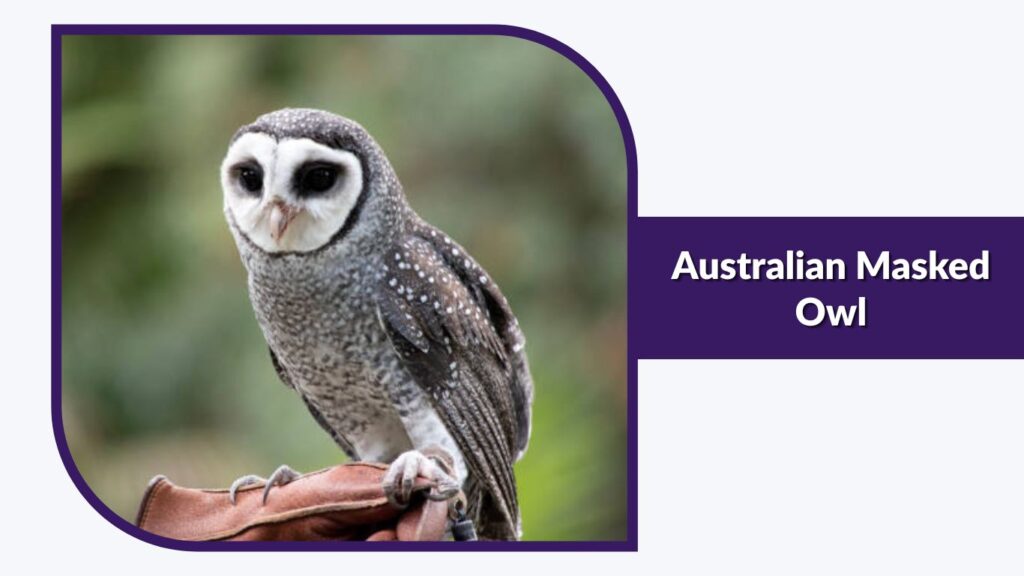
The Australian Masked Owl is a large, secretive barn owl found mainly in forested parts of Australia and nearby regions. It is best known for its heart-shaped face, dark eyes, powerful feet, and mottled brown, grey, white, or rufous plumage. This owl is mostly nocturnal and depends on mature trees, forest edges, and hollow-bearing habitat for roosting and nesting.
Identification
- Medium-sized to large owl, usually around 40–50 cm long.
- Has a flat, heart-shaped facial disc with dark eyes.
- Plumage varies from pale grey-brown to darker rufous-brown.
- Upperparts are mottled with pale spots, while the wings and tail are barred.
- Underparts may be white, buff, or rufous with dark spotting.
- Legs are fully feathered, and the feet are large and powerful.
Habitat
The Australian Masked Owl lives mostly in dry eucalypt forests, woodlands, and forested gullies. It is strongly linked with areas that have mature trees because it needs large hollows for nesting and roosting. It may also hunt along forest edges, roadsides, and open areas close to woodland.
Diet and Hunting
This owl is a nighttime hunter that feeds mainly on mammals. Rats are especially important in its diet, but it may also take other small ground-dwelling or tree-dwelling animals. It usually hunts silently from a perch or while flying low along forest edges, using sharp hearing and strong talons to catch prey.
Nesting and Breeding
Australian Masked Owls usually nest in large tree hollows, especially in older eucalypt forests. Some birds may also use caves or sheltered natural cavities. Breeding pairs can have large home ranges, so protecting mature trees and quiet nesting areas is important for successful breeding.
Conservation Status
The species is considered globally of lower concern than many rare owls, but some local populations are threatened or declining. In New South Wales, the Masked Owl is listed as vulnerable, and habitat loss, fewer hollow-bearing trees, and changes to forest structure are major concerns.
2. Tasmanian Masked Owl
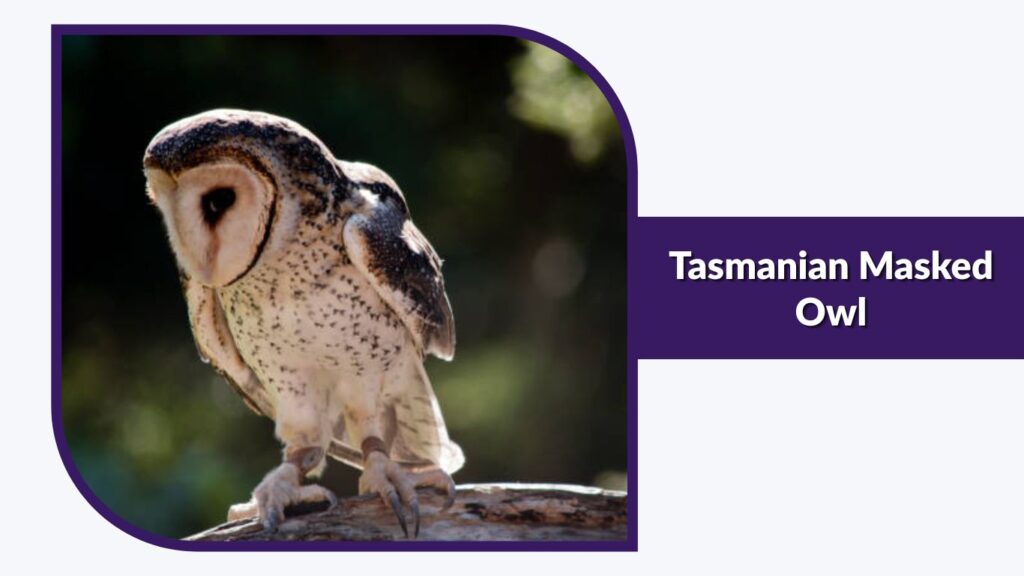
The Tasmanian Masked Owl is a large, powerful owl found only in Tasmania. It is closely related to the Australian Masked Owl and is usually treated as the Tasmanian subspecies, Tyto novaehollandiae castanops. This owl is mostly nocturnal, secretive, and strongly connected with mature forest, woodland, and old hollow-bearing trees.
Identification
- Large owl with a strong, rounded body.
- Has a pale, mask-like facial disc.
- Dark eyes give it a deep, intense expression.
- Upperparts are usually brown, grey, or rufous with mottling.
- Underparts are paler with dark spotting.
- Known for a distinctive husky, screeching call.
Habitat
The Tasmanian Masked Owl lives across much of Tasmania, except King Island and the Furneaux group. It uses forests, woodlands, agricultural edges, pasture mosaics, and areas with native vegetation. Mature eucalypt trees are especially important because they provide the large hollows needed for nesting and daytime roosting.
Diet and Hunting
This owl hunts at night and feeds mainly on small mammals and birds. It searches for prey in habitats that include mature forest, woodland edges, and open agricultural areas with nearby trees. Like other masked owls, it relies on silent flight, sharp hearing, and strong talons to catch prey in darkness.
Nesting and Breeding
Tasmanian Masked Owls usually form long-term pairs and occupy permanent territories. They depend heavily on old-growth trees with suitable hollows for nesting and roosting. Because these hollows take many years to form, the loss of even single old trees can reduce breeding opportunities for this owl.
Conservation Status
The Tasmanian Masked Owl is listed as endangered under Tasmania’s Threatened Species Protection Act and vulnerable under Australia’s EPBC Act. Major threats include clearing of nesting and foraging habitat, loss of hollow-bearing trees, secondary poisoning from rodenticides, and competition for limited nesting hollows.
3. Northern Masked Owl
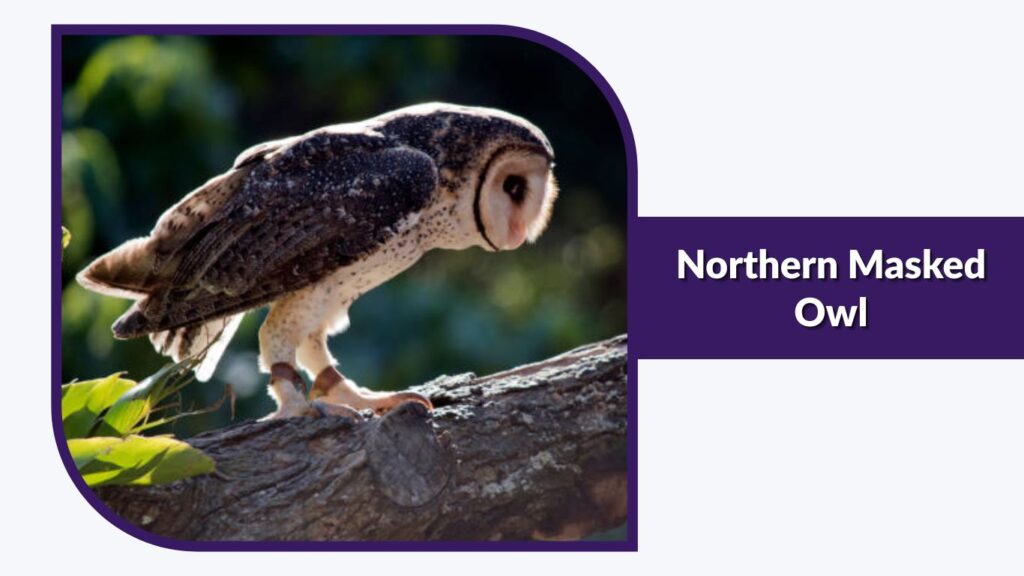
The Northern Masked Owl is a large nocturnal owl from northern Australia. It is usually treated as a subspecies of the Australian Masked Owl, with the scientific name Tyto novaehollandiae kimberli. This owl is secretive, powerful, and closely linked to savanna woodland, open forest, and large hollow-bearing trees used for roosting and nesting.
Identification
- Large owl with a body length under 50 cm.
- Wingspan can reach over 100 cm.
- Pale to buff plumage with dark spotting.
- Heart-shaped facial disc with large dark eyes.
- Strong legs and powerful talons for catching prey.
- Similar to other masked owls but found in northern Australia.
Habitat
The Northern Masked Owl lives in northern Australian landscapes, especially savanna woodland, open forest, and eucalypt-dominated areas. It often depends on old, large trees because these provide hollows for daytime roosting and nesting. Good habitat also needs nearby hunting areas where small animals are available at night.
Distribution
This owl occurs across northern Australia, from the Kimberley region of Western Australia through the Top End of the Northern Territory and into far north Queensland. Its range is broad, but the bird is usually uncommon and difficult to detect because it is nocturnal and naturally secretive.
Diet and Hunting
The Northern Masked Owl hunts mostly at night. It feeds on small mammals, birds, and reptiles, using silent flight and sharp hearing to locate prey in darkness. Like other masked owls, it may hunt from a perch, then swoop down quickly and catch prey with its strong talons.
Nesting and Breeding
Pairs are believed to be monogamous and defend territories together. Breeding usually happens in large tree hollows, with the female incubating the eggs while the male brings food. Females commonly lay 2–3 eggs, and young owls may remain dependent on their parents for several months after fledging.
Conservation Status
The Northern Masked Owl is listed as vulnerable. Major threats include clearing of mature trees, loss of nesting hollows, intense or frequent fires, climate change, and reduced prey numbers caused by invasive predators such as feral cats and foxes. Protecting intact woodland and old hollow-bearing trees is important for its survival.
4. Cave-nesting Masked Owl
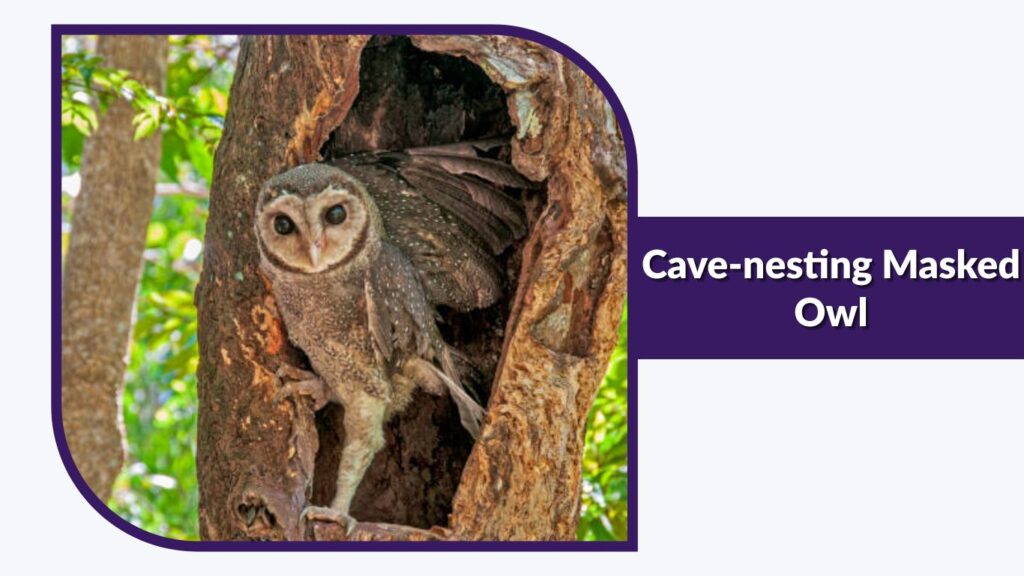
The Cave-nesting Masked Owl was a little-known form of the Australian Masked Owl, usually listed as Tyto novaehollandiae troughtoni. It was associated with the Nullarbor Plain of Australia and is considered taxonomically doubtful by some sources. Unlike many masked owls that use tree hollows, this form was noted for cave or rock-shelter nesting behavior.
Identification
- Large barn-owl type with a strong body.
- Heart-shaped facial disc edged with a darker border.
- Dark eyes set in a flat, mask-like face.
- Brown, grey, buff, or rufous upperparts with pale spotting.
- Paler underparts with darker speckling.
- Fully feathered legs and strong feet.
- Likely similar in appearance to other Australian Masked Owls.
Habitat
The Cave-nesting Masked Owl was linked with the Nullarbor Plain, a dry limestone region with caves, cliffs, and open habitats. This made it unusual compared with forest-dwelling masked owls, which usually depend on tall trees and large hollows for nesting and roosting.
Nesting Behavior
Its common name comes from its reported habit of nesting in caves or rocky places. Australian Masked Owls generally nest in large tree hollows, but some populations may also use caves or rock crevices. This cave-nesting habit is the main reason this form was separated behaviorally from other masked owls.
Diet and Hunting
Like other masked owls, it was probably a nocturnal hunter. Its likely prey included small mammals, birds, reptiles, and insects. Masked owls hunt silently at night, using strong hearing, broad wings, and powerful talons to catch prey from the ground or low vegetation.
Conservation Status
The Cave-nesting Masked Owl is often treated as extinct or possibly invalid as a distinct subspecies. Some references list it from the Nullarbor Plain and suggest it disappeared around the 1960s, but its separation from the regular Australian Masked Owl remains doubtful.
5. Golden Masked Owl
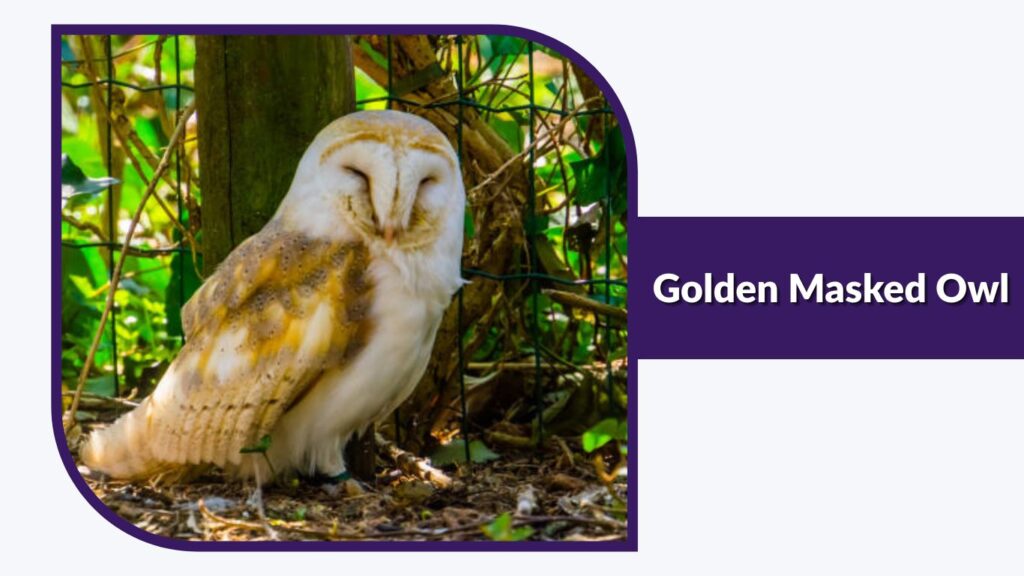
The Golden Masked Owl is a rare barn owl found only on New Britain Island in Papua New Guinea. Its scientific name is Tyto aurantia, and it is also known as the New Britain Masked Owl, New Britain Barn Owl, or Bismarck Masked Owl. It is a poorly studied, secretive forest owl with warm golden-brown plumage and a pale masked face.
Identification
- Small to medium-sized masked owl, about 27–33 cm long.
- Has a pale, heart-shaped facial disc.
- Dark eyes give the face a strong masked look.
- Plumage is golden, orange-brown, and mottled with darker markings.
- Upperparts are spotted and barred, helping it blend into forest trees.
- Underparts are usually lighter with dark speckling.
- Belongs to the barn owl family, Tytonidae.
Habitat
The Golden Masked Owl lives mainly in tropical rainforest on New Britain. It has been recorded in rainforest with clearings, ravines, trees, and shrubs, from lowland areas up to about 1,830 meters above sea level. Because it depends on forest habitat, heavy logging and land clearing can reduce suitable places for it to live.
Diet and Hunting
This owl is nocturnal and hunts mostly at night. Its known food includes small rodents, and it likely also takes other small vertebrates and insects. Like other barn owls, it probably uses quiet flight, sharp hearing, and quick strikes from its talons to catch prey in dark forest areas.
Breeding
The breeding biology of the Golden Masked Owl is still not well known. Because it is rare, nocturnal, and difficult to observe in dense tropical forest, researchers have limited information about its nest sites, clutch size, and young. It may use tree cavities or sheltered forest sites, but more field study is needed.
Conservation Status
The Golden Masked Owl is considered uncommon to rare and is listed as Vulnerable by BirdLife International. Its restricted range on New Britain makes it more sensitive to habitat loss, especially where forest is cleared or degraded. Protecting rainforest habitat is important for this little-known owl’s survival.
6. Manus Masked Owl
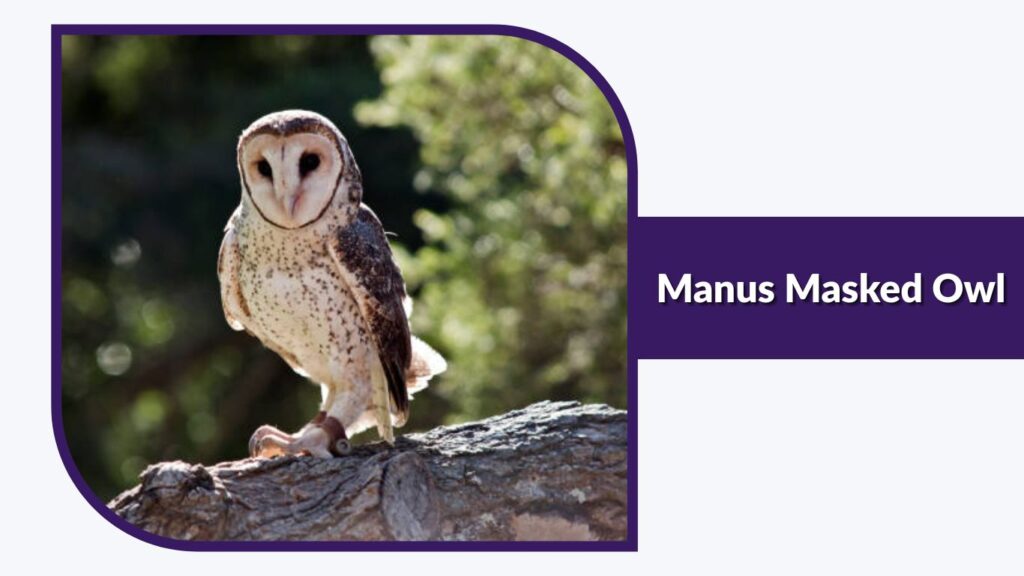
The Manus Masked Owl is a rare and poorly known barn owl from Manus Island in the Admiralty Islands of Papua New Guinea. Its scientific name is Tyto manusi, though some authorities treat it as a subspecies of the Australian Masked Owl. This owl is secretive, forest-dwelling, and rarely observed in the wild.
Identification
- Medium-sized masked owl with no ear tufts.
- Has a heart-shaped facial disc typical of barn owls.
- Dark eyes give the face a strong masked appearance.
- Likely has mottled brown, buff, and pale plumage.
- Strong feet and talons help it catch small prey.
- Similar in structure to the Australian Masked Owl.
- Best identified by its restricted range on Manus Island.
Habitat
The Manus Masked Owl is believed to live mainly in forest habitat on Manus Island. Because it is rarely seen, detailed habitat information is limited. Like other masked owls, it likely depends on mature trees, quiet forest areas, and suitable nesting or roosting cavities. Its small island range makes habitat protection especially important.
Distribution
This owl is endemic to Manus Island in the Bismarck Archipelago, meaning it is naturally found only there. Some taxonomic sources list it as Tyto manusi, while others place it under the Australian Masked Owl as Tyto novaehollandiae manusi. This limited distribution makes it one of the more localized masked owls.
Diet and Hunting
Very little is known about the exact diet of the Manus Masked Owl. Based on its close relationship with other masked owls, it probably hunts at night and feeds on small mammals, birds, reptiles, and possibly insects. It likely uses silent flight and sharp hearing to locate prey in dark forest conditions.
Breeding
The breeding habits of the Manus Masked Owl are not well documented. It probably nests in tree hollows or sheltered cavities, similar to other Tyto owls. Because the species is rarely recorded, information about clutch size, nesting season, and chick development remains limited.
Conservation Status
The Manus Masked Owl is considered poorly known, and some sources describe its status as uncertain. It may have a small population because of its restricted island range and likely need for forest habitat. More field surveys are needed to confirm its numbers, breeding sites, and long-term survival outlook.
7. Minahasa Masked Owl
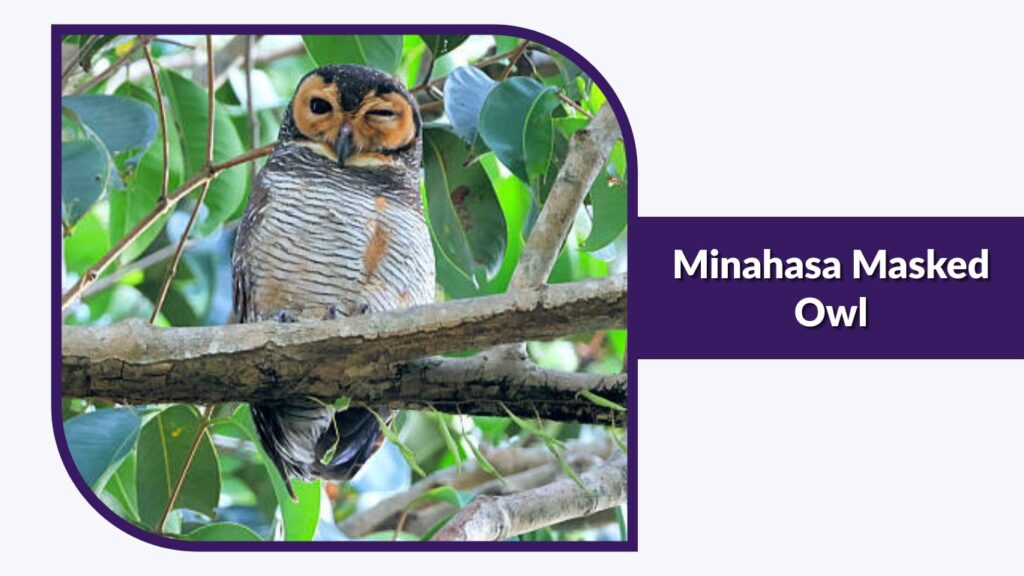
The Minahasa Masked Owl is a forest-dwelling barn owl found on Sulawesi, Indonesia. Its scientific name is Tyto inexspectata, and it is also called the Minahasa Barn Owl, Sulawesi Owl, or Sulawesi Golden Owl. It is a secretive nocturnal bird, best known for its dark eyes, warm brown plumage, and strong connection to rainforest habitat.
Identification
- Medium-sized masked owl with a heart-shaped facial disc.
- Has large, dark eyes and a pale, mask-like face.
- Upperparts are warm brown, golden-brown, or mottled.
- Underparts are lighter with dark spotting.
- Short wings are suited for moving through dense forest.
- Lacks ear tufts, like other barn owls.
- Best identified by its range on Sulawesi, Indonesia.
Habitat
The Minahasa Masked Owl prefers undisturbed or lightly disturbed rainforest. It has been recorded from about 100 to 1,600 meters above sea level. Because much lowland forest in the Minahasa Peninsula has been cleared, remaining populations may depend heavily on less accessible montane forest.
Distribution
This owl is endemic to Sulawesi, meaning it naturally occurs only on that Indonesian island. It was first described from the Minahassa Peninsula and is also known from north-central Sulawesi. Important protected areas for the species include Bogani Nani Wartabone and Lore Lindu National Parks.
Diet and Hunting
The exact diet of the Minahasa Masked Owl is not well documented. Like other Tyto owls, it is probably a nocturnal hunter that feeds on small mammals, birds, reptiles, and large insects. Its short wings may help it move through dense forest while hunting at night.
Breeding
Breeding information for this owl is limited because it is secretive and difficult to observe. It likely nests in tree hollows or sheltered cavities within mature forest. Protecting older forest is important because these areas provide safer roosting and possible nesting sites.
Conservation Status
The Minahasa Masked Owl is currently listed as Least Concern by the IUCN, but its population is thought to be limited, with older estimates placing it around 2,500–10,000 individuals. Forest loss remains the main long-term concern, especially in lowland areas of Sulawesi.
8. Moluccan Masked Owl
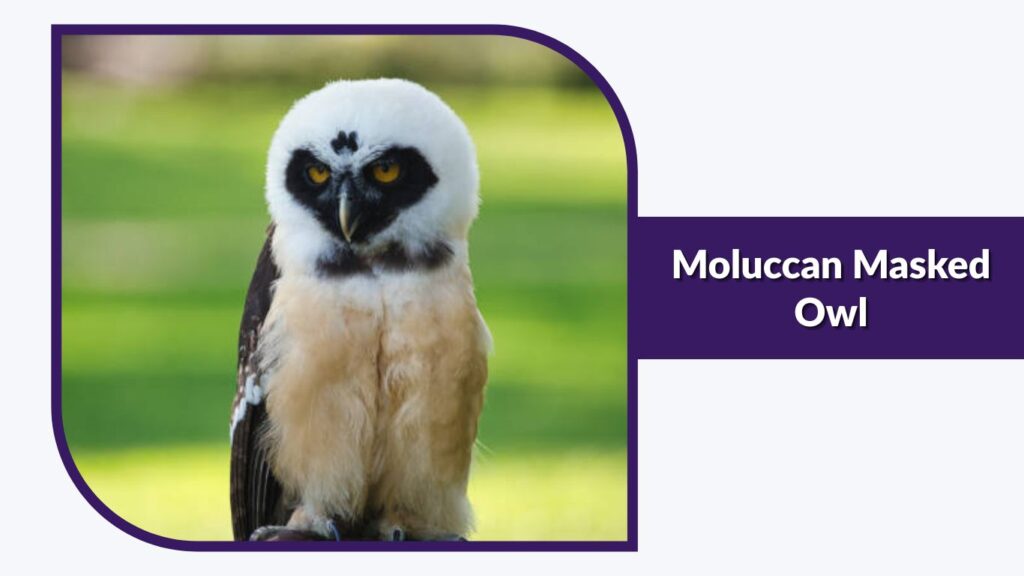
The Moluccan Masked Owl is a small to medium-sized barn owl from Indonesia’s southern Moluccas. Its scientific name is Tyto sororcula, and it is also known as the Lesser Masked Owl. Some taxonomists have treated it as close to, or possibly part of, the Australian Masked Owl complex, but it is commonly listed as a separate Tyto species.
Identification
- Small to medium-sized barn owl with no ear tufts.
- Has a pale, heart-shaped facial disc.
- Dark eyes create a strong masked expression.
- Upperparts are brown or grey-brown with mottled markings.
- Underparts are paler, often with dark speckling.
- Wings and tail show barred or mottled patterns.
- Best identified by its restricted island range in the southern Moluccas.
Habitat
The Moluccan Masked Owl is presumed to live mainly in primary forest. Records also suggest it can occur in degraded forest and scrub, especially where logged forest still has scattered patches of trees. Because it is rarely observed, much of its habitat use remains poorly documented.
Distribution
This owl is endemic to Indonesia and is associated with the southern Moluccas. The Owl Pages lists its distribution as the islands of Tanimbar and Buru, while other taxonomic summaries describe it more broadly as endemic to the south Moluccas.
Diet and Hunting
The exact diet of the Moluccan Masked Owl is not well studied. Like other barn owls, it is probably nocturnal and likely hunts small mammals, birds, reptiles, and large insects. It likely uses quiet flight, sharp hearing, and quick strikes from a perch while hunting in forest at night.
Breeding
Breeding information for this owl is very limited. It likely nests in tree cavities or sheltered natural spaces, similar to related masked owls. Since it is rare and difficult to observe, details such as nesting season, clutch size, and chick development are not well known.
Conservation Status
The Moluccan Masked Owl is listed as Least Concern by BirdLife International according to The Owl Pages, but this does not mean it is common. Its limited island range and dependence on forest habitat mean that logging and forest degradation may still affect local populations.
9. Lesser Masked Owl
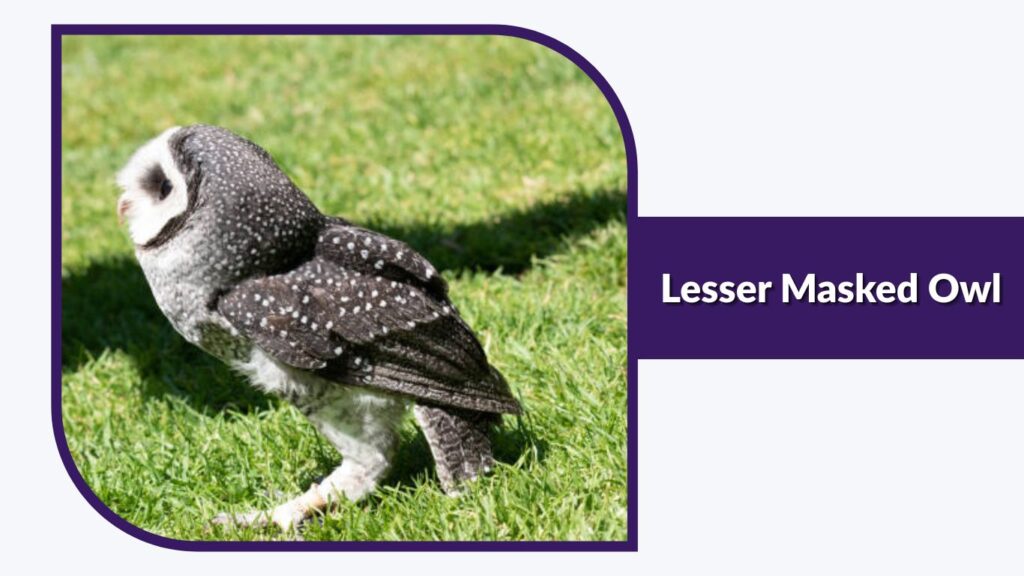
The Lesser Masked Owl is a small to medium-sized barn owl known scientifically as Tyto sororcula. Many references also call it the Moluccan Masked Owl, so the two common names often refer to the same owl rather than two clearly separate species. It is a little-known island owl from Indonesia and is usually associated with forested habitats.
Identification
- Small to medium-sized barn owl with no ear tufts.
- Has a heart-shaped facial disc.
- Dark eyes create a strong masked look.
- Upperparts are brown, grey-brown, or mottled.
- Underparts are paler with dark spotting.
- Wings and tail often show barred markings.
- Best recognized by its restricted island range in the Moluccas.
Habitat
The Lesser Masked Owl is mainly linked with forest habitat. It is believed to use primary forest, but some records suggest it may also occur in degraded forest and scrub where trees remain. Because it is rarely seen, its exact habitat needs are still not fully understood.
Distribution
This owl is found in Indonesia’s southern Moluccas. It has been associated with islands such as Tanimbar and Buru, giving it a narrow island-based range. This restricted distribution makes the species more vulnerable to local habitat changes than widespread owls.
Diet and Hunting
The diet of the Lesser Masked Owl is not well documented. Like other barn owls, it probably hunts at night and catches small mammals, birds, reptiles, and large insects. Its silent flight, sharp hearing, and strong talons help it locate and capture prey in dark forest conditions.
Breeding
Very little is known about its breeding behavior. It probably nests in tree hollows or sheltered cavities, similar to related masked owls. Since the species is rarely recorded, details about nesting season, clutch size, incubation, and chick development remain limited.
Conservation Status
The Lesser Masked Owl is not considered one of the best-studied owls, even though it is recognized by taxonomic sources under Tyto sororcula. Its limited range and forest dependence mean that habitat loss, logging, and forest degradation could affect local populations, especially on smaller islands.
10. Taliabu Masked Owl
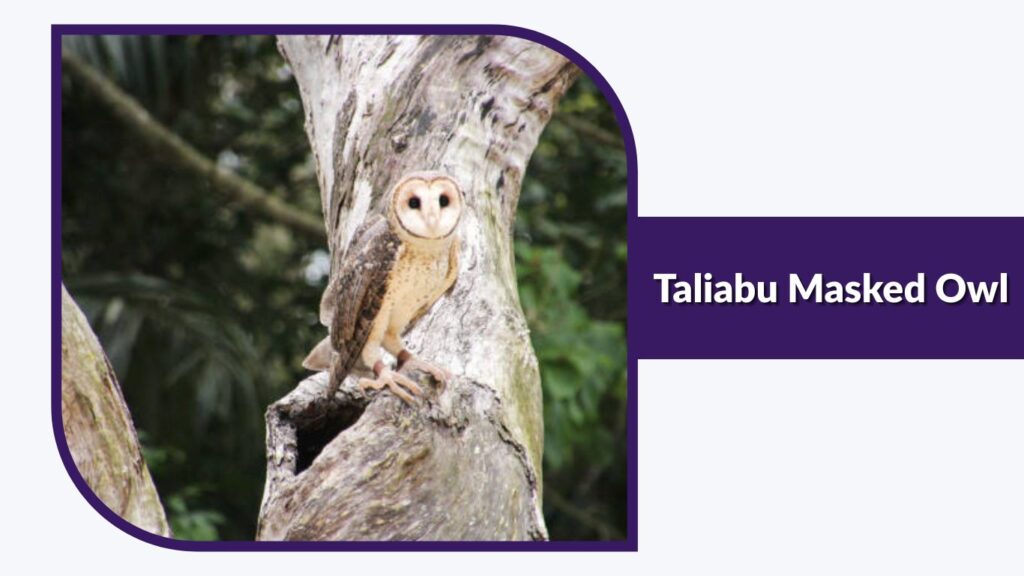
The Taliabu Masked Owl is a rare island barn owl from Indonesia. Its scientific name is Tyto nigrobrunnea, and it is also called the Sula Island Masked Owl. This species is poorly known, mostly nocturnal, and strongly associated with forest habitats on Taliabu Island in the Sula Archipelago.
Identification
- Medium-sized owl with no ear tufts.
- Has a pale reddish-brown facial disc.
- Eyes are dark brown to blackish-brown.
- Upperparts are dark brown with whitish speckles.
- Underparts are deep golden-brown with dark spots.
- Legs are partly feathered, with grey toes and dark claws.
- One known specimen measured about 31 cm in length.
Habitat
The Taliabu Masked Owl has been recorded in lowland forest, heavily logged forest, and dense secondary bamboo thickets. This suggests it may tolerate some disturbed habitat, but forest cover is still important for shelter, hunting, and possible nesting sites.
Distribution
This owl is mainly known from Taliabu Island in the Sula Archipelago, located in the Moluccan Sea of Indonesia. Some sources suggest it may also occur on nearby islands such as Mangoli, Sulabes, and Peleng, but confirmed records are limited.
Diet and Hunting
The exact diet of the Taliabu Masked Owl is unknown. Like other barn owls, it probably hunts at night and may feed on small mammals, birds, reptiles, and large insects. Its silent flight, dark-adapted vision, and strong talons help it hunt in forest darkness.
Breeding
Breeding behavior has not been well documented. It may nest in tree cavities, hollow trunks, or sheltered forest spaces, similar to related masked owls. Because the species is rare and hard to observe, details about eggs, nesting season, and chick development remain unknown.
Conservation Status
Recent taxonomic databases list the Taliabu Masked Owl as Near Threatened, while some older species profiles still describe it as Vulnerable. Its small island range, limited records, and dependence on forest habitat make continued monitoring important.
11. Sulawesi Masked Owl
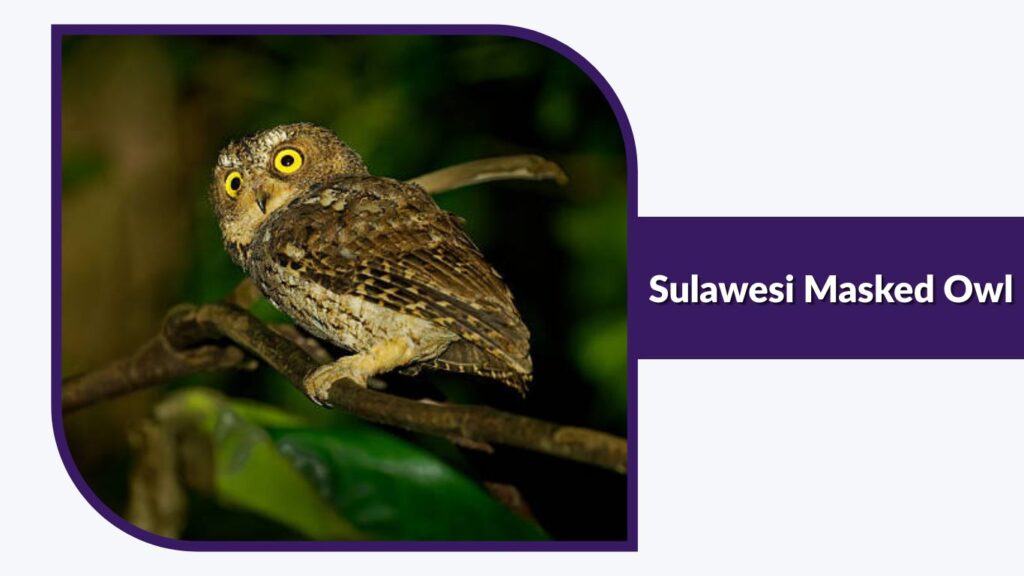
The Sulawesi Masked Owl is a medium to large barn owl found in Indonesia. Its scientific name is Tyto rosenbergii, and it is also known as the Celebes Barn Owl, Celebes Masked Owl, or Rosenberg’s Owl. It is different from the Minahasa Masked Owl, although both are Sulawesi-region Tyto owls. This species is widely distributed through Sulawesi and is listed as Least Concern.
Identification
- Medium to large owl with no ear tufts.
- Has a pale, heart-shaped facial disc.
- Dark eyes give the face a strong masked look.
- Upperparts are dark brown, grey-brown, or charcoal with pale markings.
- Underparts are buff or whitish with dark spotting.
- Wings are broad and suited for silent night hunting.
- Best identified by its range in Sulawesi and nearby islands.
Habitat
The Sulawesi Masked Owl uses several habitat types, including secondary forest, scrubland, cultivated areas, grassland, and open country. Unlike some forest-specialist masked owls, it appears more adaptable and may be seen around disturbed or semi-open habitats, especially near suitable roosting and hunting areas.
Distribution
This owl is endemic to Indonesia and is found on Sulawesi, Sangihe, and Peleng. Some references describe it as widely distributed throughout Sulawesi, though it is not always easy to find because it is nocturnal and often active when visibility is low.
Diet and Hunting
The Sulawesi Masked Owl hunts mostly at night. Pellet studies show that its diet includes rats and shrews, and it probably also catches other small vertebrates when available. It may hunt by flying low over open areas or by watching from a perch before dropping onto prey.
Breeding
Breeding information for the Sulawesi Masked Owl is limited. Like many barn owls, it likely uses sheltered places such as tree hollows, cavities, or rocky sites for nesting. Because much of its behavior happens at night, detailed records of eggs, nesting season, and chick development remain scarce.
Conservation Status
The Sulawesi Masked Owl is currently listed as Least Concern by BirdLife International. Even so, local habitat change can still affect the species, especially where older trees, roosting sites, and hunting areas are removed. Continued habitat protection helps support stable island owl populations.
12. Seram Masked Owl
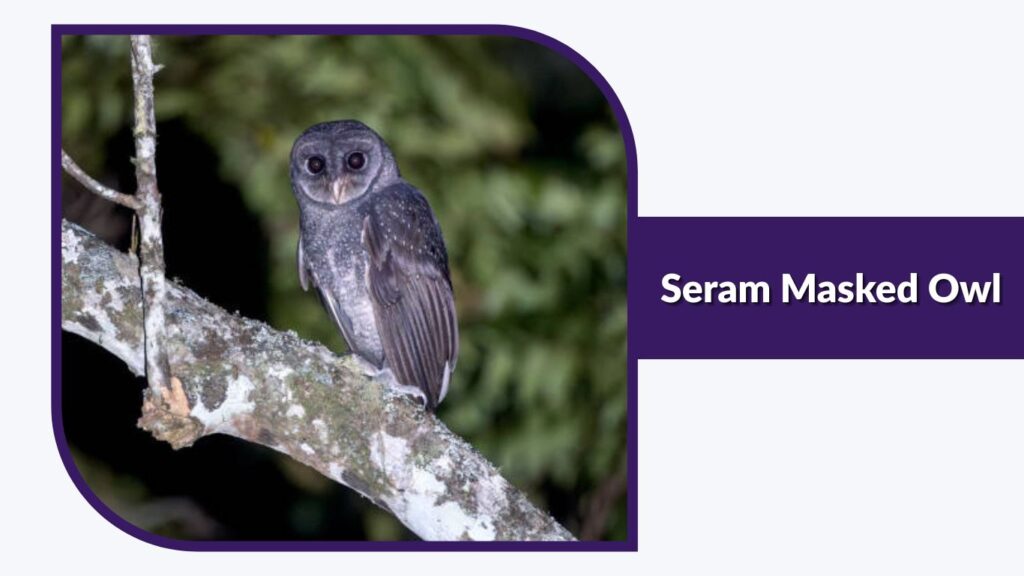
The Seram Masked Owl is a rare barn owl from Seram Island in Indonesia. Its scientific name is Tyto almae, though some taxonomic sources treat it as a subspecies of the Moluccan Masked Owl. It was formally described in 2013 and remains one of the least-known masked owls.
Identification
- Medium-sized masked owl with no ear tufts.
- Has a pale, heart-shaped facial disc.
- Dark eyes create a strong masked appearance.
- Body length is about 31 cm based on the known specimen.
- Weight is recorded at about 540 g.
- Upperparts are ochre-buff to orange-buff with dense dark spotting.
- Best identified by its restricted range on Seram Island.
Habitat
The Seram Masked Owl is linked with forest habitat on Seram. The first specimen was caught in wet, mossy lower montane forest at about 1,350 meters elevation. Other summaries describe its habitat broadly as forested areas, which fits its secretive, island-forest lifestyle.
Distribution
This owl is endemic to Seram Island in the Moluccas of eastern Indonesia. Its existence was first suggested by a photograph taken in Manusela National Park in 1987, and the holotype was later mist-netted in 2012 before the species was formally described.
Diet and Hunting
The exact diet of the Seram Masked Owl is not well documented. Like other Tyto owls, it is probably a nocturnal hunter that catches small mammals, birds, reptiles, and large insects. It likely uses quiet flight, sharp hearing, and strong talons to hunt in dense forest at night.
Breeding
Breeding behavior is still unknown because the species has been recorded very rarely. It may nest in tree hollows or other sheltered forest cavities, similar to related masked owls. More field research is needed to understand its nesting season, clutch size, and chick development.
Conservation Status
The Seram Masked Owl is listed as Data Deficient by the IUCN because there is not enough information for a full conservation assessment. Habitat loss may be a concern, and protection of Manusela National Park is considered important for its long-term survival.
13. Andaman Masked Owl
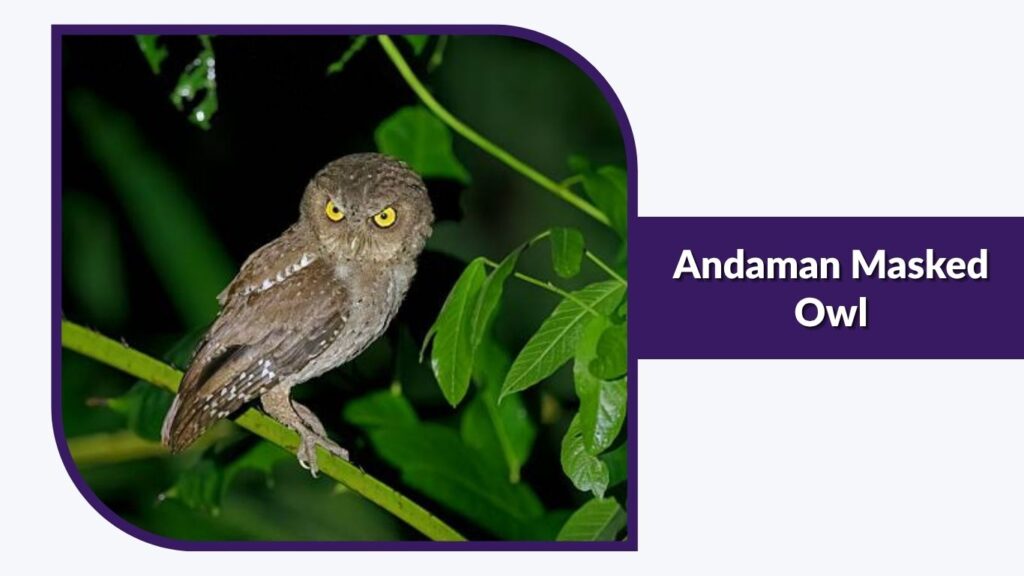
The Andaman Masked Owl is a medium-sized barn owl found in the Andaman Islands of India. Its scientific name is Tyto deroepstorffi, and it is also called the Andaman Barn Owl. Some authorities treat it as a distinct species, while others have treated it as a subspecies of the Barn Owl complex.
Identification
- Medium-sized owl with no ear tufts.
- Has a clear, heart-shaped facial disc.
- Face is pale reddish-buff with an orange-brown rim.
- Eyes are blackish-brown, and the bill is cream-colored.
- Upperparts are dark brown with fine orange-buff spots.
- Breast is golden-rufous with blackish spotting.
- Length is about 30–36 cm.
Habitat
The Andaman Masked Owl uses coastal areas, fields, semi-open landscapes with trees, and places near or inside human settlements. It is not only a deep-forest owl; it may live around villages, gardens, and tree-filled open areas where it can roost by day and hunt after dusk.
Distribution
This owl is endemic to the Andaman Islands, with sources describing it as restricted to the southern Andaman Islands or the Andaman island group more broadly. Because of this narrow island range, its status is harder to judge than that of widespread barn owls.
Diet and Hunting
The Andaman Masked Owl is nocturnal and usually leaves its daytime roost at dusk. Its food habits are not fully studied, but bones of rats and mice have been found in pellets collected below roosting sites. This suggests that small rodents are an important part of its diet.
Breeding
Breeding details are still poorly known. Like related barn owls, it probably nests in cavities, sheltered spaces, or similar protected sites, but exact information on nesting season, eggs, incubation, and chick development remains limited.
Conservation Status
The conservation status of the Andaman Masked Owl is uncertain in some owl references. Its restricted island range, taxonomic debate, and limited field information make it difficult to assess clearly. More surveys would help confirm its population size, breeding habits, and long-term threats.
FAQs
Are masked owls the same as barn owls?
Masked owls belong to the barn owl family, Tytonidae, so they are closely related to barn owls. However, many masked owls are larger, darker, and more forest-dependent than the common Barn Owl. They usually have a strong heart-shaped facial disc, dark eyes, and powerful feet.
Where do masked owls live?
Masked owls live mainly in Australia, Tasmania, New Guinea, Indonesia, and nearby islands. Different species or subspecies have very restricted ranges. Some live in forests and woodlands, while others use island rainforests, coastal areas, open woodland, caves, or semi-open habitats near human settlements.
What do masked owls eat?
Masked owls mostly eat small mammals such as rats, mice, and other rodents. Some species may also catch birds, reptiles, insects, and other small animals. They hunt at night using silent flight, sharp hearing, and strong talons to catch prey from trees, forest edges, or open ground.
Are masked owls rare?
Some masked owls are uncommon or rare, especially island species with small ranges. Examples include the Golden Masked Owl, Taliabu Masked Owl, Manus Masked Owl, and Seram Masked Owl. Wider-ranging forms, such as the Australian Masked Owl, may be more widespread but can still be locally threatened by habitat loss.
Why are masked owls important?
Masked owls help control rodent populations and show the health of forest and woodland ecosystems. Many depend on mature trees, hollows, and undisturbed habitat, so their presence can indicate good-quality natural areas. Protecting masked owls also helps protect many other forest animals.