The tawny owl sound is one of the most recognizable nighttime bird calls, especially in the United Kingdom. Known for its haunting hoots, sharp screeches, and famous “twit-twoo” duet, the tawny owl uses different vocalizations to communicate with its mate, defend territory, and warn intruders. Male, female, and young tawny owls produce distinctive sounds that can help birdwatchers identify them. Understanding these calls makes it easier to recognize tawny owls in woodlands, parks, and gardens after sunset.
What Does a Tawny Owl Sound Like?
The tawny owl (Strix aluco) produces several distinctive calls, ranging from deep, wavering hoots to sharp, high-pitched contact sounds. These vocalizations are commonly heard across British woodlands and other suitable habitats. Although people often associate owls with the familiar “twit-twoo” sound, this phrase usually represents an exchange between two birds rather than one owl calling alone.
The Famous Twit-Twoo Sound
The classic “twit-twoo” is typically a duet between a male and female tawny owl.
The female produces a sharp “ke-wick” note, while the male answers with a longer, resonant hoot.
When these sounds overlap or follow each other, they create the familiar owl call heard in forests and gardens.
Why Do Tawny Owls Make Different Sounds?
Tawny owls communicate through vocalizations because they are primarily nocturnal and often remain hidden in trees.
Their calls serve several purposes, including territorial defense, maintaining contact with partners, courtship, and signaling alarm.
Different sounds communicate different information depending on the bird’s age, sex, and circumstances.
Male and Female Tawny Owl Sounds
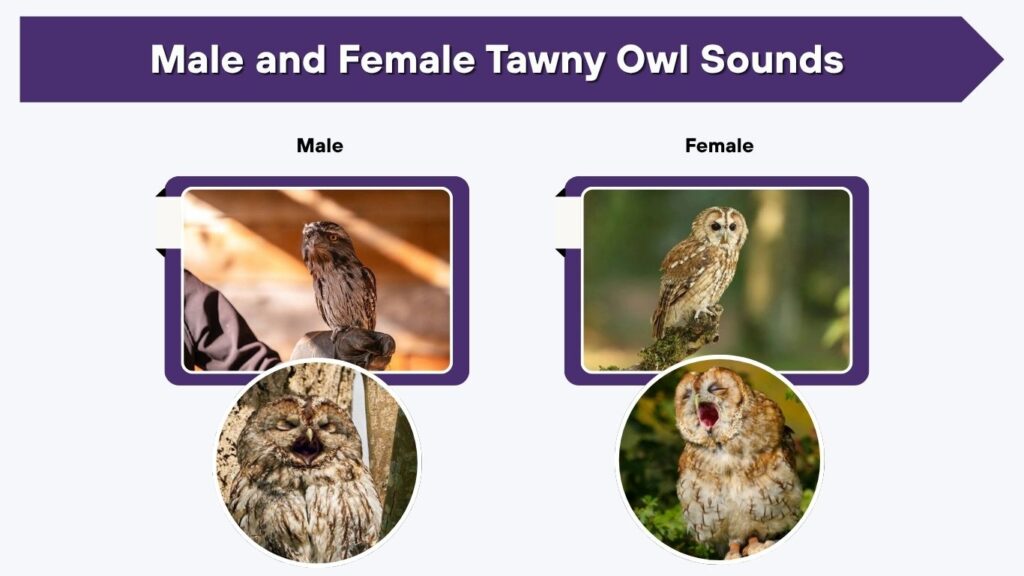
Male and female tawny owls have recognizable vocal differences, although both sexes can produce more than one type of call. Males are particularly associated with long territorial hoots, while females commonly produce short contact notes. Together, their calls create the traditional owl duet. Learning these differences helps identify calling birds even when they remain concealed among branches.
Male Tawny Owl Hooting Sound
The male tawny owl produces a deep, musical hoot that travels through woodland.
His call usually begins with a prolonged “hooo,” followed by a pause and a shorter series of wavering notes.
These territorial calls warn competing males while helping maintain communication with a partner.
Female Tawny Owl Sound
The female tawny owl commonly produces a sharp, penetrating “ke-wick” call.
This sound is noticeably shorter and higher-pitched than the male’s typical territorial hoot.
Females sometimes hoot as well, but their hooting is generally less structured than the male’s familiar sequence.
Key Differences Between Male and Female Calls
- Male hoot: Deep, resonant, and sustained.
- Female contact call: Sharp, short, and relatively high-pitched.
- Male territorial call: Often includes several wavering notes.
- Female response: Frequently heard between the male’s hoots.
- Duet: Both birds may alternate calls while communicating.
These patterns are useful identification clues, but individual sounds cannot always determine a bird’s sex with certainty.
Different Types of Tawny Owl Calls
Tawny owls possess a varied vocal repertoire beyond their familiar hooting sounds. Their calls may change according to territorial activity, interactions with neighboring birds, and perceived threats. Some vocalizations sound melodic and rhythmic, while others resemble sharp screams or repeated cries. Understanding these differences helps explain why a single tawny owl can produce several surprisingly different nighttime sounds.
Common Tawny Owl Sounds
- Hooting calls: Deep, rhythmic sounds associated with territory.
- Contact calls: Short “ke-wick” notes used for communication.
- Duet calls: Alternating vocalizations between paired birds.
- Alarm calls: Sharper, more urgent sounds produced during disturbances.
- Juvenile begging calls: High-pitched cries requesting food.
- Agitated calls: Harsh or repeated vocalizations during tense encounters.
Tawny Owl Screech Sound
Tawny owls sometimes produce harsh, screech-like cries, particularly during alarm or confrontations.
These sounds differ considerably from their familiar territorial hoots.
However, not every nighttime screech comes from a tawny owl. Barn owls, foxes, and other animals can produce similarly startling sounds.
Tawny Owl Mating Sounds
During courtship and pair communication, tawny owls exchange vocalizations that reinforce their bond.
Males frequently hoot from established territories, while females respond with contact calls.
These exchanges may become particularly noticeable during the months leading into the breeding season.
Baby and Young Tawny Owl Sounds
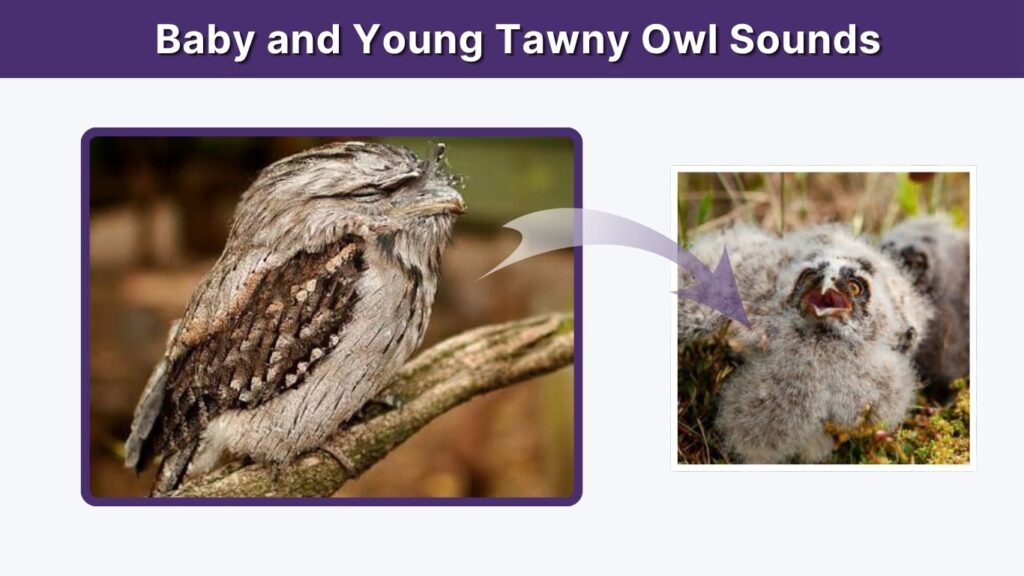
Baby and juvenile tawny owls produce noticeably different sounds from mature birds. Instead of deep territorial hoots, young owls usually make high-pitched begging calls to attract parental attention. These vocalizations are particularly noticeable around nesting areas during spring and early summer. As the birds mature, their voices gradually develop into the familiar adult contact calls and hooting patterns.
Baby Tawny Owl Sound
Young tawny owls frequently make short, squeaky calls that can resemble “psee-ep” or sharp whistles.
These begging sounds help parents locate hungry chicks, particularly after they leave the nest and begin resting on nearby branches.
Juvenile Tawny Owl Screech
Juvenile tawny owls may produce repeated, piercing cries while waiting for food.
These calls can sound surprisingly loud for such small birds. As juveniles gain independence, they begin developing more adult-like vocalizations.
Their begging cries may continue for several weeks after leaving the nest.
Tawny Owl Sounds at Night and Throughout the Year
Tawny owls are primarily nocturnal, making their calls especially noticeable after sunset. Although they communicate throughout the year, vocal activity changes seasonally. Autumn is particularly important because established pairs defend their territories while young owls search for new areas. Their calls may also become prominent during courtship and the months preceding their early breeding season.
Why Do Tawny Owls Hoot at Night?
Tawny owls use nighttime hooting to communicate across their territories.
Males advertise their presence and discourage competing owls, while paired birds exchange calls to maintain contact.
Their powerful vocalizations allow communication over considerable distances in wooded habitats.
Best Time to Hear Tawny Owl Sounds in the UK
- Autumn: Often the most vocal season because territorial activity increases.
- Winter: Hooting continues as pairs prepare for breeding.
- After sunset: An excellent time to hear active owls.
- Woodland: Mature deciduous forests provide suitable listening locations.
- Parks and gardens: Tawny owls may call wherever suitable mature trees and nesting sites exist.
Listening quietly without playing recorded calls is the best way to observe natural behavior.
How to Identify Tawny Owl Sounds and Find Recordings
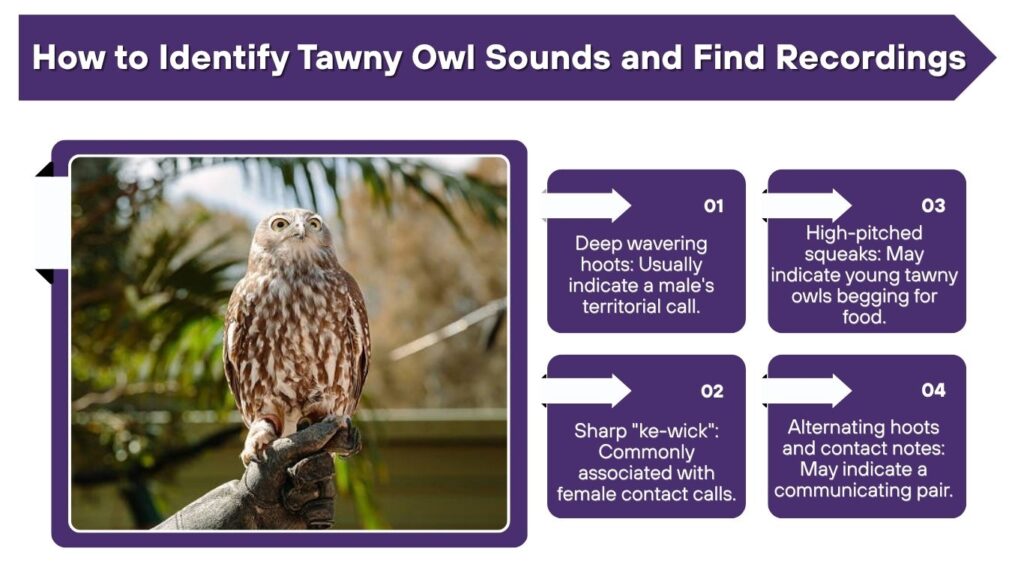
Recognizing tawny owl sounds requires attention to pitch, rhythm, repetition, and habitat. Their characteristic hooting differs from the calls of several other nocturnal birds. Birdwatchers can compare field recordings to become familiar with these distinctions. Reliable wildlife recording collections also provide examples of male, female, and juvenile vocalizations, making identification easier without disturbing wild birds.
Tawny Owl vs Tawny Frogmouth Sound
The tawny frogmouth is an Australian bird that is not a true owl.
Its familiar call is a soft, repeated “oom-oom-oom,” unlike the wavering hoots and sharp contact calls of the Eurasian tawny owl.
The two species belong to different bird families and inhabit different geographical regions.
How to Recognize Tawny Owl Calls
- Deep wavering hoots: Usually indicate a male’s territorial call.
- Sharp “ke-wick”: Commonly associated with female contact calls.
- High-pitched squeaks: May indicate young tawny owls begging for food.
- Alternating hoots and contact notes: May indicate a communicating pair.
- Long screeches: Compare carefully with barn owl calls before identifying the bird.
Where to Find Tawny Owl Sound Clips and MP3 Recordings
The British Trust for Ornithology (BTO), RSPB, Woodland Trust, and xeno-canto offer useful tawny owl audio examples.
Some recording collections provide downloadable sound files, including MP3 recordings. Check each recording’s license before using it for videos, sound effects, or commercial projects.
FAQs
Tawny owl calls can be confusing because males, females, and juveniles produce different vocalizations. Their sounds also change with the breeding season, territorial activity, and interactions with other birds. Understanding these differences helps birdwatchers recognize which calls they are hearing and why the owls are communicating.
1. What Sound Does a Tawny Owl Make?
Tawny owls produce deep hooting calls, sharp “ke-wick” contact notes, and occasional alarm cries. Their famous “twit-twoo” sound usually involves two birds.
2. What Does a Female Tawny Owl Sound Like?
Female tawny owls commonly make sharp, high-pitched “ke-wick” calls. They can also produce hoots, although these generally differ from typical male territorial calls.
3. Why Do Tawny Owls Screech at Night?
Tawny owls may produce harsh cries when alarmed, during aggressive interactions, or when young birds beg for food.
4. What Do Baby Tawny Owls Sound Like?
Baby tawny owls produce repeated squeaks and high-pitched begging calls to attract their parents and request food.
5. What Time of Year Do Tawny Owls Hoot Most?
Tawny owls are especially vocal during autumn, when territorial defense becomes more intense. Hooting also continues throughout winter and the breeding period.