The morepork, also called the ruru, is a small nocturnal owl native to New Zealand. Although people rarely see it during the day, its distinctive two-note call is commonly heard in forests, parks and well-planted suburbs after sunset. Moreporks have large yellow eyes, mottled brown feathers and short, broad wings that allow them to move quietly through dense vegetation. They feed on insects, rodents, lizards and small birds. The species remains widespread across much of New Zealand, but habitat loss, introduced predators, vehicle collisions and secondary poisoning continue to threaten local populations.
What Is Morepork?
The morepork is a true owl belonging to the family Strigidae. Its scientific name is Ninox novaeseelandiae. It is New Zealand’s only surviving native owl and is known in te reo Māori as ruru.
The names “morepork” and “ruru” imitate the owl’s repeated two-part nighttime call. In Australia, closely related owls are usually called boobooks. The Australian boobook is generally treated as a separate species from the New Zealand morepork.
| Feature | Information |
| Scientific name | Ninox novaeseelandiae |
| Māori name | Ruru |
| Bird family | Strigidae |
| Length | Around 29 cm |
| Average weight | Approximately 175 g |
| Main habitat | Forests, wooded farmland and suburbs |
| Diet | Insects, rodents, lizards and small birds |
| Activity | Nocturnal |
| New Zealand status | Not Threatened |
New Zealand moreporks are widespread and moderately abundant, although they are less common in the dry eastern and central areas of the South Island.
Morepork Identification
A morepork is a compact, dark-brown owl with a rounded head and no visible ear tufts. Its mottled plumage provides excellent camouflage when it rests against bark or among shaded foliage.
Key Identification Features
- Length of approximately 29 cm
- Bright yellow or yellow-green eyes
- Dark facial discs surrounding the eyes
- Small, sharply hooked bill
- Brown upperparts with pale spots
- Cream, buff or reddish streaks on the chest
- Short tail and broad, rounded wings
- Feathered legs with yellow feet
- Strong, curved talons
Females are generally larger than males, but both sexes have similar colours and markings. Their short, broad wings make them highly manoeuvrable, helping them fly between trees and branches in thick forest.
Morepork Size
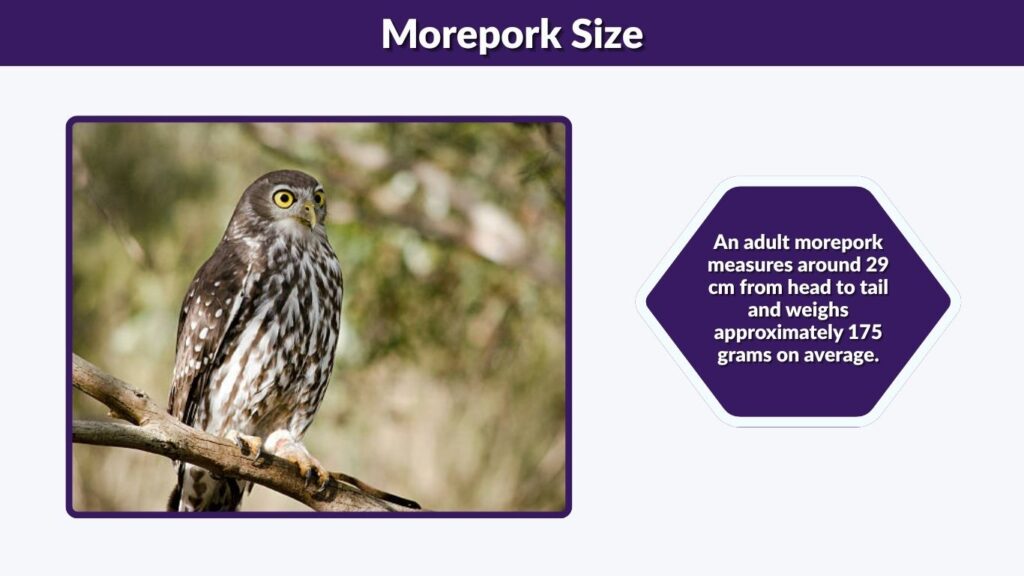
An adult morepork measures around 29 cm from head to tail and weighs approximately 175 grams on average. This makes it a relatively small owl, although its rounded body and loose feathers can make it appear larger when perched.
Moreporks are similar in size to New Zealand’s introduced little owl. However, the little owl is usually paler, greyer and more heavily marked with cream spots. Little owls also prefer open South Island habitats, while moreporks are strongly associated with forests and wooded areas.
Morepork Sound and Call
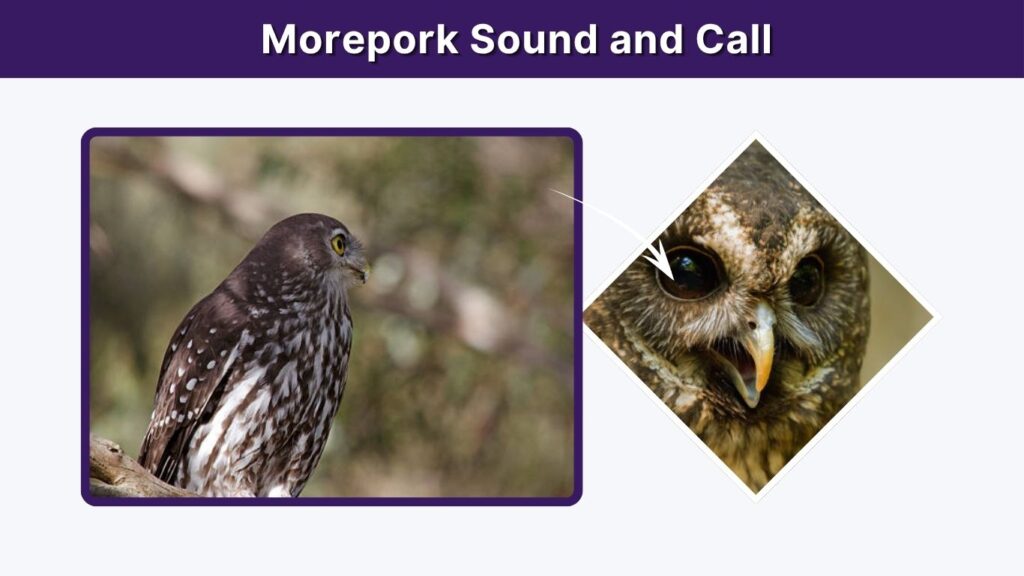
The classic morepork call sounds like:
“More-pork… more-pork.”
It is a clear, two-note call repeated at intervals during the night. The Māori name “ruru” also reflects the rhythm of this vocalisation.
Moreporks produce several other sounds, including repetitive “quork-quork” notes, rising whistles, squeals and sharp yelping calls. The rising call is sometimes mistaken for a kiwi, while the yelp may sound similar to a little owl.
Why Do Moreporks Call at Night?
Moreporks call after dark to communicate and announce their presence. Calls may be exchanged by neighbouring birds, mates or competing males. What sounds like a peaceful duet can sometimes be two rival males calling against each other.
The birds are often most vocal around dusk and during the early part of the night. Their calls may carry a considerable distance through quiet forest.
Morepork Call Meaning in Māori Tradition
In Māori tradition, the ruru was associated with the spiritual world and was sometimes regarded as a watchful guardian. Interpretations depended on the particular call. The familiar ruru or “more-pork” sound could be considered positive, while a piercing yelp was sometimes viewed as a warning of approaching bad news.
Where Do Moreporks Live?
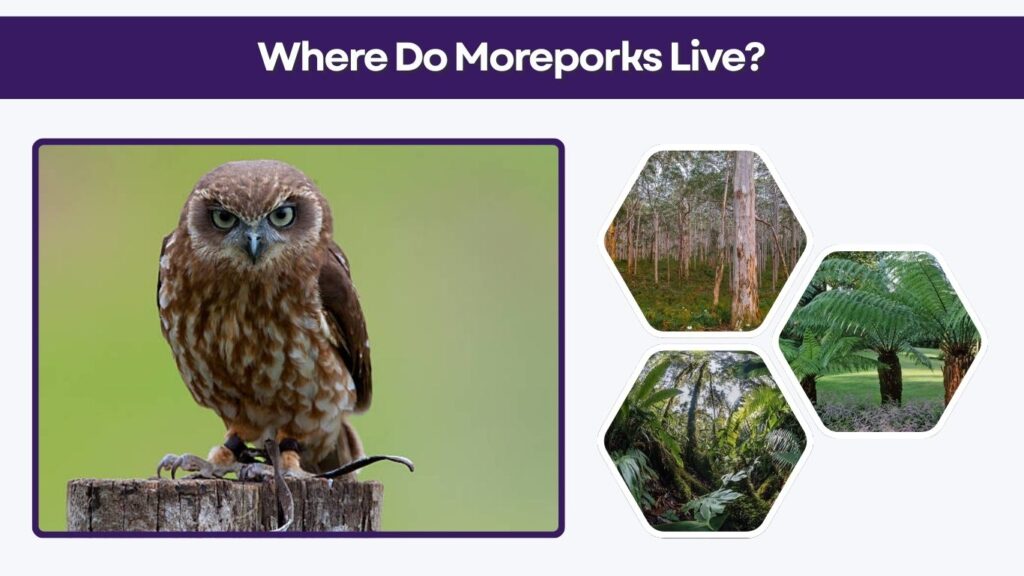
Moreporks inhabit native and introduced forests throughout mainland New Zealand and many offshore islands. They also occur in wooded farmland, regenerating scrub, urban parks and suburban gardens where mature trees and thick vegetation remain.
They are less common in the dry, open parts of Canterbury and Otago. During daylight, they usually hide in heavily shaded locations such as:
- Tree cavities
- Thick foliage
- Tree-fern crowns
- Dense forest canopies
- Hollow logs
- Occasionally abandoned buildings
Moreporks need sheltered daytime roosts and nearby areas containing abundant prey. Mature trees are especially important because they provide nesting cavities and protected resting places.
What Do Moreporks Eat?
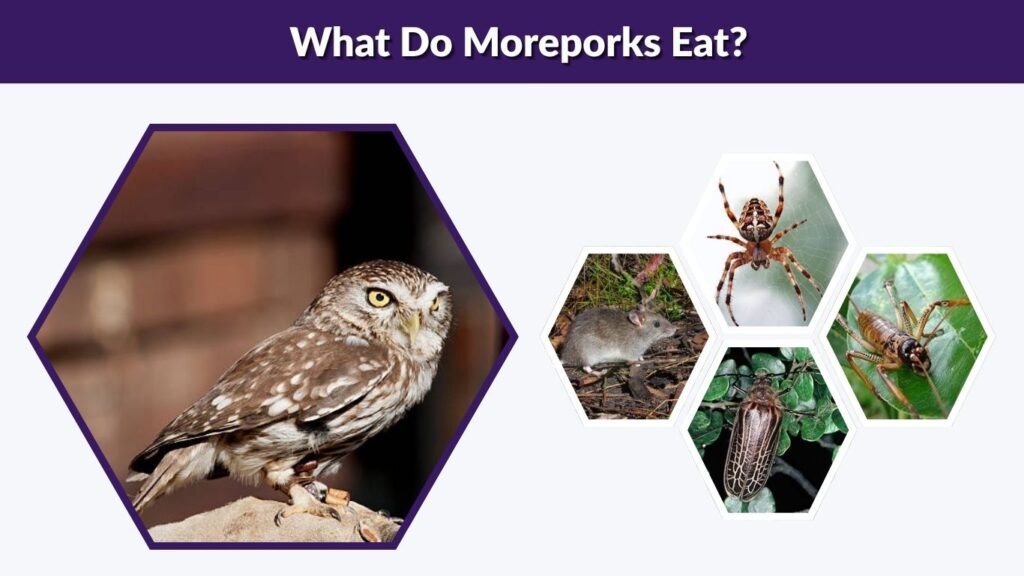
Moreporks are opportunistic predators that feed on whatever suitable prey is locally abundant. Insects normally form a major part of their diet, but they also capture small vertebrates.
Common foods include:
- Wētā
- Huhu beetles
- Moths
- Cicadas
- Spiders
- Rats and mice
- Small lizards
- Small birds, including silvereyes
A morepork typically watches from a perch before dropping onto its prey. Its excellent hearing, sensitive night vision and nearly silent flight allow it to approach without being detected. Large prey is held with the talons and torn apart with the hooked bill.
Bones, fur and other indigestible materials are later regurgitated as compact pellets.
Morepork Adaptations
Moreporks possess several adaptations for hunting in darkness.
Their large eyes gather available light, while sensitive hearing helps them detect prey hidden under vegetation. Soft, comb-like edges on the flight feathers reduce turbulence and wing noise, enabling the owl to fly quietly.
The owl can also rotate its head through approximately 270 degrees. This movement helps it scan its surroundings without repositioning its entire body. Its short wings provide control rather than high-speed, long-distance flight, making the bird well suited to navigating dense New Zealand forests.
Nesting and Life Cycle
Moreporks usually breed during spring and summer. They prefer dark, concealed nesting locations, particularly cavities in living or dead trees. They may also nest in hollow logs, epiphytes, earth banks, rock crevices, exposed tree roots and suitable artificial nest boxes.
The female generally lays two white eggs, although clutches can vary. She performs the incubation while the male brings food. Incubation takes approximately 20–30 days.
After hatching, the young remain dependent on their parents for several weeks. Sources differ slightly regarding fledging age, but chicks generally leave the nesting site when they are around five to seven weeks old. Young birds may continue receiving food after they can fly.
Baby and Juvenile Moreporks
Newly hatched moreporks are covered with pale down and depend completely on their parents. Juveniles become more similar to adults as their flight feathers develop, although young birds may appear fluffier and less strongly marked.
A juvenile found on the ground is not necessarily abandoned. Its parents may still be nearby. People should keep pets away, observe from a safe distance and contact a wildlife professional when the bird appears injured or is in immediate danger.
How Long Do Moreporks Live?
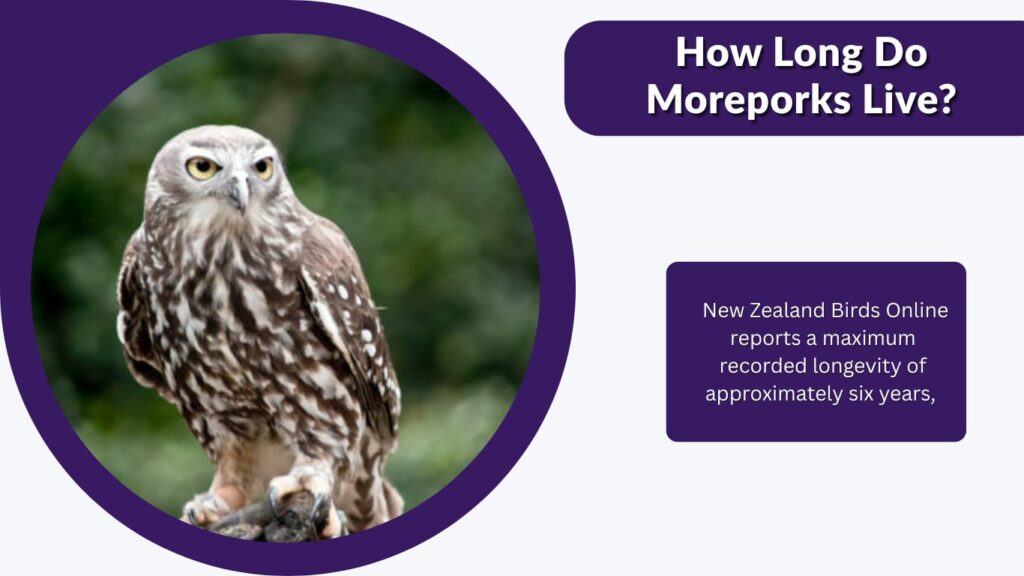
The average wild lifespan has not been firmly established. New Zealand Birds Online reports a maximum recorded longevity of approximately six years, but some individuals could potentially survive longer than available records indicate. Survival depends on food, habitat quality, predation and exposure to human-related dangers.
Are Moreporks Endangered?
The mainland New Zealand morepork is currently classified as Not Threatened. It remains widespread, but conservation authorities believe some numbers may be gradually declining because of predation and habitat loss.
Stoats, rats, possums and cats can kill adults, eggs or chicks. Females are especially vulnerable while incubating inside cavities. Moreporks may also die after eating rodents contaminated with anticoagulant poison. Collisions with vehicles, buildings and windows are additional dangers, particularly when owls hunt moths around streetlights.
Maintaining mature trees, controlling introduced predators responsibly and avoiding harmful rodent poisons can help protect local morepork populations.
Norfolk Island Morepork
The Norfolk Island morepork has a remarkable conservation history. By the 1980s, only one local female remained. Two male moreporks were moved from New Zealand, and one successfully bred with her. Today’s Norfolk Island birds descend from this extremely small founding group.
In January 2026, Parks Australia reported that the population was estimated at fewer than 30 birds. Conservation work includes nest boxes, predator control, habitat protection, annual call surveys and close monitoring of breeding success.
FAQs
Is a morepork an owl?
Yes. The morepork is a small native New Zealand owl with the scientific name Ninox novaeseelandiae. It is also commonly called ruru, its Māori name.
How do you pronounce more pork?
Morepork is pronounced approximately as “more-pork.” The name imitates the owl’s distinctive two-note call. Ruru is commonly pronounced “roo-roo.”
Can more pork fly silently?
Moreporks fly very quietly because the edges of their flight feathers reduce turbulence and noise. Silent flight helps them approach insects, rodents and small birds without alerting them.
Can you keep more pork as a pet?
Moreporks are native wild birds, not conventional pets. They should not be captured, handled or removed from the wild. Injured birds require help from trained wildlife rehabilitators.
Do more pigs use nesting boxes?
Yes. Moreporks sometimes use properly positioned nesting boxes, especially where natural tree hollows are limited. Keeping mature hollow-bearing trees is still one of the most valuable ways to provide long-term nesting habitat.