
A barn owl nest box provides a safe nesting space for barn owls in areas where natural cavities are limited. These boxes can be installed in barns, trees, or on poles near open fields and grasslands. However, successful nesting depends on choosing the right size, design, and location. Whether you plan to build a DIY barn owl nest box or purchase a ready-made model, understanding its dimensions, construction, placement, and maintenance will help you create a safer environment for these remarkable birds.
What Is a Barn Owl Nest Box?
A barn owl nest box is an artificial nesting structure designed to provide barn owls with a protected place to lay eggs and raise their young. Barn owls naturally use hollow trees, abandoned buildings, rock cavities, and other sheltered spaces.
Unlike many birds, barn owls do not construct traditional nests from twigs and grass. Instead, they usually lay their eggs on a surface containing accumulated owl pellets and other nesting debris.
A properly designed nest box provides shelter from rain, wind, predators, and unnecessary disturbances. It also gives young owls sufficient space to develop before leaving the nest.
Barn Owl Nest Box Dimensions and Size
Choosing suitable dimensions is one of the most important parts of barn owl nest box design. An undersized or shallow box can expose young owls to danger, particularly if they reach the entrance before they are ready to fly.
Recommended Barn Owl Nest Box Size
Different organizations recommend different dimensions depending on the country, owl population, and box design.
For example, Cornell Lab’s NestWatch provides North American plans for a box approximately 12⅜ inches wide, 22¾ inches long, and 16 inches deep. Its suggested entrance opening is approximately 3¾ by 4½ inches.
The Barn Owl Trust recommends deeper designs, with the bottom of the entrance at least 450 mm (about 18 inches) above the nesting floor. This helps prevent young owls from leaving prematurely.
Important design considerations include:
- Nesting chamber: Large enough for several growing owlets.
- Entrance opening: Suitable for barn owls and matched to the selected plan.
- Internal depth: Sufficient to reduce premature exits.
- Ventilation: Openings positioned to allow airflow without admitting excessive rain.
- Access panel: A secure opening for future maintenance.
Because regional recommendations differ, follow one complete, professionally developed nest box plan rather than combining incompatible measurements.
Barn Owl Nest Box Plans and Design
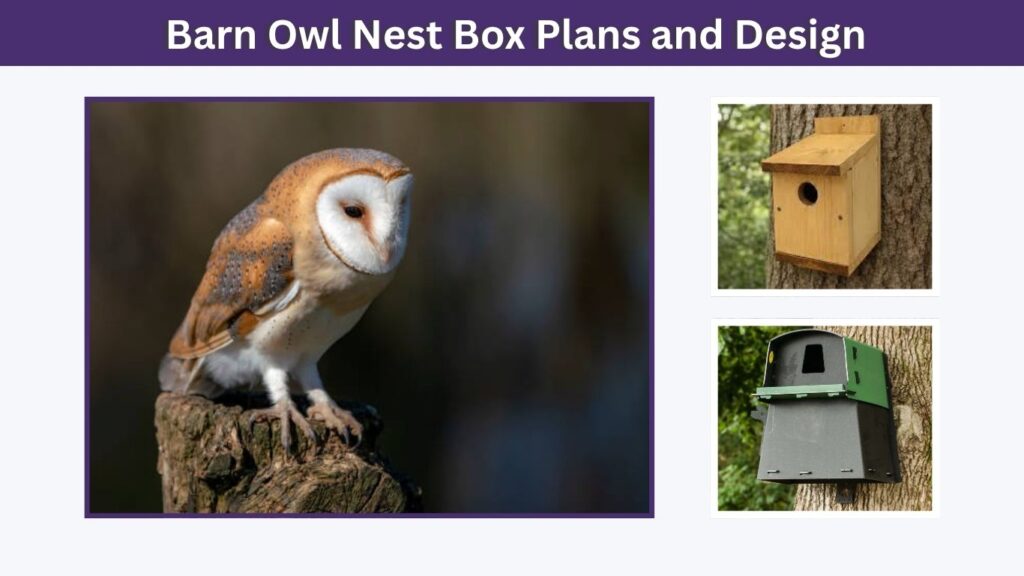
Barn owl nest box plans explain how to construct the chamber, position the entrance, and install the finished structure safely. Free plans are available from wildlife organizations, including the Barn Owl Trust.
Types of Barn Owl Nest Box Designs
Several designs can accommodate different properties and nesting locations.
- Wooden nest box: A traditional structure made from durable plywood or solid timber.
- Pole-mounted nest box: A freestanding design for open farmland without suitable trees or buildings.
- Indoor barn nest box: A protected nesting chamber installed inside a barn or agricultural building.
- Tree-mounted nest box: A weather-resistant structure secured to a suitable mature tree.
Each model has specific construction and mounting requirements. Outdoor boxes generally need additional protection against rain and extreme temperatures.
How to Build a Barn Owl Nest Box
Building a DIY barn owl nest box can be an affordable alternative to purchasing a completed structure. However, the box must follow an established wildlife-safe design.
Materials Needed
Prepare the following materials before beginning construction:
- Exterior-grade plywood suitable for the selected plans
- Weather-resistant screws and suitable brackets
- Measuring tape, saw, and drill
- Hinges and a secure latch for the access panel
- Appropriate exterior waterproofing materials
- Mounting hardware suited to the installation surface
Avoid exposed sharp edges, protruding screws, and materials that could harm nesting birds.
Step-by-Step Building Instructions
Step 1: Choose suitable plans. Select a design developed specifically for barn owls. Confirm that its size is appropriate for your region.
Step 2: Measure and cut the panels. Cut the front, back, sides, floor, and roof according to the plan. Check each measurement carefully.
Step 3: Create the entrance. Cut the opening in the specified position, maintaining the recommended distance between the entrance and nesting floor.
Step 4: Assemble the box. Secure the panels using suitable screws. Ensure the finished structure is stable and free from dangerous gaps.
Step 5: Add ventilation and drainage. Follow the chosen blueprint to prevent overheating and moisture accumulation.
Step 6: Install the maintenance panel. Include a securely fastened hatch that allows cleaning when the box is unoccupied.
Step 7: Weatherproof the exterior. Protect exposed joints and the roof from rain while keeping the interior safe for wildlife.
Inspect the completed structure carefully before installation.
Best Barn Owl Nest Box Placement
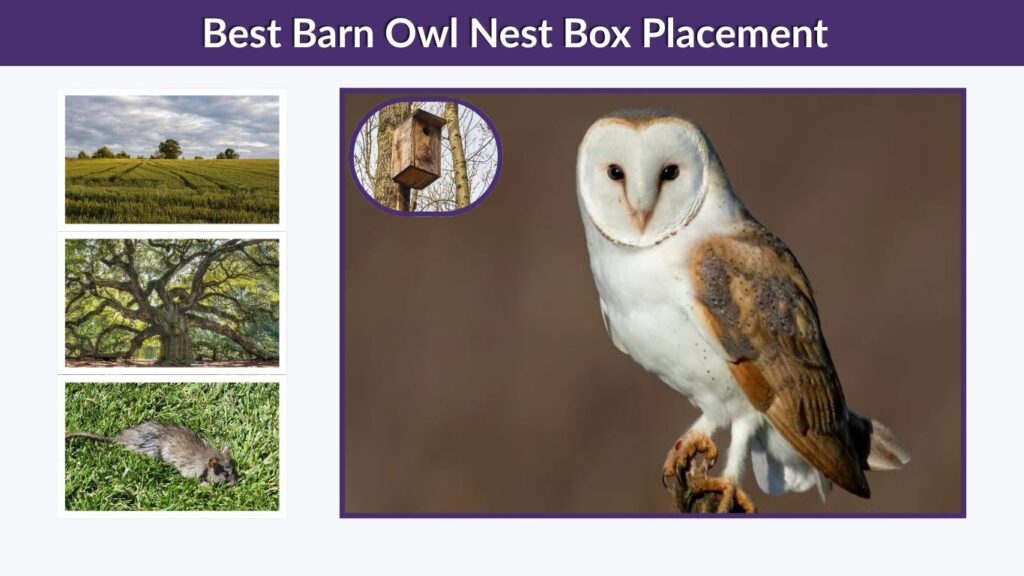
Even a well-constructed nest box may remain unused if installed in an unsuitable location. Barn owls typically hunt across open landscapes where small mammals are available.
The best placement provides access to suitable hunting habitat while minimizing disturbances and hazards.
Where to Install a Barn Owl Nest Box
Suitable locations may include:
- Open agricultural fields and farmland
- Grasslands and meadows with rodent populations
- Quiet barns and agricultural buildings
- Mature trees near open hunting areas
- Secure freestanding poles in suitable countryside
Avoid areas near busy roads, where vehicle collisions are a serious risk. The Barn Owl Trust generally advises avoiding nest box sites within one kilometer of major unscreened roads.
Barn Owl Nest Box Height
Cornell Lab’s NestWatch recommends a mounting height of approximately 8–25 feet for North American barn owl boxes.
However, the ideal height depends on the mounting structure, regional conditions, and box design. Boxes should be inaccessible to most ground predators and positioned away from regular human disturbance.
The entrance should face a reasonably open flight path. Where possible, protect it from prevailing wind, driving rain, and intense afternoon sunlight.
Barn Owl Nest Box on a Pole
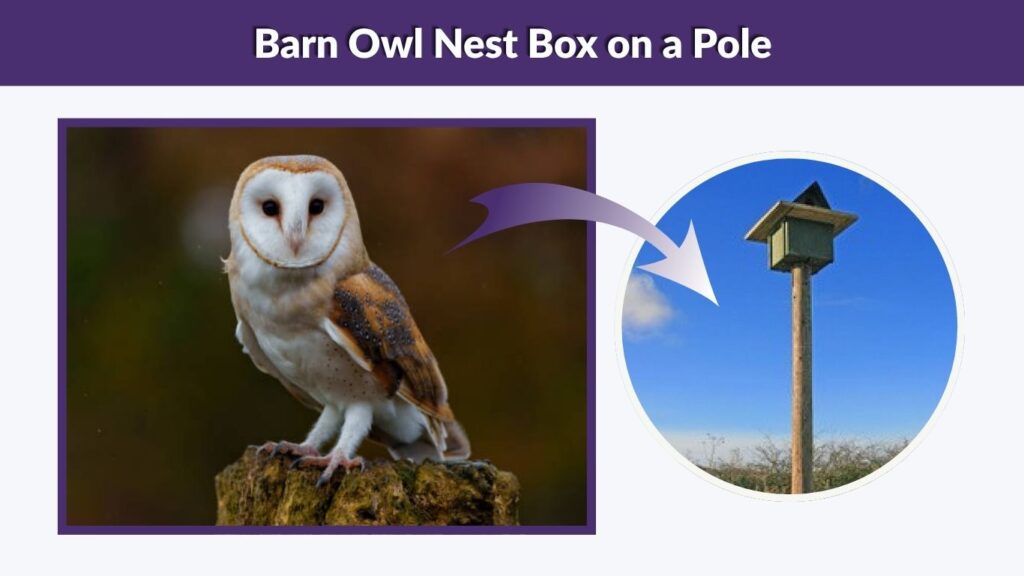
A pole-mounted barn owl nest box is particularly useful when suitable trees or agricultural buildings are unavailable.
These models are commonly positioned in open fields, providing owls with access to hunting areas.
The support pole must be sufficiently strong to withstand the combined weight of the box, nesting birds, and strong winds. It should also be installed using suitable foundations and hardware.
A predator guard may be appropriate where climbing animals present a risk. Because pole installation involves significant height and weight, professional assistance may be necessary.
Barn Owl Nest Box Bedding and Maintenance
Barn owls generally do not require traditional nesting materials because they create their own nesting substrate from regurgitated pellets.
Cornell’s NestWatch notes that a thin layer of wood shavings is optional for its recommended design. Avoid filling the chamber with thick bedding, especially if this reduces the safe distance below the entrance.
Maintenance is essential because debris gradually accumulates inside occupied boxes.
Inspect and clean a nest box only when it is confirmed to be inactive and doing so is lawful. Remove excessive debris, check mounting hardware, and repair damaged weatherproofing.
The Barn Owl Trust suggests that many boxes used by barn owls require clearing approximately every two or three years, although heavily used boxes may need more frequent maintenance.
Never open or disturb an active nest without the appropriate authorization.
Should You Buy or Build a Barn Owl Nest Box?
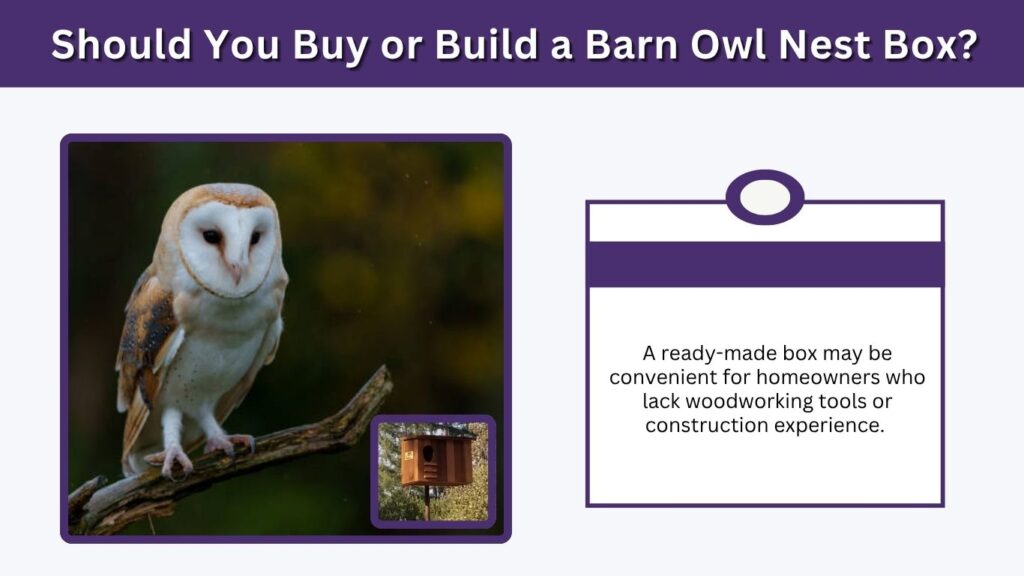
Both ready-made and DIY barn owl nest boxes can provide suitable nesting opportunities when properly designed.
A ready-made box may be convenient for homeowners who lack woodworking tools or construction experience. Commercial options include wooden boxes, pole-mounted models, and designs with camera compatibility.
A DIY box offers greater flexibility and may cost less, particularly when suitable materials are already available.
Before buying, check the internal dimensions, weather resistance, mounting system, and accessibility for maintenance. Avoid selecting a model based on price or appearance alone.
Barn Owl Nest Box With Camera
A barn owl nest box camera allows wildlife enthusiasts to observe nesting activities without repeatedly approaching the birds.
Camera systems may include infrared night viewing, recording capabilities, and remote monitoring.
Install cameras before birds begin using the nesting site. Equipment should not obstruct entrances or create excessive light, noise, or heat.
Camera installation and filming may be subject to wildlife protection laws, particularly when nesting birds are present. Follow local regulations and avoid disturbing occupied boxes.
How to Attract Barn Owls to a Nest Box
Installing a nest box does not guarantee that barn owls will occupy it. Habitat quality plays an important role in whether a nesting pair chooses the site.
Open grasslands, undisturbed hunting areas, and healthy small-mammal populations can make a location more suitable.
Avoid using rodenticides because poisoned prey can harm owls. Reducing unnecessary nighttime lighting and keeping activity around potential nesting sites minimal may also improve conditions.
Most importantly, allow time for natural occupation rather than attempting to introduce wild owls into the box.
FAQs
1. What size should a barn owl nest box be?
Dimensions vary by region and design. Cornell NestWatch provides North American plans, while the Barn Owl Trust recommends deeper chambers to help protect young owls. Choose a complete species-specific plan rather than relying on one universal box size.
2. How high should a barn owl nest box be?
Cornell NestWatch recommends approximately 8–25 feet above the ground for North American installations. The appropriate height also depends on the structure, surrounding habitat, predator risks, and accessibility for safe maintenance.
3. Where do barn owls naturally build nests?
Barn owls nest in hollow trees, cavities in buildings, sheltered ledges, cliffs, and other protected spaces. They generally do not build traditional twig nests, instead laying eggs on existing surfaces or accumulated pellet debris.
4. Do barn owl nest boxes need bedding?
Barn owls do not normally need artificial nesting material. They produce their own substrate from owl pellets. Some plans permit a thin layer of untreated wood shavings, but excessive bedding can reduce the safe internal depth.
5. How long does it take barn owls to use a nest box?
There is no guaranteed timeline. Barn owls may discover a suitable box relatively quickly, while others may remain unused for years. Local owl populations, available food, competing nesting sites, and habitat suitability all influence occupancy.