The tawny frogmouth owl is one of Australia’s most fascinating nocturnal birds, famous for its remarkable camouflage, large yellow eyes, and unusual appearance. Although commonly mistaken for an owl, the tawny frogmouth belongs to a completely different bird family. Its bark-colored feathers, wide mouth, and mysterious nighttime calls make it especially interesting to birdwatchers. Understanding its identification, habitat, diet, behavior, and breeding habits reveals how this extraordinary Australian bird survives in the wild while remaining almost invisible during the day.
What Is a Tawny Frogmouth Owl?
The tawny frogmouth is a medium-sized nocturnal bird native to Australia. Its broad head, forward-facing eyes, and upright posture give it an owl-like appearance. However, despite these similarities, it is not a true owl. This unusual bird belongs to the frogmouth family and has specialized adaptations for hunting insects and blending into its surroundings.
Scientific Name and Classification
The scientific name of the tawny frogmouth is Podargus strigoides. It belongs to the family Podargidae and is more closely related to nightjars than to true owls.
The name “frogmouth” refers to its exceptionally wide mouth, which resembles the broad opening of a frog’s mouth.
Are Tawny Frogmouths Owls?
No, tawny frogmouths are not owls. Although both birds hunt at night, their anatomy and hunting techniques differ considerably.
Important differences include:
- Bird family: Frogmouths belong to Podargidae, while true owls belong to Strigidae or Tytonidae.
- Beak: Frogmouths have broad, flattened beaks designed for catching prey.
- Feet: Owls possess powerful hunting talons, while frogmouths have relatively weak feet.
- Hunting: Frogmouths commonly capture insects by pouncing from perches.
- Camouflage: Frogmouths are especially skilled at resembling broken tree branches.
These distinctions explain why the tawny frogmouth is an unusual nocturnal bird rather than an Australian owl.
Tawny Frogmouth Identification and Feathers
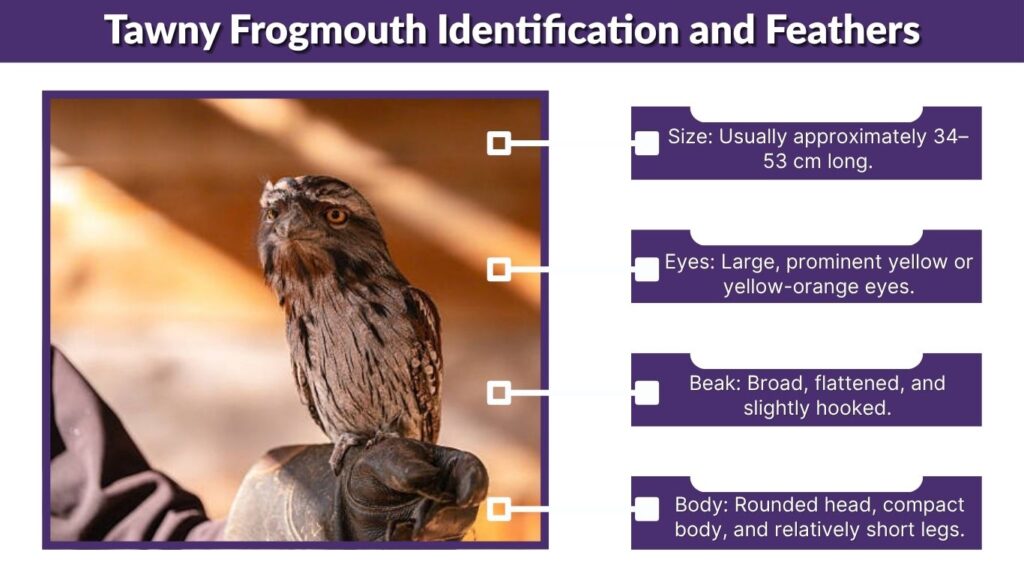
Identifying a tawny frogmouth becomes easier once you recognize its distinctive features. This bird has a stocky body, broad head, yellow eyes, and intricately patterned feathers. Its appearance changes depending on its posture and surrounding vegetation. During daylight, its remarkable disguise can make even an adult bird almost impossible to distinguish from the tree where it rests.
Key Identification Features
- Size: Usually approximately 34–53 cm long.
- Eyes: Large, prominent yellow or yellow-orange eyes.
- Beak: Broad, flattened, and slightly hooked.
- Feathers: Mottled grey, brown, black, and occasional reddish markings.
- Body: Rounded head, compact body, and relatively short legs.
- Posture: Often sits upright with its head pointed toward the sky.
Tawny Frogmouth Owl Feathers
Tawny frogmouth feathers provide excellent protection against predators. Their complex patterns resemble rough bark, dried leaves, and weathered branches.
Most individuals have silver-grey plumage, although reddish-brown variations also occur. Dark streaks break up the bird’s outline, improving its natural camouflage.
The wing feathers also have specialized fringes that help reduce flight noise.
Tawny Frogmouth Habitat and Camouflage
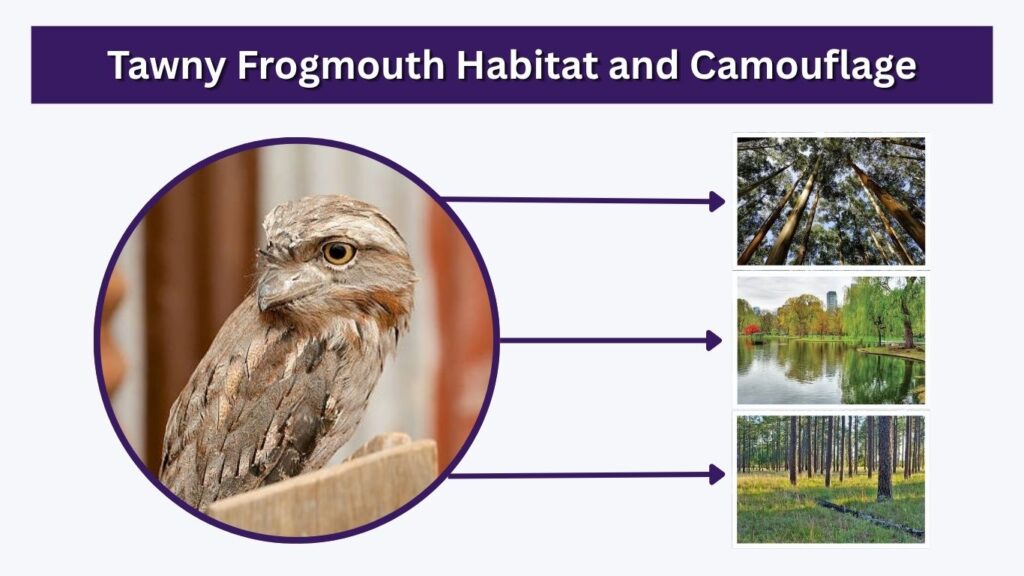
Tawny frogmouths inhabit a remarkable variety of Australian environments, from native forests to suburban gardens. Their survival depends heavily on suitable trees that provide shelter, nesting opportunities, and concealed daytime resting locations. Because they remain almost motionless while roosting, these birds frequently go unnoticed even in populated neighborhoods where they may live close to people.
Where Do Tawny Frogmouths Live?
Tawny frogmouths occur throughout mainland Australia and Tasmania.
They inhabit eucalyptus forests, open woodlands, scrublands, parks, and residential gardens. However, they generally avoid dense rainforests and completely treeless deserts.
Trees with established branches provide important resting and nesting locations.
How Does Tawny Frogmouth Camouflage Work?
When threatened, a tawny frogmouth stretches its neck, raises its beak, compresses its feathers, and freezes.
This posture makes its body resemble a broken branch.
Its patterned plumage completes the disguise, allowing the bird to remain concealed from predators and people during daylight hours.
What Do Tawny Frogmouth Owls Eat?
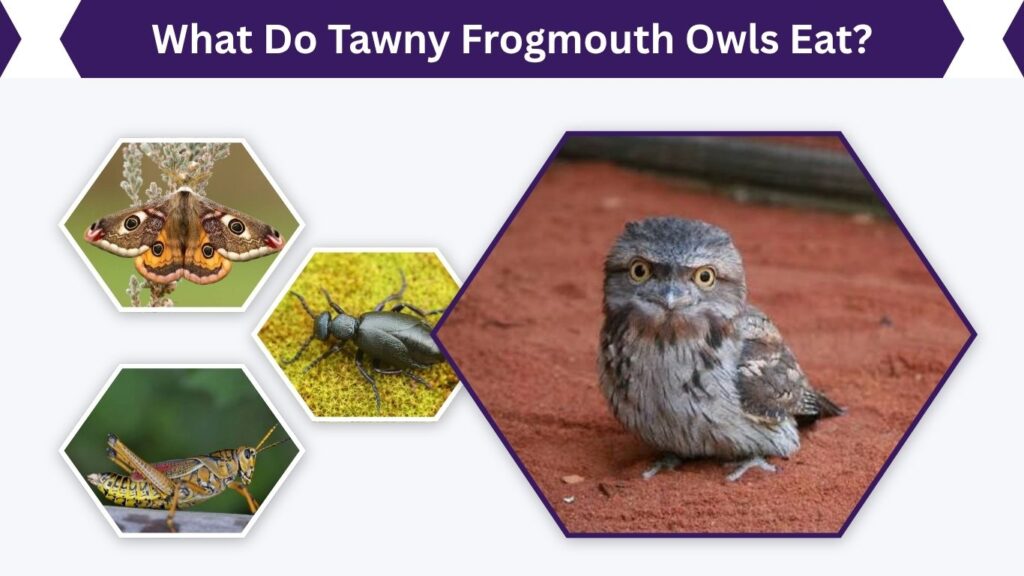
Tawny frogmouths are primarily insect-eating birds, although they consume various other small animals. Their nighttime feeding habits help control populations of insects and other invertebrates. Unlike owls, which frequently grab prey using powerful talons, frogmouths rely mainly on their broad mouths. Their hunting strategy combines patient observation with sudden movements toward unsuspecting prey.
Common Foods in Their Diet
The tawny frogmouth diet includes:
- Moths: Common nighttime prey captured from perches or during flight.
- Beetles: Frequently consumed when available.
- Grasshoppers: Protein-rich insects found in grassy habitats.
- Spiders: Occasional prey among vegetation.
- Worms: Collected from the ground.
- Snails and slugs: Common soft-bodied food sources.
- Small vertebrates: Occasionally frogs, lizards, mice, and small birds.
How Do Tawny Frogmouths Hunt?
Tawny frogmouths usually hunt from elevated branches, watching the ground for movement.
Once prey appears, they swoop downward and seize it with their beaks.
They also capture flying insects, particularly moths attracted to lights. Unfortunately, hunting near illuminated roads increases their risk of vehicle collisions.
Tawny Frogmouth Calls and Sounds
Despite their quiet daytime behavior, tawny frogmouths can become surprisingly vocal after sunset. Their distinctive calls help individuals communicate and maintain contact with nearby partners. Birdwatchers often hear these sounds before spotting the birds themselves. Learning to recognize their vocalizations is particularly useful because tawny frogmouths frequently remain hidden among branches even while calling.
What Does a Tawny Frogmouth Sound Like?
The most recognizable tawny frogmouth call is a deep, repetitive “oom-oom-oom” sound.
These low, rhythmic notes are commonly heard during nighttime activity.
When threatened, the bird may also produce loud hissing sounds while opening its mouth and adopting a defensive posture.
Tawny Frogmouth vs Mopoke Owl Calls
People sometimes confuse tawny frogmouth calls with those of the southern boobook owl, commonly called the mopoke.
However, the southern boobook typically produces a recognizable two-note call, while the tawny frogmouth gives a softer, repeated booming sound.
Listening carefully helps distinguish these Australian nocturnal birds.
Tawny Frogmouth Nesting, Babies, and Lifespan
Tawny frogmouths are known for their strong breeding partnerships and shared parental responsibilities. Pairs often remain together for extended periods and may reuse familiar nesting territories. Their nests are surprisingly simple structures made from sticks positioned on tree branches. Both parents participate in incubation and chick care, helping their offspring survive their vulnerable early development.
Nesting and Breeding Behavior
Breeding commonly occurs between August and December in southern Australia, although timing varies with location and rainfall.
The female generally lays two or three eggs in a loosely constructed stick nest.
The male usually incubates during daylight, while both parents share incubation duties at night.
Baby Tawny Frogmouth Development
Baby tawny frogmouths initially have fluffy white down and depend entirely on their parents.
As they grow, their feathers develop the mottled patterns needed for camouflage.
Young birds generally leave the nest around four to five weeks after hatching, although their parents continue providing care afterward.
Tawny Frogmouth Lifespan
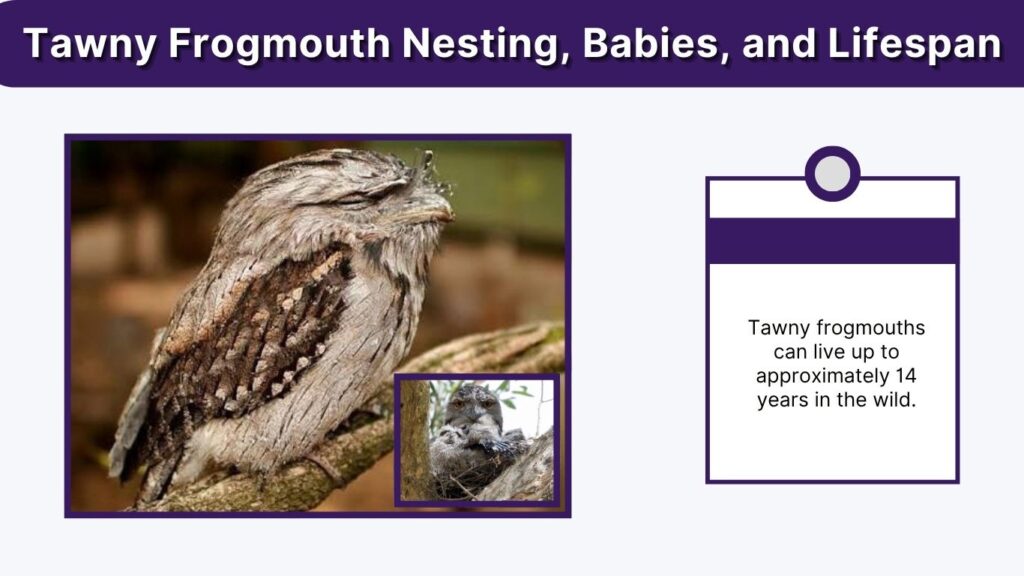
Tawny frogmouths can live up to approximately 14 years in the wild.
Their survival depends on food availability, suitable habitats, protection from predators, and environmental conditions.
Tawny Frogmouth Adaptations and Conservation
Tawny frogmouths possess several remarkable adaptations that help them survive Australia’s changing environments. Their camouflage, nocturnal activity, and specialized feeding behavior provide important advantages. Nevertheless, these birds face dangers from habitat destruction, road traffic, predators, and poisoning. Protecting native trees and reducing preventable threats can help maintain healthy populations throughout their natural range.
Important Survival Adaptations
- Cryptic feathers: Blend naturally with bark and branches.
- Excellent night vision: Helps detect movement in low light.
- Wide mouth: Allows efficient capture of insects and small prey.
- Quiet flight: Reduces noise while approaching prey.
- Motionless resting: Helps prevent detection by predators.
- Defensive hissing: May discourage approaching threats.
Are Tawny Frogmouths Endangered?
Tawny frogmouths are currently classified as Least Concern by the IUCN because they remain widespread.
However, habitat loss, road accidents, predators, and secondary poisoning from rodenticides can threaten individual birds and local populations.
How to Protect Tawny Frogmouths
Preserving established trees, minimizing pesticide use, and keeping domestic cats safely contained can improve conditions for these birds.
Avoid disturbing nesting pairs or handling young birds. If a frogmouth appears injured, contact a licensed wildlife rescue organization for assistance.
FAQs
Tawny frogmouths often generate questions because of their unusual appearance and similarities to owls. Their distinctive feathers, mysterious calls, nighttime feeding habits, and remarkable camouflage can make them difficult to understand at first. The following answers address common questions about their behavior, identification, conservation, and relationship with other nocturnal birds found throughout Australia.
1. Why Is a Tawny Frogmouth Not an Owl?
Tawny frogmouths belong to the Podargidae family rather than either of the true owl families. They also have different feet, beaks, and hunting techniques.
2. Are Tawny Frogmouths Dangerous to Humans?
Tawny frogmouths generally pose little danger to humans. However, they may hiss or defend themselves when threatened, so observing them from a distance is best.
3. Why Do Tawny Frogmouths Look Like Tree Branches?
Their mottled feathers and upright resting posture create exceptional camouflage, helping conceal them from predators during daylight hours.
4. Can Tawny Frogmouths Be Kept as Pets?
Tawny frogmouths are protected native wildlife in Australia. Keeping one generally requires specific legal authorization and appropriate wildlife-care expertise.
5. What Is Special About the Tawny Frogmouth Owl?
Its extraordinary camouflage, wide frog-like mouth, unusual calls, and ability to remain almost motionless make it one of Australia’s most distinctive nocturnal birds.