
The Northern White-faced Owl is a fascinating African owl recognized by its bright orange eyes, striking white facial disc, and remarkable defensive behavior. Scientifically known as Ptilopsis leucotis, this small nocturnal predator inhabits savannas, open woodlands, and scattered forests across sub-Saharan Africa. Its unusual ability to change its apparent body shape has earned it the nickname “transformer owl.” Despite its mysterious appearance, this bird plays an important ecological role by hunting small animals and insects. This guide explores Northern White-faced Owl identification, habitat, behavior, diet, reproduction, lifespan, and conservation status.
What Is a Northern White-faced Owl?
The Northern White-faced Owl (Ptilopsis leucotis) is a small owl belonging to the family Strigidae. It was previously grouped with the Southern White-faced Owl under the name White-faced Scops Owl. Today, the two are generally recognized as separate species. Its distinctive facial markings, ear tufts, and unusual defensive postures make it one of Africa’s most recognizable small owls.
Northern White-faced Owl Scientific Classification
- Common name: Northern White-faced Owl
- Scientific name: Ptilopsis leucotis
- Family: Strigidae
- Order: Strigiformes
- Genus: Ptilopsis
- Native region: Sub-Saharan Africa
- Conservation status: Least Concern
Northern White-faced Owl Identification
The Northern White-faced Owl has a distinctive appearance that separates it from many other small African owls. Its contrasting facial markings, orange eyes, and prominent ear tufts provide useful identification features. The grayish-brown plumage blends with tree bark and branches, helping the owl remain concealed during daylight hours. Both males and females share similar coloration.
Physical Characteristics
- Body length: Approximately 19–24 cm (7.5–9.5 inches).
- Wingspan: Around 54–58 cm (21–23 inches).
- Eyes: Large, bright orange eyes surrounded by dark markings.
- Facial disc: White or pale gray with a distinctive black outline.
- Ear tufts: Two prominent feather tufts on the head.
- Plumage: Grayish-brown feathers with darker streaks and markings.
- Body shape: Compact and rounded when relaxed, but noticeably slender when threatened.
Male vs. Female Northern White-faced Owls
Male and female Northern White-faced Owls look very similar, making visual identification of their sex difficult.
Females may average slightly larger than males, as occurs in many owl species. However, body size alone is not a reliable method of determining sex.
Northern White-faced Owl Habitat and Distribution
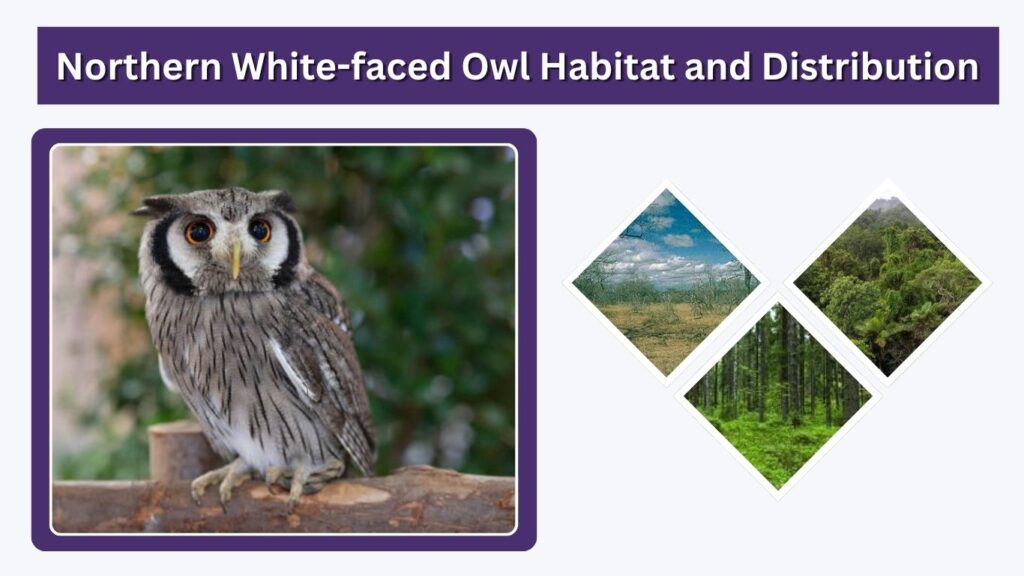
Northern White-faced Owls inhabit warm African environments where scattered trees provide shelter, nesting locations, and hunting perches. They generally prefer open habitats rather than dense tropical rainforests. Their distribution extends across the savanna belt of Africa south of the Sahara, where suitable woodland and grassland habitats support their feeding and breeding requirements.
Where Do Northern White-faced Owls Live?
This species occurs across northern sub-Saharan Africa, including Senegal, Ghana, Nigeria, Chad, Sudan, Ethiopia, and parts of Kenya and Uganda.
Its geographical range stretches from western Africa toward the Horn of Africa. Populations are mainly resident rather than long-distance migratory.
Preferred Natural Habitat
Northern White-faced Owls favor dry savannas, thorny woodlands, wooded grasslands, and forest edges.
They often use scattered trees for daytime roosting and hunting. Dense tropical forests and open deserts without suitable trees are generally less favorable environments.
Northern White-faced Owl Transformation and Defense
One of the most fascinating characteristics of the Northern White-faced Owl is its ability to change its apparent size and shape. This behavior has made white-faced owls famous in wildlife videos and earned them the nickname “transformer owls.” Their unusual defensive postures help them respond to potential predators by appearing either larger or less noticeable.
Why Does the Northern White-faced Owl Become Skinny?
When confronted with certain threats, the owl may stretch its body upward, compress its feathers, narrow its eyes, and raise its ear tufts.
This posture makes the bird appear unusually thin and resembles a broken branch or part of a tree. The behavior may help reduce detection by potential predators.
Why Does the Owl Puff Up Its Feathers?
When threatened by an animal of comparable size, a white-faced owl may spread its wings and expand its feathers.
This display increases its apparent size and may discourage an approaching predator.
The exact response depends on the situation, and these defensive behaviors are also documented in the closely related Southern White-faced Owl.
Northern White-faced Owl Behavior
Northern White-faced Owls are primarily nocturnal birds that spend much of the day resting in concealed locations. Their specialized eyes and sensitive hearing help them locate prey in low-light environments. Although usually difficult to observe during daylight hours, their distinctive appearance and nighttime vocalizations make them interesting subjects for birdwatchers and wildlife researchers.
Nocturnal Hunting Behavior
These owls become active after sunset and search for prey from elevated perches.
They rely on sharp hearing, low-light vision, and silent flight to approach small animals. Their hunting techniques resemble those of other small woodland owls.
Daytime Roosting Habits
During daylight, Northern White-faced Owls often remain motionless on branches or within dense foliage.
Their patterned plumage provides camouflage against tree bark, while their ability to change posture can help them remain inconspicuous.
What Do Northern White-faced Owls Eat?
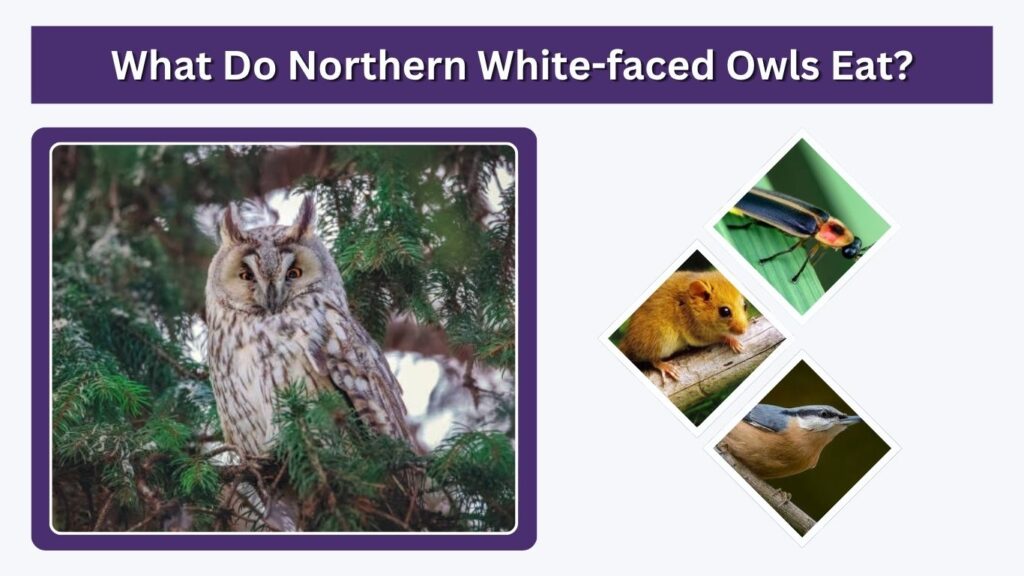
Northern White-faced Owls are carnivorous predators that feed on small animals living in savanna and woodland habitats. Their strong talons and hooked beaks help them capture and consume prey. Like many small owls, they hunt mainly at night. Their feeding habits contribute to the natural regulation of rodents and other small animal populations.
Northern White-faced Owl Diet
- Small rodents: Mice and other small mammals are important prey.
- Insects: Beetles, grasshoppers, and other large insects may be consumed.
- Small birds: Occasionally captured when opportunities arise.
- Reptiles: Small lizards may form part of the diet.
- Other invertebrates: Spiders and similar animals may be taken opportunistically.
How Do They Catch Their Prey?
Northern White-faced Owls commonly hunt from perches, watching and listening for movement below.
When prey is detected, the owl flies toward it and captures it using sharp talons. Its hooked beak helps tear food into manageable pieces.
Northern White-faced Owl Sound and Call
The Northern White-faced Owl communicates through vocalizations that differ from those of its southern relative. Calls help individuals communicate across suitable habitats, particularly during nighttime activity. Vocal differences are important for distinguishing the two closely related species. However, these owls are not continuously vocal, and their calling patterns can vary with breeding activity.
What Does a Northern White-faced Owl Sound Like?
Its characteristic call consists of two distinct hooting notes, often delivered with a pause between them.
The sound is different from the faster, bubbling series of notes associated with the Southern White-faced Owl.
Why Do Northern White-faced Owls Call?
Vocalizations are associated with territorial communication and interactions between breeding birds.
Calls may help individuals maintain contact or advertise their presence within a suitable habitat.
Northern White-faced Owl Breeding and Life Cycle
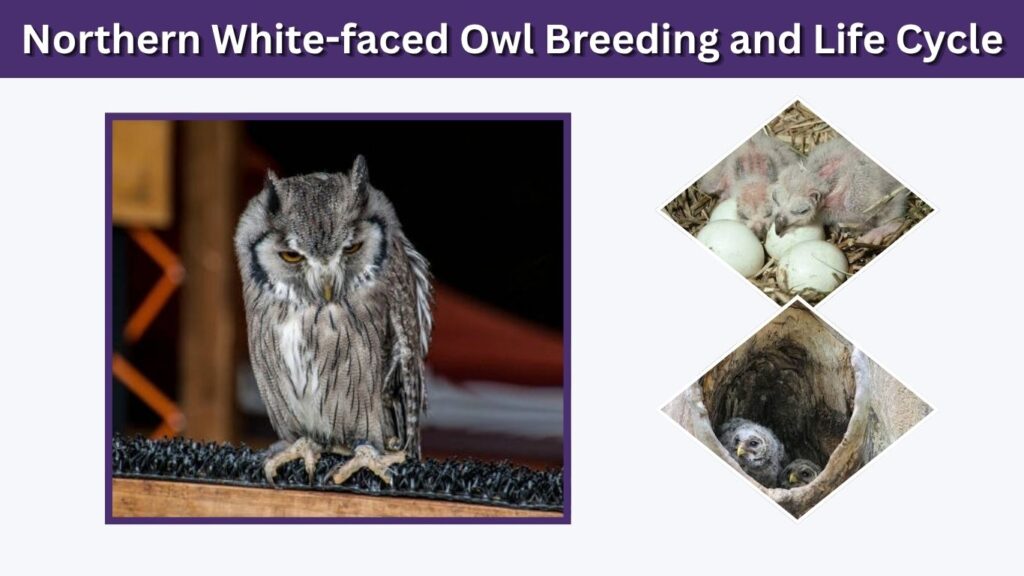
Northern White-faced Owls reproduce in sheltered nesting locations, often using abandoned nests or cavities in trees. Their breeding activity varies geographically and may be influenced by local environmental conditions. Like other owls, they provide parental care to developing chicks. The female performs most incubation duties, while the male contributes food during the nesting period.
Nesting and Egg Laying
The species may use abandoned stick nests built by other birds or suitable natural cavities.
A typical clutch contains two or three eggs, although larger and smaller clutches have been recorded. Incubation lasts approximately 30 days.
Baby Northern White-faced Owls
Young owls hatch dependent on their parents for warmth, protection, and food.
They gradually develop feathers and begin exploring nearby branches before becoming capable of sustained flight. Both parents contribute to feeding the young after they leave the nest.
Northern White-faced Owl Lifespan
The lifespan of Northern White-faced Owls depends on environmental conditions, food availability, predation, and other factors. Like many wild birds, individuals face greater risks in their natural habitats than they do under carefully managed captive conditions. However, reliable species-specific estimates of average lifespan in the wild remain limited.
How Long Do Northern White-faced Owls Live?
Some captive white-faced owls have reportedly survived for decades, but these records should not be treated as the normal lifespan of wild Northern White-faced Owls.
Wild survival rates remain insufficiently documented. Habitat conditions, prey availability, disease, and predation can influence longevity.
Northern vs. Southern White-faced Owl
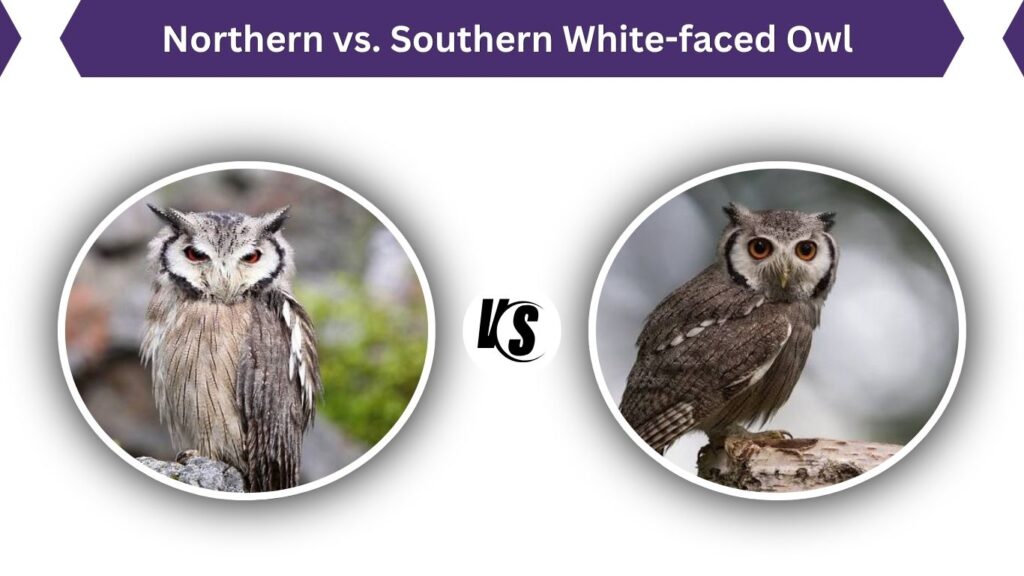
Northern and Southern White-faced Owls belong to the same genus and share many physical characteristics. Both have pale facial discs, prominent ear tufts, and orange eyes. They were historically classified together, but differences in distribution, vocalizations, and appearance support their recognition as separate species today.
Key Differences Between the Two Species
| Feature | Northern White-faced Owl | Southern White-faced Owl |
|---|---|---|
| Scientific name | Ptilopsis leucotis | Ptilopsis granti |
| Distribution | Northern sub-Saharan Africa | Central and southern Africa |
| Plumage | Generally paler and browner | Often grayer and more heavily streaked |
| Typical call | Distinctive two-note hoot | Faster series of bubbling hoots |
| Defensive display | Changes apparent body shape | Also displays dramatic body postures |
Northern White-faced Owl Conservation Status
Northern White-faced Owls are classified as Least Concern on the IUCN Red List, indicating that they are not currently considered globally threatened. Nevertheless, local populations may experience environmental pressures from habitat changes and declining prey resources. Maintaining healthy savannas, woodlands, and nesting sites remains important for supporting the species across its African range.
Potential Threats
- Habitat loss: Clearing woodland may reduce nesting and roosting opportunities.
- Agricultural expansion: Changes in land use can alter available hunting habitats.
- Pesticide exposure: Chemicals may affect prey availability or expose owls to toxins.
- Loss of nesting trees: Removal of mature trees can reduce suitable breeding locations.
FAQs
1. Why Is the Northern White-faced Owl Called a Transformer Owl?
Its ability to stretch into a narrow posture or puff up its feathers changes its apparent body shape. These displays help it respond to potential predators.
2. Where Do Northern White-faced Owls Live?
They inhabit savannas, open woodlands, and forest edges across northern sub-Saharan Africa, from western Africa toward Ethiopia and nearby regions.
3. What Is the Difference Between Northern and Southern White-faced Owls?
The species differ mainly in geographical distribution, vocalizations, and subtle plumage characteristics. Both belong to the genus Ptilopsis.
4. What Do Northern White-faced Owls Eat?
Their diet includes small rodents, large insects, small birds, and occasionally reptiles or other small animals.
5. Are Northern White-faced Owls Endangered?
No. The species is currently classified as Least Concern, although habitat protection remains important for maintaining healthy populations.