The Brown Fish Owl (Ketupa zeylonensis) is a large waterside owl found across parts of South and Southwest Asia. Recognizable by its bright yellow eyes, shaggy ear tufts, heavily streaked brown plumage, and powerful feet, it is specially adapted for hunting fish, frogs, crabs, and other aquatic prey. Brown Fish Owls usually live near rivers, streams, lakes, wetlands, and wooded valleys. They are primarily nocturnal but may occasionally be active around dawn or dusk. This guide covers their size, habitat, diet, call, hunting behavior, lifespan, juveniles, range, and adaptations.
What Is a Brown Fish Owl?
The Brown Fish Owl is a member of the typical owl family, Strigidae. Its scientific name is Ketupa zeylonensis, although older references may place it in the genus Bubo. It belongs to a group of large fish-eating owls adapted to hunting around water. The species is currently classified as Least Concern, although local populations can still be affected by habitat loss and disturbance.
Brown Fish Owl Identification
- Scientific name: Ketupa zeylonensis
- Large, bulky body
- Prominent horizontal ear tufts
- Bright yellow eyes
- Brown upperparts with darker markings
- Pale brown chest with dark vertical streaks
- Whitish patch around the throat
- Large feet and curved talons
- Broad, rounded wings
- Relatively plain facial pattern
One of its most noticeable features is its intense yellow-eyed stare combined with heavy brown streaking on the breast.
Brown Fish Owl Size
The Brown Fish Owl is a large owl, generally measuring approximately 48–58 cm (19–23 inches) long.
Females are usually larger than males, as is common among many owl species. Its broad wings and powerful body are useful when carrying slippery aquatic prey.
Although substantial in size, it is smaller than some of the world’s largest eagle-owls and fish-owls.
Brown Fish Owl Characteristics
Unlike many woodland owls that specialize almost entirely in rodents, Brown Fish Owls are strongly associated with water.
Their appearance and behavior reflect this lifestyle. They have powerful legs and feet for gripping fish, large eyes suited to low-light hunting, and strong talons capable of securing wet prey.
Their plumage provides excellent camouflage when resting against tree trunks during daylight.
Brown Fish Owl Habitat and Range
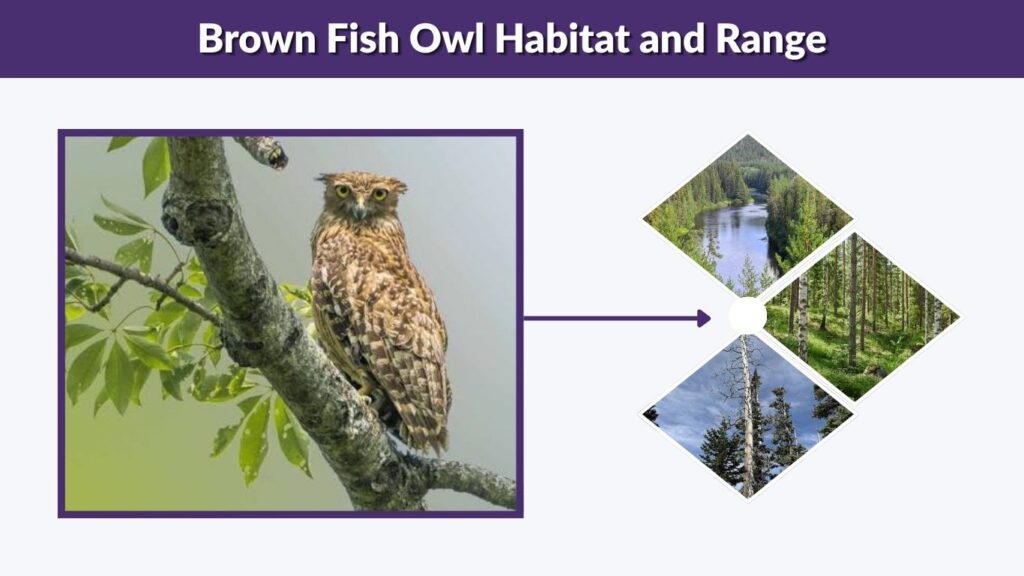
Brown Fish Owls usually occur in wooded landscapes where permanent or seasonal water is nearby. Rivers, streams, ponds, lakes, marshes, reservoirs, and forested valleys can all provide suitable hunting areas. They may occur from lowlands into mountainous regions where appropriate waterways and mature trees are available.
Where Does the Brown Fish Owl Live?
Typical habitats include:
- Forested riverbanks
- Streams and creeks
- Lakeshores
- Wetlands
- Wooded valleys
- Mangrove areas
- Agricultural landscapes near water
- Reservoirs and ponds
- Rocky waterways surrounded by trees
Large trees are particularly useful because the owls need secure daytime roosts and suitable nesting sites.
Brown Fish Owl in India and Sri Lanka
The species is widely associated with the Indian subcontinent and occurs across suitable habitats in India and Sri Lanka.
In India, it may be encountered around forest rivers, wildlife reserves, wooded lakes, and streams. It can sometimes remain surprisingly still during daylight, making its brown plumage difficult to distinguish from surrounding branches.
Sri Lankan populations also occupy wooded habitats near rivers and wetlands.
Brown Fish Owl in Turkey
Turkey represents the far western edge of the species’ distribution.
The Turkish population is generally associated with the subspecies Ketupa zeylonensis semenowi and has a restricted distribution, making observations there especially noteworthy. eBird treats the Turkish form separately within its sensitive-species information.
What Does a Brown Fish Owl Eat?
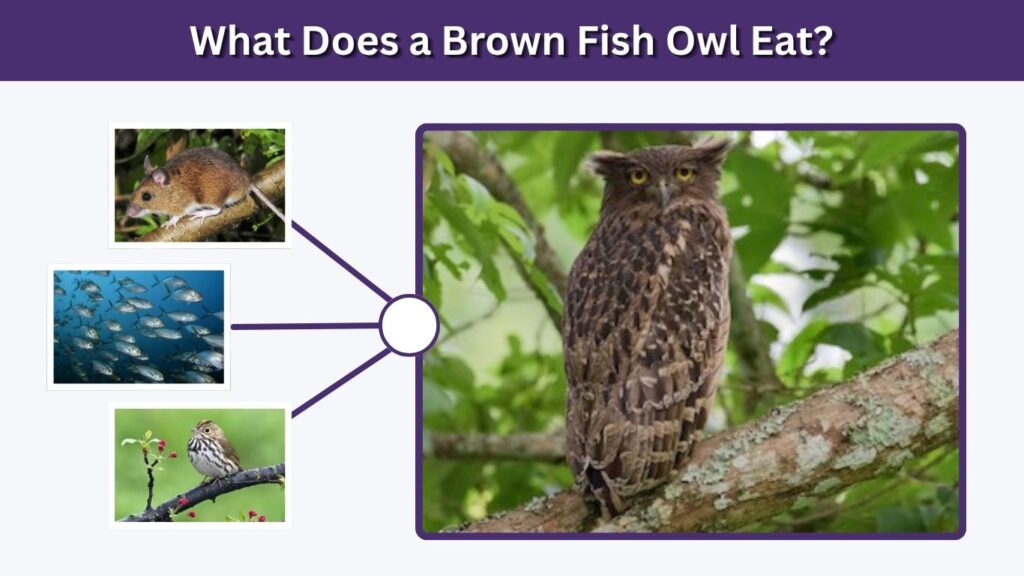
As its name suggests, fish are an important part of the Brown Fish Owl diet, but the species is an opportunistic predator. It hunts whatever suitable prey is available around waterways and surrounding habitat.
Its diet can shift depending on season, location, and prey abundance.
Common Brown Fish Owl Food
Brown Fish Owls may eat:
- Fish
- Frogs
- Toads
- Crabs
- Crayfish and other crustaceans
- Small mammals
- Birds
- Reptiles
- Large insects
Aquatic prey is especially important, distinguishing this owl from many closely related species that rely more heavily on terrestrial mammals.
Brown Fish Owl Hunting Behavior
Brown Fish Owls frequently hunt from branches overlooking water.
The owl watches for movement and then drops toward the surface to grab prey with its feet. It may also enter shallow water and hunt around the edges of streams, pools, and lakes.
After capturing something substantial, the owl usually carries it to a perch where it can eat without standing in the water.
Brown Fish Owl Adaptations
Fish hunting creates challenges that ordinary rodent-hunting owls do not face. Aquatic prey is slippery, water reflects light, and prey may disappear beneath the surface within seconds. Brown Fish Owls possess several physical and behavioral adaptations that help them succeed in these environments.
Key Adaptations
- Powerful feet for grabbing slippery prey
- Long, curved talons
- Excellent low-light vision
- Acute hearing
- Strong legs
- Broad wings for controlled approaches
- Waterside perching behavior
- Camouflaged brown plumage
Fish-owls also differ somewhat from highly specialized silent-flying forest owls because hunting near moving water can reduce the importance of completely silent wingbeats.
Why Are Their Feet Important?
The feet are crucial to its fishing lifestyle.
Instead of entering the water with its entire body, the owl can swoop down and extend its legs toward prey. Powerful toes and sharply curved talons help prevent a struggling fish or frog from escaping.
Its feet are also useful when walking or standing briefly around shallow water.
Brown Fish Owl Call and Sound
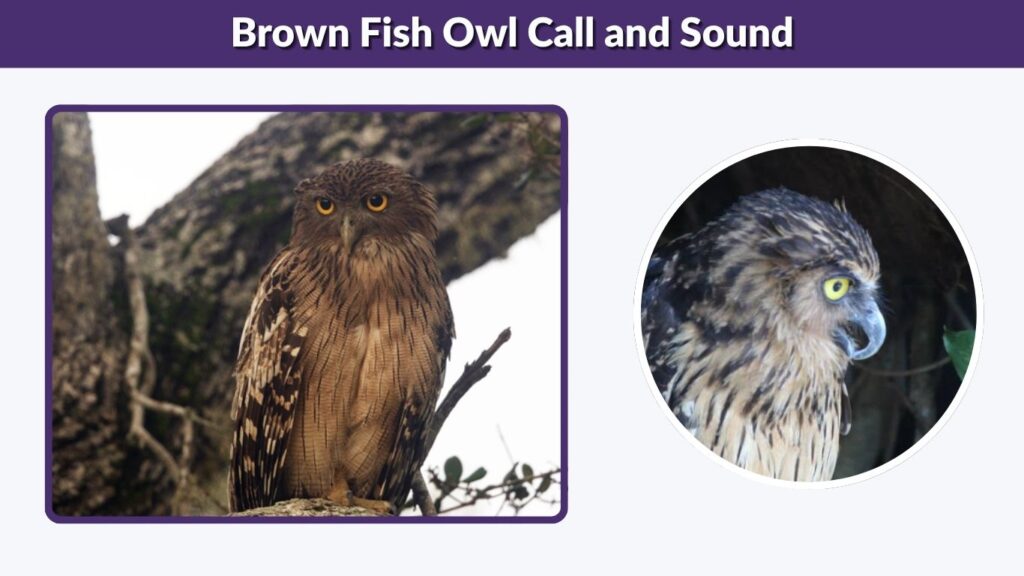
The Brown Fish Owl call is usually heard more often at night than during the day. Because the bird can remain hidden in thick vegetation, vocalizations are sometimes the first clue that one is present.
Its voice includes deep hoots as well as harsher and higher-pitched sounds.
What Does a Brown Fish Owl Sound Like?
The most recognizable vocalizations include deep, resonant hoots that can carry across wooded waterways.
Brown Fish Owls may also produce:
- Deep hooting notes
- Harsh screams
- Higher-pitched hoots
- Rough calls
- Calls exchanged between paired birds
The exact vocalization varies with territorial behavior, courtship, alarm, and communication.
When Do Brown Fish Owls Call?
They are primarily nocturnal, so calling is most often heard after sunset and before dawn.
Breeding birds may become more vocal when defending territories or communicating with mates. Their calls can be especially noticeable around quiet rivers and forest valleys where sound travels well.
Brown Fish Owl Nesting and Juveniles
Brown Fish Owls do not construct elaborate nests. Instead, they typically make use of existing protected sites such as large tree cavities, natural hollows, ledges, and occasionally abandoned nests built by other large birds.
A secure nesting location near a productive feeding habitat is especially valuable.
Eggs and Breeding
A female commonly lays a small clutch of pale eggs.
She performs most incubation while the male provides food. After hatching, the chicks remain dependent on their parents for protection and meals.
Young fish owls must gradually develop the coordination required to catch aquatic prey successfully.
Brown Fish Owl Juvenile
Juvenile Brown Fish Owls generally look paler and fluffier than adults.
Their feathers gradually acquire the stronger streaking and richer brown coloration characteristic of mature individuals. Young birds remain with their parents for a period after leaving the nest while developing hunting skills.
Juveniles may sometimes be observed sitting conspicuously on branches near nesting areas.
Brown Fish Owl vs. Buffy Fish Owl
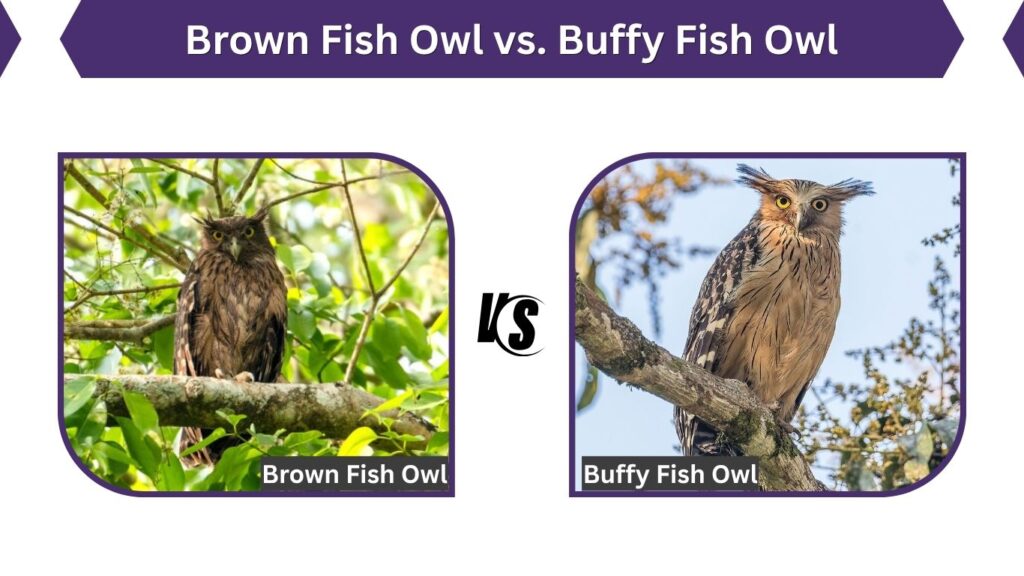
The Brown Fish Owl vs. Buffy Fish Owl comparison is important because both belong to Ketupa and share waterside lifestyles, yellow eyes, prominent ear tufts, and brown plumage.
Geographic range and coloration are among the easiest ways to separate them.
Key Differences
The Brown Fish Owl generally has darker, more strongly streaked plumage and a somewhat less orange overall appearance.
The Buffy Fish Owl (Ketupa ketupu) is typically warmer orange-brown or buff colored and occurs mainly farther southeast, particularly through Southeast Asia. eBird describes the Buffy Fish Owl as a large orange-brown species with conspicuous ear tufts and bright yellow eyes.
Both species favor areas around rivers and wetlands, so distribution should be considered alongside physical appearance.
Brown Fish Owl Lifespan and Conservation
Precise wild lifespan figures for the Brown Fish Owl are not as well documented as for some extensively studied owl species. Large owls can potentially survive for many years when food, nesting habitat, and protection from human threats are available.
Conservation Status
The Brown Fish Owl is currently categorized as Least Concern on BirdLife’s owl species list.
However, local populations may still face threats from destruction of riverside forests, wetland degradation, disturbance around nest sites, collisions, and persecution.
Protecting mature waterside trees and healthy freshwater ecosystems benefits both Brown Fish Owls and the prey they depend on.
FAQs
Brown Fish Owls are unusual among large owls because so much of their ecology revolves around water. Their powerful feet, yellow eyes, waterside hunting style, and distinctive ear tufts make them one of Asia’s most recognizable fish-eating owls.
How big is a Brown Fish Owl?
Adults are generally around 48–58 cm (19–23 inches) long, with females usually larger than males.
What does a Brown Fish Owl eat?
Its diet includes fish, frogs, crabs, other aquatic animals, small mammals, reptiles, birds, and large insects.
Where does the Brown Fish Owl live?
It inhabits parts of South and Southwest Asia, especially wooded habitats near rivers, streams, lakes, wetlands, and other bodies of water.
What does a Brown Fish Owl sound like?
It produces deep echoing hoots along with shrieks and higher-pitched calls, particularly during nighttime activity.
Is the Brown Fish Owl endangered?
No. The species is currently classified as Least Concern, although habitat protection remains important for maintaining healthy local populations.