
Snowy owls live mainly in the Arctic tundra across North America, Greenland, Europe, and Asia. These large white owls prefer open, treeless landscapes where they can easily locate lemmings and other prey. During winter, some remain in the far north, while others travel south into Canada, the United States, Europe, and Asia. Their movements depend more on food availability than fixed migration routes. Snowy owls usually nest on the ground and are well adapted to cold, windy environments.
Where Do Snowy Owls Live in the World?
Snowy owls have a circumpolar distribution, meaning their natural range extends around the northern regions of the world. They primarily occupy the Northern Hemisphere and breed in remote Arctic environments. Their exact locations may change yearly because they follow available food. In winter, some individuals travel hundreds or even thousands of miles beyond their normal breeding grounds.
Geographic Range
The snowy owl’s worldwide range includes:
- North America: Northern Alaska, Canada, and the Canadian Arctic islands
- Greenland: Coastal and inland areas containing suitable tundra
- Europe: Scandinavia, Iceland, and northern European regions
- Asia: Northern Russia and Siberia
- Winter range: Southern Canada, the northern United States, Europe, and Central Asia
Do Snowy Owls Live in the Northern Hemisphere?
Snowy owls live naturally in the Northern Hemisphere. Their breeding range surrounds the Arctic region near the North Pole. They do not naturally occur around the South Pole or in Antarctica.
In North America, snowy owls breed in northern Canada and Alaska. Wintering birds may appear in Michigan, Minnesota, Wisconsin, New York, Maine, Colorado, and Utah. These southern sightings are generally seasonal, not evidence of permanent breeding populations.
What Habitat Do Snowy Owls Live In?
Snowy owls prefer open habitats with low vegetation and few trees. These environments allow them to watch for prey and approaching danger across considerable distances. Although they are strongly associated with frozen tundra, wintering owls can use several similar habitats. Food supply, visibility, and available resting places are often more important than deep snow or extremely cold temperatures.
Main Snowy Owl Habitats
Snowy owls may be found in the following habitats:
- Arctic tundra: Their primary nesting and breeding environment
- Grasslands: Open areas containing mice, voles, and rabbits
- Agricultural fields: Winter hunting grounds with abundant rodents
- Coastal dunes: Open habitats supporting birds and small mammals
- Marshes and wetlands: Areas containing waterfowl and shorebirds
- Airports: Wide grassy spaces that resemble Arctic tundra
- Open shorelines: Coastal locations offering birds, rodents, and fish
Do Snowy Owls Live in Trees?
Snowy owls may rest in trees, but they do not normally live or nest in them. Unlike many forest owls, they prefer the ground and low, exposed perches. They may sit on rocks, fence posts, utility poles, roofs, hay bales, and small mounds.
Dense forests are generally unsuitable for snowy owls because trees obstruct their view. Their body structure and hunting behavior are better suited to flat, open landscapes. They may enter lightly wooded areas temporarily but rarely establish territories in thick forests.
Where Do Snowy Owls Live During Different Seasons?
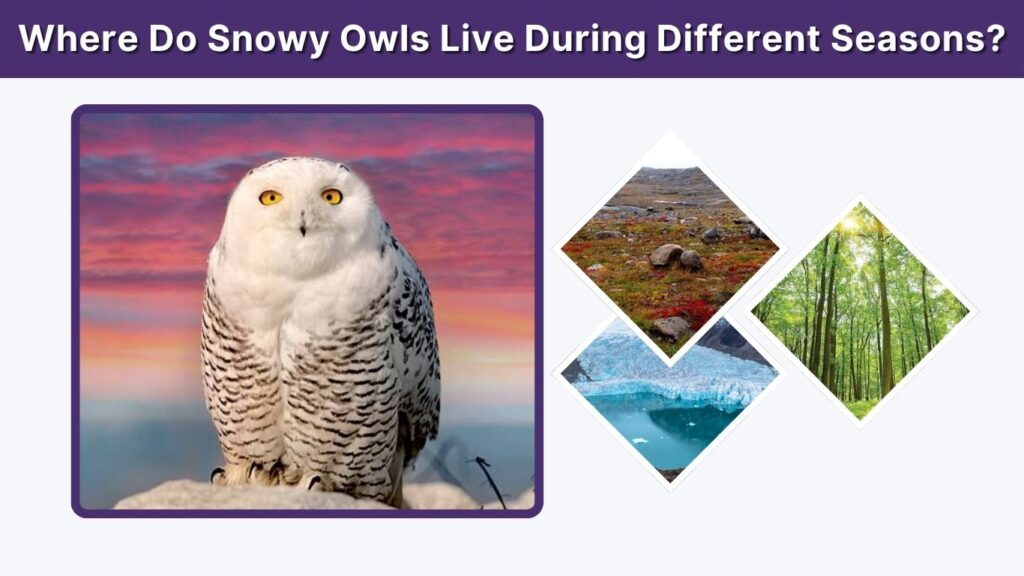
The snowy owl’s seasonal movements are less predictable than those of many other migratory birds. Some remain in Arctic regions throughout the year, while others travel south during autumn and winter. Their destination depends on rodent populations, weather, age, and competition. Consequently, snowy owls may be abundant in one region during one winter and nearly absent the following year.
Summer Range
During summer, snowy owls primarily occupy:
- Arctic tundra in northern Canada
- The Canadian Arctic Archipelago
- Northern and western Alaska
- Greenland’s suitable tundra regions
- Northern Scandinavia
- Arctic Russia and Siberia
The owls select dry, slightly elevated locations for breeding. These areas offer clear views and access to lemmings, voles, ground squirrels, and birds. Breeding pairs may move to different regions when local prey becomes scarce.
Winter Range
Some snowy owls remain in the Arctic during winter, particularly when prey is available. Others move south into southern Canada, the northern United States, Europe, and Asia.
Wintering owls often settle in farmland, coastal marshes, beaches, grasslands, and airports. These places resemble tundra because they are flat and mostly treeless. A dependable population of rodents or birds may encourage an owl to remain in one location for several weeks or months.
Snowy Owl Irruptions
An irruption occurs when unusually large numbers of snowy owls travel south during a particular winter. These movements can bring owls into locations where they are rarely observed.
Irruptions do not always mean the birds are starving. A successful Arctic breeding season can produce many young owls. Increased competition may then encourage inexperienced birds to explore southern habitats. Changing lemming populations can also influence the number and direction of migrating owls.
Why Do Snowy Owls Live in the Tundra?
The Arctic tundra provides everything snowy owls need for breeding and hunting. Its short vegetation offers an unobstructed view, while lemmings and other small animals provide food. Snowy owls possess several physical and behavioral adaptations for surviving freezing winds, snow, and seasonal daylight. Their white plumage also helps conceal them from prey and predators across the pale landscape.
Adaptations for Tundra Life
Important snowy owl adaptations include:
- Dense plumage: Thick feathers insulate the body against cold air
- Feathered feet: Feathers protect the feet and toes from freezing
- White coloration: Pale plumage provides camouflage on snow and ice
- Strong talons: Powerful feet help capture and hold struggling prey
- Excellent hearing: Sensitive hearing detects animals beneath vegetation or snow
- Sharp eyesight: Strong vision helps locate prey across open ground
- Daylight hunting: They can hunt during bright Arctic summer days
Can Snowy Owls Live in Warm Places?
Snowy owls can temporarily survive in moderately warm places, especially during winter migration. However, their thick plumage makes them vulnerable to overheating in hot conditions. They usually seek shade, reduce activity, or pant when temperatures become uncomfortable.
Warm regions also lack the Arctic conditions snowy owls require for breeding. Therefore, an owl appearing in a southern area is normally a seasonal visitor. Snowy owls are not permanent residents of tropical, desert, or consistently hot climates.
How and Where Do Snowy Owls Nest?
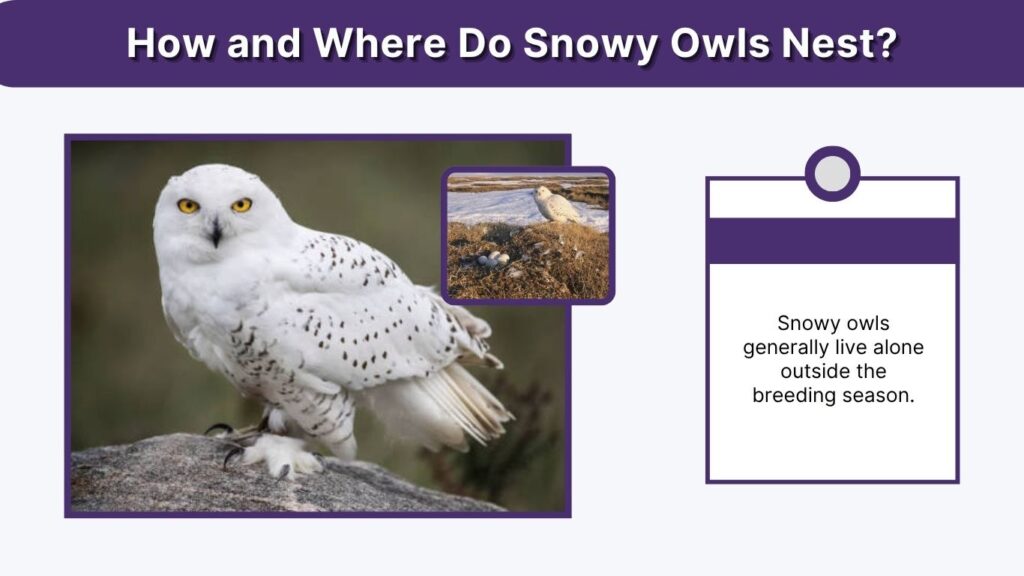
Snowy owls nest on the ground rather than in trees or barns. The female selects a dry, elevated section of tundra offering a clear view of the surrounding area. Ground nesting allows the adults to observe approaching foxes, wolves, gulls, and other potential threats. Nesting locations also provide convenient access to the rodents required for feeding their chicks.
Nest Construction
The female creates a shallow depression by scraping the ground with her feet and body. She may add a small amount of grass, moss, or feathers, but the nest remains simple.
A nesting pair strongly defends the surrounding territory. The male delivers food, while the female protects the eggs and young chicks. Both parents may dive at animals or people that approach too closely.
Do Snowy Owls Live Alone or in Groups?
Snowy owls generally live alone outside the breeding season. They do not form permanent flocks or organized social groups. Each bird normally hunts and rests independently.
During breeding, a male and female form a pair and raise their chicks together. Several owls may also gather in the same productive winter habitat when food is plentiful. However, they still maintain individual hunting spaces and may behave aggressively toward nearby owls.
How Long Do Snowy Owls Live?
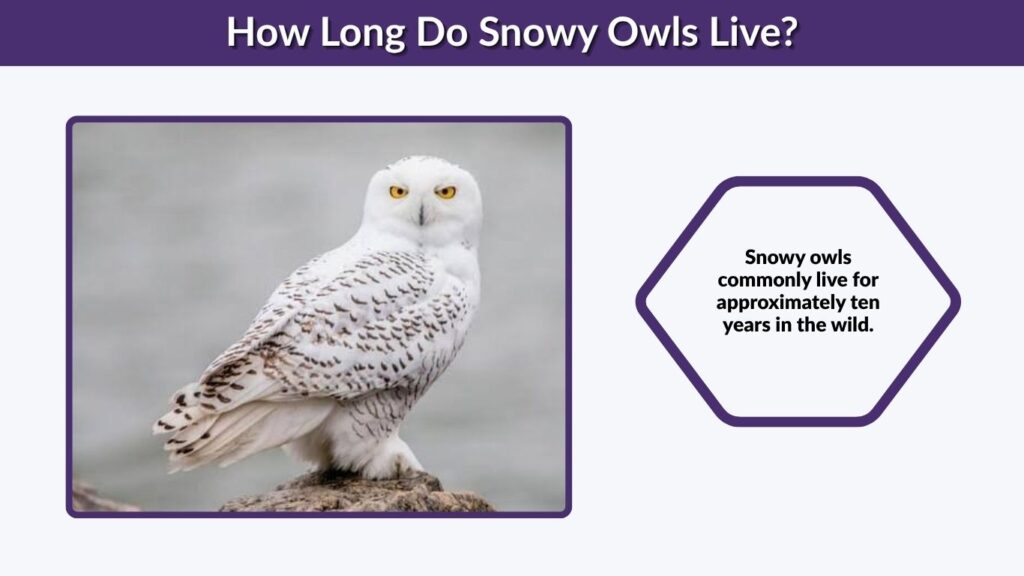
Snowy owls commonly live for approximately ten years in the wild, but some survive for more than twenty years. Their lifespan depends on food, weather, disease, accidents, and human activity. Young owls face the greatest danger because they are inexperienced hunters. Birds receiving professional care may live longer because food, shelter, and veterinary treatment are consistently available.
Lifespan in the Wild
Wild snowy owls face several threats, including starvation, severe storms, disease, and conflicts with predators. Vehicle collisions, aircraft strikes, power lines, and illegal shooting can also shorten their lives.
Many young owls do not survive their first few years. However, individuals that become successful hunters can live for many years. Bird-banding records have documented exceptional snowy owls surviving for more than two decades.
Lifespan in Captivity
Snowy owls in licensed zoos or wildlife facilities may live for twenty years or longer. They receive reliable food, veterinary care, and protection from extreme weather and accidents.
Despite their attractive appearance, snowy owls are not suitable pets. They are powerful wild predators with specialized dietary, environmental, and behavioral needs. Keeping one without proper permits is also illegal in many countries.
FAQs
Snowy owls occupy a much broader winter range than many people realize. Although the Arctic tundra is their main breeding habitat, individuals may appear in farms, marshes, airports, and coastal environments farther south. The following answers address common questions about their distribution, preferred biome, nesting locations, seasonal movements, and ability to survive in different climates.
Do snowy owls live in the Arctic?
Yes. Snowy owls breed throughout the Arctic tundra of North America, Greenland, Europe, and Asia. Some remain there throughout winter.
Do snowy owls live in Antarctica?
No. Snowy owls live in the Northern Hemisphere near the Arctic. They do not naturally occur in Antarctica or around the South Pole.
Where do snowy owls live in Canada?
They breed across northern Canada and the Arctic islands. During winter, they may appear throughout southern Canada in fields, wetlands, grasslands, and coastal areas.
What biome does a snowy owl live in?
The snowy owl’s primary biome is the Arctic tundra. It may also use temperate grasslands, agricultural fields, marshes, and coastal dunes during winter.
How long can snowy owls live?
Snowy owls commonly live around ten years in the wild. However, some exceptional individuals survive for more than twenty years, especially when they avoid accidents and consistently find food.