A baby barn owl looks very different from the graceful adult it will eventually become. Newly hatched barn owls are tiny, weak, and covered with sparse white down, while older chicks develop thick fluffy feathers before gaining their familiar heart-shaped face and pale wings. Baby barn owls remain dependent on their parents for food and protection for several weeks. During this time, they grow rapidly, make unusual hissing and snoring sounds, eat whole prey, and eventually begin exercising their wings before learning to fly.
What Is a Baby Barn Owl Called?
A baby barn owl is usually called an owlet or chick. Barn owls belong to the family Tytonidae, and the widespread barn owl is commonly known scientifically as Tyto alba, although modern classifications recognize several closely related barn owl species in different parts of the world.
Baby barn owls spend their earliest weeks inside a protected nest while their parents hunt for food.
What Does a Baby Barn Owl Look Like?
Young barn owls change dramatically as they grow. Common features include:
- White or cream-colored down
- Large dark eyes
- Long legs
- Developing heart-shaped facial disc
- Pale hooked bill
- Large feet and sharp talons
- Fluffy body feathers
- Growing flight feathers on the wings
Very young chicks can look almost alien-like because their bodies are thin, their legs appear unusually long, and their feathers have not yet developed.
Baby Barn Owl Size
A newly hatched barn owl is very small compared with an adult. Chicks gain weight rapidly because their parents provide them with protein-rich prey.
By around seven to nine weeks of age, young barn owls can approach adult size even though their plumage and behavior may still show that they are juveniles.
Adult barn owls are usually around 13–16 inches long, depending on sex, geographic population, and species classification.
Baby Barn Owl Growth Stages
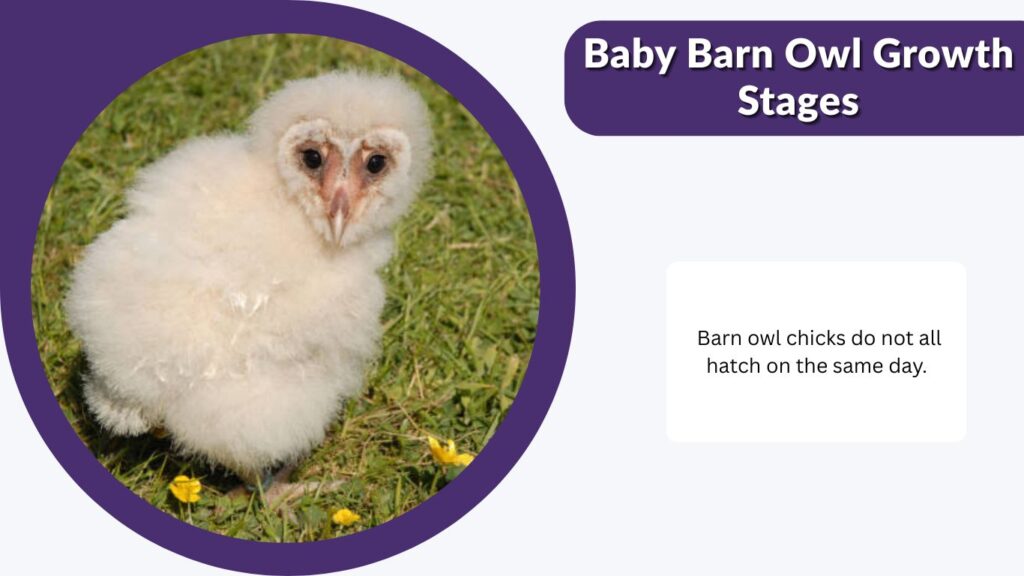
Barn owl chicks do not all hatch on the same day. The female typically begins incubating before the clutch is complete, meaning eggs hatch at intervals.
As a result, one nest may contain a large older chick alongside much smaller younger siblings.
Newly Hatched Baby Barn Owl
A newborn barn owl is:
- Nearly helpless
- Sparsely covered in white down
- Unable to regulate its temperature well
- Dependent on its mother for warmth
- Unable to hunt
- Fed pieces of prey by its parents
During the earliest stage, the female spends considerable time with the chicks while the male usually brings food.
Two to Four Weeks Old
The chicks become noticeably larger and develop thicker white down. Their legs grow quickly, and they can begin moving around the nest more confidently.
Their appetites also increase considerably as their bodies develop.
Five to Seven Weeks Old
At this stage, juvenile feathers begin replacing much of the fluffy down. The face starts looking more like that of an adult barn owl.
Youngsters may stretch and flap their wings repeatedly. This behavior strengthens the muscles they will need for flight.
Eight to Nine Weeks Old
Many young barn owls begin making their first flights at roughly this age, although development varies between individuals.
Even after leaving the nest, young owls may remain dependent on their parents for food while they practice flying and learn to hunt.
What Do Baby Barn Owls Eat?
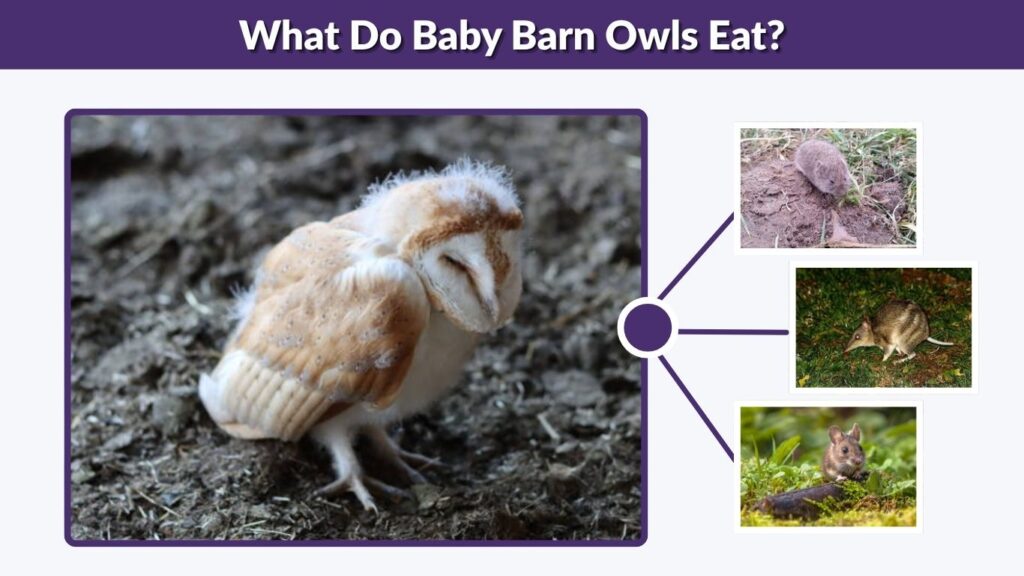
Baby barn owls are carnivores. Their diet is made almost entirely of animal prey brought to the nest by their parents.
Rodents are particularly important because they provide the calories and protein needed for rapid growth.
Baby Barn Owl Food
Typical prey includes:
- Mice
- Voles
- Shrews
- Small rats
- Other small mammals
- Small birds occasionally
- Other locally available prey
The exact diet varies with location and whichever prey animals are abundant around the nest.
Can a Baby Barn Owl Eat a Whole Mouse?
Very small owlets cannot initially swallow large prey whole. The female tears prey into smaller pieces and feeds them to young chicks.
As the owlets grow, they become capable of swallowing small rodents whole.
Their digestive system processes the nutritious soft tissues while bones, fur, teeth, and other difficult-to-digest materials are eventually compressed into pellets.
Baby Barn Owl Pellets
Older baby barn owls begin producing pellets just like adults.
Owl pellets are compact masses of indigestible materials that are regurgitated after a meal. They should not be confused with ordinary feces.
What Is Inside a Baby Barn Owl Pellet?
A pellet can contain:
- Mouse fur
- Small bones
- Teeth
- Claws
- Feathers
- Other indigestible prey material
Scientists can examine pellets to learn what barn owls are eating in a particular area.
What Does a Baby Barn Owl Sound Like?
Baby barn owls make some surprisingly strange noises. Unlike stereotypical owls, barn owls are not famous for making a classic “hoot.”
Young barn owls commonly produce hisses, screeches, raspy calls, and food-begging sounds.
Baby Barn Owl Hissing
One of the most distinctive sounds is a long, raspy hiss. Young owls frequently use begging calls when they want their parents to bring food.
At night, several chicks calling from the same nest can create surprisingly loud and unusual noises.
Why Do Baby Barn Owls Scream?
Loud calling usually relates to communication rather than aggression.
An owlet may vocalize because it is:
- Hungry
- Communicating with parents
- Competing with siblings for food
- Alarmed
- Disturbed near the nest
Barn owl calls can sound frightening to someone unfamiliar with them, especially when heard inside an attic or barn at night.
Where Do Baby Barn Owls Live?
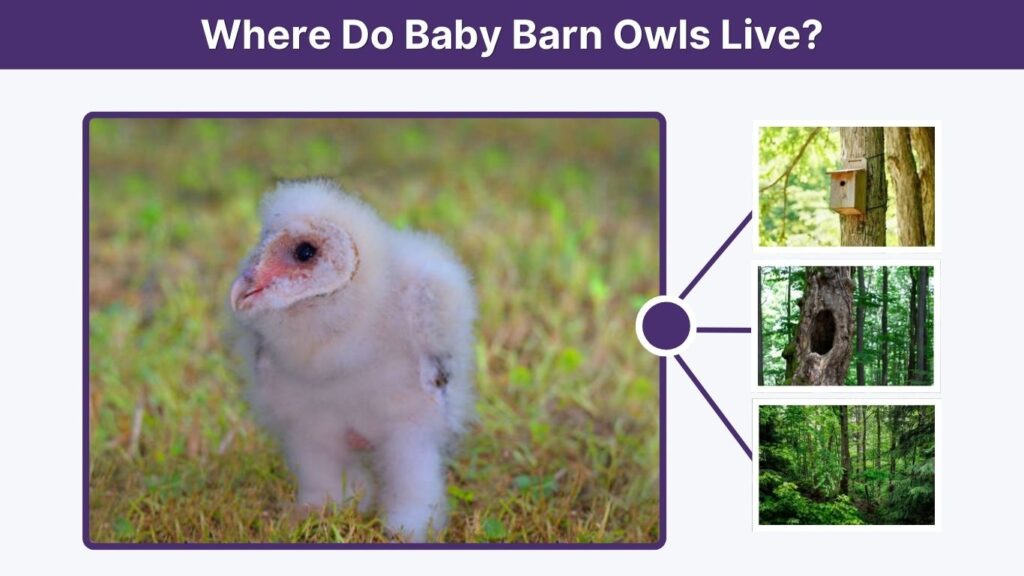
Baby barn owls remain inside a nest until they are sufficiently developed to explore and fly.
Barn owls are cavity nesters and often use sheltered locations created naturally or by humans.
Common Barn Owl Nesting Places
Nests may occur in:
- Hollow trees
- Barns
- Old buildings
- Church towers
- Farm structures
- Cliffs and rock cavities
- Nest boxes
- Attics or roof spaces
Barn owls generally do not construct elaborate stick nests. Instead, they use an existing cavity or sheltered platform.
Baby Barn Owl Behavior
Young barn owls spend much of their early life eating, sleeping, developing feathers, and waiting for their parents to return with prey.
As they mature, their behavior becomes increasingly active.
Why Do Baby Barn Owls Stand So Tall?
Owlets have surprisingly long legs. When they stretch upward, their body can suddenly look much taller than expected.
The combination of long legs, white fluffy feathers, and an undeveloped facial disc is one reason young barn owls sometimes look very different from adults.
Why Do Baby Barn Owls Flap Their Wings?
Before their first real flight, chicks frequently flap and stretch their wings inside or near the nest.
This builds strength and coordination. Older juveniles may also climb around the nest entrance and explore nearby surfaces before becoming confident flyers.
What to Do If You Find a Baby Barn Owl
Finding a young barn owl on the ground does not always mean that it has been abandoned.
Older juveniles may leave the nest area while still developing their flight skills, and the parents may continue caring for them nearby.
When Does a Baby Barn Owl Need Help?
Professional wildlife assistance may be appropriate if the owl:
- Is visibly injured
- Has been attacked by a cat or dog
- Is extremely weak
- Is a very young chick far from a nest
- Is trapped in a dangerous location
- Has an obviously broken wing or leg
- Is in immediate danger from vehicles or people
Avoid feeding the owl milk, bread, or random meat. Young raptors have specialized nutritional needs, and inappropriate feeding can cause serious problems.
Contact a licensed wildlife rehabilitator or local wildlife authority when intervention is genuinely needed.
Can You Keep a Baby Barn Owl as a Pet?
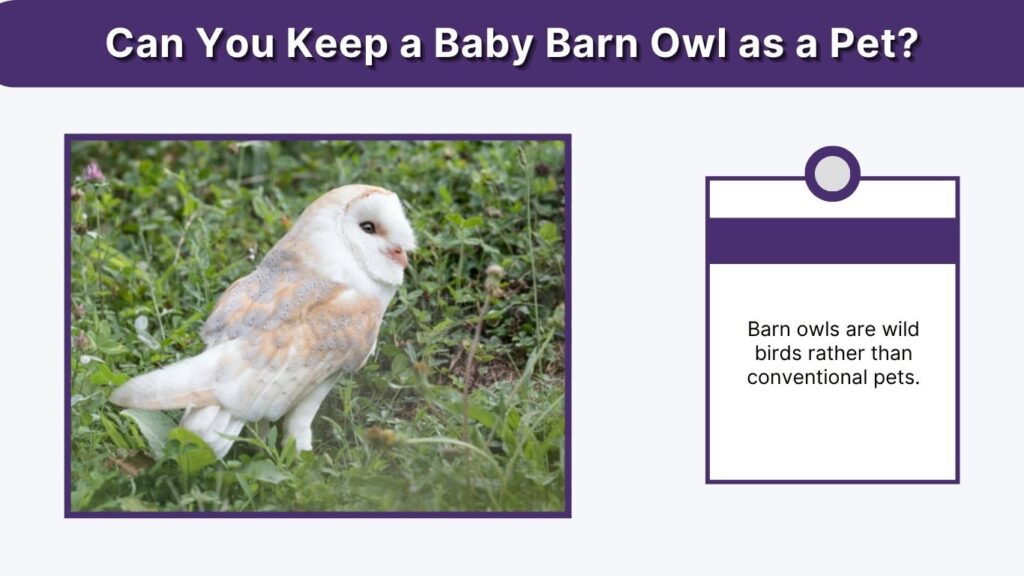
Barn owls are wild birds rather than conventional pets. In many countries, native owls are legally protected, and keeping one without the required authorization may be illegal.
They also require specialized diets, large amounts of space, proper veterinary care, and opportunities for natural behavior.
Finding a baby owl does not make it suitable for domestication. Wildlife rehabilitation should focus on eventually returning healthy birds to the wild whenever possible.
Interesting Baby Barn Owl Facts
Baby barn owls have several fascinating characteristics:
- Baby barn owls are called owlets or chicks.
- Siblings in the same nest can be noticeably different sizes.
- They are born with very little feather covering.
- Their white fluffy appearance develops as they grow.
- Young barn owls do not normally make classic owl hoots.
- Older chicks can swallow small rodents whole.
- They produce pellets containing bones and fur.
- Their long legs are present even when they are young.
- Wing-flapping exercises help prepare them for flight.
- Parents may continue feeding young owls after they leave the nest.
FAQs
How long do baby barn owls stay in the nest?
Young barn owls generally remain associated with the nest for around two months before beginning their first flights. Development differs between individual chicks, and juveniles can continue relying on their parents for food after they start flying.
What does a newborn baby barn owl look like?
A newly hatched barn owl is small, fragile, and covered with sparse whitish down. It lacks the smooth, complete plumage of an adult and depends entirely on its parents for warmth, protection, and food.
Why do baby barn owls hiss at night?
Hissing is commonly associated with food begging and communication. Young barn owls may repeatedly make raspy hissing or snoring-like calls while waiting for adults to return with prey, making an active nest surprisingly noisy after dark.
When can a baby barn owl fly?
Young barn owls typically begin attempting their first flights at approximately eight to nine weeks old, though timing varies. They first exercise their wings by stretching and flapping before making short flights and gradually improving their hunting and flying skills.
What should I feed a rescued baby barn owl?
Do not attempt to create a homemade diet unless instructed by a qualified wildlife professional. Baby barn owls naturally consume whole animal prey, and proper nutrition requires more than plain meat. Contact a licensed wildlife rehabilitator for feeding and care instructions.