
Boobook owls are small to medium-sized owls from the Ninox group, known for their rounded heads, bright eyes, compact bodies, and sharp nighttime calls. Many species live in forests, woodlands, mangroves, gardens, and island habitats across Australia, New Zealand, South Asia, Southeast Asia, and the Pacific region. Some boobooks are widespread and familiar, while others are rare island species with very limited ranges. In this guide, you will learn about 17 types of boobook owls, including their identification features, habitat, diet, nesting behavior, and conservation status.
1. Sumba Boobook
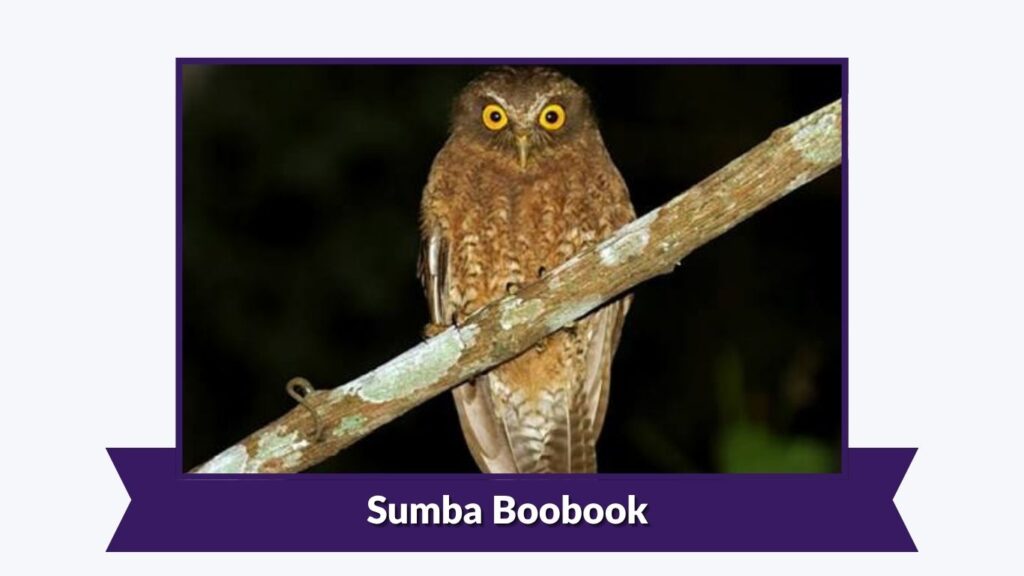
The Sumba Boobook, also called the Great Sumba Boobook, is a medium-sized owl found only on Sumba Island in the Lesser Sunda Islands of Indonesia. Its scientific name is Ninox rudolfi. This owl has no ear tufts and is usually connected with forested and semi-forested habitats. It is considered rare to uncommon and is listed as Near Threatened.
Identification
- Medium-sized owl with no ear tufts
- Dark brown upperparts with white spotting
- Whitish chin patch
- Reddish-brown underparts with strong barring
- Whitish eyebrow markings
- Yellowish-brown bill
- Heavily feathered legs
- Length usually around 30–40 cm
Habitat and Range
The Sumba Boobook is endemic to Sumba, meaning it naturally occurs only on that island. It uses dry forest, moist lowland forest, disturbed primary forest, secondary forest, forest edge, deciduous woodland, evergreen woodland, and mangrove areas. BirdLife notes that it can occur up to about 1,000 meters elevation and can tolerate some degraded forest and edge habitat.
Diet and Hunting Behavior
The diet of the Sumba Boobook is not as well documented as that of many common owls. Available descriptions suggest it probably feeds mainly on insects, though it may also take other small prey when available. Like other boobook owls, it is mainly nocturnal, using quiet perches and short flights to hunt in wooded areas after dark.
Nesting and Breeding
Detailed nesting information for the Sumba Boobook is limited. As a forest owl, it likely depends on mature trees, hidden roosting sites, and natural cavities or sheltered places for breeding. Habitat loss remains an important concern because the species is restricted to one island, so even moderate forest damage can affect its long-term survival.
2. Australian Boobook
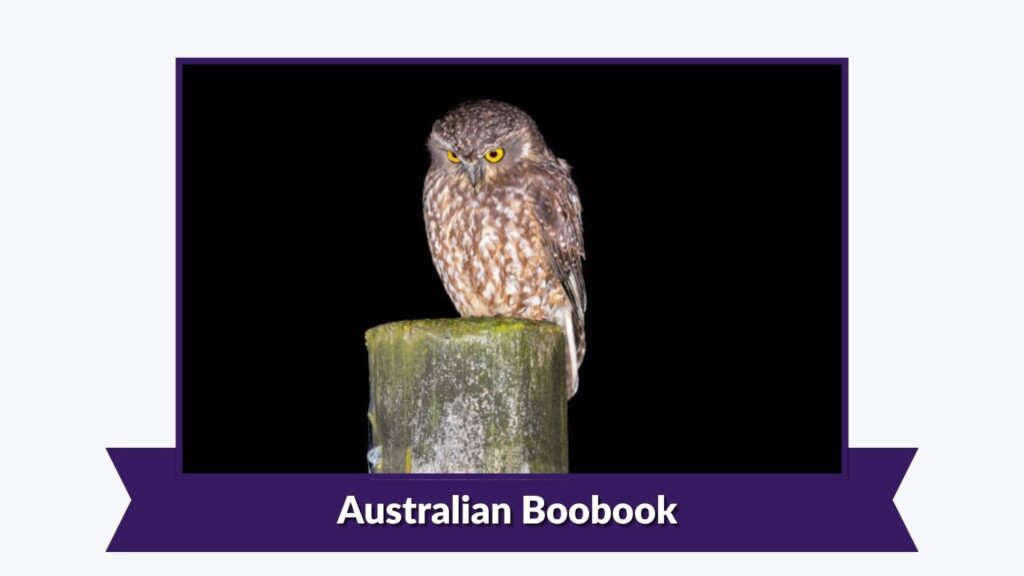
The Australian Boobook, also known as the Southern Boobook, is the smallest and most common owl in Australia. It has a compact body, large yellowish eyes, brown upperparts, and white spotting across the feathers. This owl is mainly nocturnal and is often recognized by its repeated “boo-book” call. It lives in many habitats, from forests and woodlands to farms, parks, and suburban gardens.
Identification
- Small to medium-sized owl
- Rounded head with no ear tufts
- Large yellowish eyes
- Dark chocolate-brown upperparts
- Rufous-brown underparts
- White streaks and spots on body and wings
- Grey bill with a darker tip
- Grey or yellowish feet
- Usually heard by its “boo-book” call
Habitat and Range
The Australian Boobook is found widely across Australia and nearby regions. It uses eucalyptus forests, open woodland, scrub, farmland with trees, parks, and gardens. Because it can live near people, it is one of the more familiar owls in Australian suburbs and rural areas. It roosts quietly during the day in dense foliage or tree hollows, then becomes active after dark.
Diet and Hunting Behavior
This owl hunts mostly at night from a perch. It watches and listens carefully, then flies out to catch prey. Its diet includes insects, moths, beetles, small mammals, small birds, reptiles, and other small animals. Around lights, it may catch insects attracted to the glow. Its silent flight helps it surprise prey in trees, open woodland, and garden areas.
Nesting and Breeding
The Australian Boobook usually nests in tree hollows, especially in mature trees. It may also use suitable cavities in dead limbs or old trunks. The female lays eggs inside the hollow with little nest material. Old trees are important for this owl because they provide safe nesting sites, daytime shelter, and nearby hunting places.
3. Rote Boobook
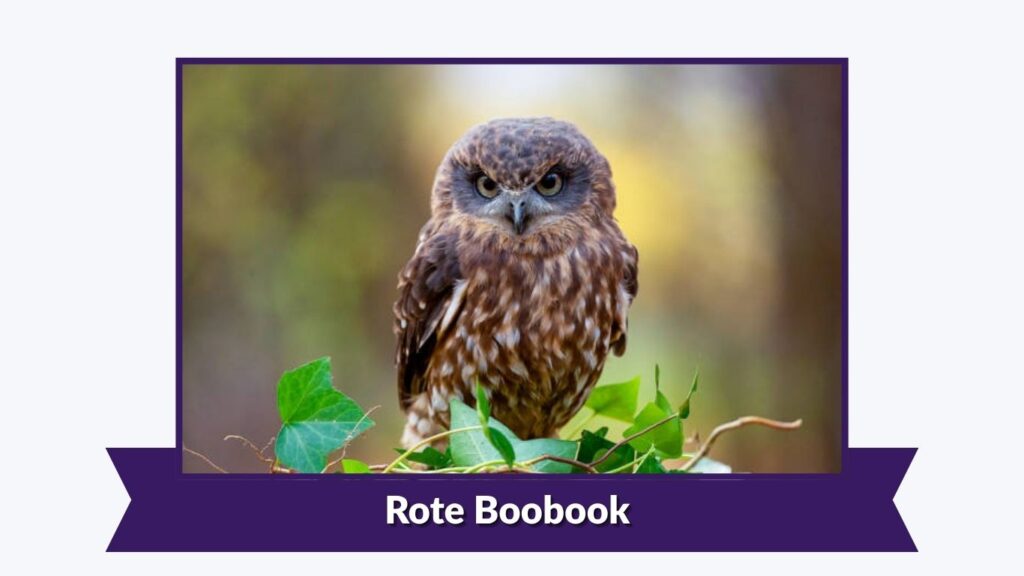
The Rote Boobook is a small island owl found only on Rote Island in the Lesser Sunda Islands of Indonesia. Its scientific name is Ninox rotiensis. It was once treated as a form of the Southern or Australian Boobook, but many modern checklists now recognize it as a separate species. It is currently listed as Near Threatened.
Identification
- Small to medium-sized boobook owl
- Rounded head with no ear tufts
- Brown upperparts with pale spotting
- Pale underparts with brown streaking or barring
- Yellowish eyes
- Compact body and short tail
- Heavily barred primaries, rump, and tail
- Similar to Australian Boobook but smaller
Habitat and Range
The Rote Boobook is endemic to Rote Island, meaning it naturally occurs only there. This makes it vulnerable to habitat loss because its entire natural range is limited to a single island. It is a resident owl, not a long-distance migrant, and depends on remaining wooded or semi-wooded habitats for roosting, hunting, and breeding.
Diet and Hunting Behavior
The diet of the Rote Boobook is not well documented. Like related boobook owls, it is probably mainly nocturnal and likely hunts insects and small vertebrates from a perch. It may use short, quiet flights to catch prey in trees, forest edges, and open wooded areas after dark.
Nesting and Breeding
Detailed breeding information for the Rote Boobook is limited. It likely uses tree hollows or sheltered cavities, as many Ninox owls do. Mature trees and remaining forest patches are important because they provide daytime roosts, possible nest sites, and nearby feeding areas. BirdLife notes that remaining forest areas supporting this species should be treated as a high conservation priority.
4. Timor Boobook
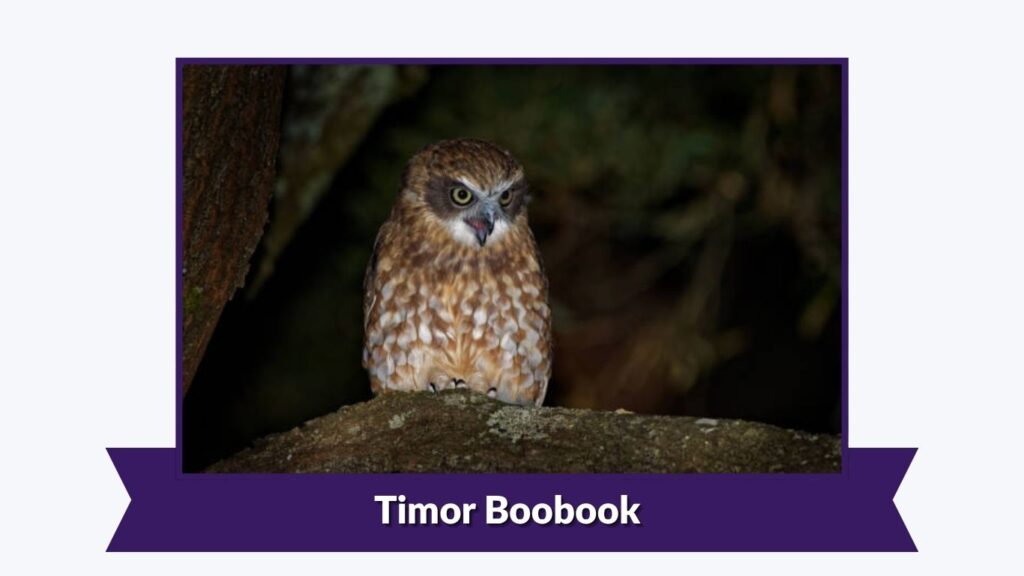
The Timor Boobook is a small to medium-sized owl from the eastern Lesser Sunda Islands. Its scientific name is Ninox fusca, and it is now often treated as a separate species from the Australian Boobook. It has a compact body, bright yellow eyes, brownish plumage, and a nocturnal lifestyle. It is found on Timor, Roma, Leti, and Semau islands.
Identification
- Small to medium-sized boobook owl
- Rounded head with no ear tufts
- Bright yellow eyes
- Grey-brown to brown upperparts
- Pale spotting on wings and nape
- Whitish or pale underparts with grey-brown streaking
- Compact body and short tail
- Similar to Australian Boobook but with different calls and island range
Habitat and Range
The Timor Boobook lives in the eastern Lesser Sunda Islands, especially Timor and nearby islands such as Roma, Leti, and Semau. It is mainly associated with forested habitats, including tropical moist lowland forest and plantations. It is considered a resident species, meaning it generally stays within its island range rather than making long migrations.
Diet and Hunting Behavior
This owl is mainly nocturnal. Like other boobook owls, it probably hunts from a perch, watching and listening before flying out to catch prey. Its diet is not fully studied, but it likely includes insects and small vertebrates. Field records also show it using forest-edge and mixed habitat at night.
Nesting and Breeding
Detailed nesting information for the Timor Boobook is limited. It likely depends on trees, cavities, and sheltered wooded areas for roosting and breeding, similar to related Ninox owls. Because it is restricted to a small island region, protecting forest patches and mature trees is important for its long-term survival.
5. Alor Boobook
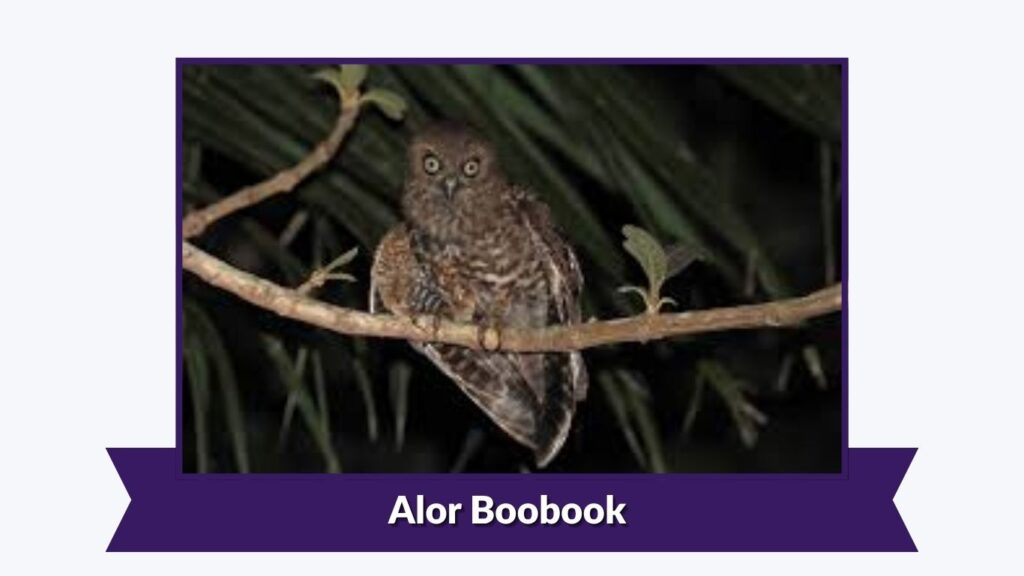
The Alor Boobook is a small island owl found in the eastern Lesser Sunda Islands of Indonesia. Its scientific name is Ninox plesseni. It was once treated as part of the Australian Boobook group, but it is now commonly recognized as a separate species. This owl is native to Alor and Pantar Islands and is mainly active at night.
Identification
- Small to medium-sized boobook owl
- Rounded head with no ear tufts
- Bright yellow eyes
- Brownish upperparts
- Pale spotting on wings and body
- Whitish underparts with brown streaking or barring
- Compact body and short tail
- Similar to nearby boobook species but separated by island range and voice
Habitat and Range
The Alor Boobook occurs on Alor and Pantar Islands in Indonesia. It uses different wooded habitats, including primary forest, secondary wooded areas, mangrove forest, eucalypt woodland, and plantations. Because its range is limited to only a few islands, local forest condition is important for its long-term survival.
Diet and Hunting Behavior
The diet of the Alor Boobook is not fully documented. Like other Ninox owls, it is mainly nocturnal and probably hunts insects, small vertebrates, and other small prey. It likely hunts from a perch, waiting quietly before making short flights through trees or forest edges after dark.
Nesting and Breeding
Detailed nesting information for the Alor Boobook is limited. It probably uses tree cavities or sheltered natural spaces, similar to many related boobook owls. Mature trees and wooded areas are likely important because they provide daytime roosts, possible nest sites, and safe cover for breeding.
6. Tasmanian Boobook
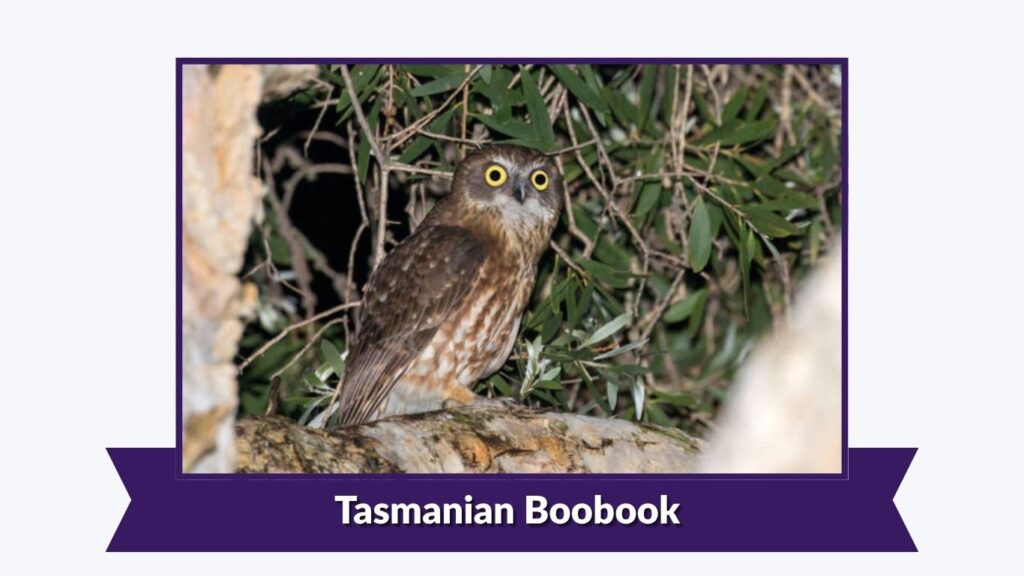
The Tasmanian Boobook is a compact nocturnal owl found in Tasmania and nearby offshore islands. Its scientific name is Ninox leucopsis. It was once treated as part of the Australian Boobook group, but it is now widely recognized as a separate species because of differences in genetics, voice, and appearance. It is known for its yellow eyes, brown mottled plumage, and familiar “boo-book” call.
Identification
- Small to medium-sized boobook owl
- Rounded head with no ear tufts
- Large golden-yellow eyes
- Warm chocolate-brown upperparts
- Buff or whitish spots on wings and body
- Pale facial markings around the eyes
- Mottled brown and cream underparts
- Compact body with a short tail
- Slightly larger and paler than some mainland boobooks
Habitat and Range
The Tasmanian Boobook is endemic to Tasmania and occurs on several offshore islands, including Bruny Island, Maria Island, and Bass Strait islands. It uses wet and dry eucalypt forest, mixed woodland, coastal scrub, farmland edges, riparian strips, and even gardens with mature trees. Mature hollow-bearing trees are especially important for roosting and breeding.
Diet and Hunting Behavior
This owl hunts mostly at night using a sit-and-wait method. It perches quietly, listens for movement, then swoops down to catch prey. Its diet includes beetles, moths, insects, mice, juvenile rats, pygmy possums, small reptiles, and sometimes small birds. Like other boobooks, it relies on sharp hearing, low-light vision, and silent flight.
Nesting and Breeding
The Tasmanian Boobook usually nests in tree hollows, especially in large old eucalypts. These hollows can take more than a century to form, so old trees are very valuable for breeding. Breeding usually occurs from September to December. The female may lay one to three eggs, and chicks fledge after about five to six weeks.
7. Morepork
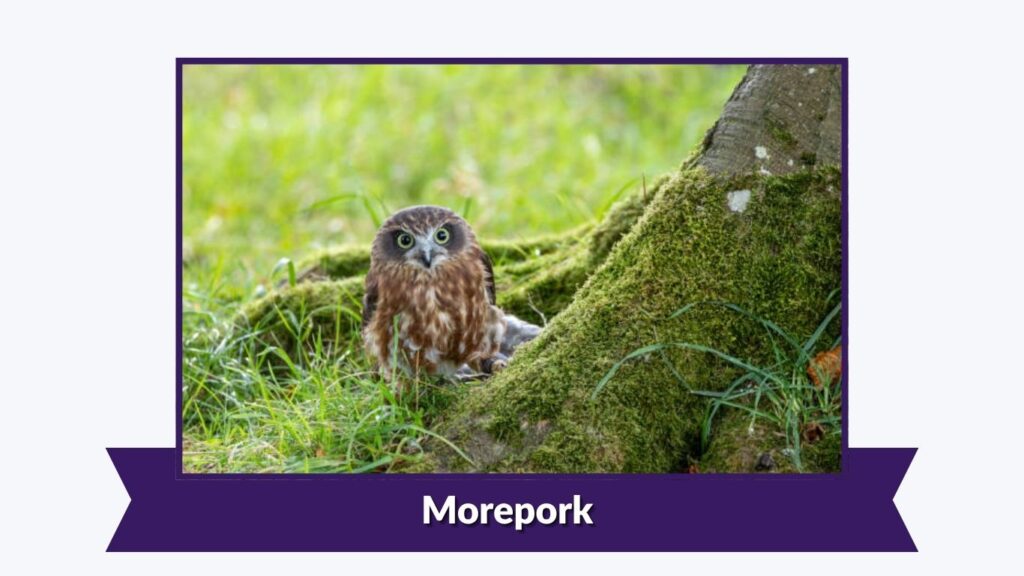
The Morepork, also called Ruru, is a small brown boobook owl native to New Zealand. Its scientific name is Ninox novaeseelandiae. This owl is famous for its repeated “more-pork” call at night. It has bright yellow eyes, mottled brown feathers, and a compact body. Moreporks are mostly nocturnal and are found in native forests, parks, farmland edges, and wooded gardens.
Identification
- Small to medium-sized owl
- Rounded head with no ear tufts
- Bright yellow eyes
- Dark brown upperparts with pale spotting
- Cream or whitish streaks on the underparts
- Short tail and compact body
- Strong yellow feet and talons
- Usually recognized by its “more-pork” or “ruru” call
Habitat and Range
The Morepork is found throughout New Zealand’s North Island, South Island, and several offshore islands. It prefers native forest but can also live in altered habitats such as plantations, parks, farmland edges, and urban areas with enough trees. During the day, it usually roosts quietly in dense cover, tree cavities, or shaded branches.
Diet and Hunting Behavior
The Morepork hunts mainly at night using a perch-and-pounce method. It feeds on large insects, beetles, moths, caterpillars, spiders, grasshoppers, wētā, mice, rats, and small birds. It waits silently from a branch, then makes a quick flight to catch prey in the air, on branches, or on the ground.
Nesting and Breeding
Moreporks breed in spring and summer. They nest in tree cavities, broken logs, tree forks, epiphytes, rock spaces, roots, earth-bank holes, and sometimes nest boxes. The female usually lays one to three eggs and does the incubation, while the male brings food. Young owls fledge after several weeks but may remain near the parents for some time.
8. Northern Boobook
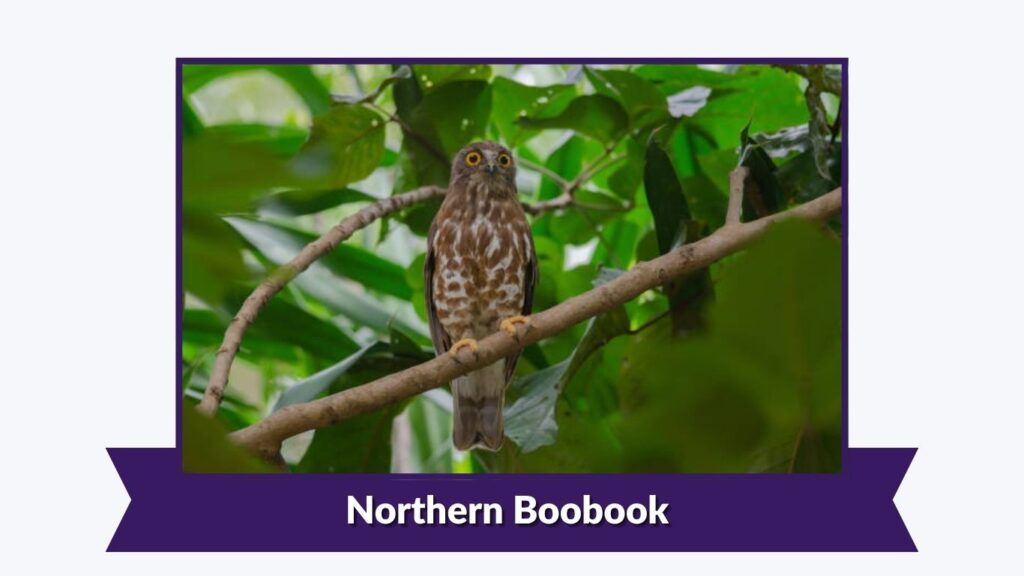
The Northern Boobook is a medium-sized owl from East and Southeast Asia. Its scientific name is Ninox japonica. It has bright yellow eyes, a rounded head, no ear tufts, and a slim hawk-like shape. This owl is mostly nocturnal and is often found in forests, wooded parks, gardens, and coastal migrant stopover areas.
Identification
- Medium-sized owl, usually about 29–33 cm long
- Rounded head with no ear tufts
- Bright yellow eyes
- Dark chocolate-brown upperparts
- Whitish forehead patch
- Whitish underparts with rufous-brown streaking
- Long wings and fairly long tail
- Slim upright posture when perched
- Hawk-like shape in flight
Habitat and Range
The Northern Boobook breeds in eastern China, central and southern Korea, and Japan, including the Ryukyu Islands. It winters farther south in parts of the Greater and Lesser Sundas, while the Taiwan population is often treated as resident. During migration, it may appear in woodland, parks, gardens, mature shrubland, and coastal areas.
Diet and Hunting Behavior
This owl hunts mainly at night. It feeds on large insects, frogs, lizards, small birds, and small rodents. Like many boobook owls, it often waits quietly from a perch, then flies out quickly to catch prey. Its long-winged shape also helps it move through trees and across open areas during migration.
Nesting and Breeding
The Northern Boobook usually nests in trees or natural cavities. In a Taiwan breeding study, females laid three to four eggs, incubation was done only by females, and the average incubation period was about 27 days. Most fledglings appeared in May, showing that spring is an important breeding period for this owl.
9. Brown Boobook
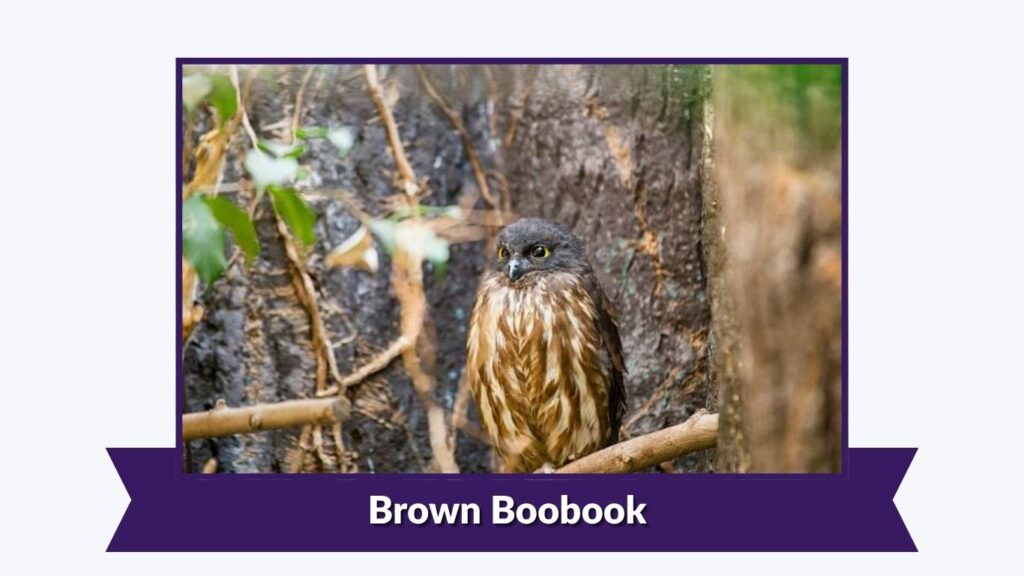
The Brown Boobook, also called the Brown Hawk-Owl, is a medium-sized Ninox owl found across South and Southeast Asia. It has a rounded head, bright yellow eyes, brown upperparts, and a white underbody marked with brown streaks or blotches. This owl is mainly nocturnal and is often found in forests, wooded areas, gardens, and semi-urban places with trees.
Identification
- Medium-sized owl with no ear tufts
- Rounded head and compact body
- Large bright yellow eyes
- Brown upperparts
- White or pale underparts with brown streaking
- Small white patch above the bill
- Long wings and fairly long tail
- Hawk-like shape when perched or flying
- Similar to Northern Boobook, but usually separated by range, call, and plumage details
Habitat and Range
The Brown Boobook ranges from the Indian subcontinent east through southern China, Indochina, the Malay Peninsula, western Indonesia, and nearby island regions. It uses forest, woodland, plantations, gardens, and tree-filled urban or suburban areas. In some cities, it may roost quietly in daytime trees and become active after sunset.
Diet and Hunting Behavior
The Brown Boobook hunts mostly at night. It feeds on large insects, frogs, lizards, small birds, mice, and other small animals. Like many boobook owls, it often waits on a perch, then flies out quickly to catch prey. Its repeated soft call is usually heard at dusk, dawn, or during the night.
Nesting and Breeding
The Brown Boobook usually nests in tree cavities. The female may lay three to five eggs, and she mainly incubates while the male brings food. After hatching, both parents help feed the young. Tree hollows are important for this species because they provide safe nesting and daytime shelter
10. Hume’s Boobook
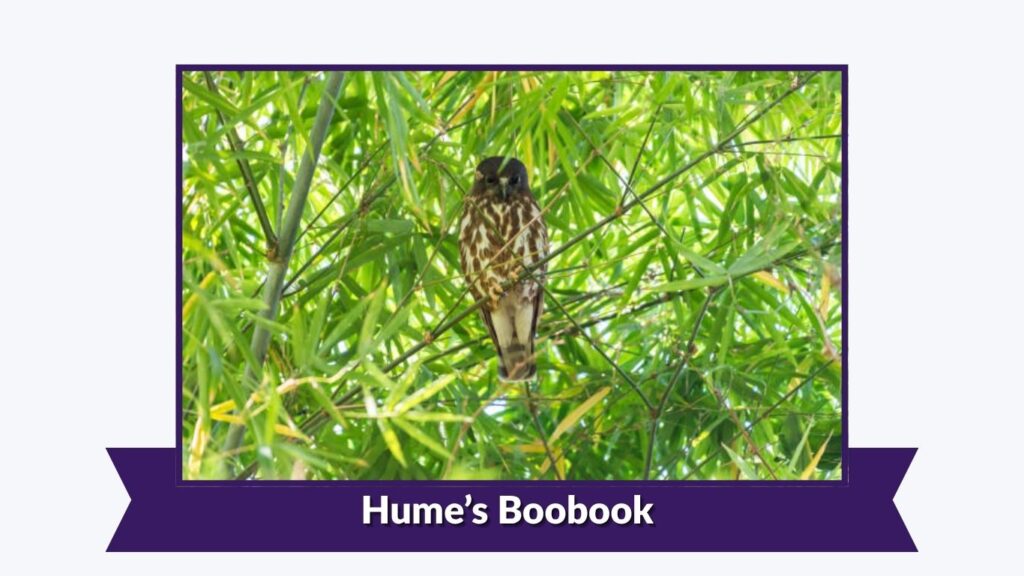
The Hume’s Boobook, also called Hume’s Hawk-Owl, is a small to medium-sized owl found only in the Andaman Islands. Its scientific name is Ninox obscura. This owl has a rounded head, no ear tufts, bright yellow eyes, and a hawk-like shape. It was formerly treated as a form of the Brown Boobook, but it is now commonly listed as a separate species.
Identification
- Small to medium-sized boobook owl
- Rounded head with no ear tufts
- Bright yellow eyes
- Dark brown upperparts
- Pale spotting on wings and body
- Whitish or pale underparts with brown streaking
- Slim, hawk-like posture
- Fairly long wings and tail
- Similar to Brown Boobook but restricted to the Andaman Islands
Habitat and Range
Hume’s Boobook is endemic to the Andaman Islands, where it lives in subtropical or tropical moist lowland forest and mangrove forest. It is a resident island owl, so it does not make long seasonal migrations. Because its natural range is limited, healthy forest and mangrove habitat are important for its survival.
Diet and Hunting Behavior
Hume’s Boobook is mainly nocturnal. Like other Ninox owls, it likely hunts from a perch, watching and listening before flying out to catch prey. Its diet is not as well documented as that of common mainland owls, but related boobooks often feed on large insects, small birds, lizards, frogs, and small mammals.
Nesting and Breeding
Detailed nesting information for Hume’s Boobook is limited. It likely uses tree cavities or sheltered natural spaces for nesting, similar to other boobook owls. Mature trees, forest edges, and mangrove areas may provide daytime roosts, hunting cover, and possible breeding sites. BirdLife lists the species as Least Concern, but habitat loss can still affect local populations.
11. Chocolate Boobook
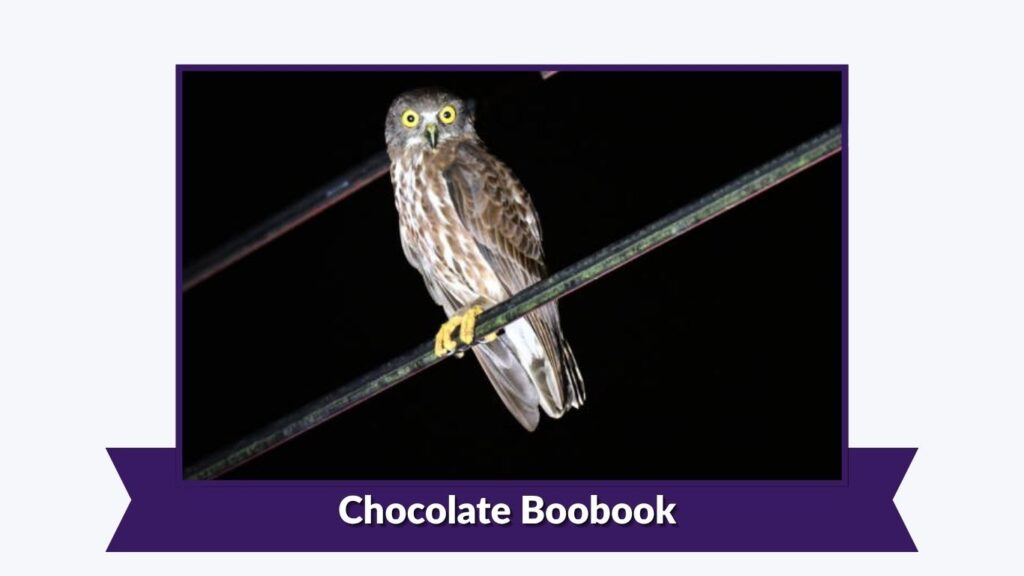
The Chocolate Boobook is a medium-sized owl from the Ninox group. Its scientific name is Ninox randi. It was once treated as a subspecies of the Brown Boobook, but it is now commonly recognized as a separate species. This owl is best known from the Philippines, where it lives in forested habitats and is currently listed as Near Threatened.
Identification
- Medium-sized boobook owl
- Rounded head with no ear tufts
- Bright yellow eyes
- Dark chocolate-brown upperparts
- Pale markings on the face and body
- Whitish underparts with brown streaking
- Compact body with a fairly long tail
- Hawk-like shape when perched or flying
- Similar to Brown Boobook but darker and more restricted in range
Habitat and Range
The Chocolate Boobook is mainly found in the Philippines, including several major islands such as Luzon, Mindanao, Mindoro, Negros, Cebu, Basilan, Marinduque, and Siquijor. Some checklists also mention records from the Talaud Islands northeast of Sulawesi. It uses primary lowland rainforest, second-growth forest, and mangrove habitats, usually up to about 1,000 meters elevation.
Diet and Hunting Behavior
The diet of the Chocolate Boobook is not well studied. Like related boobook owls, it is presumed to feed on insects and small vertebrates. It is mainly nocturnal and likely hunts from a perch, watching and listening before making quick flights to catch prey in forest or forest-edge habitats.
Nesting and Breeding
Very little is known about the breeding habits of the Chocolate Boobook. It is presumed to be a cavity-nesting owl, like many other Ninox species. A young bird has been recorded in June, suggesting breeding activity before or around that period. Forest loss is an important concern because the species depends on wooded habitats and has a limited range.
12. Andaman Boobook
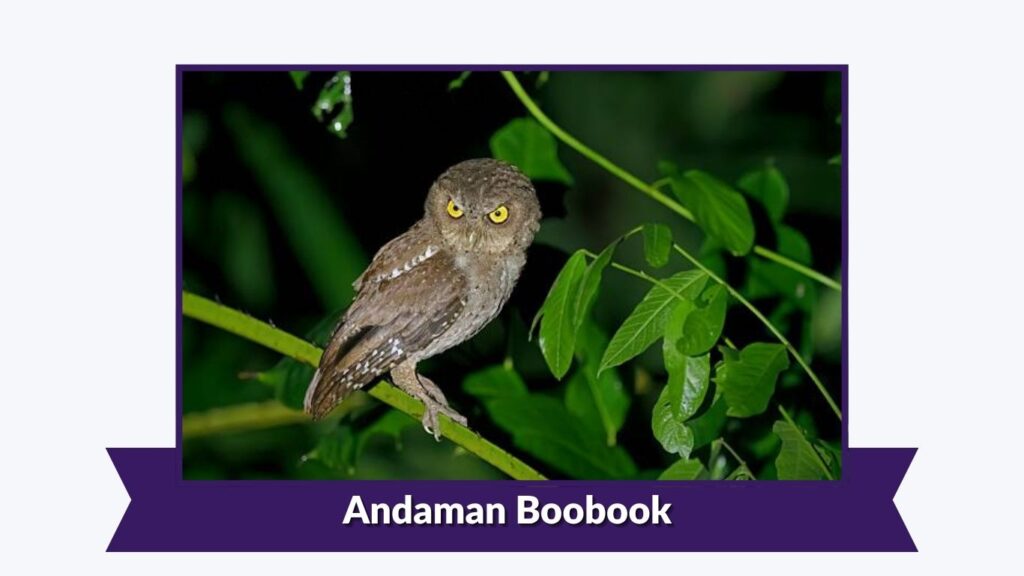
The Andaman Boobook, also called the Andaman Hawk-Owl, is a small to medium-sized Ninox owl from the Andaman region. It has bright yellow eyes, brown upperparts, pale streaked underparts, and a compact hawk-like shape. This owl is mainly nocturnal and is associated with forests, mangroves, and wooded island habitats.
Identification
- Small to medium-sized boobook owl
- Rounded head with no ear tufts
- Bright yellow eyes
- Brown upperparts
- Pale underparts with brown streaking
- Compact body and short tail
- Hawk-like posture when perched
- Similar to other island boobooks but separated by range and voice
Habitat and Range
The Andaman Boobook is closely linked with the Andaman Islands, and some taxonomic treatments also include related island forms from the Nicobar Islands. It lives in primary forest, secondary forest, moist lowland forest, mangrove forest, and other wooded habitats. Its ability to use some degraded habitats may help it survive, but forest loss can still reduce suitable roosting and breeding areas.
Diet and Hunting Behavior
The Andaman Boobook is mainly active at night. Like other Ninox owls, it likely hunts from a perch, watching and listening before flying out to catch prey. Its diet is not fully documented, but related boobooks commonly feed on large insects, small reptiles, small birds, and small mammals in wooded habitats.
Nesting and Breeding
Detailed breeding information for the Andaman Boobook is limited. It likely depends on trees and sheltered cavities for nesting, similar to many other boobook owls. Mature forest, mangroves, and old trees are important because they provide daytime roosts, possible nest holes, and safe cover for young owls.
13. Luzon Boobook
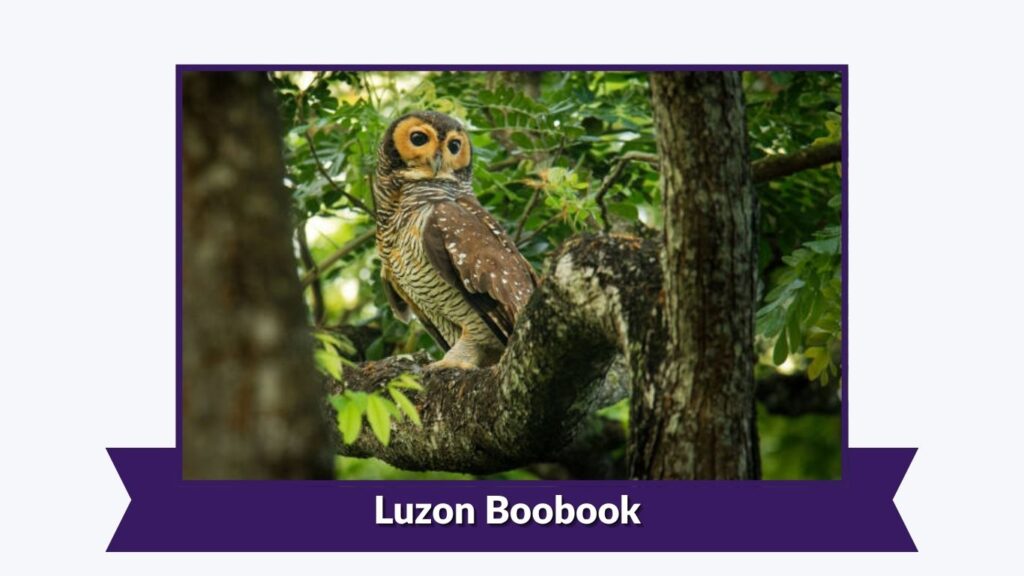
The Luzon Boobook, also called the Luzon Hawk-Owl, is a small nocturnal owl from the Philippines. Its scientific name is Ninox philippensis. It belongs to the Philippine hawk-owl group and is known for its bright yellow eyes, brown-and-white mottled feathers, and compact hawk-like shape. It lives mainly in forested habitats.
Identification
- Small boobook owl with a rounded head
- No visible ear tufts
- Bright yellow eyes
- Brown upperparts with white oval spots
- Pale underparts with broad brown streaks
- White eyebrow-like marks above the eyes
- White moustache-like marks forming an X-shape on the face
- Pale yellow feet, partly feathered
- Olive-colored bill
Habitat and Range
The Luzon Boobook is endemic to the Philippines. It occurs on Luzon and several nearby islands, including Biliran, Catanduanes, Leyte, Marinduque, Polillo, Samar, and others. It is found in forest areas up to about 1,800 meters, though it is more common below 1,000 meters. Its habitats include tropical moist lowland forest and moist montane forest.
Diet and Hunting Behavior
This owl hunts mostly at night. Its diet includes insects, frogs, small rodents, and sometimes birds. Like other boobook owls, it likely hunts from a perch, watching and listening before making a quick flight to catch prey. Its compact body and silent movement help it hunt inside forests and wooded areas.
Nesting and Breeding
The Luzon Boobook uses tree hollows as nesting sites. Breeding starts around February, and fledglings have been reported in March and May. Because it depends on wooded habitat and tree cavities, forest clearance can reduce nesting and roosting sites, even though the species is currently listed as Least Concern.
14. Mindanao Boobook
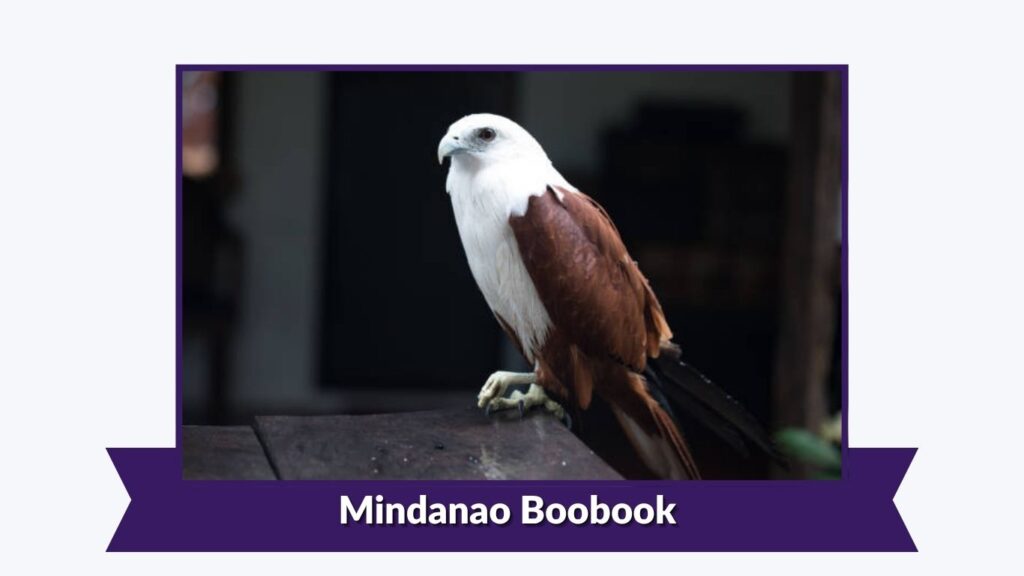
The Mindanao Boobook, also called the Mindanao Hawk-Owl, is a small owl found only in the Philippines. Its scientific name is Ninox spilocephala. It belongs to the Philippine boobook group and is known for its bright eyes, compact body, and forest-dwelling lifestyle. This owl is endemic to Mindanao and nearby smaller islands, including Dinagat, Siargao, and Basilan.
Identification
- Small boobook owl with a rounded head
- No visible ear tufts
- Bright yellow eyes
- Dark brown upperparts
- Speckled or spotted wings
- Reddish-brown streaking on the breast
- Whitish belly
- Compact body, about 18 cm long
- Similar to Luzon Boobook but separated by range, voice, and plumage details
Habitat and Range
The Mindanao Boobook is native to Mindanao and its satellite islands in the southern Philippines. It is mainly associated with tropical moist lowland forest and remaining forest patches. Because it has a restricted island range, forest loss is an important threat. BirdLife lists the species as Near Threatened and notes that its population is believed to be declining.
Diet and Hunting Behavior
This owl is mainly nocturnal and hunts after dark. Its known diet is mostly insects, but like related boobooks, it may also take small mammals, reptiles, amphibians, and possibly small birds. It likely hunts from a perch, waiting quietly before making a quick flight to catch prey in forest or forest-edge habitat.
Nesting and Breeding
Breeding information for the Mindanao Boobook is still limited. A nestling has been recorded in March, but its full nesting season is not well known. Like many other Ninox owls, it is likely to use tree cavities or sheltered spaces in forested areas. Protecting mature trees and remaining lowland forest is important for its nesting and long-term survival.
15. Camiguin Boobook
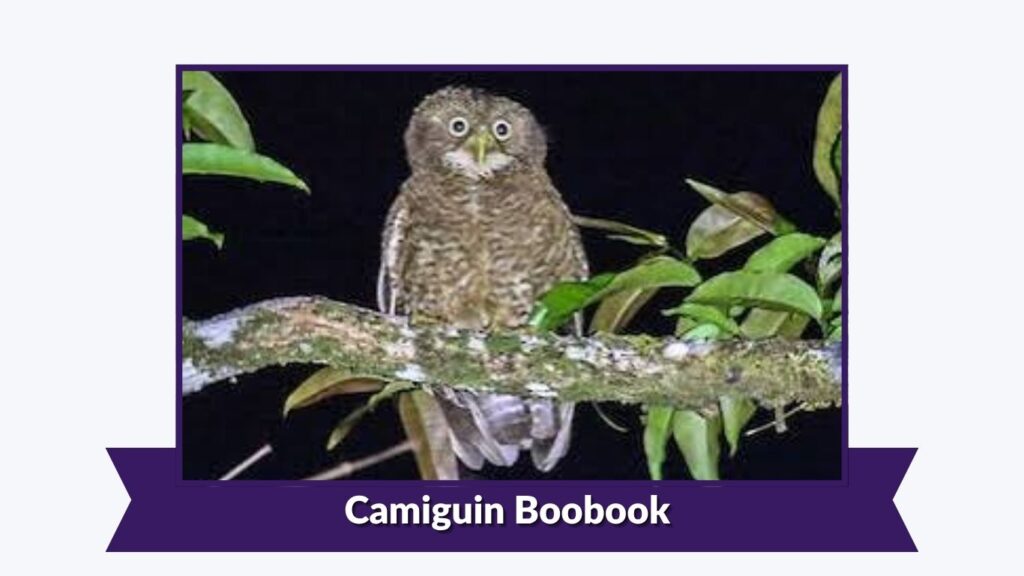
The Camiguin Boobook, also called the Camiguin Hawk-Owl, is a small island owl found only on Camiguin Island in the Philippines. Its scientific name is Ninox leventisi. This owl is notable for its greenish-yellow or grayish eyes, which make it different from many related Philippine boobooks. It is currently listed as Vulnerable because of its very limited range and dependence on remaining forest habitat.
Identification
- Small to medium-sized boobook owl
- Rounded head with no visible ear tufts
- Greenish-yellow or grayish eyes
- Brown upperparts with mottled markings
- Pale throat patch
- Rufous-brown and whitish underparts
- Compact body and short tail
- About 25 cm tall
- Similar to other Philippine boobooks but separated by eye color, voice, and island range
Habitat and Range
The Camiguin Boobook is endemic to Camiguin Sur, a small island off the northern coast of Mindanao in the Philippines. It is mainly linked with remnant forest, including tropical moist lowland and montane forest. It may also occur in heavily degraded former forest, but its small island range makes habitat protection very important.
Diet and Hunting Behavior
This owl is mostly nocturnal and likely hunts in the same way as other boobook owls. It probably waits quietly on a perch, then flies out to catch prey after dark. Its diet is believed to include insects, small mammals, reptiles, amphibians, and possibly small birds, though its feeding ecology is still not fully studied.
Nesting and Breeding
Little is known about the breeding habits of the Camiguin Boobook. Like many related Ninox owls, it is presumed to nest in tree cavities or sheltered natural spaces. Mature trees are likely important because they provide daytime roosting cover, nesting holes, and safe places for young owls to develop.
16. Sulu Boobook
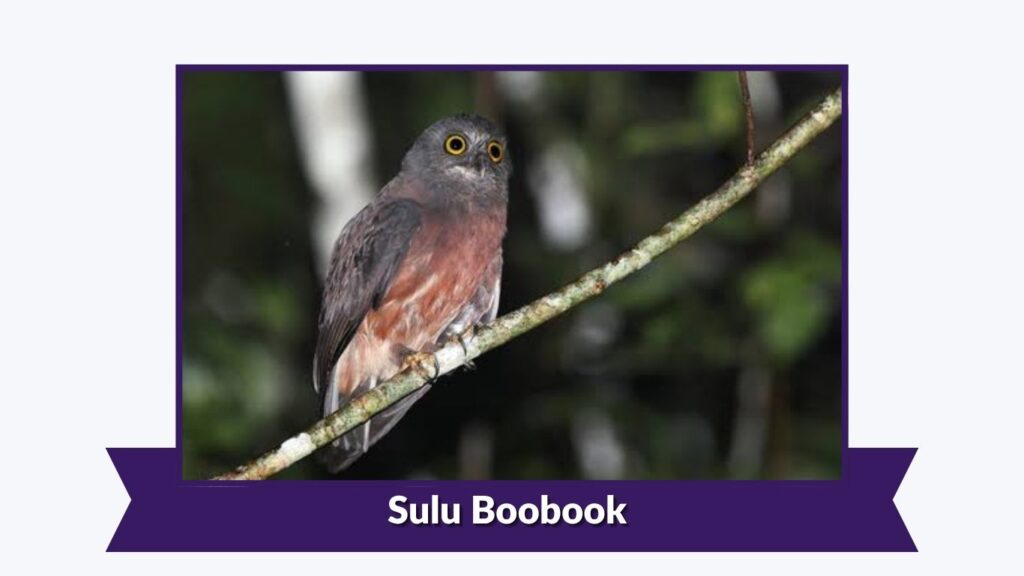
The Sulu Boobook, also called the Sulu Hawk-Owl, is a small island owl found in the Sulu Archipelago of the southern Philippines. Its scientific name is Ninox reyi. It was once treated as part of the Philippine Hawk-Owl group, but it is now recognized as a separate species. This owl is mainly nocturnal and is currently listed as Vulnerable.
Identification
- Small boobook owl with a rounded head
- No visible ear tufts
- Yellow to mustard-yellow eyes
- Brown facial disc
- Whitish eyebrow marks
- Noticeable pale or white throat patch
- Brown upperparts with spotting or mottling
- Pale underparts with streaking or barring
- Compact body and short tail
Habitat and Range
The Sulu Boobook is endemic to the Sulu Islands of the Philippines. It is known from islands such as Jolo, Siasi, Tawi-Tawi, Sanga Sanga, Bongao, and Sibutu. It lives in tropical moist lowland forest, secondary forest, mangroves, and wooded areas near villages. A 2025 report also recorded it at Bolobok Rock Shelter in Tawi-Tawi, suggesting it may use limestone karst habitat too.
Diet and Hunting Behavior
The diet of the Sulu Boobook is not fully studied. Like other Ninox owls, it is probably mainly nocturnal and likely feeds on insects, small reptiles, small mammals, and other small prey. It likely hunts from a perch, waiting quietly before making short flights through forest or edge habitat after dark.
Nesting and Breeding
Breeding information for the Sulu Boobook is still limited. It probably uses tree cavities or other sheltered natural spaces, similar to many related boobook owls. Because it has a restricted island range and faces habitat loss, protecting remaining forest, mangroves, and mature trees is important for its long-term survival.
17. Cebu Boobook
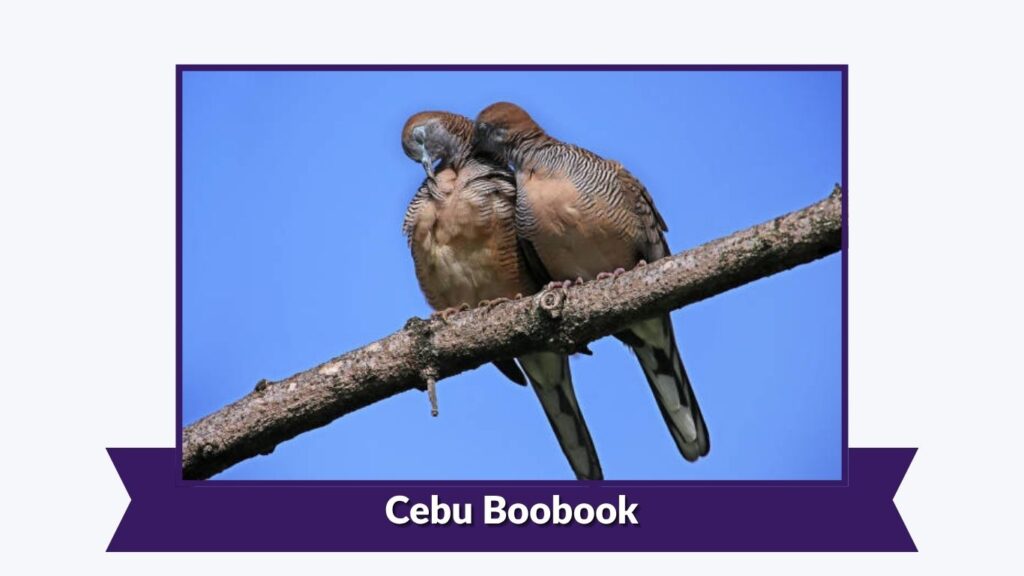
The Cebu Boobook, also called the Cebu Hawk-Owl, is a small to medium-sized owl found only on Cebu Island in the Philippines. Its scientific name is Ninox rumseyi. It was formerly included in the Philippine Hawk-Owl complex but is now treated as a separate species. It is a restricted-range owl and is listed as Vulnerable.
Identification
- Medium-sized owl of wooded areas
- Rounded head with no ear tufts
- Bright yellow eyes
- Dark brown head and upperparts
- Orange-brown underparts
- White speckling on the wings
- Pale bar behind the shoulder
- White eyebrows forming a V-shape
- Large white throat patch
- No other owl shares its Cebu range
Habitat and Range
The Cebu Boobook is endemic to Cebu Island. It lives mainly in dense lowland forest, but it may also use forest edges, degraded secondary forest, clearings, farms, and wooded areas near settlements. The remaining forests in Cebu’s central highlands are especially important refuges for this species.
Diet and Hunting Behavior
The Cebu Boobook hunts at dusk and during the night. It feeds mainly on insects such as cicadas, mantises, moths, stick insects, and crickets. It may also take small birds, snakes, lizards, geckos, frogs, and toads. It uses a perch-and-pounce hunting style, flying out from elevated perches to catch prey in foliage, on the ground, or in flight.
Nesting and Breeding
The Cebu Boobook nests in natural cavities in large trees. Eggs have been recorded in early May, and the female usually lays two to three eggs. Incubation lasts about 28–33 days, with the male feeding the female during this period. Both parents feed the chicks, which fledge after about five weeks.
FAQs
What is a boobook owl?
A boobook owl is a small to medium-sized owl from the Ninox group. Most boobooks have rounded heads, no ear tufts, bright yellow eyes, compact bodies, and hawk-like shapes. They are usually nocturnal and are best known for their repeated “boo-book” or whistling calls.
Where do boobook owls live?
Boobook owls live across Australia, New Zealand, South Asia, Southeast Asia, and many Pacific and island regions. Some species are widespread, while others are found only on one island, such as the Sumba Boobook, Rote Boobook, Camiguin Boobook, and Cebu Boobook.
What do boobook owls eat?
Boobook owls mainly eat insects, moths, beetles, small mammals, reptiles, frogs, and small birds. Their diet depends on the species and habitat. Many hunt from a quiet perch at night, then fly out quickly to catch prey in trees, on the ground, or in the air.
Are boobook owls active during the day?
Most boobook owls are active at night. During the day, they usually roost quietly in dense foliage, tree hollows, mangroves, or shaded forest cover. Some may become active at dusk or dawn, especially when feeding young or responding to calls from nearby owls.
Are boobook owls endangered?
Some boobook owls are common, while others are threatened because they live on small islands with limited forest habitat. Species such as the Camiguin Boobook, Sulu Boobook, Cebu Boobook, and several Lesser Sunda boobooks face pressure from habitat loss, forest degradation, and small population size.