

The screech owl is a small, fascinating bird known for its excellent camouflage, distinctive nighttime calls, and remarkable hunting abilities. Found throughout much of North America, these owls live in forests, parks, and suburban neighborhoods. The Eastern Screech Owl and Western Screech Owl are particularly well-known species, each with unique sounds and habitat preferences. Despite their name, screech owls do not always make screeching noises. Understanding their appearance, behavior, diet, and nesting habits can help you recognize these mysterious birds in the wild.
What Is a Screech Owl?
A screech owl is a small owl belonging to the genus Megascops. These birds are primarily nocturnal and spend much of the daytime resting in tree cavities or hidden among branches. Their patterned feathers resemble tree bark, providing natural camouflage against predators. Several screech owl species occur in the Americas, including two familiar North American species.
Eastern Screech Owl
The Eastern Screech Owl (Megascops asio) is widespread across eastern North America. It commonly inhabits wooded neighborhoods, parks, forests, and areas near streams.
This species has a rounded body, prominent ear tufts, and bright yellow eyes. Its feathers may be gray or reddish-brown, with intricate markings that help it blend into trees.
Eastern Screech Owls are adaptable birds that can survive near human settlements when suitable trees and nesting cavities are available.
Western Screech Owl
The Western Screech Owl (Megascops kennicottii) lives mainly in western North America. It inhabits woodlands, wooded river corridors, parks, and some desert environments.
These owls have compact bodies, yellow eyes, and grayish or brownish plumage. They resemble Eastern Screech Owls but produce different vocalizations.
Western Screech Owls are skilled nighttime hunters, catching small mammals, insects, and other animals from concealed perches.
What Does a Screech Owl Sound Like?

A screech owl sound can vary depending on the species, situation, and purpose of the call. Although their name suggests a sharp scream, their most familiar vocalizations are often soft trills, whistles, or repeated hooting notes. Listening to these calls is usually easier than spotting an owl hidden in a tree.
Eastern Screech Owl Sound
The Eastern Screech Owl produces two particularly recognizable sounds.
- Descending whinny: A high-pitched, horse-like whistle that gradually falls in pitch.
- Tremolo: A steady, rolling trill that may last several seconds.
- Alarm calls: Sharp barking or screeching noises when the bird feels threatened.
These vocalizations help owls communicate, defend territories, and maintain contact with their mates or family members.
Western Screech Owl Sound
Western Screech Owls are known for a series of hollow, accelerating hoots. Their characteristic call resembles a bouncing ball, with notes becoming faster toward the end.
They also produce short trills and barking calls. These sounds are especially useful for distinguishing Western Screech Owls from similar-looking Eastern Screech Owls.
Why Do Screech Owls Call at Night?
Screech owls communicate most frequently during their active periods, particularly around dusk and throughout the night.
Their calls serve several purposes, including territorial defense, courtship, communication between partners, and warning signals.
Hearing a screech owl at night does not necessarily mean it is distressed. Most calls are normal behaviors associated with communication and reproduction.
Screech Owl Size and Appearance
Screech owls are among the smaller North American owls. Their compact bodies, short tails, and large heads give them a distinctive appearance. Although Eastern and Western Screech Owls have similar proportions, their measurements vary slightly. Both species have strong talons, hooked beaks, and excellent vision adapted for hunting.
How Big Is a Screech Owl?
Typical measurements include:
| Feature | Eastern Screech Owl | Western Screech Owl |
| Body length | 6.3–9.8 inches | 7.5–9.8 inches |
| Wingspan | 18.9–24 inches | 21.6–24.4 inches |
| Weight | 4.3–8.6 ounces | 3.5–10.8 ounces |
| Eye color | Yellow | Yellow |
Females are generally larger than males, although their sizes overlap.
Red and Gray Screech Owls
Eastern Screech Owls are particularly famous for their different color forms, known as morphs.
Gray morphs have silver-gray feathers with dark markings, while red morphs display reddish-brown plumage. Both color forms belong to the same species.
These colors help the owls remain concealed against different tree surfaces. A red screech owl is not necessarily a separate species or a different age group.
Where Do Screech Owls Live?
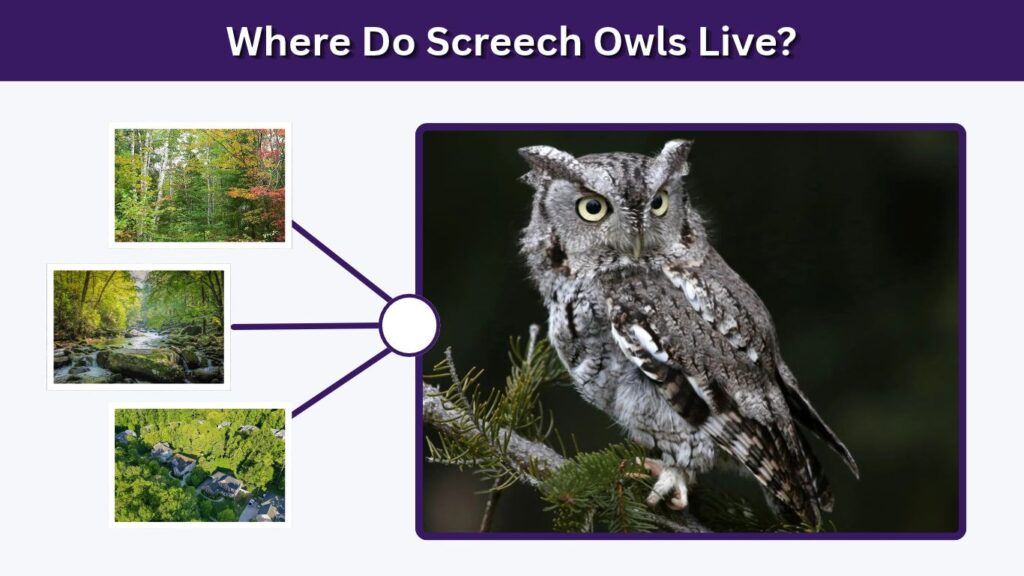
Screech owl habitat usually includes wooded environments with suitable hunting areas and nesting cavities. These birds depend heavily on trees for shelter, daytime roosting, and reproduction. Some species adapt well to suburban landscapes, especially where mature trees, natural vegetation, and adequate prey are available.
Eastern Screech Owl Habitat
Eastern Screech Owls occur throughout much of the eastern United States and parts of southern Canada and northeastern Mexico.
Their preferred environments include:
- Deciduous and mixed forests
- Wooded suburban neighborhoods
- Parks and gardens with mature trees
- Woodlands along rivers and streams
Eastern Screech Owls also occur in Florida. The name Florida screech owl usually refers to the Eastern Screech Owl found in that state rather than a separate species.
Western Screech Owl Habitat
Western Screech Owls inhabit western regions of North America, including wooded areas in the Pacific Northwest and parts of the southwestern United States.
They often occupy open woodlands, tree-lined canyons, and wooded waterways. Some populations also live near residential communities.
Both Eastern and Western Screech Owls depend on suitable shelter and hunting opportunities throughout the year.
What Do Screech Owls Eat?

Screech owls are carnivorous birds that eat a wide variety of small animals. Their diet changes according to habitat, season, and available prey. They typically hunt from branches, watching and listening for movement before flying down to capture their target with sharp talons.
Common screech owl foods include:
- Small mammals: Mice, voles, shrews, and other small rodents.
- Insects: Beetles, moths, grasshoppers, crickets, and other large insects.
- Small birds: Songbirds and other birds they can successfully capture.
- Amphibians and reptiles: Frogs, small lizards, and occasionally other small vertebrates.
- Other animals: Earthworms, crayfish, and additional invertebrates.
How Do Screech Owls Hunt?
Screech owls rely on sensitive hearing, sharp eyesight, and relatively quiet flight to locate prey.
They frequently wait on elevated perches before making sudden hunting flights. Their strong feet and curved talons allow them to secure captured animals.
Because they consume rodents and insects, screech owls are natural predators that contribute to local food webs.
Screech Owl Nesting Habits and Nest Boxes

Screech owls are cavity-nesting birds. Rather than building large stick nests, they occupy existing hollows in trees, including abandoned woodpecker holes. They may also accept artificial nesting boxes when the surrounding habitat offers suitable shelter and food. Protecting mature trees is especially important for maintaining natural nesting opportunities.
Screech Owl Eggs and Breeding
Eastern Screech Owls commonly lay four or five eggs, although clutch sizes vary.
The female incubates the eggs for approximately 26 days. After hatching, both parents help provide food for the young.
Young owls usually begin leaving the nest cavity around four weeks after hatching, although they remain dependent on their parents for some time.
How to Attract Screech Owls With a Nest Box
A properly designed screech owl nest box can provide additional nesting opportunities where natural cavities are limited.
Helpful considerations include:
- Install the box approximately 10 feet above the ground.
- Choose a shaded location near suitable trees.
- Use an appropriately sized entrance and weather-resistant construction.
- Add a shallow layer of untreated wood chips.
- Provide predator protection and avoid disturbing occupied boxes.
Maintaining mature trees, reducing excessive outdoor lighting, and avoiding unnecessary pesticide use can also improve backyard habitat.
FAQs
1. Are Screech Owls Dangerous to Humans?
Screech owls are generally not dangerous to humans. Their small size and secretive behavior make direct encounters uncommon. However, they may defend themselves or their young if approached closely. Observe them from a safe distance and avoid handling wild owls.
2. Do Screech Owls Actually Screech?
Yes, screech owls can produce sharp screeches, particularly during defensive situations. However, their familiar songs are usually trills, whinnies, or repeated hooting notes. The sounds vary between species, making vocalizations useful for identification.
3. Are Screech Owls Active During the Day?
Screech owls are primarily nocturnal, meaning they are most active at night. During daylight hours, they usually rest in tree cavities or sheltered branches. Occasionally, they may appear at a cavity entrance or become active during the day.
4. Do Screech Owls Stay in the Same Area Year-Round?
Many Eastern and Western Screech Owls remain within their territories throughout the year. They are generally nonmigratory birds, although individual movements can occur. Suitable food, shelter, and nesting locations help them occupy the same general area across seasons.
5. Can Screech Owls Live in Residential Backyards?
Yes, screech owls can inhabit residential neighborhoods with mature trees, adequate prey, and suitable nesting cavities. Some individuals also use artificial nest boxes. Providing natural vegetation and minimizing disturbance can make a backyard more suitable for these small owls.