

A white owl bird is one of the most fascinating sights in nature, recognized for its pale feathers, striking eyes, and mysterious appearance. The snowy owl is the best-known white owl, but several other owl species have white faces, bodies, or unusually pale plumage. These birds live in different habitats, hunt various types of prey, and display unique behaviors. Understanding white owl species, physical characteristics, symbolism, diet, and nesting habits can help you identify these beautiful birds and learn more about their lives in the wild.
What Is a White Owl Bird?
A white owl bird is not a single scientific species. The term generally describes owls with predominantly white or pale plumage. The snowy owl is the most recognizable example, while barn owls and unusually pale individuals of other owl species can also appear white.
1. Snowy Owl
The snowy owl (Bubo scandiacus) is the most famous white owl species. It has thick white feathers, bright yellow eyes, a rounded head, and heavily feathered feet that help it survive freezing Arctic temperatures.
Adult males are usually the whitest, sometimes having almost completely white plumage. Females and younger birds typically have more dark brown or black markings across their bodies and wings.
Snowy owls inhabit Arctic tundra regions and sometimes travel south during winter in search of food. They mainly hunt lemmings, voles, rabbits, and other small animals.
2. Barn Owl
The barn owl (Tyto alba) is another well-known owl with a predominantly white appearance. It has a distinctive heart-shaped facial disc, dark eyes, pale underparts, and grayish or golden-brown upper feathers.
Unlike snowy owls, barn owls are generally nocturnal. They hunt over grasslands, agricultural fields, and open landscapes, using their excellent hearing to locate small mammals.
Their pale faces and undersides can make them appear almost entirely white when seen flying at night.
3. Albino and Leucistic Owls
Some owl individuals appear completely or partially white because of unusual pigmentation conditions.
Leucism reduces or prevents normal pigment deposition in feathers, producing white plumage while usually leaving the eyes their natural color. Albinism involves a genetic inability to produce melanin and typically results in very pale plumage and pink or reddish eyes.
These conditions can occur in different owl species. They do not represent separate white owl species.
How to Identify a White Owl Bird

Identifying a white owl requires looking beyond feather color. Body size, facial shape, eye color, wing patterns, and behavior can help distinguish snowy owls from barn owls and other pale-looking birds.
Physical Characteristics of White Owls
Common identification features include:
- Feather color: White, cream, pale gray, or white with dark markings.
- Eye color: Yellow in snowy owls, usually dark in barn owls.
- Facial shape: Rounded facial appearance in snowy owls and a distinctive heart-shaped face in barn owls.
- Body size: Snowy owls are considerably larger and heavier than barn owls.
- Feet: Snowy owls have thick feathers covering much of their legs and feet.
- Wing shape: Broad wings help these birds fly efficiently while hunting.
Snowy Owl vs. Barn Owl
Snowy owls and barn owls are often confused because both have prominent white plumage. However, their physical characteristics and behaviors are quite different.
| Feature | Snowy Owl | Barn Owl |
| Scientific name | Bubo scandiacus | Tyto alba |
| Main color | White with dark markings | White, buff, and gray |
| Eyes | Yellow | Dark |
| Facial shape | Rounded | Heart-shaped |
| Habitat | Arctic tundra | Grasslands and farmland |
| Activity | Day and night | Mostly night |
| Main prey | Lemmings and rodents | Mice and other small mammals |
Where Do White Owls Live?

White owl species occupy different habitats depending on their natural adaptations and food requirements. Snowy owls are strongly associated with the Arctic, while barn owls live across a much wider range of environments. Their habitats include open landscapes, grasslands, agricultural areas, and coastal regions.
Snowy Owl Habitat
Snowy owls primarily breed in the Arctic tundra of North America, Greenland, and Eurasia. These open landscapes provide excellent visibility for hunting and monitoring potential predators.
During winter, some individuals move south into Canada and the northern United States. They may appear near beaches, agricultural fields, airports, and other open areas where prey is available.
Barn Owl Habitat
Barn owls inhabit grasslands, agricultural fields, marshes, deserts, and open woodland edges. They often roost or nest in quiet cavities, abandoned buildings, barns, and specially designed nest boxes.
Their preference for open hunting grounds allows them to locate rodents more easily. Barn owls are also found near farms and rural communities where small mammals are abundant.
What Do White Owls Eat?
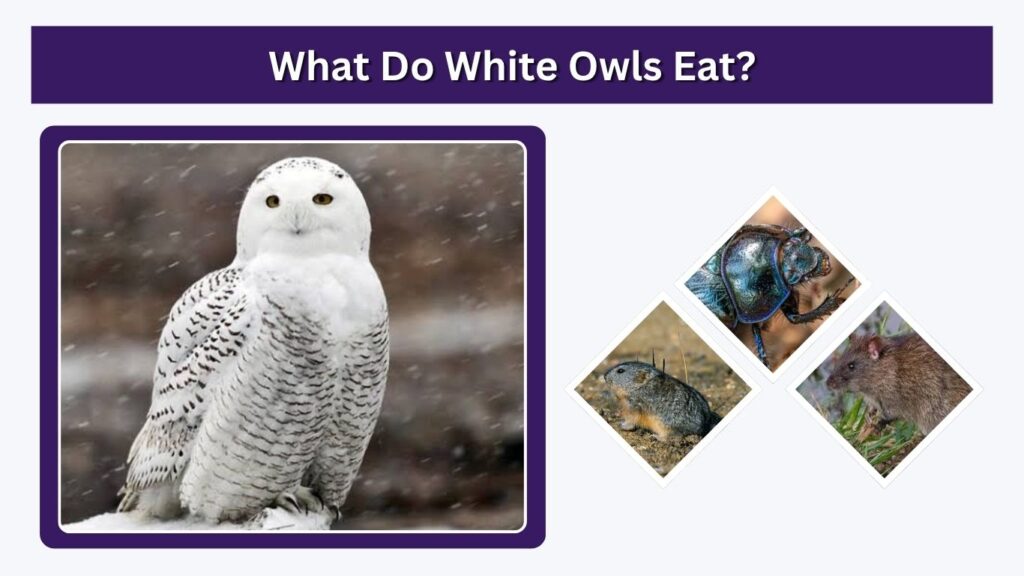
White owls are carnivorous predators that depend on other animals for food. Their diets vary according to species, habitat, and seasonal prey availability. Most hunt small mammals, although some also capture birds and other animals.
Common Foods of White Owls
- Lemmings: An important food source for snowy owls in Arctic breeding areas.
- Mice: Frequently hunted by barn owls and other small-prey specialists.
- Voles: Common prey for snowy owls and barn owls.
- Rabbits: Larger prey that snowy owls can capture.
- Small birds: Some white owls hunt ducks, shorebirds, and other birds.
- Rats: Barn owls frequently capture rats in agricultural and open habitats.
- Insects: Some smaller owl species occasionally consume large insects.
Snowy owls often depend heavily on lemming populations. When lemmings become abundant, snowy owls may successfully raise more chicks. When prey becomes scarce, they may travel farther or skip breeding.
White Owl Bird Meaning and Symbolism
White owls have fascinated people for centuries because of their unusual appearance, nighttime activity, and silent flight. In different cultures and spiritual traditions, people have associated them with wisdom, mystery, protection, transformation, and sometimes death. However, these meanings are cultural interpretations rather than scientifically established facts.
White Owl as a Symbol of Wisdom
Owls are widely associated with knowledge, intelligence, and wisdom, particularly in Western traditions influenced by ancient Greek mythology. Their ability to hunt in darkness and observe their surroundings has contributed to this symbolism.
A white owl may therefore represent clarity, knowledge, and a deeper understanding of unfamiliar situations.
White Owl as a Symbol of Change
Some spiritual interpretations associate seeing a white owl with transformation, new beginnings, or important life changes. Its pale appearance is sometimes connected with purity and renewal.
These interpretations vary between individuals and traditions. There is no scientific evidence that seeing a white owl predicts future events.
White Owl as a Symbol of Protection or Bad Luck
In some folklore, owls are considered protective or spiritually significant animals. Other traditions associate their calls with death, misfortune, or supernatural events.
These beliefs developed in different historical and cultural settings. A white owl appearing near a house should not be interpreted as proof that something good or bad will happen.
White Owl Behavior, Sounds, and Nesting Habits

White owls display different behaviors depending on their species. Snowy owls can hunt during daylight as well as nighttime, while barn owls are primarily nocturnal. Their communication, breeding activities, and nesting locations also differ considerably.
What Sounds Do White Owls Make?
White owls produce several types of vocalizations, including hoots, screeches, hisses, and warning calls.
Snowy owls are known for deep, powerful hooting calls, particularly during territorial displays and breeding season. Barn owls are different because they produce harsh, raspy screams and hissing sounds rather than the familiar hooting associated with many other owls.
Their calls help them communicate with mates, defend territories, and warn potential intruders.
How Do White Owls Build Their Nests?
Nesting habits depend on the species.
Snowy owls nest directly on the ground, where females scrape shallow depressions into the Arctic tundra. They usually select slightly elevated locations with good visibility.
Barn owls prefer cavities in trees, cliffs, buildings, and nest boxes. Their nesting sites provide sheltered places for laying eggs and raising chicks.
Both species depend on suitable nesting locations and sufficient food to raise healthy offspring.
Are White Owl Birds Good Pets?
White owls are wild birds of prey and are generally unsuitable as household pets. They require specialized diets, large and carefully designed enclosures, veterinary attention, and appropriate environmental conditions.
Snowy owls also have particular environmental requirements because they are adapted to cold Arctic conditions. Barn owls have different care needs, but they still require expert wildlife management.
Owls are protected under wildlife laws in many countries, and keeping them may require special authorization. Anyone interested in these birds should consider visiting a licensed wildlife sanctuary or conservation center rather than attempting to purchase or capture a wild owl.
FAQs
1. What is the most common white owl bird?
The snowy owl is the best-known white owl species. It has predominantly white feathers, bright yellow eyes, and a large rounded body. Adult males are generally whiter than females, which usually have more dark markings.
2. Are all white owls snowy owls?
No, not all white owls are snowy owls. Barn owls have white faces and underparts, while some individuals of other owl species develop unusually pale plumage because of leucism or albinism.
3. What does seeing a white owl mean?
In different cultural and spiritual traditions, white owls can symbolize wisdom, protection, mystery, transformation, or death. However, these interpretations are based on folklore and personal beliefs rather than scientific evidence.
4. Where can white owl birds be found?
Snowy owls primarily inhabit Arctic regions but sometimes migrate south during winter. Barn owls have a much wider distribution and live in grasslands, agricultural areas, open woodlands, and rural environments across many parts of the world.
5. How long do white owls live?
Lifespan depends on the species. Snowy owls typically live around 9–10 years in the wild, although some survive much longer. Barn owl lifespans also vary depending on environmental conditions, food availability, and other survival factors.