The white barn owl is a beautiful nocturnal bird known for its heart-shaped face, bright white feathers, and silent flight. Found in grasslands, farmland, and open countryside, these remarkable owls are skilled hunters that primarily feed on small rodents. Although many barn owls have pale plumage, some appear almost entirely white, creating a ghostlike appearance at night. Understanding white barn owl facts, including their appearance, habitat, diet, hunting behavior, breeding habits, and spiritual meaning, reveals why these fascinating birds attract so much attention from wildlife enthusiasts and birdwatchers.
What Is a White Barn Owl?
A white barn owl is a barn owl with predominantly white or very pale feathers. The term usually describes a natural color variation rather than a separate species. Barn owls belong to the family Tytonidae, which includes several closely related species distributed across different continents.
These birds are immediately recognizable by their heart-shaped facial discs, dark eyes, and elegant appearance. Their pale feathers can make them look almost ghostlike when flying through open fields at night.
Barn owls are exceptional hunters that rely heavily on sound to detect prey. Their ability to fly quietly and locate rodents in darkness makes them important predators in agricultural ecosystems.
White Barn Owl Facts
Here are some interesting facts about white barn owls:
- Scientific classification: Family Tytonidae, genus Tyto.
- Appearance: White or cream-colored underside with varying golden-brown markings.
- Body length: Approximately 30–40 centimeters in many populations.
- Wingspan: Commonly around 80–125 centimeters, depending on species and region.
- Eyes: Large, dark eyes adapted to low-light conditions.
- Habitat: Grasslands, farmland, marshes, and open countryside.
- Diet: Primarily mice, voles, rats, and other small mammals.
- Activity: Mostly nocturnal, occasionally hunting during daylight.
- Nesting locations: Tree cavities, barns, abandoned buildings, and nest boxes.
These characteristics help distinguish barn owls from other pale-colored owl species.
White Barn Owl Appearance and Identification
White barn owls have distinctive physical features that make them relatively easy to recognize. Their pale plumage, heart-shaped faces, and long wings create an elegant appearance, particularly when they are flying.
However, the exact amount of white coloration varies among individuals, sexes, and regional populations.
Physical Characteristics of White Barn Owls
The most recognizable feature of a white barn owl is its heart-shaped facial disc. This specialized arrangement of feathers helps direct sounds toward the bird’s ears, improving its ability to locate prey.
Their underparts are often white or cream-colored, while their upper wings and backs may display golden, gray, or brown markings.
Males are frequently paler than females in some populations, although coloration overlaps considerably.
Other important identification characteristics include:
- Heart-shaped face: Usually white or cream-colored with a distinct outline.
- Dark eyes: Provide a striking contrast against pale facial feathers.
- Long wings: Help the owl glide smoothly over open hunting grounds.
- Feathered legs: Provide additional protection during hunting.
- Golden upperparts: Often feature fine gray and black markings.
These features give white barn owls their distinctive appearance and help separate them from snowy owls and other white birds of prey.
Are Barn Owls Naturally White?
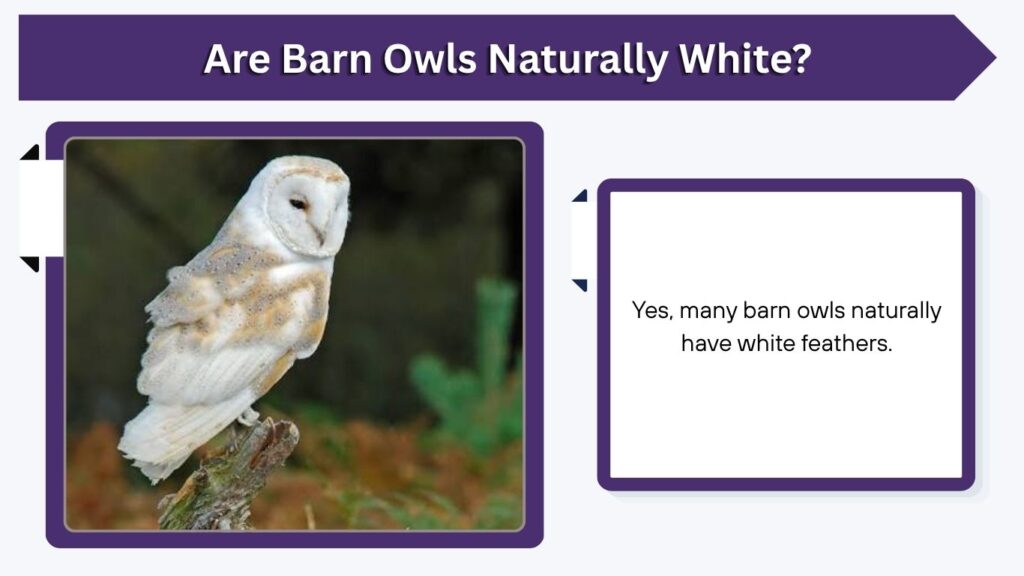
Yes, many barn owls naturally have white feathers. Their coloration varies from pale white to golden-buff, depending on genetics, sex, geographic location, and species.
Some individuals have almost completely white underparts, while others display noticeable brown or reddish markings.
Pure White Barn Owl vs. Normal Barn Owl
A pure white barn owl may appear almost entirely white, especially when viewed from below or photographed under bright lighting.
However, most naturally pale barn owls still have some golden, gray, or brown markings on their backs and upper wings.
An unusually all-white owl may possess a genetic pigmentation variation, such as leucism. Albinism is another possibility, although it is rare and generally affects pigmentation in the eyes as well.
Therefore, a bright white barn owl is not automatically albino.
Why Are Some Barn Owls White?
White plumage is a natural characteristic of many barn owl populations and may also influence hunting success.
Research suggests that bright white feathers can affect how rodents respond to an approaching owl under moonlit conditions.
Studies have found that pale barn owls can benefit from moonlight during hunting, potentially because their bright appearance briefly delays prey reactions.
Their coloration therefore serves more than an aesthetic purpose and may contribute to their survival.
Where Do White Barn Owls Live?
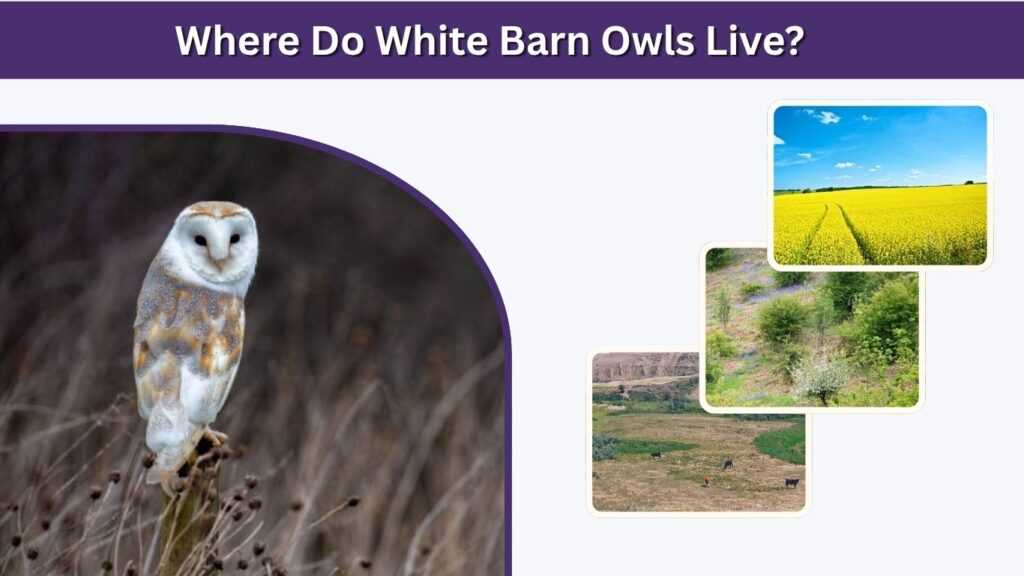
White barn owls inhabit many regions worldwide, although their distribution depends on the particular barn owl species. These birds generally prefer open environments that support healthy populations of small mammals.
White Barn Owl Habitat
Barn owls commonly inhabit grasslands, agricultural fields, marshes, savannas, and woodland edges. They are especially associated with open areas where rodents are abundant.
Unlike forest-dwelling owl species, barn owls typically hunt over relatively unobstructed ground.
They frequently use abandoned buildings, barns, tree cavities, and other sheltered structures for nesting and daytime resting.
Barn owls occur in Europe, Africa, Asia, Australia, and the Americas, although modern taxonomy recognizes several regional species.
In the United States, white-looking American barn owls can be found in suitable habitats, including parts of California and other regions with open countryside.
What Do White Barn Owls Eat?
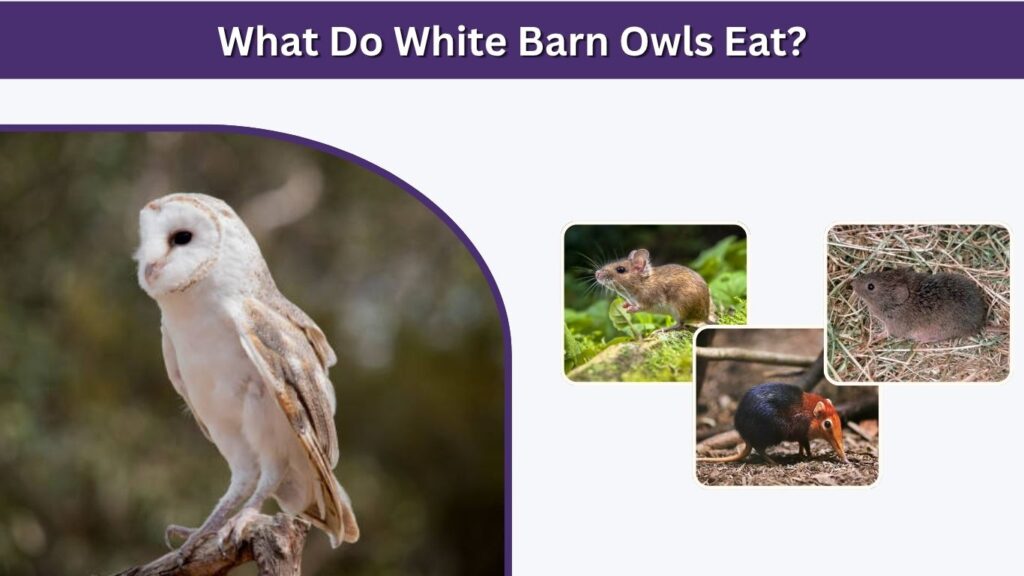
White barn owls are carnivorous birds that primarily hunt small mammals. Their feeding behavior makes them important natural predators in grasslands and agricultural environments.
These owls rely on exceptional hearing, sharp talons, and quiet flight to capture prey, often during complete darkness.
Common Foods of White Barn Owls
Their typical diet includes:
- Mice: One of the most frequently captured prey animals.
- Voles: Small rodents commonly found in grasslands.
- Rats: Particularly smaller rats and young individuals.
- Shrews: Small mammals occasionally included in their diet.
- Small birds: Sometimes captured when mammalian prey is scarce.
- Other animals: Occasionally bats, insects, or other small vertebrates.
White barn owls generally swallow small prey whole and later regurgitate pellets containing bones, fur, and other indigestible materials.
By consuming rodents, these birds help regulate small-mammal populations.
White Barn Owl Flying and Hunting Behavior
White barn owls are remarkable nighttime hunters known for their quiet and graceful flight. Their large wings and specialized feather structures allow them to move through the air with very little noise.
How White Barn Owls Hunt at Night
Barn owls usually fly slowly over fields while listening for movement beneath the vegetation.
Their heart-shaped facial discs direct sounds toward asymmetrically positioned ears, allowing them to identify the location of prey with impressive accuracy.
Once a target is detected, the owl dives toward the ground and captures it using sharp talons.
Their pale wings may reflect moonlight, making them appear unusually bright against the darkness.
Although barn owls primarily hunt at night, they occasionally become active during daylight, especially when feeding growing chicks or experiencing food shortages.
White Barn Owl Nesting and Breeding
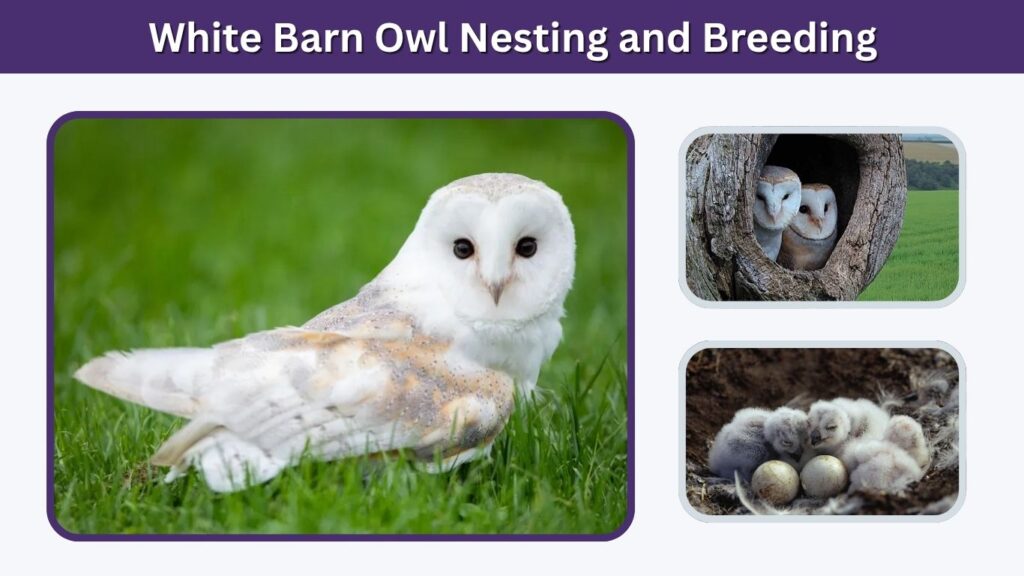
White barn owls generally nest in sheltered cavities rather than constructing elaborate nests. Suitable nesting locations include hollow trees, old barns, building roofs, caves, and specially designed nest boxes.
Eggs and Baby White Barn Owls
Female barn owls commonly lay several white eggs, with clutch size depending on food availability and environmental conditions.
Incubation typically lasts approximately 29–34 days, although timing varies among populations.
Newly hatched chicks are covered in soft white down and depend entirely on their parents for food and protection.
As they grow, their juvenile feathers gradually replace the fluffy down. Young barn owls generally begin leaving the nest after approximately seven to eight weeks.
Successful breeding depends on abundant prey, secure nesting locations, and favorable environmental conditions.
White Barn Owl Meaning and Symbolism
White barn owls have fascinated people for centuries because of their pale appearance, mysterious nighttime behavior, and unusual calls.
Their ghostlike flight has inspired different cultural interpretations, ranging from wisdom and protection to mystery and supernatural beliefs.
White Barn Owl Spiritual Meaning
In some modern spiritual interpretations, white barn owls represent intuition, awareness, transformation, and personal reflection.
Their ability to move quietly through darkness is sometimes associated with understanding hidden truths or navigating uncertainty.
However, symbolic meanings differ among cultures, and there is no universal spiritual interpretation of seeing a white barn owl.
Meaning of Seeing a White Barn Owl
Some people interpret seeing a white barn owl as a symbol of change, heightened awareness, or new beginnings.
Others simply appreciate the encounter as a rare opportunity to observe a beautiful nocturnal predator.
From a scientific perspective, seeing a white barn owl usually indicates that suitable habitat and prey are available nearby.
White Barn Owl Lifespan and Conservation
Barn owls face several environmental challenges despite their widespread distribution.
Wild individuals often live only a few years because juvenile mortality can be high, although some survive much longer. Captive barn owls may live beyond ten years with appropriate professional care.
Habitat loss, vehicle collisions, food shortages, and secondary poisoning from rodenticides can threaten local populations.
Protecting open hunting habitats, maintaining safe nesting locations, and reducing harmful rodenticide exposure can help support barn owl conservation.
FAQs
1. Are White Barn Owls Rare?
White feathers are common in barn owls, but individuals with almost entirely white plumage are less typical. The rarity of exceptionally pale birds depends on regional populations and genetic variation.
2. Is a Pure White Barn Owl an Albino?
Not necessarily. Naturally pale barn owls may have extensive white plumage without being albino. True albinism involves a major reduction or absence of melanin pigmentation and is uncommon.
3. Are White Barn Owls Dangerous to Humans?
White barn owls are generally not dangerous to humans. They mainly hunt small mammals and normally avoid people, although they may defend themselves or their nests when threatened.
4. What Does Seeing a White Barn Owl Mean?
White barn owls are sometimes associated with wisdom, intuition, mystery, or transformation. These meanings are cultural interpretations rather than scientifically established signs of future events.
5. Are White Barn Owls Endangered?
Barn owl conservation status varies among species and regions. Some populations remain widespread, while others face declines caused by habitat loss, rodenticides, and reduced nesting opportunities.