Barn owls are fascinating birds known for their heart-shaped faces, silent flight, and exceptional hunting abilities. Found across many regions of the world, these mysterious nocturnal hunters play an important role in controlling rodent populations. Some of the most interesting barn owl facts involve their extraordinary hearing, unusual calls, and unique nesting behaviors. Whether you are a birdwatcher, wildlife enthusiast, or curious student, these fun facts about barn owls will help you understand their appearance, habitat, diet, behavior, and remarkable adaptations.
Barn Owl Fact File: Quick Facts and Information
Barn owls belong to the owl family Tytonidae. They are recognized by their pale feathers, rounded wings, dark eyes, and distinctive facial discs. Here is a quick barn owl fact sheet covering their main characteristics.
| Feature | Facts |
| Common name | Barn Owl |
| Scientific name | Tyto alba (Western Barn Owl); Tyto furcata (American Barn Owl) |
| Family | Tytonidae |
| Body length | Approximately 32–40 cm |
| Wingspan | Roughly 80–125 cm, depending on species |
| Diet | Mice, voles, rats, shrews, and other small animals |
| Habitat | Grasslands, farms, marshes, and open countryside |
| Activity | Mostly nocturnal |
| Typical eggs | Usually 4–7, but varies |
| Lifespan | Often short in the wild; some survive more than 15 years |
Modern classifications recognize three closely related barn owl species: Western, Eastern, and American Barn Owls.
15 Interesting and Fun Facts About Barn Owls
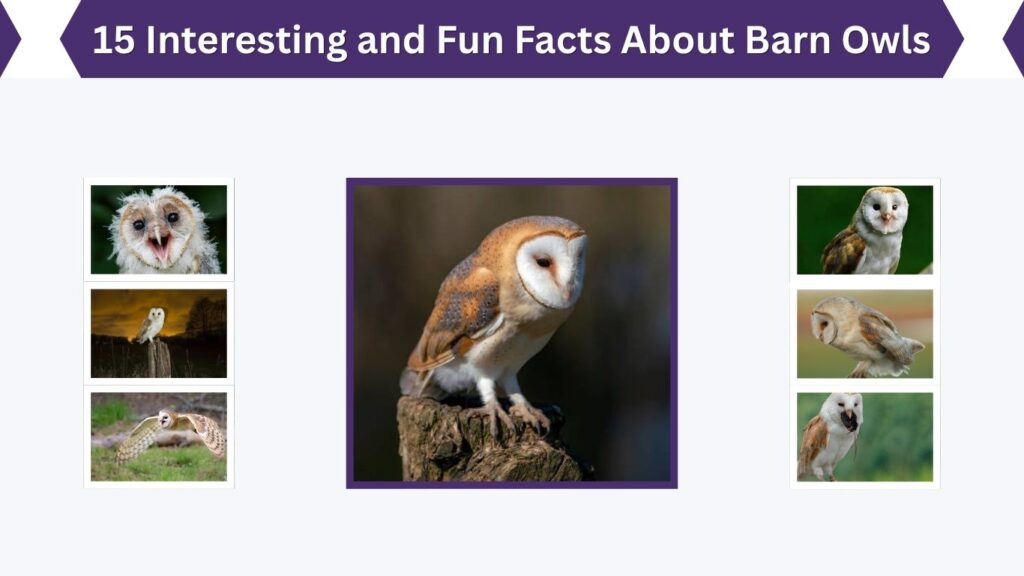
Barn owls possess several remarkable adaptations that distinguish them from other birds of prey. Their appearance, hunting techniques, communication, and reproductive behavior make them particularly interesting to study.
1. Barn Owls Have Heart-Shaped Faces
One of the most recognizable barn owl facts is their unusual heart-shaped facial disc. This structure consists of specially arranged feathers surrounding the eyes and beak.
The facial disc helps collect and direct sounds toward the owl’s ears. It provides a significant advantage when locating small animals moving through grass, especially during nighttime hunting.
2. Barn Owls Can Fly Almost Silently
Barn owls possess specialized wing feathers that significantly reduce flight noise. Their soft feather surfaces and comb-like leading edges help minimize turbulence and sound.
This adaptation allows them to approach prey without being easily detected. Quiet flight also helps barn owls hear small movements beneath them while flying across fields and grasslands.
3. Barn Owls Have Extraordinary Hearing
Barn owls have some of the most sensitive hearing abilities studied in birds. Their ears are positioned asymmetrically, with one opening slightly higher than the other.
This arrangement helps them determine the direction and elevation of sounds. Experiments have demonstrated that barn owls can locate and capture prey in complete darkness using hearing alone.
4. Barn Owls Do Not Make Traditional Hooting Sounds
Unlike many other owl species, barn owls do not produce the familiar deep hooting calls.
Instead, they communicate through harsh screeches, hissing noises, and softer calls. Adult males frequently produce loud screams during flight, while young owls make repeated begging sounds when hungry.
Their unusual vocalizations are especially noticeable around nesting locations after sunset.
5. Barn Owls Are Excellent Nighttime Hunters
Barn owls are primarily active at night, although they sometimes hunt around dawn and dusk.
Their excellent low-light vision, sensitive hearing, and quiet flight make them effective predators. They typically fly slowly above open fields, searching for movements and sounds produced by small mammals.
Once prey is detected, they descend and capture it using their sharp talons.
6. Barn Owls Swallow Small Prey Whole
Barn owls often swallow small rodents whole instead of tearing them into pieces.
However, they cannot completely digest fur, bones, and other hard materials. These indigestible remains are compressed into pellets and later regurgitated.
Scientists examine barn owl pellets to identify prey species and study local ecosystems. A single pellet may contain several small bones and skull fragments.
7. Barn Owls Help Control Rodent Populations
Barn owls are natural predators of mice, rats, voles, and other small mammals.
By consuming rodents, they help regulate prey populations in agricultural landscapes. This makes them valuable members of farmland ecosystems.
Farmers and conservation groups sometimes encourage barn owl nesting by installing suitable nest boxes near open hunting habitats.
8. Barn Owls Can Turn Their Heads Remarkably Far
Barn owls have limited eye movement, so they depend heavily on moving their heads to observe their surroundings.
Like many other owls, they can rotate their heads approximately 270 degrees in either direction.
Specialized neck anatomy and blood vessels allow this impressive movement without damaging circulation to the brain.
9. Barn Owls Are Found Across Much of the World
The barn owl group has an exceptionally wide geographic distribution.
Related barn owl species occur across North America, South America, Europe, Africa, Asia, and Australia. They are absent from Antarctica and some extreme environments.
Their adaptability allows them to occupy various open landscapes, including agricultural regions, deserts, grasslands, and wetlands.
10. Barn Owls Often Nest in Human Structures
Barn owls frequently establish nesting sites inside barns, abandoned buildings, church towers, and other quiet structures.
They also use hollow trees, natural cavities, cliffs, and specially designed nest boxes.
Unlike many birds, barn owls do not construct elaborate nests from twigs. Instead, they often lay eggs on accumulated debris, including previously regurgitated pellets.
11. Baby Barn Owls Hatch at Different Times
Female barn owls generally lay several eggs over multiple days.
Incubation begins before the entire clutch is completed, meaning the chicks hatch at different times. Consequently, siblings within the same nest may vary considerably in size.
Newly hatched barn owls are covered in white down and depend entirely on their parents for food and protection.
12. Female Barn Owls Are Often Larger Than Males
Female barn owls are generally slightly larger and heavier than males, although individual sizes overlap.
Females also frequently display more dark spotting on their undersides.
These differences can help researchers distinguish the sexes, but appearance alone is not always sufficient for accurate identification.
13. Barn Owls Can Live More Than 15 Years
Many barn owls experience relatively short lifespans in the wild because of food shortages, harsh weather, accidents, and other dangers.
Research in Britain indicates that average survival is particularly low during the first year.
Nevertheless, some individuals live much longer. The oldest recorded American Barn Owl survived for at least 15 years and five months.
14. Barn Owls Are Usually Monogamous
Barn owls generally form breeding pairs and may remain together across multiple nesting seasons.
Male barn owls perform courtship displays and often bring food to females before egg-laying begins.
During incubation, the male typically supplies food while the female remains near the eggs. Both parents contribute to raising young as they develop.
15. Barn Owls Can Catch Prey Without Seeing It
Perhaps one of the most amazing barn owl facts is their ability to hunt using sound alone.
Their facial discs gather sound waves, while their asymmetrical ears help pinpoint the exact location of prey.
This remarkable sensory system allows them to detect rodents concealed beneath vegetation, even when visual information is unavailable.
Barn Owl Habitat Facts: Where Do They Live?
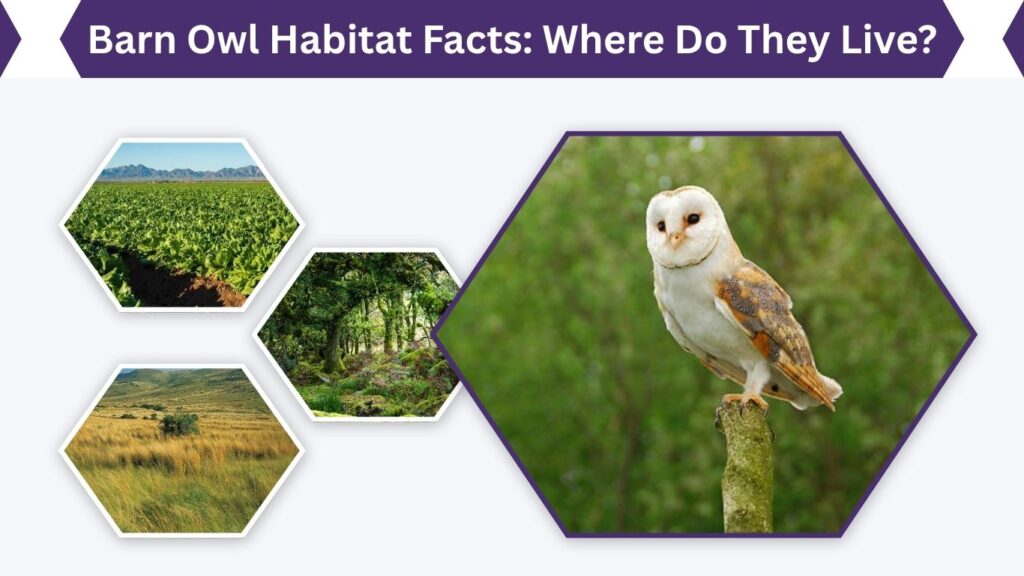
Barn owls prefer open habitats that provide good opportunities for hunting small mammals. Grasslands, meadows, agricultural fields, marshes, and countryside landscapes are particularly suitable.
They generally require quiet nesting locations near productive feeding areas. Old barns, hollow trees, abandoned structures, and artificial nest boxes can provide shelter.
Although barn owls can tolerate some human activity, extensive habitat changes can reduce suitable hunting grounds and nesting opportunities.
Their distribution also depends on climate, food availability, and local landscape conditions.
Barn Owl Diet Facts: What Do Barn Owls Eat?
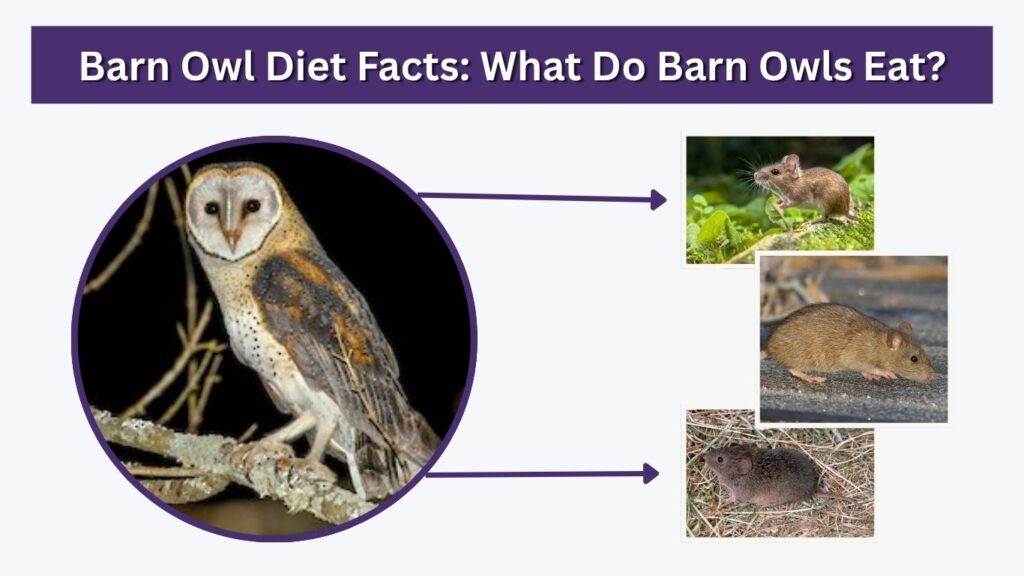
Barn owls are carnivorous predators that primarily consume small mammals. Their diet varies according to location, season, and available prey.
Common barn owl food sources include:
- Mice: Frequently captured around farms and grasslands.
- Voles: Important prey in many temperate regions.
- Rats: Captured when small enough to handle.
- Shrews: Common prey in suitable habitats.
- Small birds: Occasionally eaten when opportunities arise.
Barn owls generally hunt by flying low over vegetation and listening carefully for prey. Their specialized feathers, hearing, and sharp talons make them effective hunters.
Barn Owl Breeding and Reproduction Facts
Barn owl breeding seasons vary according to geographic location and food availability.
Females often produce clutches of approximately four to seven white eggs, although clutch sizes can be smaller or considerably larger. Incubation typically lasts around 29–34 days.
The chicks hatch helpless and remain dependent on adults for several weeks. Young barn owls usually begin leaving the nest at around seven to eight weeks, although they may continue receiving food from their parents.
In favorable conditions, some barn owl pairs can raise more than one brood in a year.
Barn Owl Facts for Kids
Barn owls are interesting birds for children learning about wildlife and nature. Their unusual faces, mysterious nighttime behavior, and impressive hunting skills make them easy to remember.
Here are five simple barn owl facts for kids:
- Barn owls have white, heart-shaped faces.
- They can fly very quietly through the air.
- Barn owls eat small animals such as mice.
- Baby barn owls are called owlets.
- Barn owls make screeching sounds instead of ordinary hoots.
These birds also help keep ecosystems balanced by eating rodents.
FAQs
1. What are three interesting facts about barn owls?
Barn owls have heart-shaped faces that help direct sound toward their ears, specialized feathers that allow quiet flight, and exceptional hearing that enables them to locate prey in complete darkness.
2. Are barn owls rare?
Barn owls are widespread globally, but their abundance varies significantly by region. Some local populations are declining because of habitat loss, reduced nesting opportunities, vehicle collisions, and rodenticide exposure.
3. Are barn owls dangerous to humans?
Barn owls are generally not dangerous to humans. They typically avoid people and prefer escaping disturbances. However, adults may defend themselves when threatened, especially near nests containing eggs or young.
4. What is special about barn owl eyes?
Barn owls have large, dark, forward-facing eyes that provide excellent low-light vision. Their eyes move very little within their sockets, so they rely on flexible neck movements to observe their surroundings.
5. Why are barn owls important to the environment?
Barn owls help regulate small mammal populations, particularly rodents living in agricultural and grassland habitats. Their presence supports natural food-web balance, while their pellets provide useful information about local prey species.