Barn owl sounds are among the most unusual bird calls heard at night. Unlike many other owl species, barn owls do not produce the familiar deep hooting sound. Instead, they communicate through sharp screeches, harsh screams, hissing noises, and softer calls. These sounds help them attract mates, defend nesting areas, and communicate with their young. Understanding the different barn owl sounds can help you identify these mysterious nocturnal birds and recognize what their calls mean in the wild.
What Does a Barn Owl Sound Like?
The most common barn owl sound is a long, harsh screech that resembles a high-pitched scream rather than a traditional owl hoot. This distinctive vocalization often lasts around two seconds and can sound startling when heard in the darkness.
Barn owls produce several recognizable sounds, including:
- Screeching: A loud, drawn-out scream commonly associated with adult barn owls.
- Hissing: A forceful warning sound directed at potential threats.
- Snoring: A rhythmic, raspy begging call frequently made by young barn owls.
- Chirping: Shorter contact calls used during interactions between adults and chicks.
- Clicking: Bill-snapping noises sometimes produced when an owl feels threatened.
Although these sounds vary in purpose, the loud screech is generally the easiest barn owl call to recognize.
Listen to Barn Owl Sounds and Calls
Listening to actual barn owl recordings is one of the easiest ways to understand their unusual vocalizations. Their screams, hisses, and begging calls can sound surprisingly different from one another.
You can hear authentic recordings from these wildlife organizations:
- Cornell Lab – American Barn Owl Sounds — Adult calls and juvenile vocalizations.
- Barn Owl Trust – Screeching and Begging Calls — Audio recordings of adult screeches and young owlets.
- Cornell Bird Academy – Owl Call Comparison — Compare barn owl calls with those of other owl species.
These recordings are especially helpful for identifying unfamiliar bird sounds near farms, open fields, and wooded landscapes.
Different Barn Owl Sounds and Their Meanings
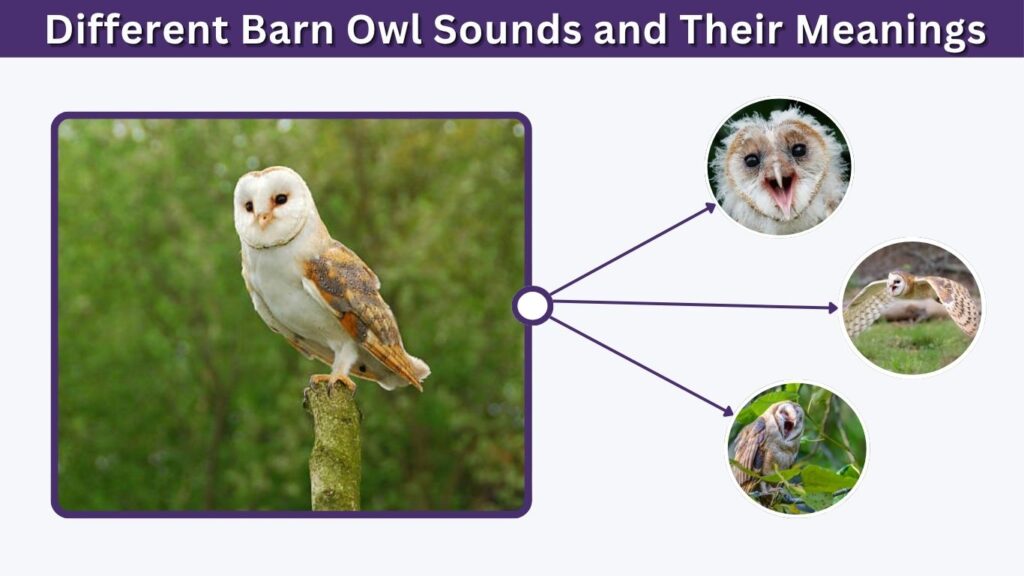
Barn owls use different vocalizations depending on their behavior, age, and surroundings. Each call serves a particular purpose, whether communicating with a partner, warning predators, or requesting food.
1. Barn Owl Screeching Sound
The barn owl screech is its most recognizable vocalization. It produces a loud, piercing scream that can carry across open landscapes.
Male barn owls frequently make this sound while flying, particularly during breeding-related activity. The screech may be repeated several times, creating an eerie nighttime atmosphere.
This distinctive sound is often described as a sharp, raspy shriek rather than a musical bird call.
2. Barn Owl Hissing Sound
Barn owls produce loud hissing noises when they feel threatened or disturbed. These sounds are particularly common around nests containing eggs or young chicks.
A defensive hiss may last several seconds and is sometimes accompanied by threatening body movements.
Both adults and young owls can hiss to discourage predators from approaching.
3. Barn Owl Clicking Sound
Barn owl clicking sounds are usually created by snapping the upper and lower parts of the bill together.
This behavior often occurs when an owl is agitated or responding to a nearby threat.
Unlike screaming calls, clicking produces short, sharp noises rather than prolonged vocalizations. It is one of the less frequently noticed barn owl sounds.
4. Barn Owl Snoring Sound
The barn owl snoring sound is a rhythmic, raspy noise commonly produced by hungry chicks.
Young owls repeat this call while waiting for their parents to deliver food. The noise can resemble heavy breathing, snoring, or repeated wheezing.
Adult females may also make similar begging calls during the breeding period.
5. Barn Owl Chirping and Chattering Sounds
Barn owls also produce quieter chirps, twitters, and chattering noises during close interactions.
These calls may occur when adults deliver food, chicks greet their parents, or family members communicate around a nesting site.
Although less dramatic than a barn owl scream, these softer vocalizations are an important part of communication.
Barn Owl Sounds at Night: Why Do They Scream?
Barn owls are primarily nocturnal, meaning they are most active after sunset. Their nighttime sounds are often heard around grasslands, farmland, barns, and other open hunting areas.
A barn owl may scream at night during courtship, while communicating with another owl, or when expressing alarm.
Breeding activity can increase the number of calls heard around nesting areas. Young owlets may also produce continuous begging noises when they become hungry.
However, barn owls do not scream constantly while hunting. They generally move quietly through their environment, relying on exceptional hearing to detect small mammals.
Hearing repeated screeches at night may indicate that a barn owl is active nearby, but the sound alone cannot establish exactly what the bird is doing.
Baby Barn Owl Sounds: What Do Young Owls Sound Like?
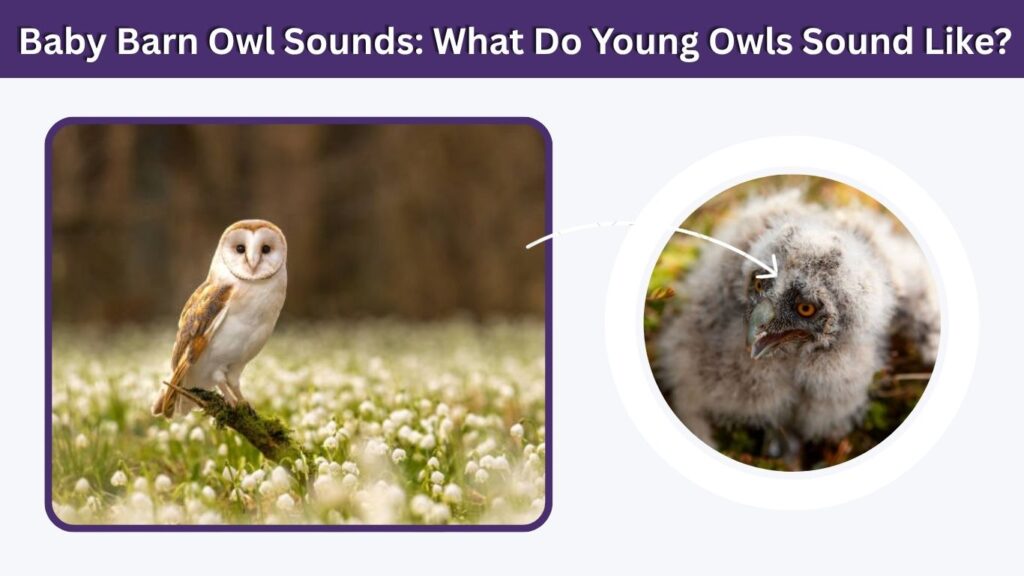
Baby barn owl sounds differ considerably from those of mature birds. Instead of producing strong adult screeches, young chicks commonly make raspy hissing and snoring-like begging calls.
These sounds become especially noticeable when a parent approaches the nest with food.
As chicks mature, their vocalizations gradually develop. Older juveniles may begin producing calls resembling those of adult barn owls even before they leave the nest.
Young barn owls can be surprisingly noisy, particularly when several hungry chicks occupy the same nesting site.
Male and Female Barn Owl Sounds
Male and female barn owls share several vocalizations, but they may use them differently.
The male commonly produces the characteristic loud screech, sometimes repeating it during flight. Females also scream but generally use this call less frequently.
During courtship, males may produce softer, wavering purring calls that encourage females to inspect potential nesting locations.
Female barn owls can use similar soft calls when requesting food from their partners.
Barn owl mating sounds are therefore not limited to screaming. Quieter calls and food-related communication also play important roles in pair bonding.
Do Barn Owls Hoot Like Other Owls?
No, barn owls do not produce the familiar deep, rhythmic hooting associated with many other owl species.
Their typical call is a harsh scream, whereas species such as the barred owl produce recognizable sequences of hoots.
The difference is especially useful when identifying birds by sound alone.
| Owl species | Typical sound |
| Barn owl | Long, harsh screech |
| Barred owl | Rhythmic series of hoots |
| Great horned owl | Deep, resonant hooting |
| Eastern screech-owl | Trembling trill or descending whinny |
Although these species can sometimes be confused visually, their characteristic calls are usually quite different.
American Barn Owl Sounds vs. Other Barn Owls
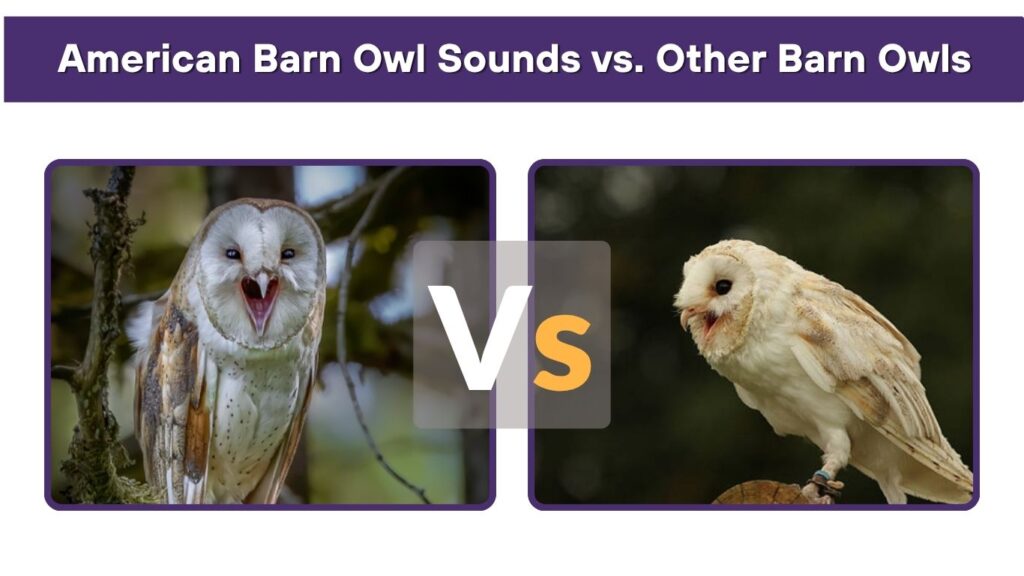
Barn owls occur across several continents, and their calls can vary among populations and individuals.
American barn owls are particularly well known for their harsh screeching calls. Barn owls found in Europe, Asia, and Australia also produce screams, hisses, and softer communication sounds.
Modern bird classifications distinguish American, Western, and Eastern barn owls as separate species. Despite these distinctions, they share many characteristic vocal behaviors.
Recordings from your local region are generally the most useful when trying to identify a barn owl by sound.
FAQs
1. What is the most common barn owl sound?
The most recognizable barn owl sound is a long, harsh screech or scream. It typically lasts around two seconds and is especially associated with adult males.
2. Why do barn owls scream at night?
Barn owls may scream at night during courtship, communication, or defensive interactions. These calls can become more noticeable during the breeding season.
3. What does a barn owl screech sound like?
A barn owl screech sounds like a piercing, raspy scream rather than a traditional owl hoot. It may be repeated several times.
4. Do baby barn owls make sounds at night?
Yes. Baby barn owls frequently produce hissing or snoring-like begging sounds at night, particularly when waiting for their parents to bring food.
5. Do barn owls make noise when flying?
Barn owls generally fly very quietly because of specialized wing feathers that reduce flight noise. However, they can produce vocal calls while airborne.