Barn owls are skilled nocturnal hunters that primarily feed on small mammals such as mice, voles, rats, and shrews. Their excellent hearing, sharp talons, and nearly silent flight allow them to capture prey in grasslands, farmland, and open countryside. Although rodents form most of their diet, barn owls occasionally eat birds, bats, amphibians, and reptiles. Understanding what barn owls eat reveals their hunting behavior, feeding habits, and important role in controlling rodent populations naturally.
What Do Barn Owls Eat in the Wild?
Barn owls are carnivorous birds of prey that mainly eat small mammals. Their diet varies depending on geographical location, available prey, habitat, and seasonal conditions.
In Britain, field voles, common shrews, and wood mice are particularly important food sources. American barn owls also hunt rats, lemmings, and other small rodents.
Barn owls prefer prey they can capture with their talons and swallow whole or consume in manageable pieces. Although they occasionally catch larger animals, small mammals remain their primary source of nutrition.
10 Best Foods That Barn Owls Eat
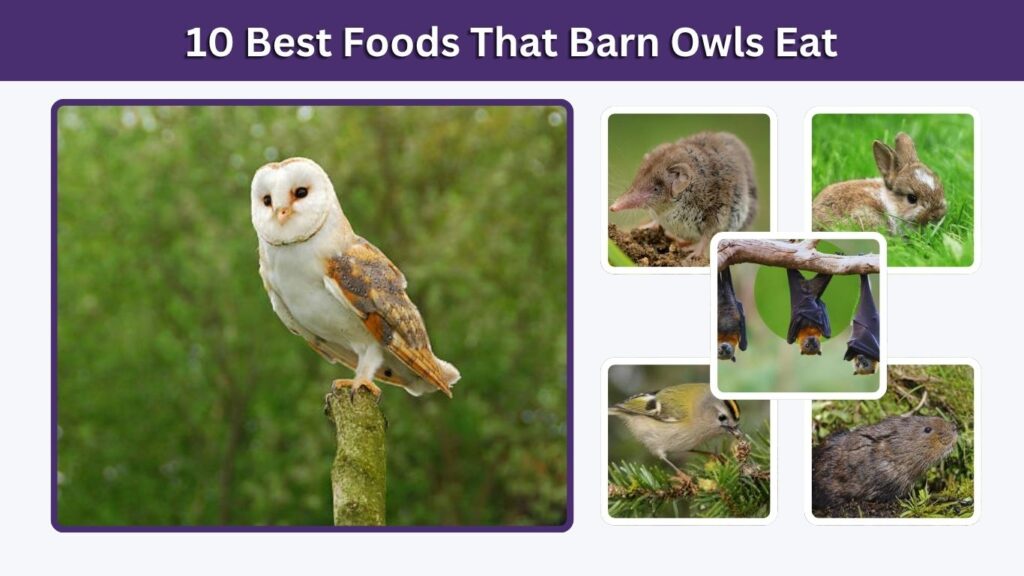
Barn owls consume a variety of animals, but not all prey types are equally important. The following ten foods include their most common prey and several occasional food sources found in different habitats.
1. Voles
Voles are among the most important food sources for barn owls, particularly in grassland habitats. These small, stocky rodents live among dense grasses and frequently move along narrow pathways through vegetation.
Barn owls locate voles by listening for movements beneath the grass. Their specialized hearing allows them to pinpoint prey even when it is difficult to see.
Field voles account for a substantial proportion of barn owl diets in parts of Britain. Their abundance makes rough grasslands particularly valuable hunting environments.
2. Mice
Mice are another major component of the barn owl’s natural diet. Barn owls regularly hunt wood mice, house mice, and other small mouse species.
Agricultural fields, barns, and rural buildings provide suitable environments for mice, making these areas attractive to hunting owls.
Mice are relatively easy for barn owls to capture and swallow whole. Their availability throughout much of the year makes them a dependable food source.
By consuming mice, barn owls naturally help regulate local rodent populations.
3. Rats
Barn owls also eat rats, especially smaller individuals and juveniles. Young rats are easier to capture and handle than fully grown adults.
Rats are commonly encountered around farms, agricultural buildings, and areas where food waste or grain attracts rodents.
Although rats can provide substantial nutrition, their larger size makes some individuals challenging prey.
Unfortunately, barn owls that consume poisoned rats may suffer secondary rodenticide poisoning. This makes responsible pest management essential in areas supporting wild owls.
4. Shrews
Shrews are small insect-eating mammals frequently hunted by barn owls. Despite resembling mice, they belong to a different group of mammals.
Common shrews and pygmy shrews are recorded in barn owl diets, particularly in Europe.
Their small size makes them suitable prey, while their movement through grass and ground vegetation exposes them to hunting owls.
Shrews are particularly important in habitats where other small mammals are less abundant.
5. Lemmings
Lemmings are small rodents that can occasionally become part of barn owl diets in regions where their geographical ranges overlap.
These animals inhabit northern grasslands and tundra environments, although barn owls are not typical high-Arctic hunters.
Like voles, lemmings are ground-dwelling rodents that provide useful nutrition when available.
However, lemmings are not a major food source for most barn owl populations. Their importance depends heavily on regional distribution and environmental conditions.
6. Young Rabbits
Barn owls occasionally catch very young rabbits when suitable opportunities arise.
Newborn or small juvenile rabbits are more manageable prey than adults, which are generally too large for barn owls to capture and carry.
Rabbit hunting is considerably less common than hunting mice, voles, or shrews.
In regions where rabbits are abundant, young individuals may supplement the owl’s regular diet, although they do not replace small rodents as its primary food source.
7. Bats
Bats are uncommon but documented prey for barn owls. These nocturnal mammals may occasionally be caught near roosting sites or during flight.
Because bats are agile flyers, capturing them can be more challenging than catching ground-dwelling rodents.
Barn owls are primarily adapted to hunting mammals moving through open grassland, rather than pursuing flying animals.
As a result, bats usually represent only a small proportion of recorded prey.
8. Small Birds
Barn owls sometimes eat smaller birds, including starlings, blackbirds, and meadowlarks.
Birds may be captured while resting or during encounters around suitable hunting locations.
However, bird hunting is generally less common because barn owls specialize in finding ground-dwelling mammals.
Small birds become occasional alternatives when opportunities arise, but rodents remain the preferred and most frequently consumed prey.
Large birds, including adult chickens, are not typical barn owl prey.
9. Frogs
Frogs are occasional food sources for barn owls, especially in environments containing wetlands, ponds, or damp grasslands.
Barn owls may capture small frogs when hunting near these areas.
However, amphibians contribute relatively little to their overall diet in most regions.
Frogs are generally opportunistic prey rather than a regular food source. Their consumption depends on local availability and hunting conditions.
10. Lizards and Small Snakes
Barn owls can occasionally consume small reptiles, including lizards and snakes.
These animals are more likely to appear in diets where suitable reptiles and barn owls share the same habitat.
However, most barn owls primarily hunt small mammals rather than reptiles.
Small snakes and lizards are therefore best considered occasional prey, not essential components of the barn owl’s natural diet.
How Do Barn Owls Hunt and Eat Their Prey?
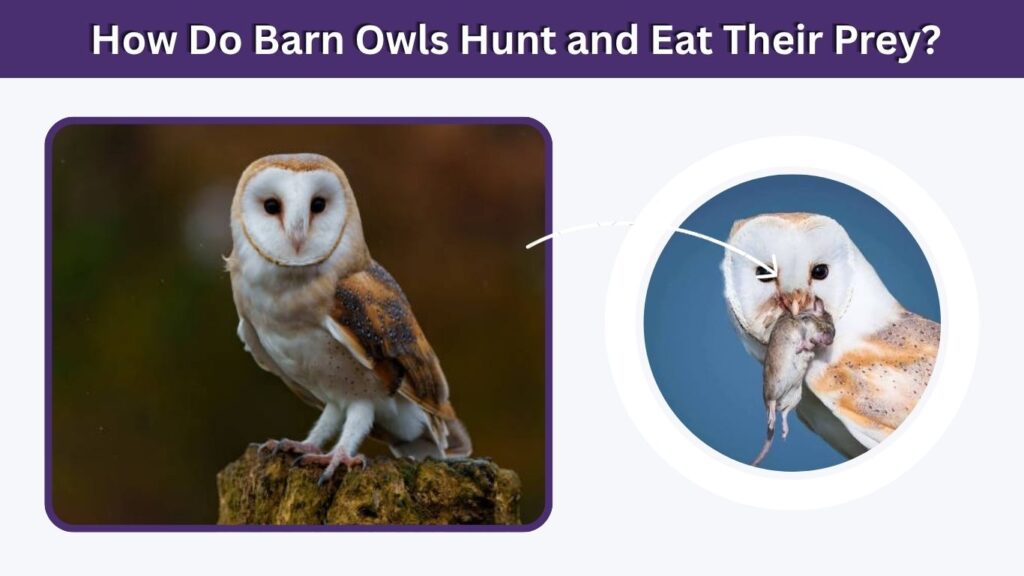
Barn owls mainly hunt at night, although they may also be active around dawn and dusk.
They fly slowly above fields and grasslands, listening carefully for sounds made by small animals.
Once prey is located, the owl dives downward and grabs it using its sharp talons.
Smaller animals are often swallowed whole, including their bones and fur. Larger prey may be torn into manageable pieces.
Because barn owls cannot digest fur and bones completely, they later regurgitate compact pellets containing these materials.
Scientists examine barn owl pellets to identify prey species and study local food webs.
How Much Do Barn Owls Eat Per Day?
An adult barn owl typically consumes approximately three to four small prey animals per night, although this varies considerably.
The amount depends on prey size, environmental temperature, hunting success, and breeding requirements.
A barn owl feeding several hungry owlets may need to capture considerably more prey than an adult feeding only itself.
During winter, cold temperatures increase energy demands, while rain, wind, and snow can make hunting more difficult.
Barn owls in professional care require suitable whole-prey diets rather than ordinary meat scraps.
Do Barn Owls Eat Cats or Chickens?
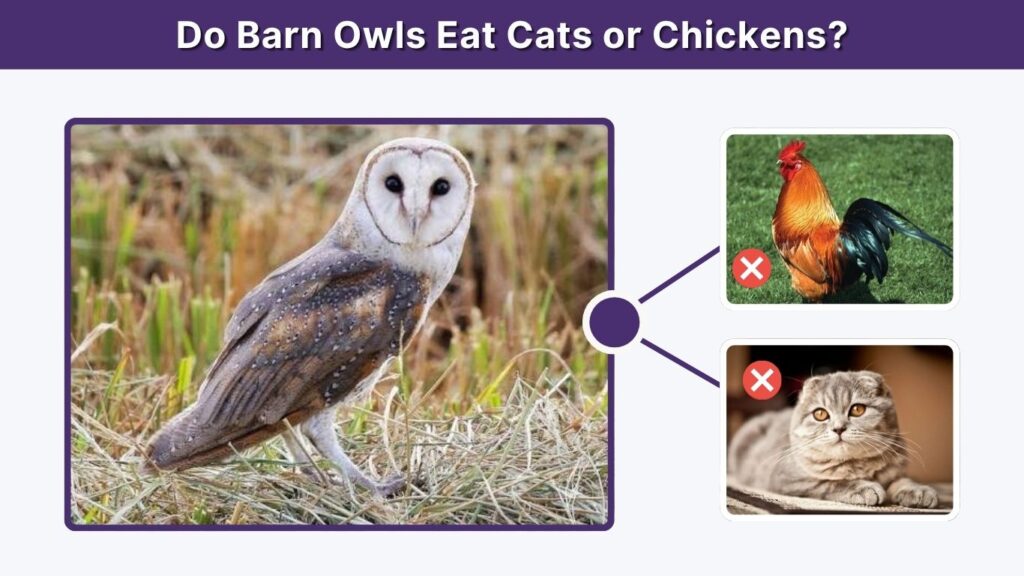
Barn owls do not normally hunt domestic cats or adult chickens.
Healthy cats are generally too large and potentially dangerous for barn owls to attack as prey.
Similarly, adult chickens are substantially larger than the rodents barn owls typically hunt.
Very small chicks might theoretically be vulnerable under unusual circumstances, but chickens are not part of the barn owl’s normal wild diet.
If poultry or pets are disappearing, larger predators such as foxes, raccoons, or other birds of prey may be more likely explanations, depending on the location.
What Animals Eat Barn Owls?
Although barn owls are effective predators, they sometimes become prey themselves.
Their natural enemies include:
- Great horned owls: Powerful predators capable of killing barn owls.
- Eagles: Some large eagle species occasionally prey on barn owls.
- Hawks and buzzards: Certain raptors attack barn owls.
- Foxes: May catch vulnerable owls, especially young or injured individuals.
- Snakes: Some species prey on eggs or nestlings.
Adult barn owls face fewer natural predators than their eggs and chicks, but they are not completely protected from predation.
FAQs
1. Do barn owls eat squirrels or chipmunks?
Barn owls rarely hunt squirrels or chipmunks because these animals are mostly active during daylight hours. Barn owls generally hunt at night, when mice, voles, and other nocturnal rodents are more available.
2. What do baby barn owls eat?
Baby barn owls eat small mammals supplied by their parents. Very young owlets receive appropriately sized pieces of prey, while older chicks can swallow small animals whole. Their diet mainly includes mice, voles, and shrews.
3. Do barn owls eat fish or insects?
Barn owls rarely eat fish or insects, although occasional consumption has been recorded. They are primarily mammal hunters, with rodents providing most of their nutritional requirements. Fish and insects are not normal staple foods.
4. What do barn owls eat in winter?
Barn owls continue eating small mammals during winter, especially mice, voles, rats, and shrews. However, heavy snow, strong winds, and prolonged rainfall can reduce hunting success and cause serious food shortages.
5. How many mice can a barn owl eat in one night?
A barn owl may eat approximately three to four mouse-sized prey animals in one night. Actual consumption varies with the size of the prey and the owl’s energy needs. Breeding adults may capture additional animals for their chicks.