The barn owl is one of the world’s most recognizable birds of prey, famous for its heart-shaped face, ghostly white feathers, and nearly silent flight. Unlike many other owls, barn owls produce harsh screeching calls rather than traditional hooting sounds. These nocturnal hunters help control rodent populations in grasslands, farms, and open countryside. This guide explores fascinating barn owl facts, including their appearance, sounds, size, wingspan, habitat, diet, nesting behavior, and unique hunting abilities.
What Is a Barn Owl?
The barn owl is a medium-sized, mostly nocturnal bird of prey belonging to the family Tytonidae. Its distinctive appearance and exceptional hearing make it one of the most remarkable owl groups.
Barn owls were historically grouped under the scientific name Tyto alba. However, a taxonomic revision recognized three major species:
- Western Barn Owl (Tyto alba): Found across Europe, Africa, and parts of western Asia.
- American Barn Owl (Tyto furcata): Native to North, Central, and South America.
- Eastern Barn Owl (Tyto javanica): Found throughout parts of Asia and the Pacific region.
Although their appearances vary slightly, these owls share similar hunting behaviors, facial structures, and habitat preferences.
Barn Owl Identification and Appearance
Barn owls have several distinctive physical characteristics that make them relatively easy to identify. Their most recognizable feature is a heart-shaped facial disc that helps collect and direct sounds toward their ears.
Key Identification Features
- Face: White or cream-colored, distinctly heart-shaped.
- Eyes: Large, dark brown to black.
- Body: Slender, with pale underparts.
- Feathers: Golden-brown, gray, and white, often with small spots.
- Head: Rounded without visible ear tufts.
- Wings: Long, broad, and rounded.
- Legs: Relatively long, with powerful talons.
Some barn owls appear almost completely white, especially when viewed in flight at night. Others have darker golden or cinnamon-colored feathers.
Unusually dark or melanistic individuals can occur, but naturally bright blue barn owls are not a recognized color variety.
Barn Owl Size and Wingspan
Barn owls are medium-sized compared with other owl species. Their long wings make them appear considerably larger when flying than when perched.
Typical American barn owl measurements include:
| Feature | Measurement |
| Body length | 12.6–15.8 inches (32–40 cm) |
| Wingspan | 39.4–49.2 inches (100–125 cm) |
| Weight | 14.1–24.7 ounces (400–700 g) |
| Eye color | Dark brown to black |
| Body shape | Slender with long wings |
Female barn owls are often slightly heavier and darker than males, although individual differences are common.
Measurements vary by geographical region and species.
What Does a Barn Owl Sound Like?
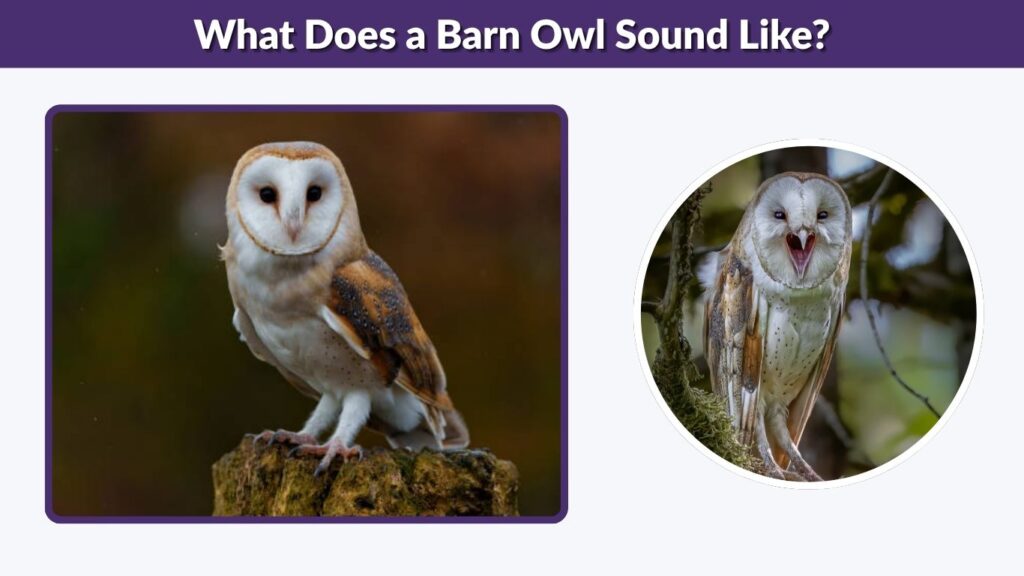
Barn owl sounds are surprisingly different from the familiar hooting calls associated with many other owls.
The most recognizable barn owl call is a long, harsh screech lasting approximately two seconds. It can sound like a piercing scream or an eerie, raspy cry.
Common Barn Owl Vocalizations
Screeching calls: Adult barn owls produce loud, sharp screams, often during flight. Males commonly use these calls when communicating.
Hissing sounds: Barn owls may hiss loudly when threatened or disturbed around their nests.
Purring calls: Softer, wavering vocalizations occur during courtship and interactions between mates.
Baby barn owl sounds: Young owlets make repeated hissing and begging noises to request food from their parents.
Barn owl vocalizations are particularly noticeable after sunset. You can hear authentic recordings through the Cornell Lab’s American Barn Owl sound library.
Where Do Barn Owls Live?
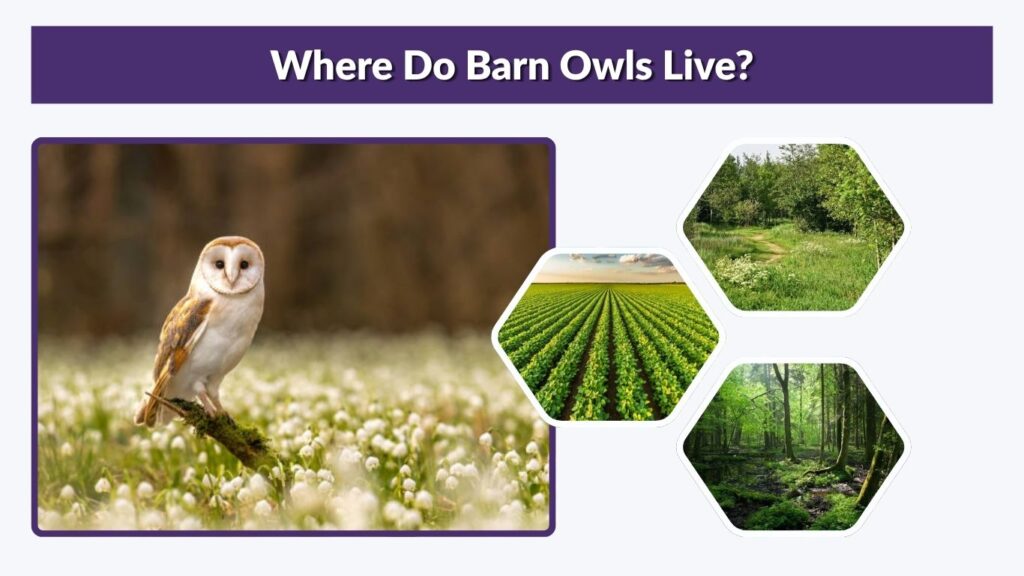
Barn owls inhabit open landscapes where they can easily hunt small mammals. Collectively, barn owl species occur across much of the world, except Antarctica.
Common Barn Owl Habitats
- Open grasslands and meadows
- Agricultural fields and farmland
- Marshes and wetlands
- Rural buildings and abandoned barns
- Woodland edges and open scrublands
- Quiet countryside near human settlements
Barn owls generally prefer open hunting grounds rather than dense forests.
During daylight hours, they rest in sheltered places such as tree cavities, barns, abandoned buildings, and other quiet structures.
Their distribution depends on available prey, suitable nesting locations, climate, and regional environmental conditions.
What Do Barn Owls Eat?
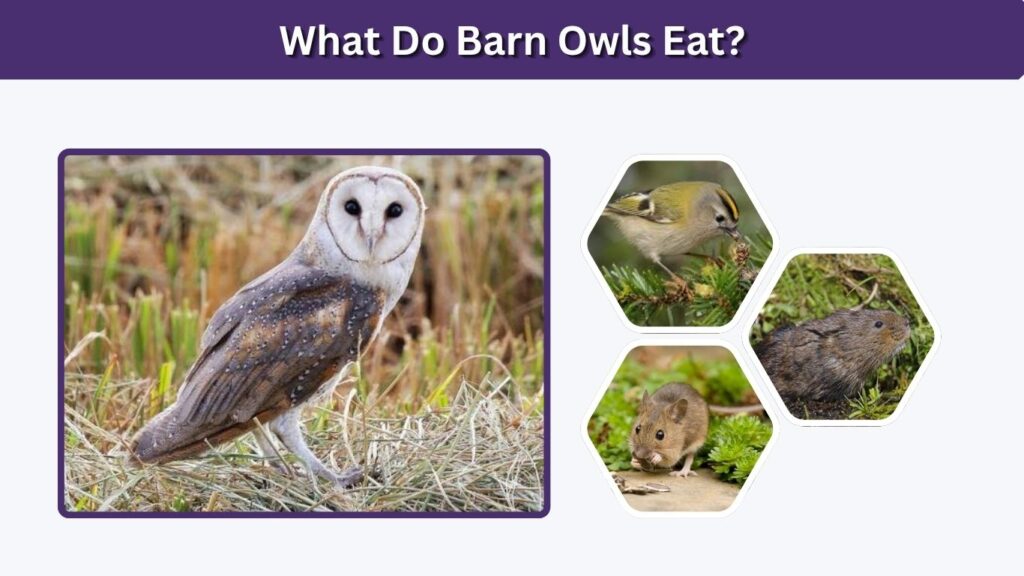
Barn owls are carnivorous predators that primarily feed on small mammals. Their hunting activities make them valuable natural rodent controllers.
Their main food sources include:
- Mice: Common prey in fields and agricultural environments.
- Voles: Particularly important in grassland habitats.
- Rats: Frequently hunted where suitably sized individuals are available.
- Shrews: Small mammals captured during nighttime hunting.
- Small birds: Occasionally eaten when available.
- Bats and other animals: Less common dietary items.
Barn owls often swallow small prey whole. Later, they regurgitate compact pellets containing indigestible fur and bones.
Scientists examine barn owl pellets to identify prey species and better understand local ecosystems.
How Do Barn Owls Fly Silently?
One of the most fascinating barn owl facts is their ability to fly with remarkably little sound.
Their feathers have specialized structures that reduce airflow noise. Soft feather surfaces and fringed wing edges help minimize turbulence during flight.
This adaptation offers two important advantages.
First, it allows barn owls to approach prey without producing obvious wing noise. Second, quieter flight helps them hear subtle movements in grass or vegetation.
Barn owls typically fly low over open fields, using slow wingbeats and controlled gliding movements.
Their highly sensitive hearing allows them to locate small rodents even in extremely poor visibility.
Barn Owl Nesting and Breeding Habits
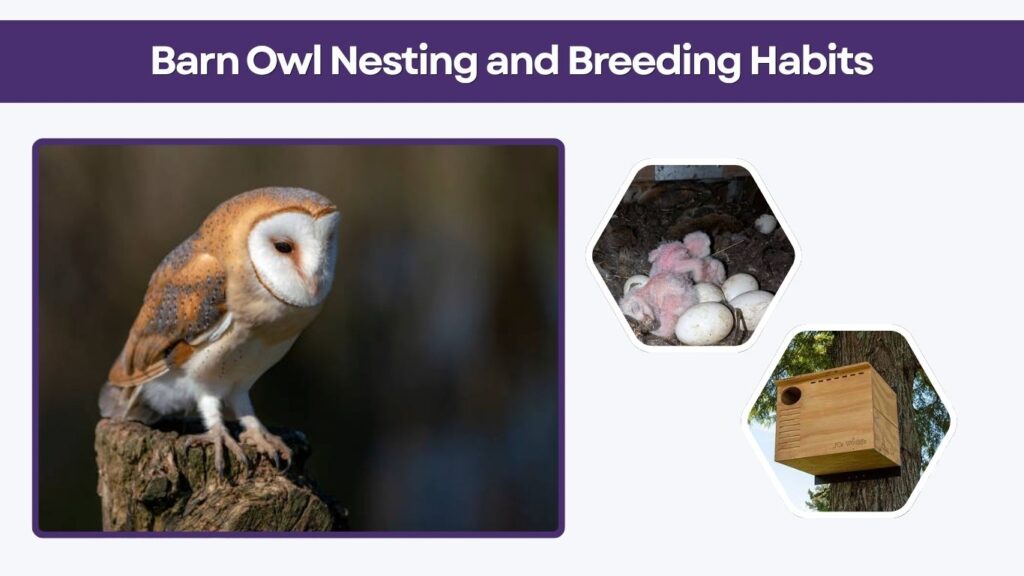
Barn owls commonly nest in cavities, sheltered building spaces, and specially designed nesting boxes.
Unlike many smaller birds, barn owls do not construct elaborate nests from twigs and leaves. Instead, females may lay eggs on accumulated debris and broken-up pellets.
Barn Owl Nesting Facts
- Nesting locations: Tree cavities, barns, buildings, and nest boxes.
- Egg color: Usually dull white.
- Clutch size: Variable, often several eggs.
- Incubation period: Approximately 29–34 days for American barn owls.
- Parental care: Both parents contribute to raising their young.
The female generally incubates the eggs while the male supplies food during the early breeding period.
Barn owls may return to suitable nesting locations in subsequent breeding seasons.
Barn Owl Nest Boxes
A properly designed barn owl nest box can provide a safe breeding location where natural cavities are limited.
Boxes should offer sufficient internal space, weather protection, and a safe entrance that prevents young owls from falling prematurely.
Placement depends on local conditions, but sheltered locations overlooking suitable open hunting habitat are generally preferred.
Baby Barn Owl: Appearance and Development
A baby barn owl, also called an owlet, looks noticeably different from an adult.
Newly hatched owlets are covered in soft white down and are completely dependent on their parents for food and warmth.
As they grow, their feathers develop, their facial discs become more defined, and their bodies begin to resemble adult barn owls.
Young American barn owls typically remain in the nest for approximately 50–55 days.
During this period, parents deliver small mammals to support their development.
Young owls gradually strengthen their wings and develop the flying and hunting skills needed for independence.
Barn Owl vs Barred Owl: Key Differences
Although their names sound similar, barn owls and barred owls are distinctly different birds.
| Feature | Barn Owl | Barred Owl |
| Face | Heart-shaped | Round |
| Body color | Pale white and golden-brown | Brown and white |
| Sound | Harsh screech | Rhythmic hooting |
| Habitat | Grasslands and farmland | Forests and wooded wetlands |
| Body shape | Slim | Larger and stockier |
| Family | Tytonidae | Strigidae |
Barred owls are especially recognizable for their patterned feathers and classic hooting calls.
Barn owls, in comparison, have lighter plumage, a distinctive heart-shaped face, and a preference for open hunting environments.
Interesting Barn Owl Facts
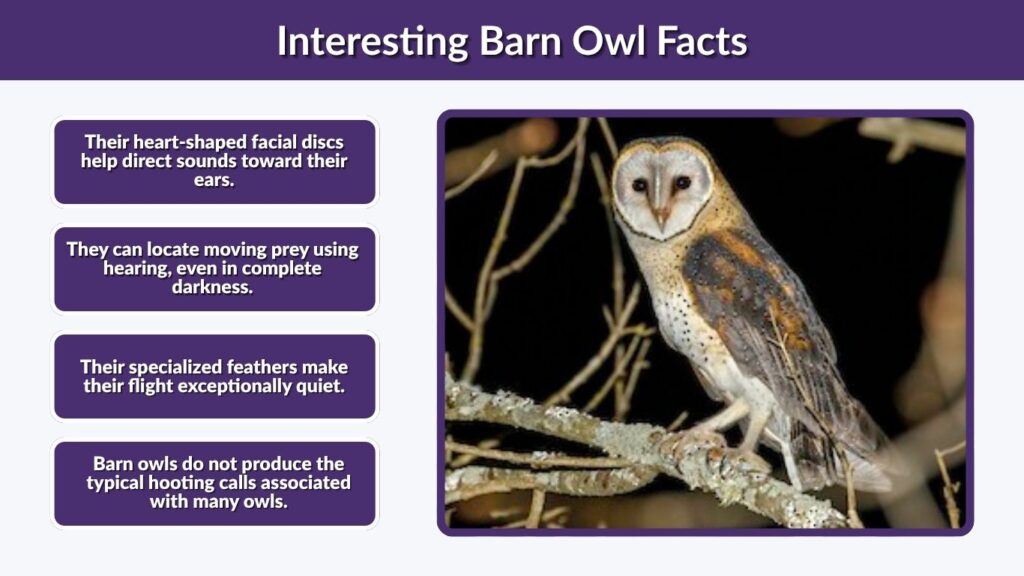
Barn owls possess several remarkable adaptations that distinguish them from other birds of prey.
- Their heart-shaped facial discs help direct sounds toward their ears.
- They can locate moving prey using hearing, even in complete darkness.
- Their specialized feathers make their flight exceptionally quiet.
- Barn owls do not produce the typical hooting calls associated with many owls.
- They regurgitate pellets containing undigested prey remains.
- Their long wings allow them to glide efficiently above open fields.
- Barn owls sometimes hunt during daylight, particularly when food is scarce.
These adaptations make barn owls highly effective predators in agricultural and grassland ecosystems.
Barn Owl Conservation and Threats
Although barn owls are widespread, some regional populations face significant environmental pressures.
Major threats include habitat loss, declining prey populations, collisions with vehicles, and exposure to rodenticides through poisoned prey.
The disappearance of old barns and hollow trees can also reduce available nesting locations.
Conservation efforts often focus on maintaining rough grasslands, protecting suitable nesting sites, installing properly designed nest boxes, and reducing harmful rodent-control chemicals.
Preserving healthy hunting habitat is essential for supporting local barn owl populations.
FAQs
1. Are barn owls dangerous to humans?
Barn owls generally avoid human contact and are not considered dangerous under normal circumstances. However, they have sharp talons and may defend themselves or their nests when threatened. Observing them from a respectful distance is the safest approach.
2. Do barn owls hoot or screech?
Barn owls primarily produce harsh screeching calls rather than the familiar rhythmic hooting associated with many other owl species. They also make hissing, purring, and begging sounds during different social interactions.
3. Are barn owls active during the day?
Barn owls are primarily nocturnal, hunting mostly at night. However, they sometimes become active during daylight hours, particularly around dawn and dusk or when increased food demands require additional hunting.
4. How long do barn owls live?
Barn owl lifespan varies with species, habitat, and environmental conditions. Many wild individuals die relatively young because of starvation, accidents, and predation. However, some individuals survive for more than ten years under favorable circumstances.
5. Why are barn owls called ghost owls?
Barn owls are sometimes called ghost owls because of their pale coloration, nearly silent flight, and eerie nighttime screams. Their white feathers can appear ghostlike when illuminated by moonlight or artificial lighting.