Have you ever wondered what great grey owls eat while hunting silently through forests and snowy landscapes? These impressive birds are skilled predators that rely primarily on small mammals for survival. Despite their enormous appearance, great grey owls prefer relatively small prey, especially voles, mice, and pocket gophers. Their exceptional hearing allows them to locate hidden animals even beneath thick snow. Understanding the great grey owl’s diet reveals how these remarkable birds hunt, adapt to seasonal changes, and maintain an important role in forest ecosystems.
What Do Great Grey Owls Eat in the Wild?
Great grey owls (Strix nebulosa) are carnivorous birds that feed primarily on small mammals. Their diet depends on prey availability, geographic location, and seasonal conditions. Voles are particularly important, although these owls also capture other rodents and occasionally birds or amphibians. Their hunting activities typically take place in forest openings, meadows, bogs, and other areas where small mammals are abundant.
Common Foods Great Grey Owls Eat
Great grey owls consume several types of prey, including:
- Voles: Their primary food source across much of their range.
- Mice: Small rodents captured in grassy fields and woodland openings.
- Pocket gophers: Important prey in western North America, especially California.
- Lemmings: Available in northern habitats within the owl’s range.
- Shrews: Occasionally captured while hunting small mammals.
- Moles: Another possible prey item in suitable habitats.
- Chipmunks: Sometimes eaten when available.
- Small birds: Occasional prey rather than a major dietary component.
- Frogs: Rarely consumed, particularly when other prey is scarce.
Why Do Great Grey Owls Prefer Voles?
Voles are particularly suitable prey because they are small, nutritious, and frequently abundant in the open grassy habitats used by great grey owls.
These rodents travel through vegetation and underground tunnels, making them accessible to owls with exceptional hearing.
In some populations, voles account for the overwhelming majority of prey captured. However, their importance varies among regions and years.
How Do Great Grey Owls Hunt Their Food?
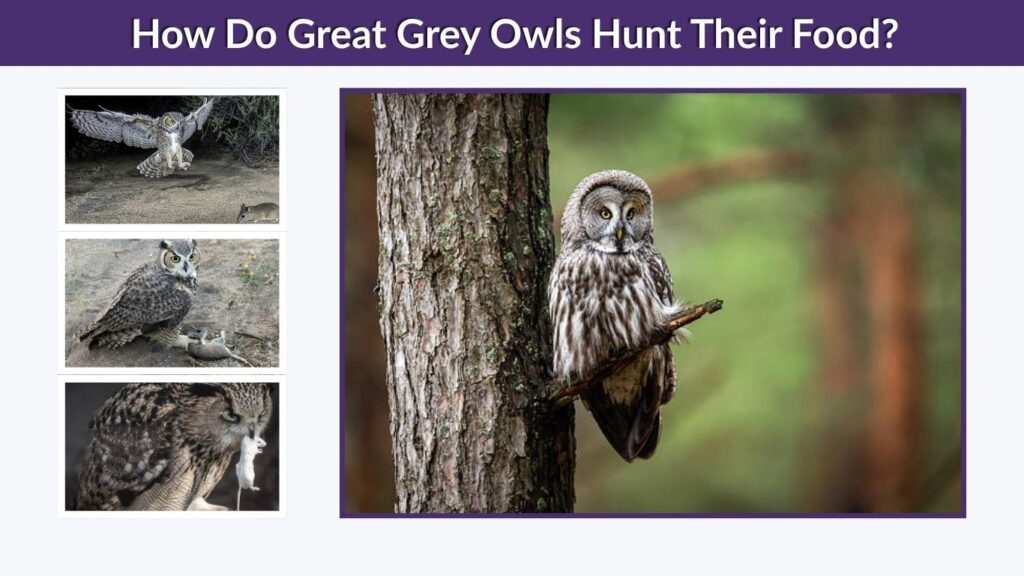
Great grey owls possess specialized adaptations that make them remarkably effective hunters. Their broad wings allow quiet flight, while large facial discs direct sounds toward asymmetrically positioned ears. These features help them pinpoint small mammals hidden in vegetation or beneath snow. Instead of relying entirely on eyesight, they frequently use sound to detect and capture prey.
Hunting With Exceptional Hearing
The great grey owl’s rounded facial disc helps collect and direct faint sounds toward its ears.
Its asymmetrical ear openings allow it to determine the location of a moving animal with remarkable precision.
This adaptation is particularly valuable during winter when small rodents remain hidden beneath snow.
Hunting Beneath Deep Snow
One of the most fascinating great grey owl hunting behaviors involves diving into snow.
After detecting prey movement, the owl may hover briefly before plunging feet-first toward the hidden animal.
Its powerful legs and talons allow it to penetrate compacted snow and capture rodents underneath.
Some great grey owls have even broken through snow crust strong enough to support a person’s weight.
When Do Great Grey Owls Hunt?
Great grey owls commonly hunt around dawn, dusk, and nighttime. However, they also hunt during daylight, especially when feeding developing chicks or meeting increased winter energy requirements.
Their flexible hunting schedule allows them to take advantage of suitable weather and prey activity.
What Do Great Grey Owls Eat in California?
Great grey owls living in California occupy forested mountain environments, particularly around the Sierra Nevada. Their feeding habits differ somewhat from those of populations in northern boreal forests. Voles and pocket gophers are especially important food sources, although their relative contributions change with local prey abundance and environmental conditions.
Voles and Pocket Gophers
California’s great grey owls frequently hunt voles in mountain meadows and adjacent openings.
Pocket gophers also provide valuable nutrition, especially where they are abundant and accessible near the surface.
Research indicates that their diet shifts between these two rodent groups depending on prey availability.
How California Habitat Influences Their Diet
The availability of suitable meadows strongly influences where California’s great grey owls hunt.
Open grassy areas support populations of voles and pocket gophers, while surrounding forests provide nesting locations and shelter.
Changes in meadow vegetation, habitat conditions, or rodent abundance can therefore influence hunting success and reproductive activity.
What Do Great Grey Owls Eat During Different Seasons?
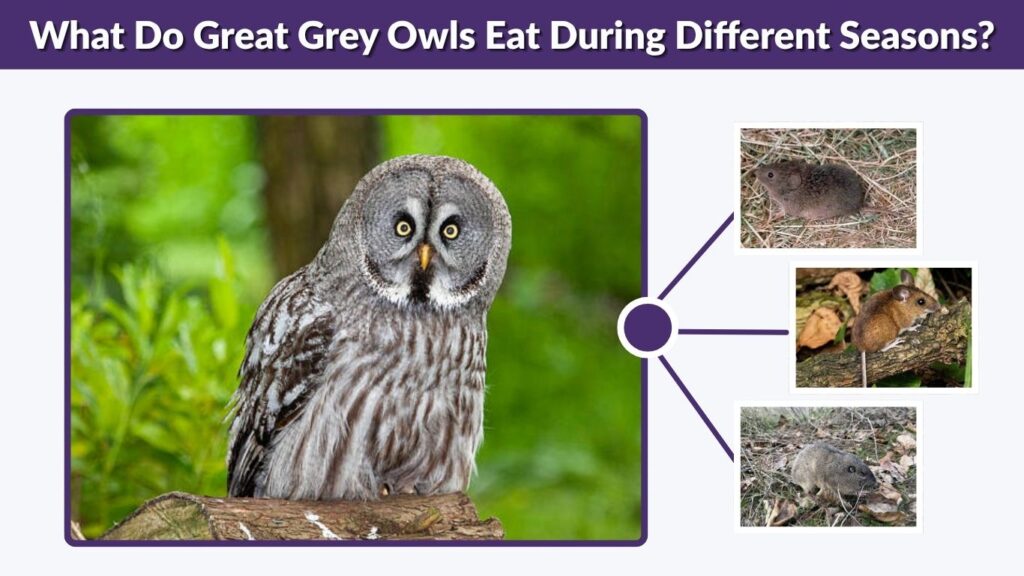
Seasonal conditions affect the types and availability of prey that great grey owls encounter. During warmer months, rodents are generally easier to locate in grassy habitats. Winter snow changes their hunting environment but does not prevent successful feeding. These owls can adjust their activity and hunting locations when food becomes difficult to obtain.
Summer Eating Habits
During summer, great grey owls frequently hunt along forest edges and open meadows.
Their diet generally includes:
- Voles moving through dense grasses.
- Mice living around woodland openings.
- Pocket gophers near meadow surfaces.
- Occasional small birds or other accessible prey.
Breeding adults must also supply food to their growing chicks, increasing hunting demands.
Winter Eating Habits
In winter, great grey owls continue feeding heavily on small mammals, particularly voles.
Their exceptional hearing allows them to locate rodents beneath snow, even when the animals remain completely invisible.
When prey populations decline significantly, some owls move into other areas where food is more abundant.
How Much Food Does a Great Grey Owl Eat?
Although great grey owls appear enormous, much of their body size comes from their thick plumage. Their nutritional needs depend on body size, weather, hunting success, and reproductive activity. They often consume multiple small mammals daily, particularly during cold conditions when maintaining body temperature requires additional energy.
Daily Food Requirements
The number of rodents a great grey owl eats changes with prey size and environmental conditions.
According to the Cornell Lab of Ornithology, great grey owls may consume up to seven vole-sized mammals per day during winter.
Larger prey items can provide more energy per capture, reducing the number of animals needed.
How Do Great Grey Owls Eat Their Prey?
Great grey owls capture animals using sharp talons before transferring them to their beaks.
Small prey may be swallowed whole, while larger prey can be torn into manageable pieces.
Like other owls, they regurgitate pellets containing indigestible material such as bones and fur. Scientists examine these pellets to understand their feeding habits.
What Eats Great Grey Owls?
Although great grey owls are effective predators, they are not completely safe from other animals. Their large body size and defensive behavior discourage many potential threats. However, eggs, nestlings, and young owls are more vulnerable than established adults. Large birds of prey represent some of their most significant natural enemies.
Natural Predators of Great Grey Owls
Great horned owls and northern goshawks are among the predators known to threaten young great grey owls.
These powerful raptors may attack vulnerable juveniles or young birds near nesting areas.
Healthy adult great grey owls face relatively few natural predators, although conflicts with other large raptors can occur.
How Do Great Grey Owls Protect Themselves?
Great grey owls use threatening displays when defending their nests.
They may spread their facial feathers, snap their bills, lower their wings, or vocalize toward intruders.
If these warnings fail, adults may pursue or attack an approaching threat to protect their territory and offspring.
Why Are Great Grey Owls Important to the Ecosystem?
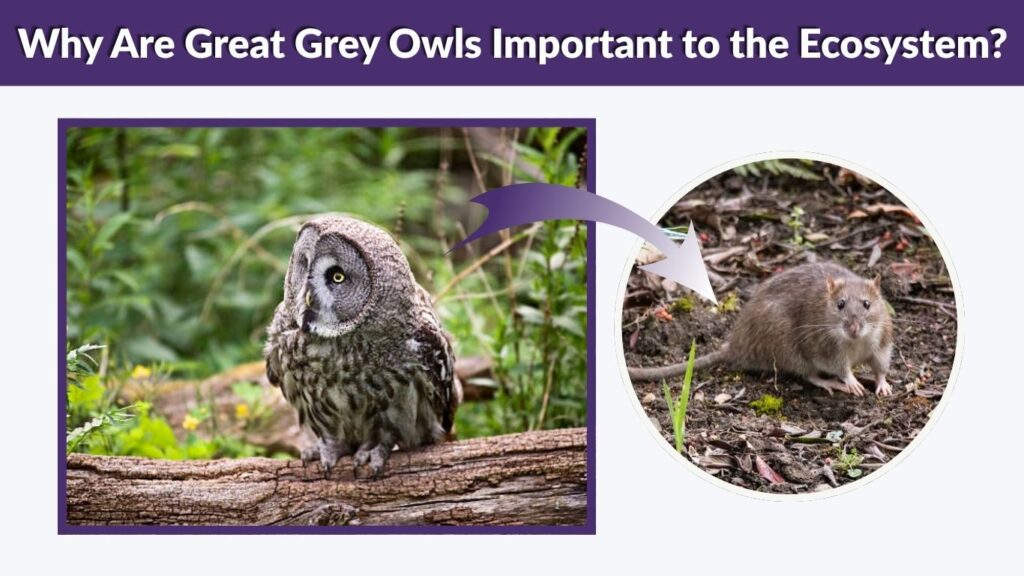
Great grey owls help regulate populations of small mammals in northern forests and mountain ecosystems. Their dependence on rodents links their survival to the health of surrounding meadow habitats. Changes in prey availability can influence their breeding success, movement patterns, and population stability.
Controlling Rodent Populations
By consuming voles, mice, and other small mammals, great grey owls contribute to natural predator-prey relationships.
Their hunting activities help regulate local rodent populations, although population changes also depend on food supplies, weather, and other predators.
Dependence on Healthy Habitats
Great grey owls depend on forests for nesting and nearby openings for hunting.
Protecting these connected habitats supports both the owls and the small mammals they consume.
Maintaining healthy meadow ecosystems is particularly important for populations whose reproduction depends heavily on vole availability.
FAQs
1. What is the favorite food of a great grey owl?
Voles are the primary food source for many great grey owl populations. They also eat pocket gophers, mice, lemmings, and other small mammals.
2. Do great grey owls eat rabbits?
Great grey owls primarily target much smaller mammals. Rabbits are not a regular part of their diet, although occasional unusual prey captures are possible.
3. Do great grey owls eat squirrels?
They can occasionally eat small squirrels or chipmunks, but these animals are less important than voles and other small rodents.
4. What do baby great grey owls eat?
Young great grey owls receive animal prey supplied by their parents. Adults initially provide manageable portions before the young can handle larger food items.
5. Do great grey owls eat other birds?
Yes. Great grey owls occasionally capture small birds, but mammals make up the vast majority of their natural diet.