
The Northern Saw-whet Owl (Aegolius acadicus) is one of North America’s smallest and most secretive owls. With a round head, oversized yellow eyes, and a soft brown-and-white pattern, it often looks almost toy-like. Despite its tiny size, this nocturnal hunter is highly effective at catching mice and other small prey. Northern Saw-whet Owls live mainly in forests across Canada and the United States, with some populations migrating south in fall. This guide covers their size, calls, habitat, diet, range, migration, nesting, lifespan, and key adaptations.
What Is a Northern Saw-Whet Owl?
The Northern Saw-whet Owl is a small woodland owl in the family Strigidae. It is mainly active at night and often remains hidden in dense vegetation during daylight. Its name is thought to come from one of its calls, which early listeners compared with the sound of a saw being sharpened on a whetstone.
Northern Saw-Whet Owl Identification
- Scientific name: Aegolius acadicus
- Small, compact body
- Large rounded head
- No visible ear tufts
- Bright yellow eyes
- Brown upperparts with white spots
- Pale facial disk
- White underparts with brown streaking
- Short tail
- Rounded wings
Juveniles look quite different from adults, with chocolate-brown bodies and warmer buff or orange coloration on the face and breast.
Northern Saw-Whet Owl Size
Northern Saw-whet Owls are very small, measuring roughly 7–9 inches long.
Their wingspan is generally around 16–22 inches, and adults often weigh only a few ounces. Females are usually larger and heavier than males, which is common among many birds of prey.
Despite their small size, they have relatively large heads and powerful feet that help them capture prey efficiently.
Northern Saw-Whet Owl Ears
Owls have ear openings hidden beneath their feathers rather than visible external ears.
The Northern Saw-whet Owl has asymmetrically positioned ear openings, which help it determine where sounds originate. This adaptation allows it to locate small mammals moving through leaves, grass, or snow even when visibility is poor.
Northern Saw-Whet Owl Call and Sounds
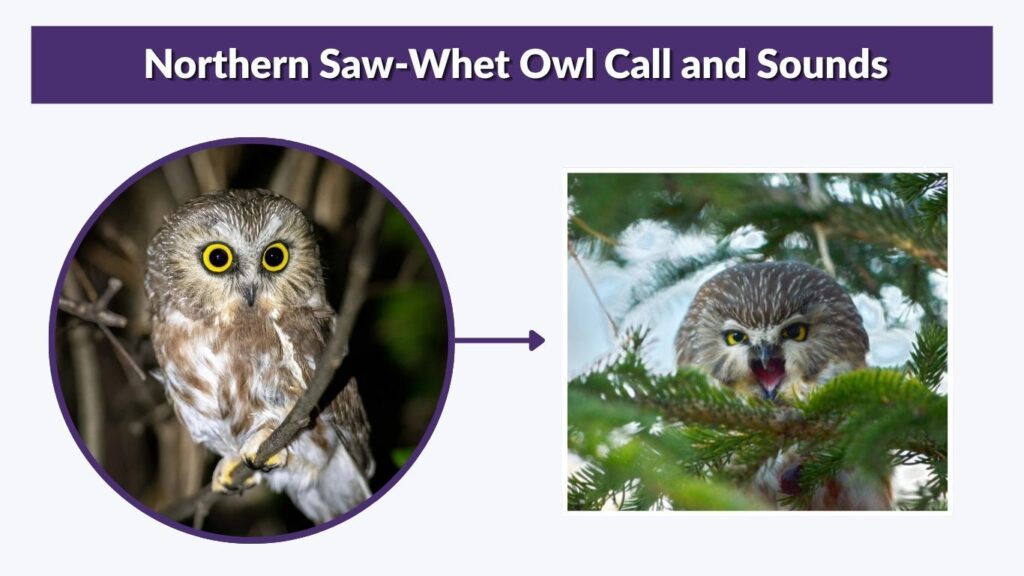
The Northern Saw-whet Owl call is one of the best ways to detect this secretive bird. Because it spends so much time hidden in dense vegetation, many people hear one before they ever see it. Males become particularly vocal during the breeding season, often calling repeatedly from wooded areas after dark.
What Does a Northern Saw-Whet Owl Sound Like?
Its most familiar call is a repeated, high-pitched “toot-toot-toot” delivered at a steady rhythm.
The sound can resemble a distant whistle or electronic beeping. A male may continue this repetitive call for long periods, especially during late winter and spring when trying to attract a mate or advertise territory.
Other Northern Saw-Whet Owl Calls
Besides the familiar repeated whistle, these owls can produce:
- Short squeaks
- Raspy calls
- Rising whistles
- Clicking or snapping sounds
- Soft calls between adults
- Begging sounds from young owls
The exact sound varies with the bird’s age, situation, and behavior.
Northern Saw-Whet Owl Call at Night
Northern Saw-whet Owls are primarily nocturnal, so calling is most commonly heard after sunset.
Breeding males may begin calling shortly after dark and continue intermittently through the night. Calm evenings can make their repetitive whistles travel surprisingly far through a forest.
Northern Saw-Whet Owl Habitat and Range
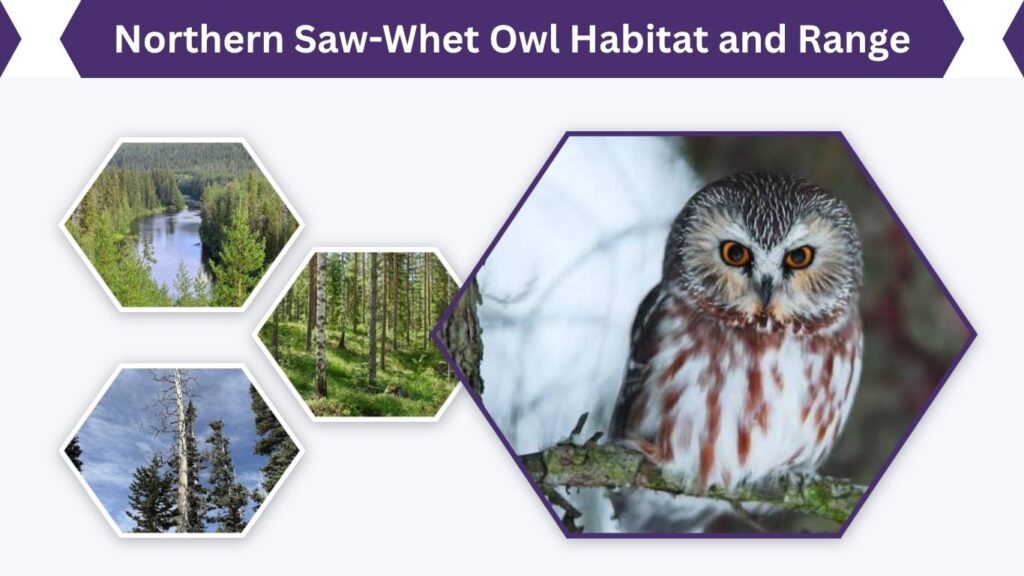
Northern Saw-whet Owls are strongly associated with forested landscapes. They need suitable trees for daytime roosting and cavities for nesting, while nearby clearings and forest edges can provide hunting opportunities. Their distribution shifts seasonally because northern populations may migrate considerable distances during autumn.
Northern Saw-Whet Owl Habitat
Typical habitats include:
- Conifer forests
- Mixed forests
- Deciduous woodlands
- Cedar and spruce stands
- Forest edges
- Riparian woodlands
- Dense young forests
- Wooded swamps
During the daytime, they frequently roost in dense evergreens where branches and foliage help conceal them from predators.
Northern Saw-Whet Owl Range
The species occurs across much of Canada and the United States, with its range extending into parts of Mexico.
Breeding populations are widespread across southern Canada, the northern United States, mountainous western regions, and suitable forests farther south.
During winter, migrating individuals may appear well beyond their main breeding areas.
Northern Saw-Whet Owl Migration
Northern Saw-whet Owls are partial migrants. Some remain within the same general area year-round, while others travel south during autumn.
Migration intensity can change considerably from one year to another. In some fall seasons, large numbers are detected at owl-banding stations, while far fewer may appear in other years.
Young birds make up a substantial portion of many migrating populations.
Northern Saw-Whet Owl Diet
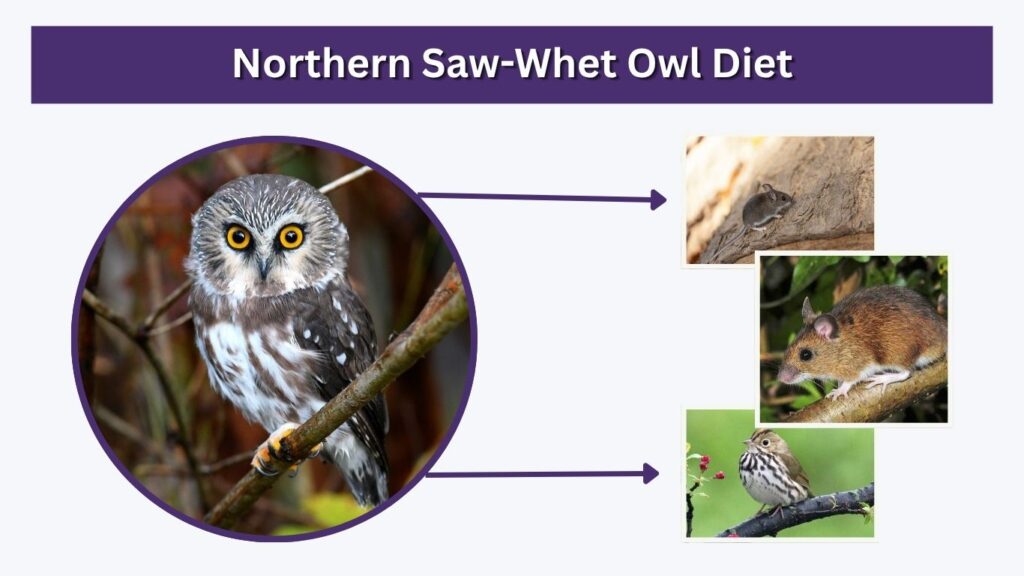
Although tiny, the Northern Saw-whet Owl is a skilled predator. It hunts primarily at night using excellent hearing, low-light vision, and silent flight. Most of its diet consists of small mammals, especially rodents, making it an important predator in forest ecosystems.
What Does a Northern Saw-Whet Owl Eat?
Common prey includes:
- Deer mice
- White-footed mice
- Voles
- Shrews
- Small rats
- Young squirrels
- Small birds
- Large insects
Mice and voles usually make up the majority of its diet.
How Does It Hunt?
A Northern Saw-whet Owl often hunts from a low perch.
It listens and watches for movement before dropping quickly onto prey. Its strong talons grip small mammals, while the hooked beak helps tear food.
Because prey may sometimes be relatively large compared with the owl, it can carry food to a protected perch and consume it in portions.
Northern Saw-Whet Owl Predators
Despite being a predator itself, this tiny owl must avoid larger animals.
Potential predators include larger owls, hawks, and mammals capable of reaching nests or roosting birds. Dense vegetation helps reduce the chance of detection during daylight hours.
Its brown-and-white plumage also provides useful camouflage against bark and branches.
Behavior and Adaptations
The Northern Saw-whet Owl is generally solitary outside the breeding season. Much of its behavior is difficult to observe because it spends daylight hours quietly roosting and becomes active after dark. Its body combines several adaptations that allow such a small bird to hunt successfully at night.
Key Adaptations
- Large eyes for low-light vision
- Highly sensitive hearing
- Asymmetrical ears for locating sounds
- Soft-edged flight feathers for quiet movement
- Strong feet and sharp talons
- Camouflaged plumage
- Dense daytime roosting behavior
Silent flight is especially useful because it allows the owl to approach prey without producing much wing noise.
Northern Saw-Whet Owl Behavior
During the day, a Saw-whet Owl may sit motionless on a branch only a few feet above the ground.
It can tolerate a person standing surprisingly close without immediately flying away, relying heavily on camouflage.
At night, however, it becomes an active hunter, moving between perches while listening for small mammals.
Northern Saw-Whet Owl Nest and Eggs
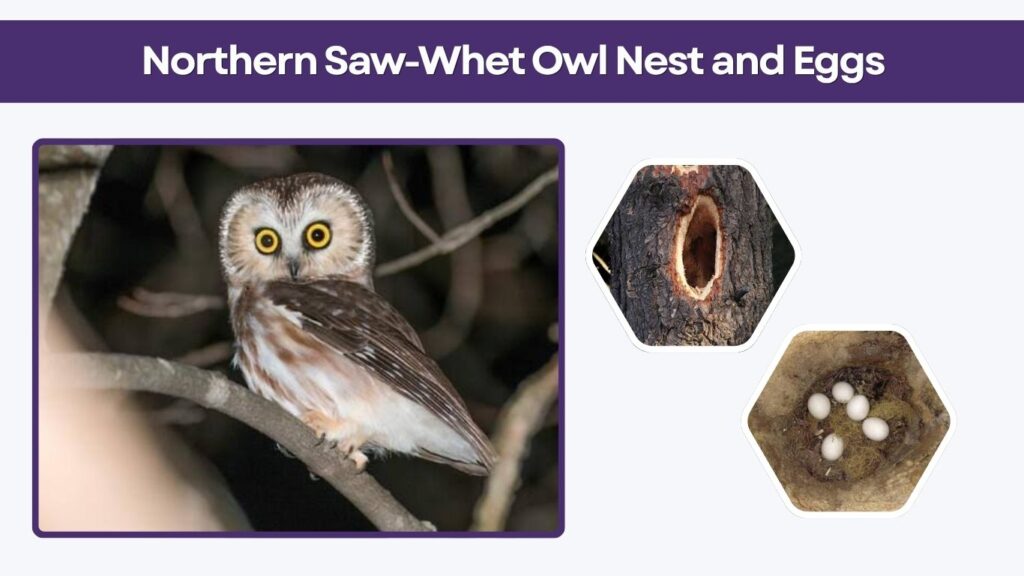
Northern Saw-whet Owls are cavity nesters, but they do not usually excavate their own nesting holes. Instead, females use existing cavities created naturally or by woodpeckers. Appropriate nest boxes may also be accepted in suitable habitat.
Northern Saw-Whet Owl Nest
Nests are commonly located in:
- Old woodpecker holes
- Natural tree cavities
- Dead or decaying trees
- Large branches with cavities
- Properly designed nest boxes
The female generally remains responsible for incubation while the male supplies much of the food during the early nesting period.
Northern Saw-Whet Owl Eggs
Females commonly lay several smooth white eggs.
Eggs are generally laid at intervals rather than all at once. Because incubation can begin before the entire clutch is completed, nestlings may differ noticeably in size.
After hatching, young owls remain in the nest while their parents provide food until they are ready to leave.
Baby Northern Saw-Whet Owls
Young Saw-whet Owls initially have soft down and depend completely on their parents.
As they grow, juveniles develop distinctive chocolate-brown plumage quite different from the spotted adult pattern.
After leaving the nesting cavity, fledglings may remain nearby while improving their flying and hunting abilities.
Northern Saw-Whet Owl Lifespan and Life Cycle
The Northern Saw-whet Owl experiences many hazards despite its effective nocturnal adaptations. Young birds must survive migration, predators, severe weather, and food shortages before reaching adulthood.
Life Cycle
The general life cycle includes:
- Courtship and calling
- Pair formation
- Egg laying
- Incubation
- Hatching
- Nestling development
- Fledging
- Juvenile independence
- Adult breeding
Most nesting occurs during spring, although timing varies with latitude, elevation, and local weather.
How Long Do Northern Saw-Whet Owls Live?
Many wild individuals likely survive only a few years because small birds face considerable natural mortality.
However, banding records show that some Northern Saw-whet Owls can survive for many years under favorable conditions.
Longevity depends on food availability, predation, weather, migration hazards, and habitat quality.
Northern Pygmy-Owl vs. Northern Saw-Whet Owl
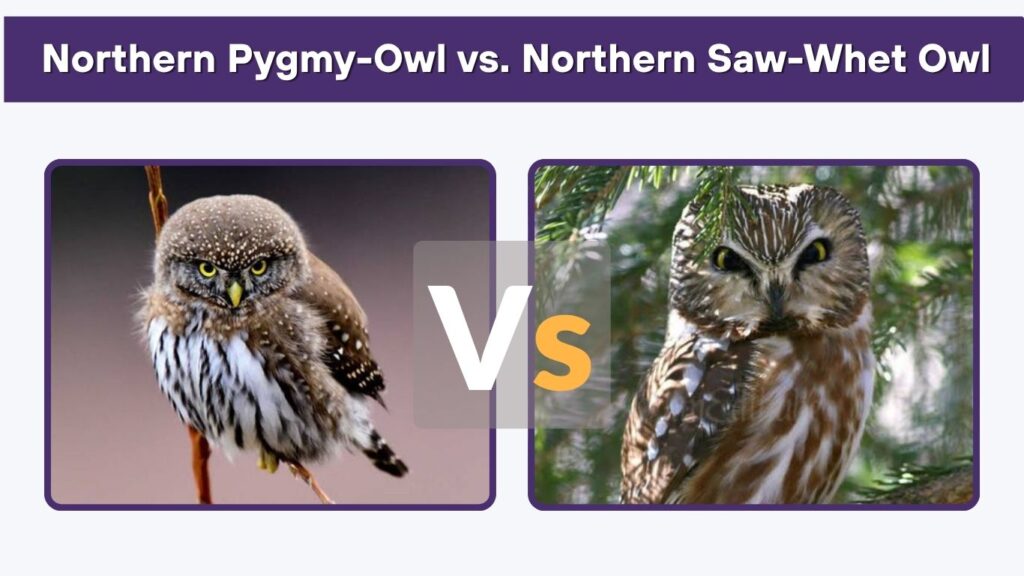
These two small owls can occur in some of the same western regions, but their appearance and behavior differ considerably. The Northern Saw-whet Owl is primarily nocturnal, whereas the Northern Pygmy-Owl is frequently active during daylight.
Key Differences
Northern Saw-whet Owls have proportionally larger heads, obvious facial disks, and brown-and-white spotted plumage. Northern Pygmy-Owls have smaller-looking heads, longer tails, and distinctive dark spots on the back of the head that resemble false eyes.
Saw-whets are mainly night hunters, while Pygmy-Owls often hunt during the day and may prey on birds almost as large as themselves.
FAQs
The Northern Saw-whet Owl is easy to overlook because it combines a tiny body with secretive nighttime behavior. Its distinctive calls, dense roosting habits, and seasonal movements make it one of North America’s most fascinating small owls.
Is the Northern Saw-Whet Owl rare?
It is not generally considered rare across its entire range, but it can be difficult to detect because it is nocturnal, quiet outside the breeding season, and well camouflaged.
How big is a Northern Saw-Whet Owl?
Adults are usually about 7–9 inches long, with a wingspan of approximately 16–22 inches.
What does a Northern Saw-Whet Owl sound like?
Its best-known call is a repeated, high-pitched tooting or whistling sound delivered at regular intervals, especially by males during the breeding season.
What does a Northern Saw-Whet Owl eat?
Its diet consists mainly of small mammals such as mice and voles, along with shrews, small birds, and occasionally insects.
Where does the Northern Saw-Whet Owl live?
It occurs across much of Canada and the United States in forested habitats, particularly coniferous and mixed woodlands. Some populations remain year-round while others migrate south during fall and winter.