
The Eastern Screech Owl (Megascops asio) is a small, well-camouflaged owl found across much of eastern North America. Despite its name, its most familiar sounds are soft trills and descending whinnies rather than harsh screeches. These adaptable nocturnal hunters live in forests, suburban neighborhoods, parks, and backyards where mature trees provide nesting cavities. Eastern Screech Owls occur in both gray and reddish color forms and eat an impressive variety of prey, including insects, mice, small birds, frogs, and other small animals.
Eastern Screech Owl Identification
Eastern Screech Owls are compact birds with rounded heads, prominent feathered ear tufts, and large yellow eyes. Their patterned feathers allow them to blend remarkably well with tree bark, making a motionless owl difficult to notice during daylight hours.
Size and Appearance
Typical characteristics include:
- Scientific name: Megascops asio
- Length of roughly 6–10 inches
- Wingspan around 18–24 inches
- Stocky body
- Large yellow eyes
- Small hooked bill
- Prominent feathered ear tufts
- Heavily patterned plumage
- Feathered legs and powerful talons
Females are generally somewhat larger and heavier than males, although their plumage patterns are very similar.
Gray and Red Morph Eastern Screech Owls
One of the most interesting characteristics of the Eastern Screech Owl is its color variation. Adults occur mainly in gray and rufous, or reddish, forms. Intermediate brownish birds can also occur.
Red Morph Eastern Screech Owl
A red morph may appear:
- Rusty red
- Reddish brown
- Cinnamon
- Orange-brown
- Heavily patterned with darker markings
Gray morph birds have silver-gray or brownish-gray feathers marked with dark streaks and bars.
Both color forms belong to the same species. Their complex patterns create excellent camouflage against tree trunks. Red morphs tend to be more common in some parts of the species’ southern and eastern range.
Eastern Screech Owl Habitat and Range
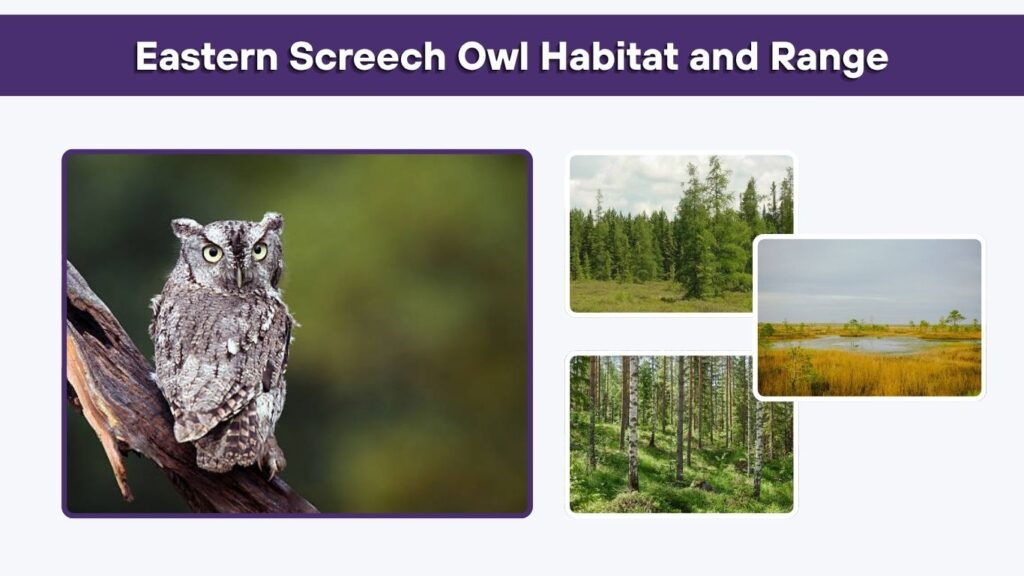
Eastern Screech Owls occupy a remarkably broad variety of wooded environments. They need trees or other structures containing cavities for nesting and roosting but can tolerate substantial human activity.
Where Do Eastern Screech Owls Live?
Suitable habitats include:
- Deciduous forests
- Mixed woodland
- Wooded suburban neighborhoods
- Parks
- Orchards
- Farm edges
- River corridors
- Swamps
- Backyard landscapes with mature trees
Their range extends through much of the eastern United States and into parts of southern Canada and northeastern Mexico.
They occur in states such as Florida, Texas, Michigan, New York, Pennsylvania, and many others within the eastern half of North America.
What Do Eastern Screech Owls Eat?
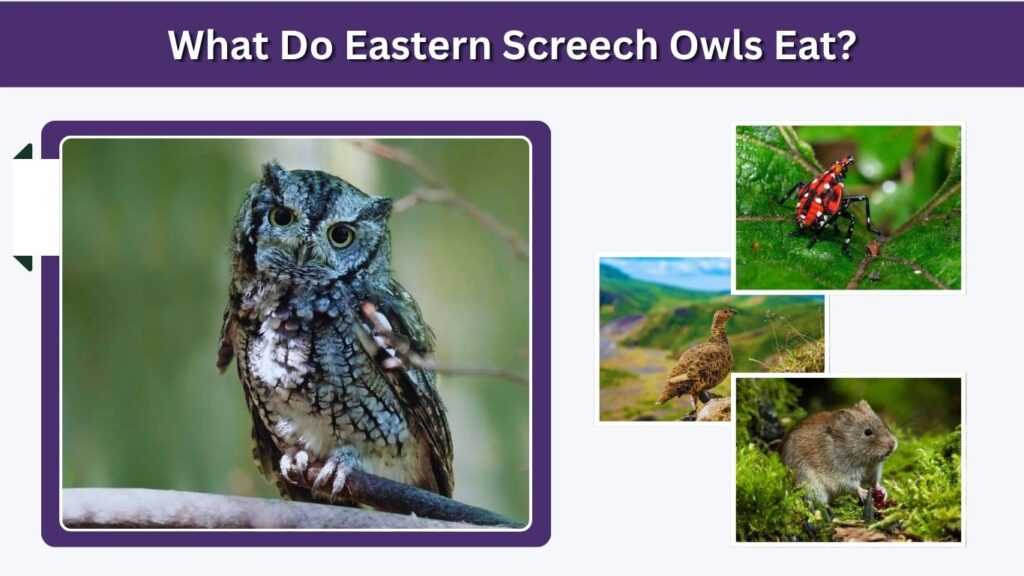
Eastern Screech Owls are opportunistic carnivores. Their diet changes according to season, location, and available prey. Their relatively small body does not prevent them from taking a surprisingly diverse range of animals.
Eastern Screech Owl Diet
Common prey includes:
- Mice
- Voles
- Shrews
- Small rats
- Small birds
- Large insects
- Crayfish
- Frogs
- Lizards
- Small snakes
- Bats
- Occasionally fish
During warmer months, insects may make up a substantial portion of the diet. In colder weather, rodents and birds can become more important.
How Do They Hunt?
Eastern Screech Owls usually hunt from a perch. They remain still while watching and listening for movement, then drop or fly rapidly toward the prey.
Their hunting adaptations include exceptional night vision, sensitive hearing, sharp talons, and specialized wing feathers that help reduce flight noise.
They may also hunt near streetlights, wetlands, woodland openings, and backyard areas where prey is concentrated.
Eastern Screech Owl Sound and Call
The name “screech owl” can be misleading because these owls are famous for musical and eerie vocalizations rather than simply screaming. Their voices are often heard at night long before the birds themselves are spotted.
What Does an Eastern Screech Owl Sound Like?
Two characteristic calls are particularly well known.
The whinny is a descending series of notes that sounds somewhat like a miniature horse. It is commonly associated with territorial or contact communication.
The monotonic trill is a long, steady, vibrating whistle. Mated pairs may use trills to communicate with each other.
Eastern Screech Owls also produce:
- Soft hoots
- Barks
- Screeches
- Alarm calls
- Bill snapping
- Juvenile begging sounds
Calls may become especially noticeable during courtship and breeding periods.
Eastern Screech Owl Nesting
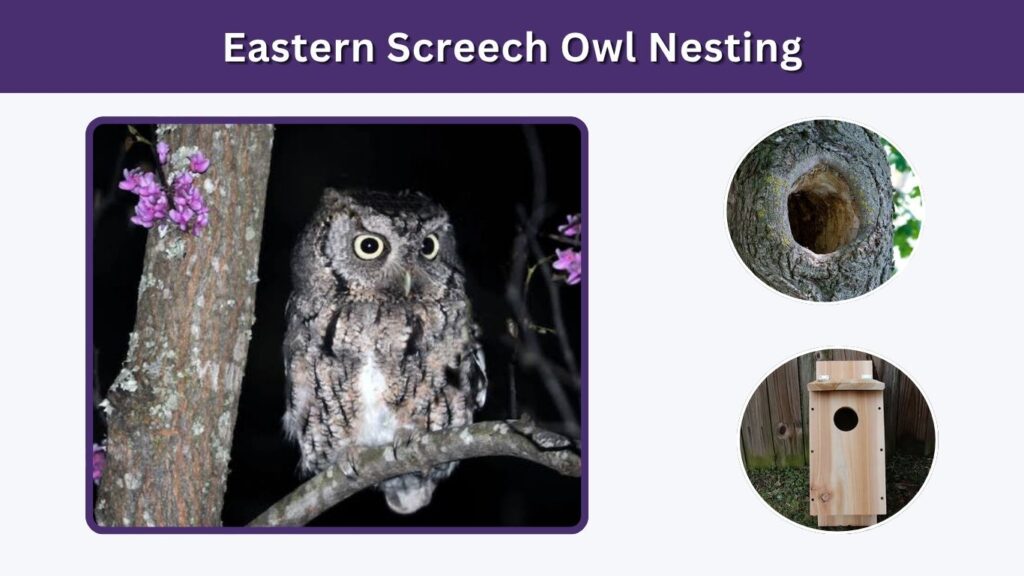
Eastern Screech Owls are cavity nesters. They do not normally excavate their own nest hole, so they depend on natural cavities or holes created by woodpeckers.
They readily accept appropriately designed nest boxes when natural cavities are limited.
Nest and Eggs
Common nesting sites include:
- Hollow trees
- Old woodpecker holes
- Broken tree cavities
- Artificial nest boxes
Females usually lay several white eggs. The female performs most incubation while the male brings food.
After hatching, the owlets remain in the cavity while both parents supply prey.
Eastern Screech Owl Nest Box
A nest box can make a backyard more attractive to Screech Owls when suitable natural cavities are scarce.
Good box placement generally includes:
- A sturdy tree or pole
- Several feet above ground
- A relatively quiet location
- Nearby trees for cover
- Clear access to the entrance
- Protection from excessive disturbance
Avoid placing a box where pets or people frequently disturb nesting birds.
Boxes should be installed well before breeding season so owls have time to investigate them.
Eastern Screech Owl Fledglings
Baby Screech Owls hatch covered with pale down. As they grow, feathers gradually replace the down and their distinctive facial features become more obvious.
When Do Young Owls Leave the Nest?
Young Screech Owls leave the nesting cavity before they are fully independent.
For a period, fledglings may:
- Sit on nearby branches
- Climb around trees
- Make begging calls
- Remain close to siblings
- Continue receiving food from parents
A young owl found on a low branch is not necessarily abandoned. Parents are often nearby and continue feeding fledglings after they leave the nest.
Male vs. Female Eastern Screech Owl
Males and females look extremely similar, making visual identification difficult.
Main Differences
Females are usually larger, while males may have slightly lower or differently patterned vocalizations.
During nesting, their roles also differ. Females perform most incubation and remain with very young chicks, while males provide much of the food during the early nesting period.
Both parents participate in defending and feeding their young.
Eastern Screech Owl Behavior
Eastern Screech Owls are mainly nocturnal, becoming active around dusk and remaining active through the night.
During daylight, they often roost inside cavities or sit motionless against tree trunks where their feathers provide exceptional camouflage.
Are Eastern Screech Owls Aggressive?
They generally avoid people but can defend nests aggressively.
Their defenses may include:
- Alarm calls
- Bill snapping
- Diving at intruders
- Spreading wings
- Protective behavior around young
Giving nesting owls adequate space is the safest approach.
Eastern Screech Owl Lifespan and Predators
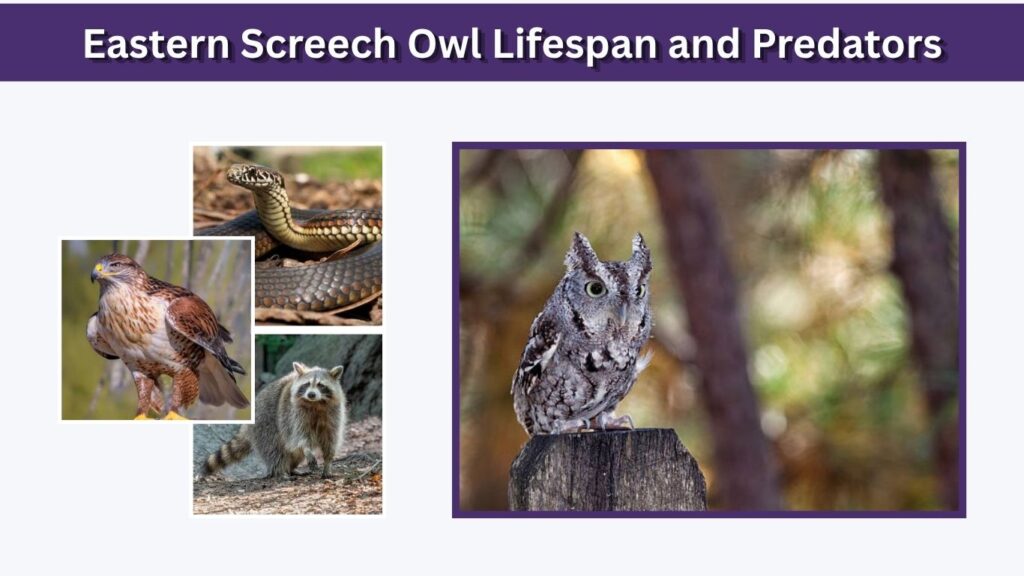
Eastern Screech Owls face substantial risks, particularly when they are young.
Potential predators include larger owls, hawks, raccoons, snakes, and other animals capable of reaching nest cavities.
Adult owls also face human-related threats such as vehicle collisions and habitat loss.
How Long Do Eastern Screech Owls Live?
Many wild individuals do not survive their first few years, but those that avoid predators and accidents can live considerably longer.
Food availability, nesting habitat, weather, disease, and predation all influence survival.
Protecting large trees and natural cavities can benefit local populations because suitable nest sites may be limited.
Eastern vs. Western Screech Owl
Eastern and Western Screech Owls look similar but are separate species.
The Eastern Screech Owl occurs primarily across eastern North America, while the Western Screech Owl occupies much of western North America.
Their ranges, calls, and some plumage characteristics differ. Geographic location and vocalization are often more useful for identification than appearance alone.
Frequently Asked Questions
Are Eastern Screech Owls nocturnal?
Yes. They are primarily nocturnal and perform most hunting after sunset, although they may occasionally become active near dawn or during daylight.
Do Eastern Screech Owls migrate?
Most are year-round residents rather than long-distance migrants. Individual birds may make local movements depending on food and habitat conditions.
Are Eastern Screech Owls rare?
They are not considered globally rare and can be fairly common in suitable habitat. However, their excellent camouflage and nocturnal behavior mean they are often overlooked.
What do Eastern Screech Owls eat?
They eat mice, voles, insects, small birds, frogs, reptiles, crayfish, and other small animals. Their diet varies widely depending on what is available.
Can Eastern Screech Owls use a nest box?
Yes. They readily use properly sized nest boxes when suitable natural cavities are unavailable, making them one of the owl species commonly attracted to backyard nesting boxes.