
The snowy owl (Bubo scandiacus) lives primarily in the open Arctic tundra, where low vegetation and wide views make it easier to detect lemmings and other prey. During winter, some owls remain in the Arctic, while others migrate into southern Canada and the northern United States. There they select farmland, grasslands, beaches, airports, marshes, and frozen lakes that resemble treeless tundra. Snowy owl habitat changes throughout the year according to prey abundance, snow cover, sea ice, breeding requirements, and highly unpredictable migratory movements.
What Does Snowy Owl Habitat Look Like?
The snowy owl’s natural breeding habitat is a vast, treeless landscape containing low plants, exposed soil, scattered rocks, wetlands, ponds, and slightly elevated ridges. Its open structure allows an owl to observe potential prey and approaching predators from a considerable distance.
Arctic Tundra Habitat
Important features include:
- Few or no trees
- Low-growing grasses and sedges
- Mosses and lichens
- Dwarf shrubs
- Rocky ridges and raised hummocks
- Shallow ponds and wetlands
- Permafrost beneath the soil
- Long, cold and windy winters
- Short, cool summers
- Large seasonal changes in daylight
Lichens form part of the tundra plant community but are not eaten by snowy owls. Instead, tundra vegetation supports lemmings and other animals that become food for the owls.
Why Snowy Owls Prefer Open Areas
Snowy owls hunt by watching and listening from the ground, a small rise, or another exposed perch. Thick forests would block their view and make this hunting strategy less effective.
Suitable habitat provides:
- Clear views across the landscape
- Abundant small mammals or birds
- Open ground for low hunting flights
- Elevated resting and nesting locations
- Enough space between neighboring owl territories
- Relatively little human disturbance
Trees are not required. In fact, snowy owls frequently rest directly on the ground or use rocks, fence posts, hay bales, buildings, poles, and dunes as observation points.
Snowy Owl Habitat Range and Map
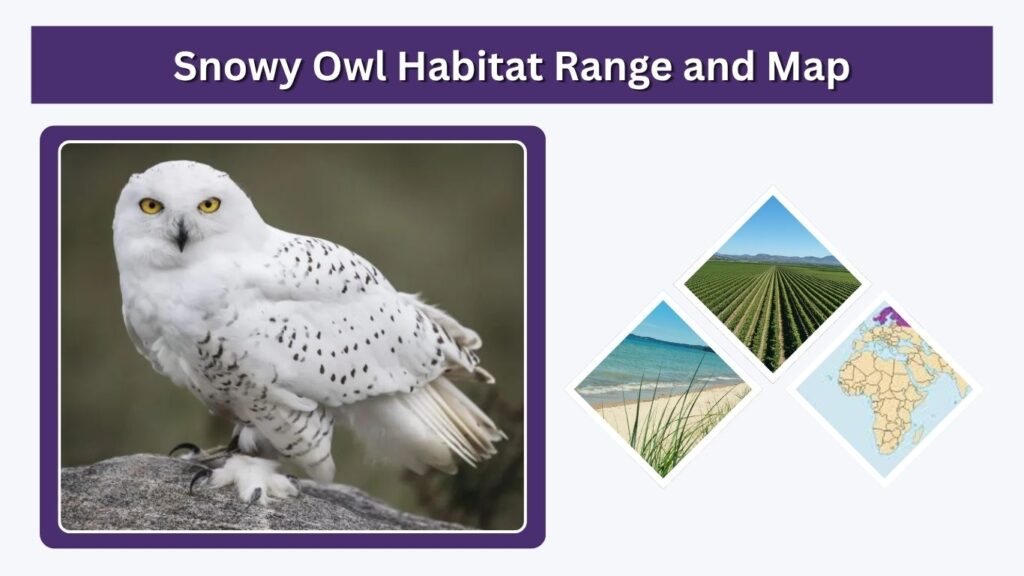
Snowy owls have a circumpolar distribution, meaning their range extends around the northern parts of the world. However, they do not occupy every location continuously. These nomadic birds travel widely in response to prey availability.
Seasonal Range
| Season | Main Regions | Typical Habitat |
| Breeding | Arctic Canada, Alaska, Greenland, Scandinavia and Russia | Open tundra |
| Migration | Canada, northern U.S., northern Europe and Asia | Coasts, grasslands and open country |
| Winter | Arctic regions, southern Canada and northern U.S. | Tundra, fields, beaches and frozen lakes |
| Irruptive winters | Occasionally much farther south | Airports, farms, shorelines and open wetlands |
Canada contains an especially large share of the species’ breeding habitat. Snowy owls nest across the Canadian Arctic Archipelago, northern Québec, Labrador, Nunavut, the Northwest Territories, and parts of Yukon. They also breed in northern Alaska, Greenland, Scandinavia, and northern Russia. Canada’s 2025 snowy owl status assessment describes the country as the core of the global breeding population.
Snowy Owl Habitat in Minnesota and Michigan
Minnesota and Michigan primarily provide winter habitat rather than regular breeding habitat. Owls may appear around:
- Great Lakes shorelines
- Frozen inland lakes
- Agricultural fields
- Prairies and grasslands
- Airports
- Dunes and beaches
- Marshes
- Large open industrial areas
The number arriving each winter varies. During an irruption, unusually large numbers move south, often following a productive Arctic breeding season.
Do Snowy Owls Live in the UK or Peru?
Snowy owls are rare visitors to the UK, especially northern Scotland, islands, and exposed coastal areas. They are not common permanent residents.
Peru is not part of their normal habitat range. Occasional reports far outside the established range require careful verification because pale owls and other birds can be misidentified.
Snowy Owl Nesting and Winter Habitat
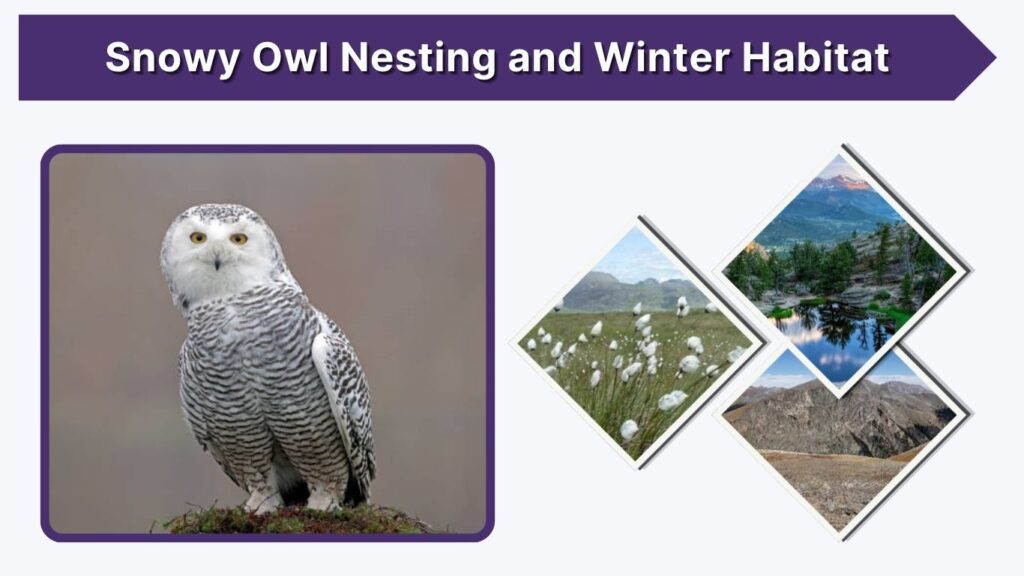
Snowy owls use different environments for breeding and winter survival. A successful nesting site must remain dry, offer a wide view, and occur near a large supply of lemmings. Winter habitat can be more varied because owls eat a wider selection of prey outside the breeding season.
Snowy Owl Nesting Habitat
Snowy owls nest on the ground rather than inside trees or cavities. The female creates a shallow scrape on a raised area of tundra. Suitable locations include:
- Windswept ridges
- Raised hummocks
- Low rocky hills
- Dry gravel deposits
- Riverbanks
- Glacial moraines
- Elevated areas near wetlands
A slight rise keeps the nest drier, improves visibility, and may remain relatively free of snow. The Cornell Lab of Ornithology notes that females favor dry, windswept rises on the tundra.
The male generally establishes a territory, while the female selects the exact nest location. She remains near the eggs and young chicks as the male delivers food.
Snowy Owl Winter Habitat
During winter, some individuals remain on Arctic tundra or sea ice. Others move south and select open landscapes resembling their breeding grounds.
Common winter habitats include:
- Plowed and unplowed farmland
- Coastal beaches and sand dunes
- Freshwater and saltwater marshes
- Frozen lakes and riverbanks
- Open grasslands
- Harbors and breakwaters
- Airports
- Large treeless fields
Airports attract snowy owls because their flat, grassy landscapes resemble tundra and support rodents. Unfortunately, aircraft collisions create risks for both owls and people.
Some Arctic owls spend winter on sea ice, where they hunt ducks and other seabirds near open-water areas. This marine lifestyle means sea ice can form an important part of snowy owl winter habitat.
Climate and Habitat Adaptations
The Arctic tundra has long, freezing winters, strong winds, limited precipitation, and months of greatly reduced daylight. Summer is short, with cool temperatures and almost continuous daylight. Snowy owls survive these conditions through a combination of physical and behavioral adaptations.
Adaptations for Arctic Survival
- Dense feathers: Thick plumage insulates the entire body.
- Feathered feet: Feathers cover the toes and reduce heat loss.
- Rounded body: A compact shape limits exposed surface area.
- White plumage: Provides camouflage against snow and pale ground.
- Powerful vision: Large eyes detect movement in dim conditions.
- Sensitive hearing: Helps locate prey hidden beneath vegetation or snow.
- Large body size: Stores heat better than a smaller owl’s body.
- Daylight hunting: Snowy owls can hunt during the Arctic’s bright summer days.
There is no single snowy owl habitat temperature. Conditions range from cool Arctic summers to severely freezing winters. Their heavy plumage is designed primarily for cold, which can make unusually warm conditions stressful.
How the Habitat Provides Food
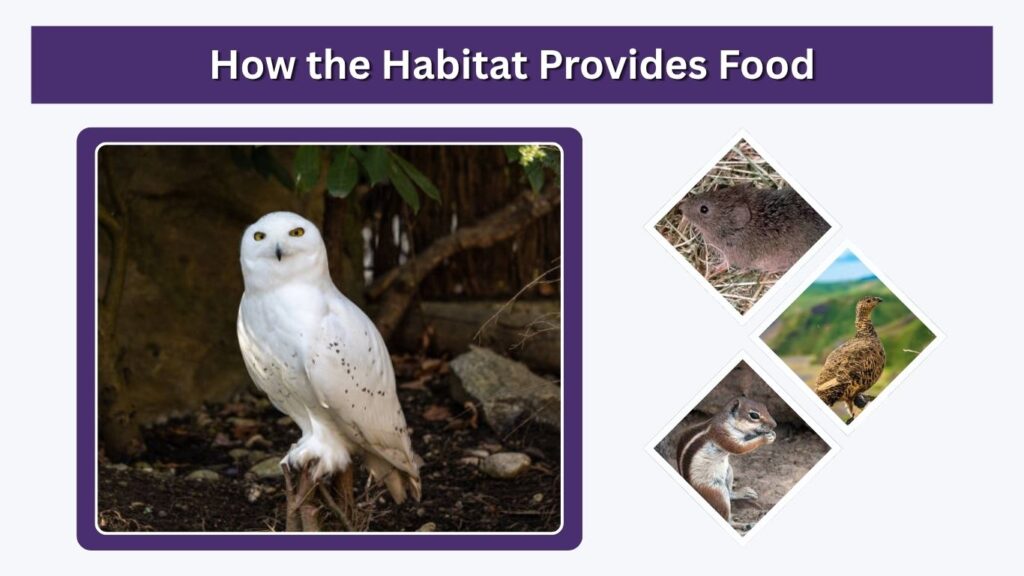
Food availability determines where many snowy owls settle and whether they attempt to breed. They may travel hundreds or thousands of kilometers between years instead of returning to one permanent nesting territory.
Food in Arctic Habitat
During the breeding season, lemmings may form more than 90% of the diet. Productive tundra supports large lemming populations through its grasses, sedges, mosses, seeds, roots, and sheltered spaces.
Other prey includes:
- Voles and mice
- Ground squirrels
- Ptarmigan
- Shorebirds
- Ducks and geese
- Rabbits and hares
- Seabirds
- Fish on rare occasions
When lemmings are scarce, snowy owls may skip breeding or move to another part of the Arctic. Abundant prey allows females to lay larger clutches and parents to raise more young.
Habitat Loss and Protection
The snowy owl’s range is enormous, but its tundra and sea-ice environments are changing. Climate warming is causing taller shrubs to spread into low tundra, altering snow conditions and affecting the food web that supports lemmings.
Major Habitat-Related Threats
- Climate-driven tundra shrub growth
- Changes in lemming population cycles
- Reduced or altered sea ice
- Increasing Arctic development
- Roads, power lines and vehicle collisions
- Airport conflicts
- Rodenticide poisoning
- Human disturbance near winter roosts
- Wildfires that change local tundra vegetation
Snowy owls are currently categorized globally as Vulnerable, and evidence indicates a declining population. Habitat change may reduce suitable breeding areas even when the land has not been directly destroyed.
People can help by observing owls from a distance, keeping pets away, avoiding repeated approaches, staying off private property, and never attempting to attract an owl with live bait. Use a long camera lens instead of moving close for photographs.
How to Make a Snowy Owl Habitat Diorama
A simple school habitat project should show an open tundra rather than a dense snowy forest.
Include:
- A flat base painted white, brown, and pale green.
- Low grasses, mosses, and lichens.
- Small rocks and a raised nesting mound.
- A shallow ground nest with eggs.
- Lemmings or voles as prey.
- A pond, wetland, or patch of sea ice.
- A snowy owl sitting on the ground or low ridge.
Adding a temperature label, range map, and short explanation of seasonal migration makes the project more informative.
FAQs
What biome does a snowy owl live in?
Its primary breeding biome is the Arctic tundra, a cold and largely treeless environment.
Do snowy owls live only in snowy places?
No. Breeding habitat may contain exposed soil and vegetation during summer. Wintering owls also use snow-free fields, beaches, and marshes.
Do snowy owls live in trees?
They may perch in trees occasionally, but they generally prefer open ground and low or exposed perches. Their nests are built on the ground.
Why do snowy owls migrate south?
They move in response to food availability, age, weather, sea-ice conditions, and competition. Their movements vary greatly between individuals and years.
What is the best snowy owl nesting habitat?
A dry, slightly raised tundra site with low vegetation, good visibility, minimal disturbance, and abundant lemmings provides suitable nesting habitat.