
A barn owl nest is often found inside a quiet cavity rather than in a traditional stick-built nest. Barn owls commonly use barns, hollow trees, abandoned buildings, church towers, cliffs, and specially designed nest boxes. They are highly adaptable and may return to a successful nesting site year after year. If suitable natural cavities are limited, a properly built barn owl nest box can provide an excellent alternative while also encouraging these efficient rodent hunters to remain in the area.
Where Do Barn Owls Nest?
Barn owls prefer sheltered locations that protect eggs and chicks from bad weather and predators.
Unlike many birds, they do not usually construct elaborate nests from twigs.
Common nesting sites include:
- Old barns
- Hollow trees
- Attics
- Silos
- Church towers
- Abandoned buildings
- Cliff cavities
- Large tree holes
- Purpose-built nest boxes
They usually choose places that are quiet, dark, elevated, and close to open hunting habitat.
Barn Owl Nest in a Barn
Barns are among the classic nesting locations for these owls.
A barn provides height, protection, and easy access to nearby fields where barn owls can hunt mice, voles, rats, and other small mammals.
Nests may be placed on beams, inside wall cavities, or in sheltered loft areas.
Do Barn Owls Nest in Trees?
Yes. Barn owls can nest in hollow trees when a large enough cavity is available.
Mature trees with natural holes are especially valuable because they offer protected nesting chambers above ground level.
However, old hollow trees are becoming less common in many developed areas, which is one reason nest boxes can be useful.
What Does a Barn Owl Nest Look Like?
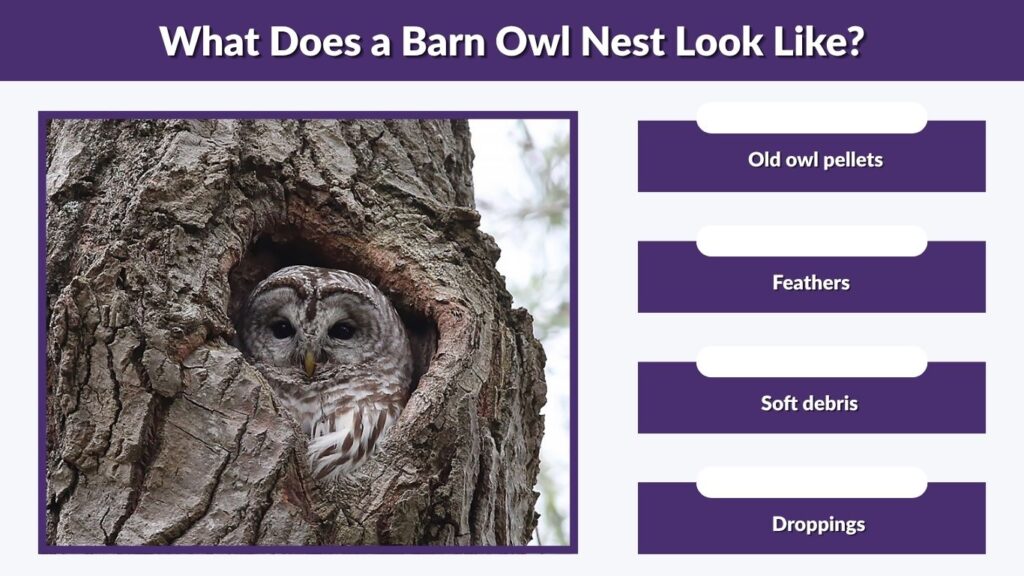
A barn owl nest usually looks very simple.
The birds generally do not bring large amounts of grass, sticks, or leaves to construct a nest.
Instead, eggs may be laid directly on an existing surface inside a cavity.
Over time, the nest area can accumulate:
- Old owl pellets
- Feathers
- Soft debris
- Droppings
- Remains of prey
Pellets gradually break apart and can form a soft layer beneath the eggs and chicks.
Barn Owl Nesting Behavior
Barn owl nesting behavior begins with a pair selecting a secure site.
The male often provides food during courtship and while the female is incubating.
Once eggs are laid, the female spends much of her time inside the nest, while the male hunts and delivers prey.
Do Barn Owls Build Nests?
Barn owls do not build traditional nests in the way that robins, eagles, or crows do.
Instead, they use existing cavities and sheltered spaces.
This makes the availability of suitable nesting sites especially important.
A nest box essentially replaces the large natural cavity the owl would otherwise need.
When Do Barn Owls Nest?
The exact barn owl nesting season depends on climate, location, weather, and prey availability.
In many areas, nesting activity begins during late winter or spring.
However, barn owls can sometimes breed at other times of year when conditions are favorable and food is abundant.
What Time of Year Do Barn Owls Nest?
Typical nesting activity may include:
- Courtship in winter or early spring
- Egg laying during spring
- Incubation for about one month
- Chicks remaining in the nest for several weeks
- Young birds leaving during late spring or summer
Some pairs may raise more than one brood when prey is exceptionally abundant.
Barn Owl Eggs and Chicks
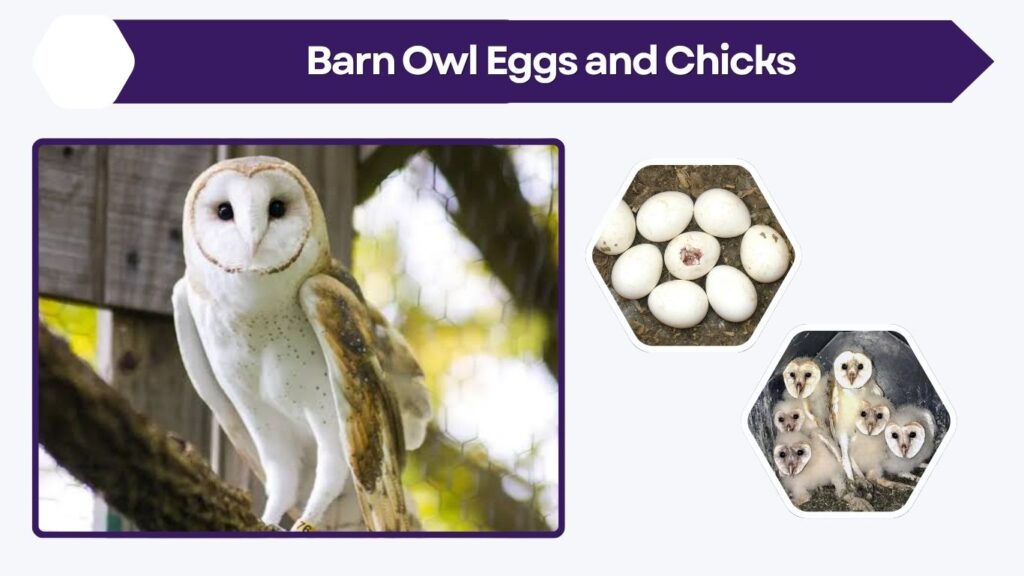
Female barn owls usually lay several white eggs.
Eggs are often laid a few days apart rather than all at once, which means the chicks hatch at different times.
This creates noticeable size differences among young owls in the same nest.
Baby Barn Owl in the Nest
Newly hatched barn owls are covered in white down and are completely dependent on their parents.
During their early development, the female remains close to the chicks while the male brings food.
As the chicks grow, both parents may spend more time hunting to satisfy their increasing food needs.
Young barn owls can consume large numbers of small rodents before they become independent.
How Long Do Barn Owls Stay in the Nest?
Barn owl chicks generally remain associated with the nest for roughly two months before they begin leaving regularly.
They may start exploring the entrance and nearby surfaces before becoming strong flyers.
When Do Barn Owls Leave the Nest?
Young barn owls typically begin their first flights at around 8 to 10 weeks old.
Leaving the nest does not immediately mean independence.
Parents may continue feeding young owls for several weeks while they improve their flying and hunting skills.
Juveniles eventually leave the nesting area and establish their own territories.
Barn Owl Nest Boxes
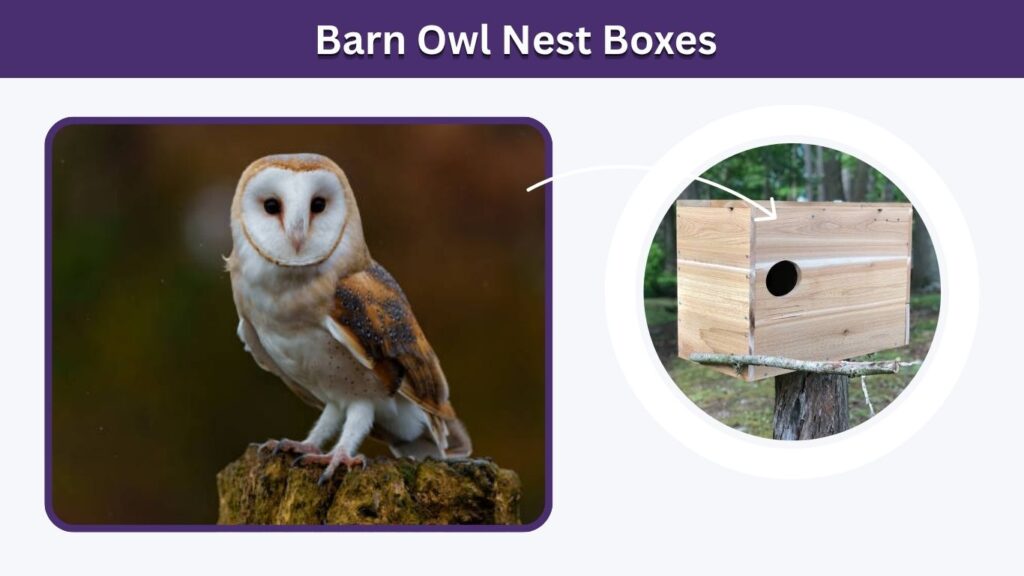
A barn owl nest box provides an artificial nesting cavity where natural sites are unavailable.
Boxes can be installed inside buildings, on suitable structures, or in some cases outdoors.
Successful boxes provide enough space for adults and growing chicks while protecting them from rain and excessive disturbance.
Barn Owl Nest Box Dimensions
Barn owl nesting box dimensions vary depending on design, but the box should be considerably larger than a typical songbird nest box.
A practical box may be approximately:
| Part | Suggested Size |
| Floor | Around 24 × 24 inches |
| Height | Around 18–24 inches |
| Entrance width | About 5–6 inches |
| Entrance height | About 5–6 inches |
| Interior depth | Enough to keep chicks safely away from opening |
Exact measurements can vary, but interior floor space is especially important because several large chicks may occupy the box at the same time.
Barn Owl Nest Box Design
A good design should include:
- Spacious interior
- Strong weather-resistant construction
- Secure mounting
- Suitable entrance opening
- Ventilation
- Drainage
- Access for inspection or cleaning
- Rough interior surfaces for grip
- A raised lip below the entrance
The entrance should not be so low that young chicks can easily fall out.
How to Build a Barn Owl Nest Box
Building a barn owl nesting box is relatively straightforward if you have basic woodworking tools.
Basic Materials
You may need:
- Exterior-grade plywood or solid wood
- Screws
- Hinges
- Drill
- Saw
- Measuring tape
- Weather-resistant fasteners
Avoid exposed sharp hardware inside the nesting chamber.
Basic Building Steps
- Cut the floor, side, back, front, and roof panels.
- Create an appropriately sized entrance hole.
- Assemble the main box securely.
- Add small ventilation openings near the upper portion.
- Include drainage holes in the floor if the box is outdoors.
- Install an access panel for inspection.
- Secure the roof against rain.
- Mount the completed box firmly.
A shallow layer of clean wood shavings can be added to the floor, although large amounts of bedding are unnecessary.
Barn Owl Nest Box Placement
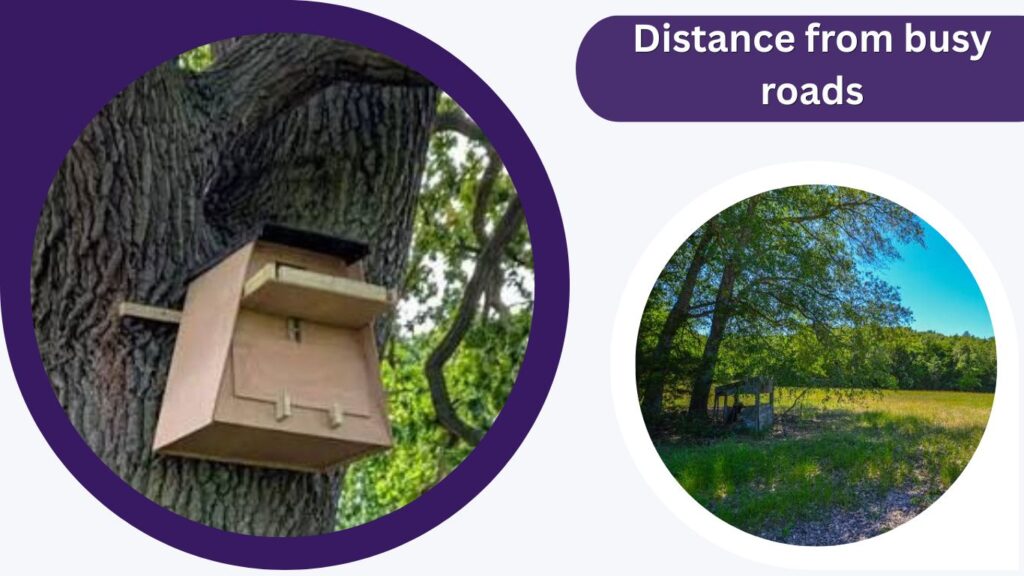
Placement can be just as important as box design.
A well-built box may remain unused if installed in a noisy, exposed, or unsuitable location.
Best Barn Owl Nest Box Location
Choose a location that provides:
- Nearby open hunting habitat
- Minimal human disturbance
- Safe flight access
- Protection from strong weather
- Distance from busy roads
- Limited access for predators
Fields, farmland, grasslands, meadows, and similar open environments are particularly suitable because barn owls hunt primarily over open ground.
Barn Owl Nest Box Height
Boxes are generally installed several feet above the ground.
A height of around 10 to 15 feet or higher can work well in many situations, depending on the structure and surrounding habitat.
The box must be firmly secured and safely accessible if future maintenance is required.
How to Get Barn Owls to Nest
Installing a box does not guarantee that barn owls will immediately move in.
The surrounding habitat must also meet their needs.
To increase the likelihood of occupancy:
- Install the box before nesting season
- Provide open hunting habitat nearby
- Avoid excessive nighttime lighting
- Minimize disturbance around the box
- Keep the entrance unobstructed
- Avoid using rodenticides in the hunting area
- Protect mature trees and natural cavities
Barn owls may take months or even years to discover and accept a new box.
Cleaning a Barn Owl Nest Box
Nest boxes can gradually fill with pellets and other debris.
However, cleaning should never be performed while the box contains eggs, chicks, or actively nesting adults.
When the box is clearly inactive, old material can be removed if necessary.
Wear suitable protective equipment when handling accumulated droppings, pellets, or nesting debris.
FAQs
Where do barn owls make their nests?
Barn owls nest in sheltered cavities such as hollow trees, barns, abandoned buildings, towers, cliffs, and specially designed nest boxes. They generally prefer elevated, quiet locations near open land where they can hunt rodents.
Do barn owls return to the same nest?
Yes, barn owls may reuse successful nesting locations for multiple breeding seasons. A secure site with abundant nearby prey can remain attractive to the same pair or other barn owls in later years.
What is the best height for a barn owl nest box?
Many boxes are installed around 10 to 15 feet above the ground or higher. The ideal height depends on the structure and surrounding habitat, but the entrance should provide safe, unobstructed flight access.
Do barn owls need nesting material in a box?
Barn owls do not construct elaborate nests. A small amount of clean wood shavings may provide a suitable starting surface, but large amounts of straw, fabric, or other nesting materials are unnecessary.
How old are barn owls when they leave the nest?
Young barn owls commonly begin flying at about 8 to 10 weeks of age. They may continue depending on their parents for food afterward while they develop stronger flight and independent hunting skills.