
Barred Owls usually nest inside large natural tree cavities in mature forests, particularly near rivers, swamps, streams, and other wet areas. They may also occupy abandoned hawk, crow, raven, or squirrel nests and readily use a properly designed Barred Owl nest box.
These owls do not construct an elaborate nest. Instead, they depend on an existing cavity or platform that provides enough room to incubate eggs and raise their young.
Where Do Barred Owls Nest?
Barred Owls normally choose mature woodland containing large trees. Natural nest cavities are commonly located about 20–40 feet above the ground, although the exact height varies with the available trees and nesting structures.
Common nesting locations include:
- Hollows inside large living trees
- Cavities in broken or decaying trunks
- Abandoned woodpecker cavities
- Old hawk, crow, or raven nests
- Flattened squirrel nests
- Artificial owl nesting boxes
Forests near water are especially attractive because they provide mature cavity-bearing trees and abundant prey. Barred Owls may inspect a potential site months or even a year before eventually nesting there.
Do Barred Owls Build Their Own Nests?
Barred Owls do not usually build a nest from the beginning. They make few changes to natural cavities and may lay eggs directly on accumulated wood debris or old nesting material.
When using an abandoned platform nest, they may flatten the top or add small amounts of lichen, feathers, or fresh evergreen sprigs. However, their nest is much less carefully constructed than the nests of many songbirds.
What Does a Barred Owl Nest Look Like?
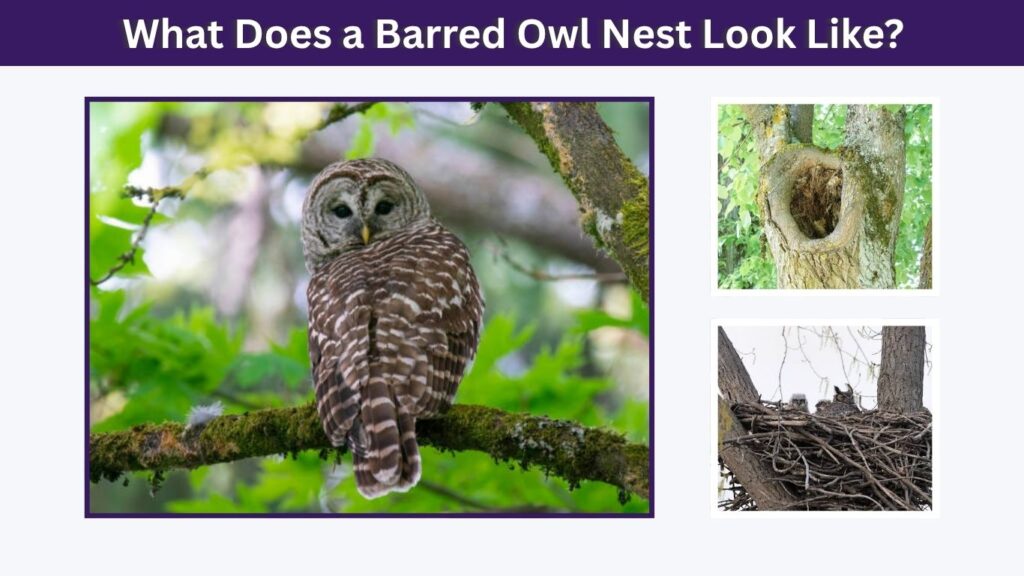
A natural Barred Owl nest often looks like a dark opening in the trunk or broken top of a mature tree. Cornell reports that typical cavities measure approximately 10–13 inches wide and 14–21 inches deep, although some cavities are substantially deeper.
A platform nest may look like a broad collection of sticks high in a tree. Because Barred Owls reuse structures built by other animals, these nests may appear messy, weathered, or partly flattened.
The nest itself may contain:
- Decayed wood particles
- Old leaves and nesting material
- Feathers
- Prey remains
- Pellets
- A small amount of fresh vegetation
When Is the Barred Owl Nesting Season?
Barred Owl nesting begins relatively early in the year. Egg laying may occur from December through April, depending on location, with northern populations generally nesting later. In many central parts of their range, eggs are commonly laid during February or March.
Pairs become increasingly vocal before nesting. Their familiar “Who cooks for you?” calls help maintain territories and allow mates to communicate.
Barred Owl Nesting Timeline
| Nesting stage | Typical duration |
| Egg laying | One egg every 2–4 days |
| Clutch size | 1–5 eggs, usually 2–3 |
| Incubation | 28–33 days |
| Time inside nest after hatching | 28–35 days |
| Young leave the nest | Around 4–5 weeks old |
Barred Owls normally produce one brood per year. The female performs most of the incubation while the male hunts and brings food to her.
Barred Owl Eggs and Chicks
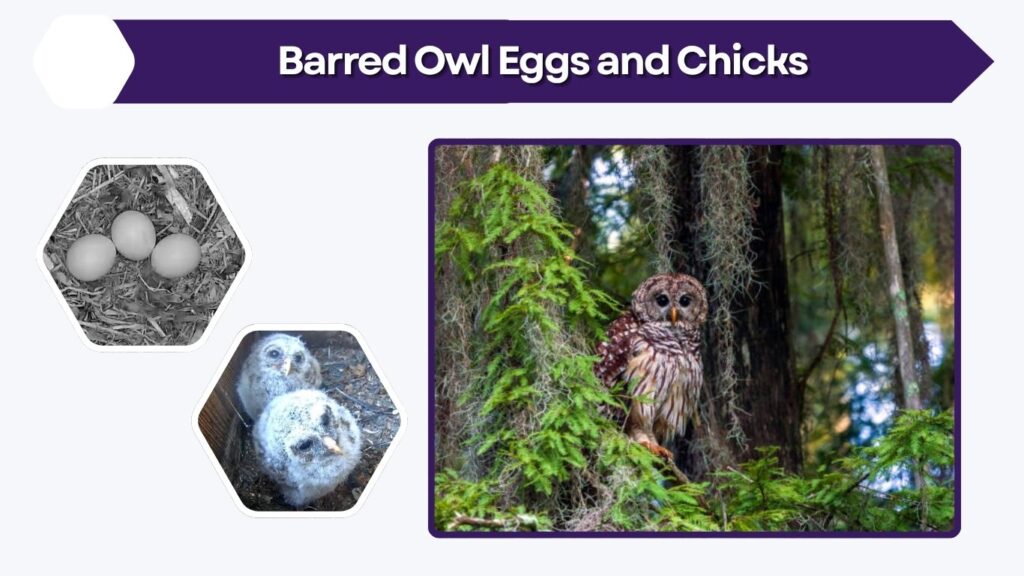
Barred Owl eggs are plain white with a slightly rough surface. A clutch may contain one to five eggs, although two or three is most common.
The chicks hatch helpless, with closed eyes and soft white down. Because eggs are laid several days apart, the chicks may differ noticeably in size.
How Long Do Barred Owls Stay in the Nest?
Young Barred Owls usually remain inside the cavity or nest box for approximately four to five weeks. They may leave before they can fly confidently, climbing onto nearby branches with their feet and bills.
This stage is known as branching. A young owl sitting on a low branch or near the base of a nest tree may still be receiving care from its parents and is not necessarily abandoned. The adults continue feeding and protecting their young after they leave the nest.
Barred Owl Nest Box Dimensions
Barred Owls will use artificial nesting boxes when suitable natural cavities are unavailable. Cornell’s NestWatch recommends the following internal dimensions and placement guidelines.
| Nest-box feature | Recommended measurement |
| Interior floor | 13 × 13 inches |
| Interior depth | 23 inches |
| Entrance opening | 7 inches |
| Mounting height | 12–15 feet |
| Distance between boxes | About 0.5 mile |
| Wood chips inside | 3–4 inches |
The entrance can face any direction, but branches and leaves should not block the opening. When possible, locate the box within approximately 200 feet of water.
How to Build a Barred Owl Nest Box
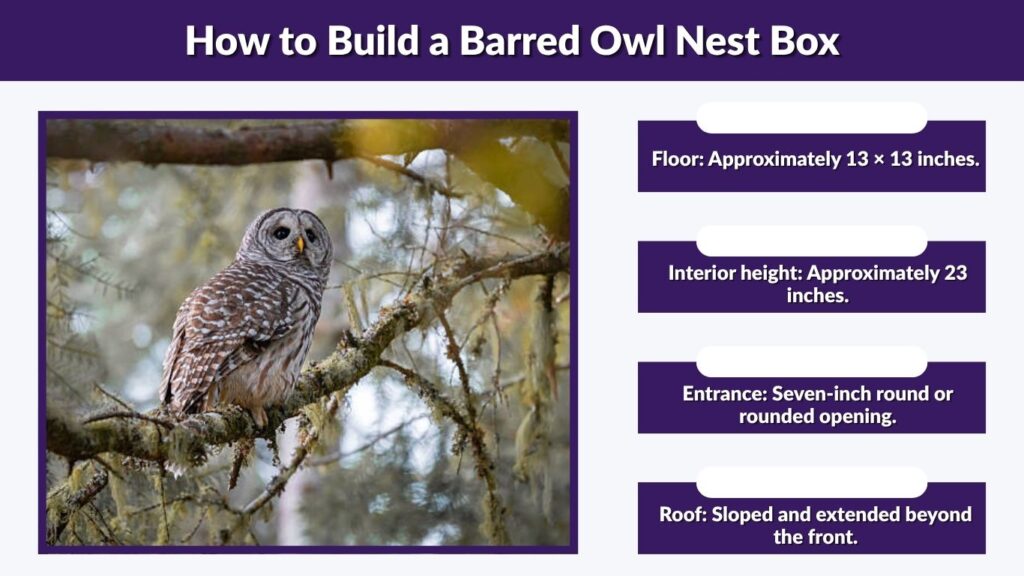
A Barred Owl box is large and heavy, so it must be built and mounted securely. Use untreated cedar, pine, fir, or non-pressure-treated exterior plywood at least ¾ inch thick.
Essential Construction Features
- Floor: Approximately 13 × 13 inches
- Interior height: Approximately 23 inches
- Entrance: Seven-inch round or rounded opening
- Roof: Sloped and extended beyond the front
- Ventilation: Openings near the top of the side panels
- Drainage: Several holes in the floor
- Access panel: Hinged side for cleaning and monitoring
- Interior: Rough surface below the entrance
- Exterior perch: Not required
- Bottom material: Three to four inches of coarse wood chips
Avoid pressure-treated lumber and chemical preservatives inside the box. Do not use sawdust, which may become compacted or excessively dusty; coarse wood chips better imitate material found inside a natural cavity.
Barred Owl Nest Box Placement
Mount the box on a strong living tree or sturdy post in a mature wooded area. The structure must support the combined weight of the box, nesting material, adults, chicks, and mounting hardware.
A suitable location should have:
- Large surrounding trees
- Nearby open branches for fledglings
- Limited human activity
- A clear flight path to the entrance
- Water or wet woodland nearby
- Protection from intense afternoon sun
- No regularly used doorway, path, or play area underneath
Install the box well before nesting begins. Autumn or early winter gives local owls time to find and inspect it before the breeding season. Cornell recommends mounting the box 12–15 feet high, while natural nests are frequently higher.
Should a Nest Box Have a Perch?
An exterior perch is unnecessary. Barred Owls can land directly at the large entrance, and a perch may provide easier access for climbing predators.
The interior surface below the entrance should be rough or grooved so growing owlets can climb toward the opening when they are ready to leave.
How to Find a Barred Owl Nest
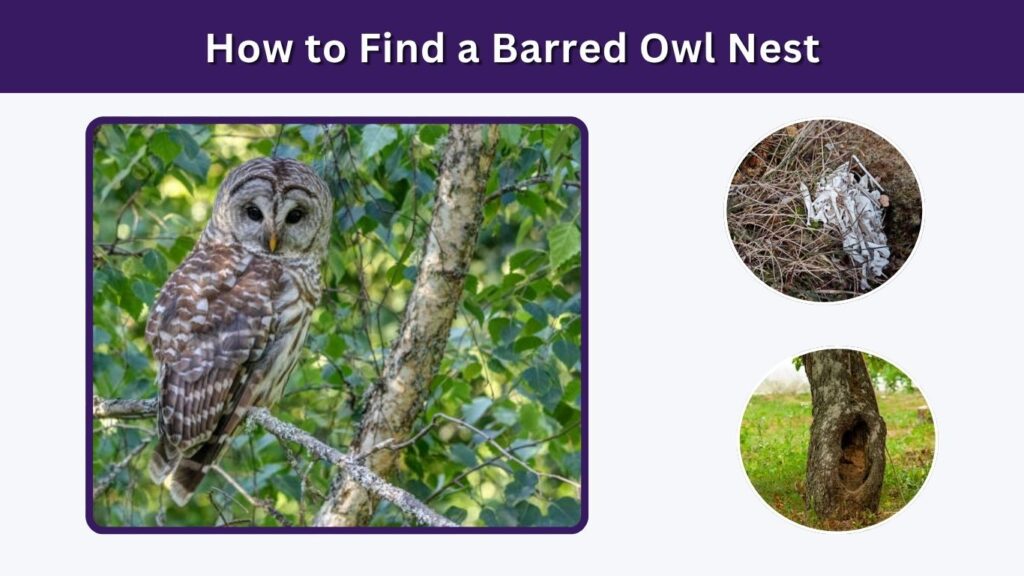
Listen for repeated hooting in mature woods during late winter and watch for adults carrying prey toward the same tree. Whitewash, pellets, feathers, or prey remains beneath a large cavity may also indicate occupancy.
Do not approach closely or remain beneath an active nest. Barred Owls become especially territorial during the nesting season, and females may strike intruders with their feet. Disturbance may also cause the adults to leave temporarily or perform defensive displays.
Cleaning a Barred Owl Nest Box
Clean the box only when no viable eggs or living young are present. Remove soiled material after the nesting season, inspect the structure for damage, and replace it with three to four inches of fresh wood chips.
Wear gloves and respiratory protection because old owl boxes may contain dust, pellets, prey remains, insects, or droppings. Keep monitoring visits brief and avoid opening the box during egg laying or early incubation.
FAQs
Do Barred Owls Use Nest Boxes?
Yes. Barred Owls readily use large nest boxes placed in suitable forest habitat. A box is most useful where mature woodland exists but natural tree cavities are limited.
How High Should a Barred Owl Nest Box Be?
Cornell NestWatch recommends mounting it approximately 12–15 feet above the ground. The box should be attached securely to a strong tree or post with an unobstructed entrance.
How Many Eggs Do Barred Owls Lay?
A female may lay one to five eggs, but two or three is typical. The eggs are usually deposited several days apart and incubated for approximately 28–33 days.
When Do Baby Barred Owls Leave the Nest?
Young Barred Owls usually leave after approximately 28–35 days. They may climb onto nearby branches before becoming strong fliers and continue depending on their parents for food.
Do Barred Owls Reuse the Same Nest?
They may return to a successful cavity or nest box in later years, but reuse is not guaranteed. Pairs can inspect several possible sites and may switch nests depending on safety, condition, competition, and disturbance.