
The barred owl is a large woodland owl recognized by its dark eyes, rounded head, brown-and-white feather pattern, and unforgettable hooting call. Scientifically known as Strix varia, it lives mainly in forests across eastern and central North America and has also expanded into the Pacific Northwest. This adaptable nocturnal hunter eats rodents, birds, frogs, fish, and other small animals. Its strong territorial behavior, cavity-nesting habits, silent flight, and varied sounds make the barred owl one of North America’s most easily recognized owls.
Barred Owl Identification and Appearance
Barred owls have broad bodies, rounded heads, and no visible ear tufts. Their patterned feathers blend with tree bark, making them difficult to notice while roosting. Dark eyes, a pale facial disc, and brown bars across the chest create a distinctive appearance compared with many yellow-eyed North American owls.
Barred Owl Identification
Look for these identifying features:
- Rounded head without ear tufts
- Dark brown or nearly black eyes
- Brown-and-white bars across the upper chest
- Vertical streaks on the belly
- Pale facial disc
- Yellow bill and feathered legs
- Rounded wings and strong talons
Size, Weight and Wingspan
Adults usually measure about 16 to 25 inches long, with a wingspan of approximately 38 to 49 inches. They commonly weigh between 1 and 2.3 pounds. Females are generally larger than males, although both sexes have nearly identical plumage.
Their dense feathers make them appear heavier. Compared with a great horned owl, a barred owl is usually smaller and lacks prominent ear tufts.
Barred Owl Habitat and Geographic Range
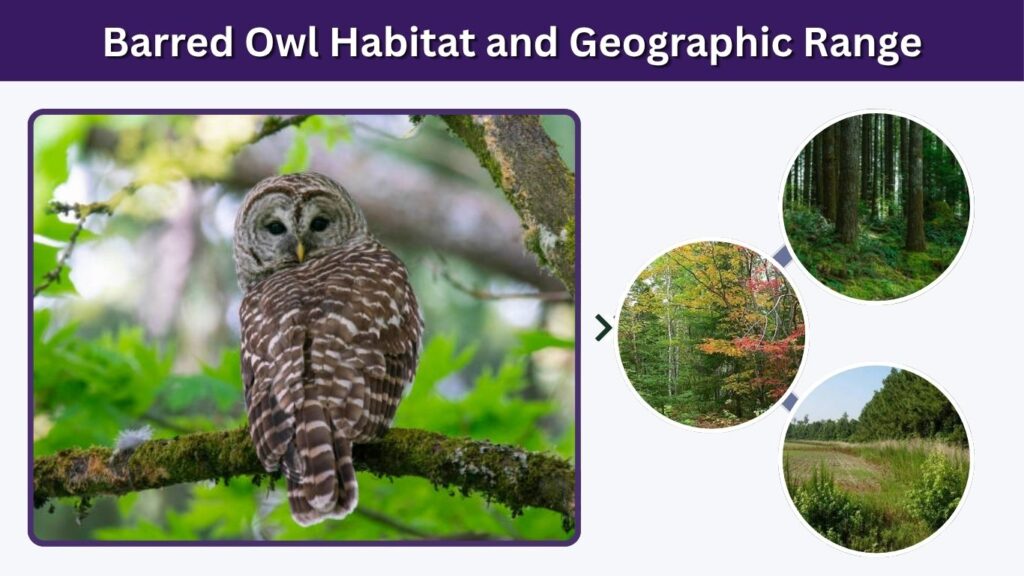
Barred owls depend mainly on wooded environments containing mature trees, nesting cavities, shaded roosts, and abundant prey. They are especially common near swamps, rivers, ponds, and bottomland forests. However, they can also adapt to large parks and wooded neighborhoods when old trees and quiet nesting locations remain available.
Where Do Barred Owls Live?
Barred owls are native to eastern and central North America. Their range covers much of the eastern United States, southern Canada, the Great Lakes region, and parts of the Southeast.
They have also expanded westward into Washington, Oregon, and northern California. In the Pacific Northwest, they compete with northern spotted owls for prey, territories, and nesting sites.
Preferred Habitats
Barred owls may live in:
- Mature deciduous forests
- Mixed hardwood and conifer forests
- Wooded swamps and wetlands
- River valleys and bottomland forests
- Large suburban parks
- Wooded neighborhoods with old trees
- Forest edges near open hunting areas
They usually avoid treeless landscapes because trees provide nesting sites, cover, roosts, and hunting perches.
Barred Owl Calls and Behavior
Barred owls are highly vocal, especially after sunset, before sunrise, and during the breeding season. A pair may call back and forth from different trees. Besides the familiar hoot, these owls produce barking, cackling, screeching, and gurgling noises that can sound unusual or alarming to people nearby.
What Does a Barred Owl Sound Like?
The best-known call is commonly described as “Who cooks for you? Who cooks for you all?” It consists of deep rhythmic hoots followed by a longer final note.
Males usually have deeper voices, while females sound slightly higher. During courtship, paired owls may combine hoots with cackles and gurgling sounds. Calls help advertise territory, locate a mate, and maintain contact through dense woodland.
Meanings of Common Sounds
- Territorial hoot: Announces ownership of an area
- Duet call: Helps mates communicate
- Bark: May signal alarm or agitation
- Screech: Often occurs during conflict
- Juvenile call: Begs parents for food
- Bill snapping: Warns an intruder near the nest
Most sounds are normal communication and do not mean the owl intends to attack.
Barred Owl Diet and Hunting Methods
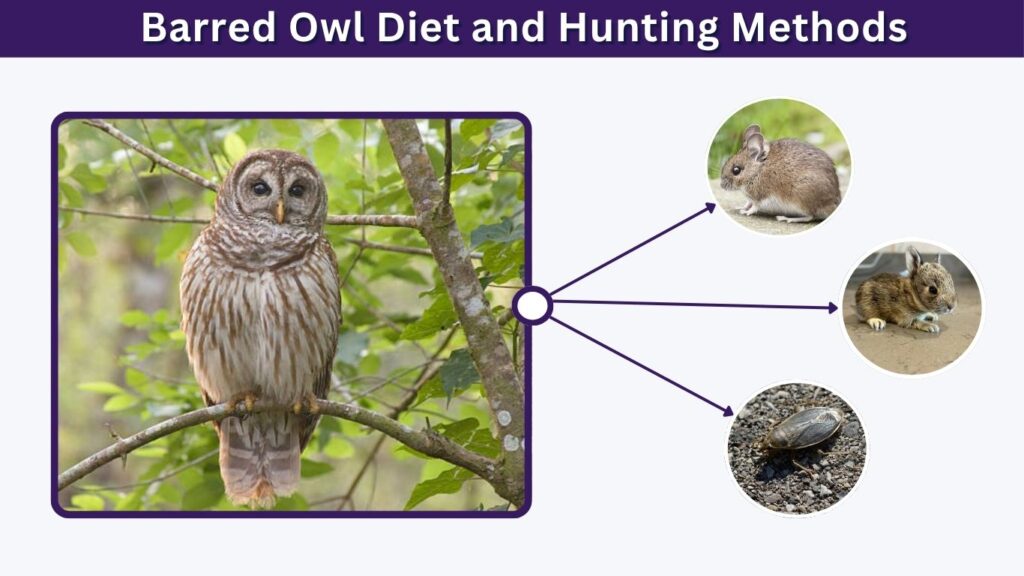
The barred owl is an opportunistic carnivore that eats whatever suitable prey is locally available. Small mammals are important, but wetlands also provide frogs, fish, salamanders, and crayfish. This broad diet helps barred owls survive in different habitats and may partly explain their successful expansion into new regions.
What Do Barred Owls Eat?
Common prey includes:
- Mice, voles, rats, and shrews
- Squirrels and chipmunks
- Small rabbits
- Small and medium-sized birds
- Frogs, salamanders, and toads
- Snakes and lizards
- Fish and crayfish
- Bats and large insects
Small prey is often swallowed whole. Later, the owl coughs up a pellet containing indigestible fur, feathers, teeth, and bones.
How They Hunt
A barred owl often waits quietly on a branch and listens for movement below. Once prey is located, it glides down and captures the animal with its talons. Its facial disc directs sound toward the ears, while specially shaped wing feathers reduce flight noise.
Barred owls may also catch fish or crayfish in shallow water. Although mostly nocturnal, they sometimes hunt during cloudy days or while feeding chicks.
Barred Owl Nesting, Chicks and Lifespan
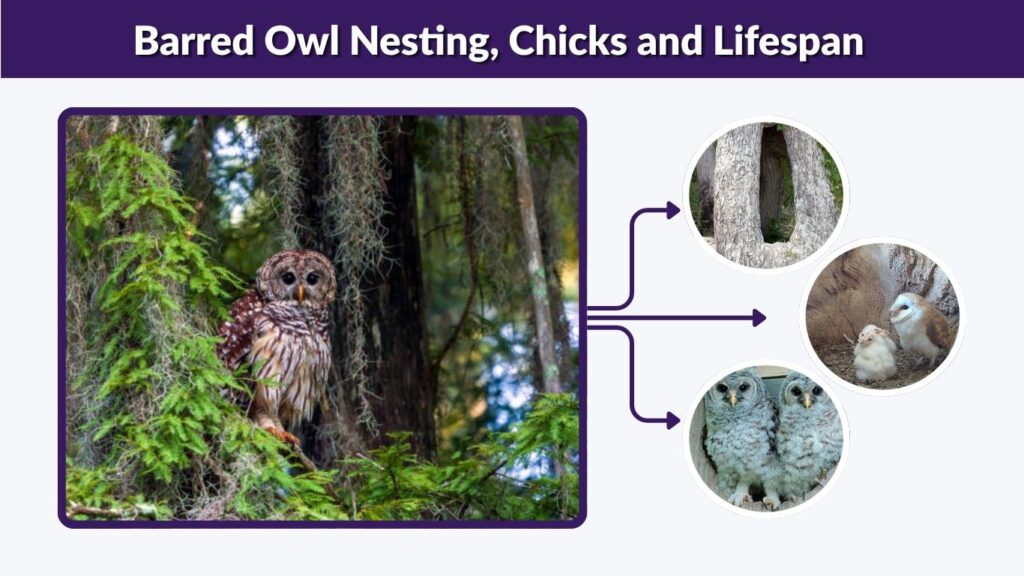
Barred owls usually use existing nest sites rather than building elaborate nests. Courtship often begins in winter, while egg laying commonly occurs from late winter through spring. Timing depends on climate, latitude, weather, and food availability. Both parents care for the young, although the female performs most incubation.
Common Nesting Sites
Barred owls may nest in:
- Large natural tree cavities
- Hollow trunks or broken tree tops
- Abandoned hawk or crow nests
- Old squirrel nests
- Large artificial nest boxes
- Mature trees near wetlands
The female generally lays two or three white eggs and incubates them for about one month while the male supplies food.
Juveniles and Lifespan
Young barred owls are covered with white down. They may leave the nest before flying properly and climb onto nearby branches, a stage called branching. Their parents continue feeding and protecting them.
Many juveniles do not survive their first year. Adults with secure territories may live for more than 10 years, and some survive beyond 20 years. Vehicles, predators, disease, food shortages, and habitat loss can shorten their lives.
Interesting Facts and Similar Owls
Barred owls combine sensitive hearing, silent flight, flexible feeding habits, and strong territorial behavior. They can occupy remote forests, wooded wetlands, and some suburban areas. Their appearance may resemble several other owls, but eye color, head shape, feather pattern, body size, and voice provide useful identification clues.
Quick Barred Owl Facts
- The scientific name is Strix varia.
- Their name comes from the barred chest pattern.
- Their eyes are dark rather than yellow.
- Females are generally larger than males.
- They may remain with the same mate for years.
- They sometimes hunt during daylight.
- Great horned owls are important predators.
- Young owls leave the nest before flying well.
- They can catch prey on land or in shallow water.
- Their call is often heard before the bird is seen.
Barred Owl vs Similar Owls
A barn owl has a pale, heart-shaped face, long legs, and a raspy screech rather than a rhythmic hoot. A great horned owl is heavier, has yellow eyes, and displays prominent ear tufts.
The northern spotted owl looks more similar but usually has white spots rather than strong chest bars. Range, voice, and habitat also help separate spotted and barred owls.
FAQs
People often recognize a barred owl by its voice before seeing the bird. Common questions focus on nighttime hooting, safety, nesting behavior, young owls, and long-term pair bonds. The following answers can help homeowners and birdwatchers understand these birds while avoiding disturbance around established territories, active nests, or dependent juveniles.
Why Do Barred Owls Hoot at Night?
Barred owls hoot to advertise territory, contact a mate, and communicate across wooded areas. Calling becomes especially noticeable during courtship and breeding. A pair may answer each other with repeated hoots, cackles, and gurgling sounds.
Are Barred Owls Dangerous?
They generally avoid people and are not normally dangerous. However, an adult may defend an active nest by swooping or striking with its talons. People and pets should remain away from nests, fledglings, and agitated adults.
Do Barred Owls Use Nest Boxes?
Barred owls may use large nest boxes when natural cavities are unavailable. Boxes should be installed high in mature woodland before breeding begins. Once occupied, the area should remain quiet and the nest should not be approached.
Do Barred Owls Stay With the Same Mate?
Barred owls are generally monogamous and may remain paired for several years. A pair often occupies the same territory throughout the year. The male supplies food during incubation, while both parents feed and defend the young.
What Should You Do After Finding a Juvenile Barred Owl?
A young owl on a low branch is often in the normal branching stage and may not need rescue. Keep people and pets away and observe from a distance. Contact a licensed wildlife rehabilitator only when the bird appears injured or is in immediate danger.