
Tawny owls and tawny-like owl species are known for their rounded heads, soft feather patterns, sharp hunting skills, and strong nighttime calls. Some live in deep forests, while others are found in deserts, wetlands, farms, and mountain woodlands. In this guide, you’ll learn about 21 types of tawny owls and related owl species, including their key identification marks, habitats, and unique features.
1. Tawny Owl
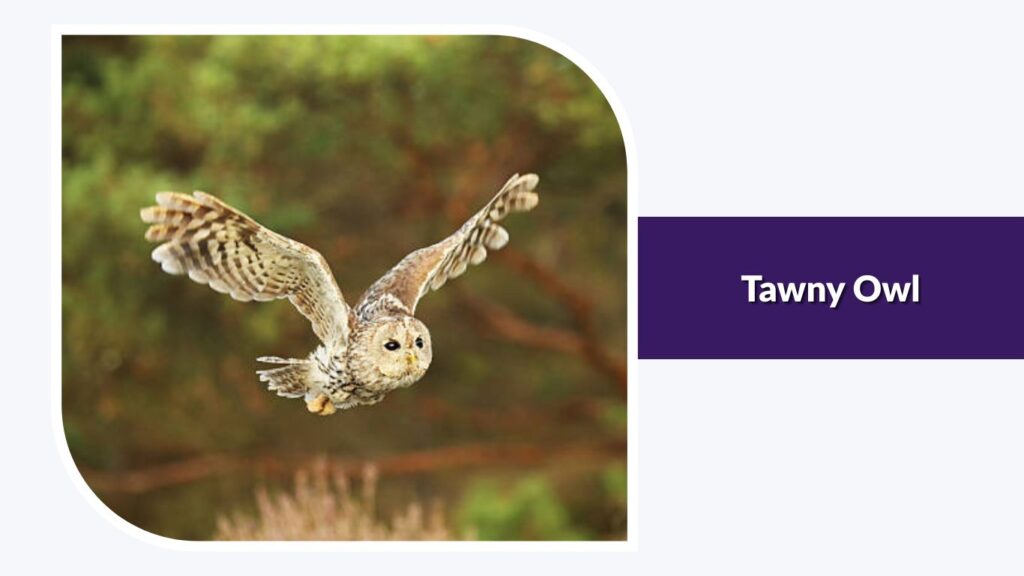
The Tawny Owl is a medium-sized owl best known for its rounded head, dark eyes, and classic hooting call. It is one of the most familiar owls in Europe and parts of Asia. This bird usually lives in wooded areas, parks, gardens, and old forests where it can find tree holes for nesting.
Identification
The Tawny Owl has a rounded head with no ear tufts. Its body is usually brown, reddish-brown, or gray-brown with mottled markings. The dark eyes and soft rounded face make it easy to separate from many yellow-eyed owls.
Habitat
Tawny Owls prefer mature woodland, mixed forests, parks, farmland with trees, and large gardens. They often stay in the same territory year-round and usually nest in tree cavities, old nests, or nest boxes.
Diet
This owl mainly eats small mammals such as mice, voles, and rats. It also hunts small birds, frogs, beetles, worms, and other insects. It hunts mostly at night from a hidden perch.
Quick ID Points
- Rounded head
- Dark eyes
- No ear tufts
- Brown or gray mottled body
- Common in woodlands and parks
2. Himalayan Owl
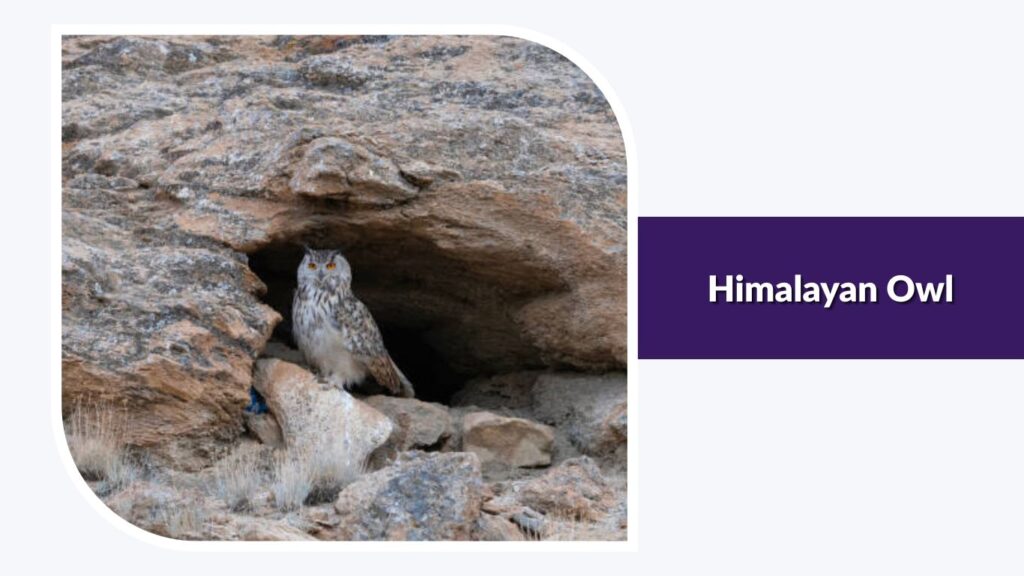
The Himalayan Owl is closely related to the Tawny Owl and is found in mountain forests of the Himalayas. It has a strong, rounded body and dark eyes. This owl is often seen in wooded valleys, forest edges, and cool mountain habitats.
Identification
The Himalayan Owl looks similar to the Tawny Owl but is usually larger and paler. It has a rounded head, dark eyes, and heavily streaked underparts. Its brown-gray plumage helps it blend well with tree bark.
Habitat
This owl lives in Himalayan forests, mountain woodlands, oak forests, pine forests, and wooded slopes. It prefers areas with tall trees and quiet cover for roosting and nesting.
Diet
The Himalayan Owl feeds on rodents, small birds, insects, reptiles, and amphibians. It hunts mostly at night, using silent flight and strong hearing to locate prey in dark forests.
Quick ID Points
- Large rounded owl
- Dark eyes
- Pale brown-gray body
- Streaked underparts
- Found in Himalayan forests
3. Hume’s Owl
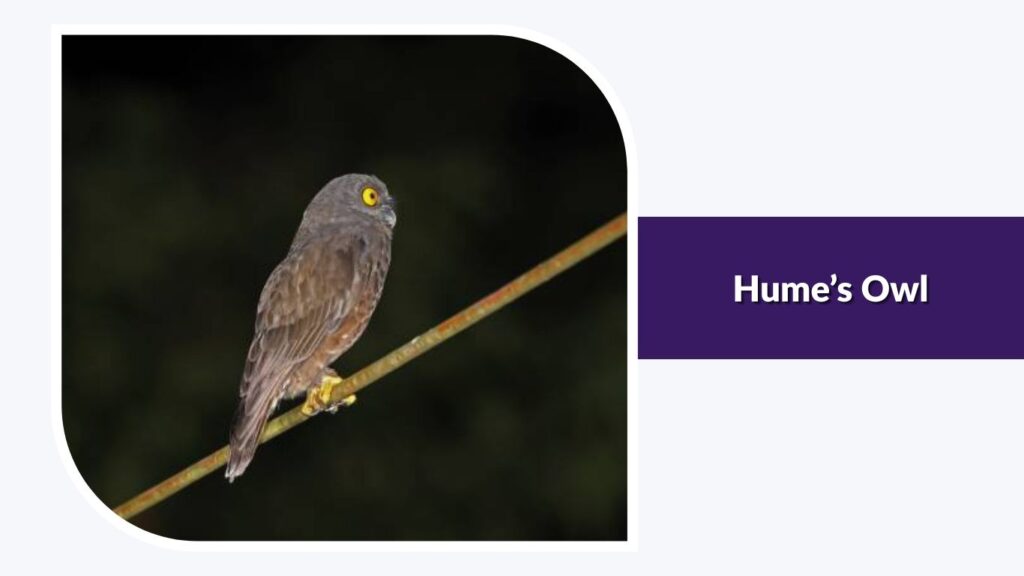
Hume’s Owl is a desert and rocky-area owl found in parts of the Middle East. It is sometimes called the Desert Tawny Owl because of its close connection to dry habitats. Its pale sandy color helps it hide among rocks and cliffs.
Identification
Hume’s Owl has a rounded head, dark eyes, and pale sandy-brown feathers. It has no ear tufts. Its body is lightly streaked, and its soft desert coloring makes it hard to see against rocks.
Habitat
This owl lives in deserts, rocky valleys, cliffs, dry hills, wadis, and semi-arid areas. It often roosts in rock cracks, caves, or sheltered cliff faces during the day.
Diet
Hume’s Owl hunts small mammals, birds, reptiles, insects, and scorpions. It usually becomes active at night and hunts from rocks or low perches.
Quick ID Points
- Pale sandy color
- Dark eyes
- Rounded head
- No ear tufts
- Found in rocky deserts
4. Ural Owl
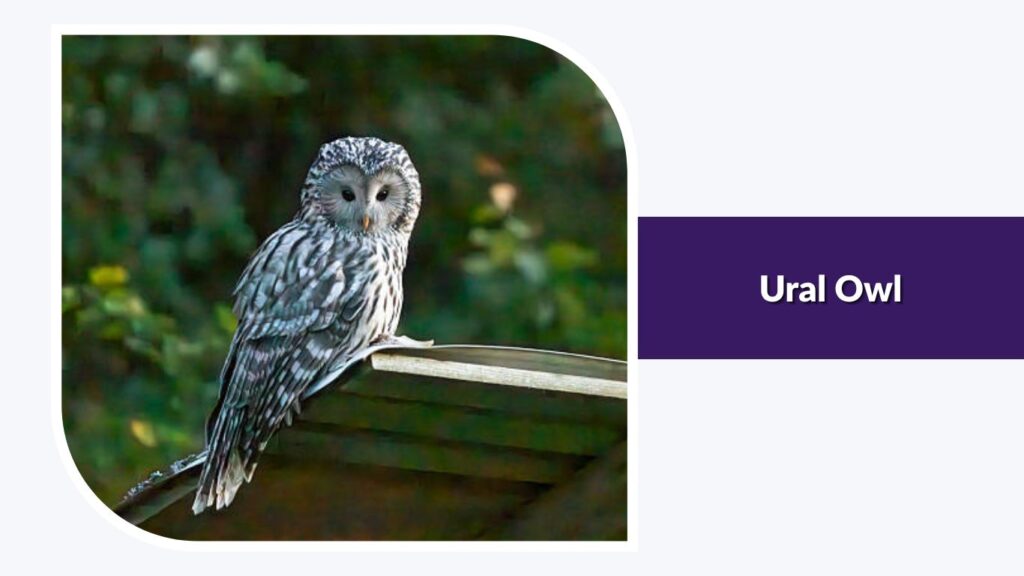
The Ural Owl is a large forest owl with a long tail, pale face, and dark eyes. It is found across Europe and Asia, especially in mature forests. This owl looks calm but can be very protective around its nest.
Identification
The Ural Owl has a large body, rounded head, and long tail. Its face is pale, and its dark eyes stand out clearly. The feathers are grayish-brown with long dark streaks on the body.
Habitat
Ural Owls live in old forests, mixed woodlands, mountain forests, and areas near clearings. They often nest in tree cavities, broken tree trunks, or old nests made by other large birds.
Diet
This owl mainly eats voles, mice, rats, shrews, squirrels, frogs, and birds. It hunts mostly at night but may also hunt during the day in quiet places.
Quick ID Points
- Large owl
- Long tail
- Pale facial disk
- Dark eyes
- Forest habitat
5. Barred Owl
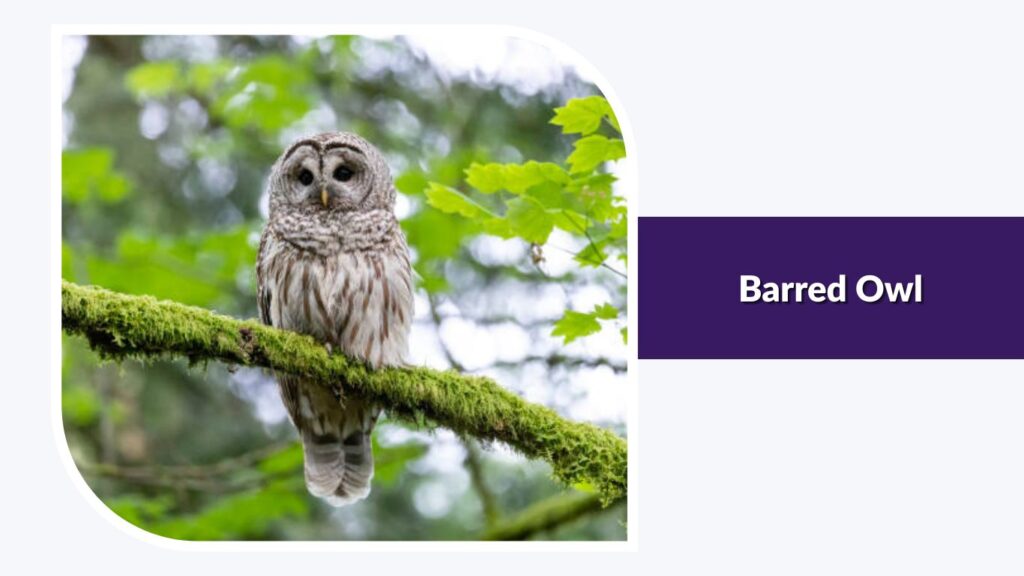
The Barred Owl is a medium-to-large owl known for its dark eyes and brown-and-white barred pattern. It is common in North America and is often heard before it is seen. Its famous call sounds like “Who cooks for you?”
Identification
Barred Owls have rounded heads with no ear tufts. Their eyes are dark brown, and their chest has horizontal barring. The belly usually has vertical streaks, giving the bird a bold patterned look.
Habitat
This owl prefers mature forests, wooded swamps, river bottoms, and mixed woodlands. It is often found near water but can also live in suburban areas with large trees.
Diet
Barred Owls eat mice, voles, squirrels, rabbits, frogs, snakes, fish, insects, and small birds. They hunt mostly at night by sitting quietly on a perch and dropping onto prey.
Quick ID Points
- Dark eyes
- Rounded head
- No ear tufts
- Barred chest
- Common in wooded wetlands
6. Spotted Owl
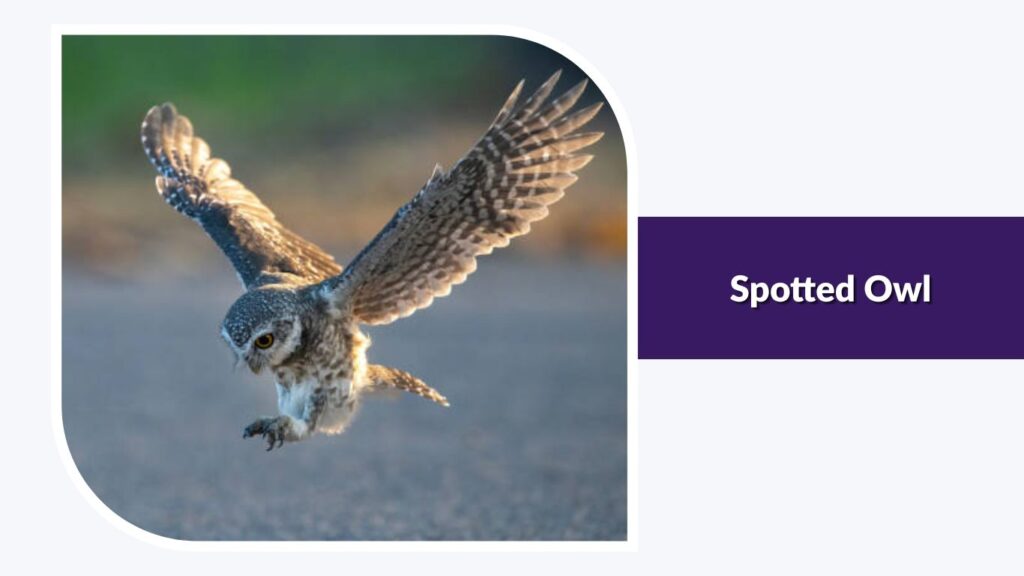
The Spotted Owl is a forest owl with dark brown feathers and white spots. It is best known for living in mature and old-growth forests. This owl is secretive and usually depends on quiet woodland habitats with large trees.
Identification
Spotted Owls have rounded heads, dark eyes, and no ear tufts. Their body is brown with white spots on the head, back, and underparts. They look similar to Barred Owls but are usually darker and more spotted.
Habitat
Spotted Owls live in old-growth forests, dense conifer forests, mixed woodlands, and deep canyons. They need shaded cover, large trees, and safe nesting places.
Diet
This owl eats flying squirrels, woodrats, mice, voles, bats, and small birds. It hunts mostly at night by waiting silently on a branch before gliding toward prey.
Quick ID Points
- Dark brown body
- White spots
- Dark eyes
- Rounded head
- Old-growth forest habitat
7. Mottled Owl
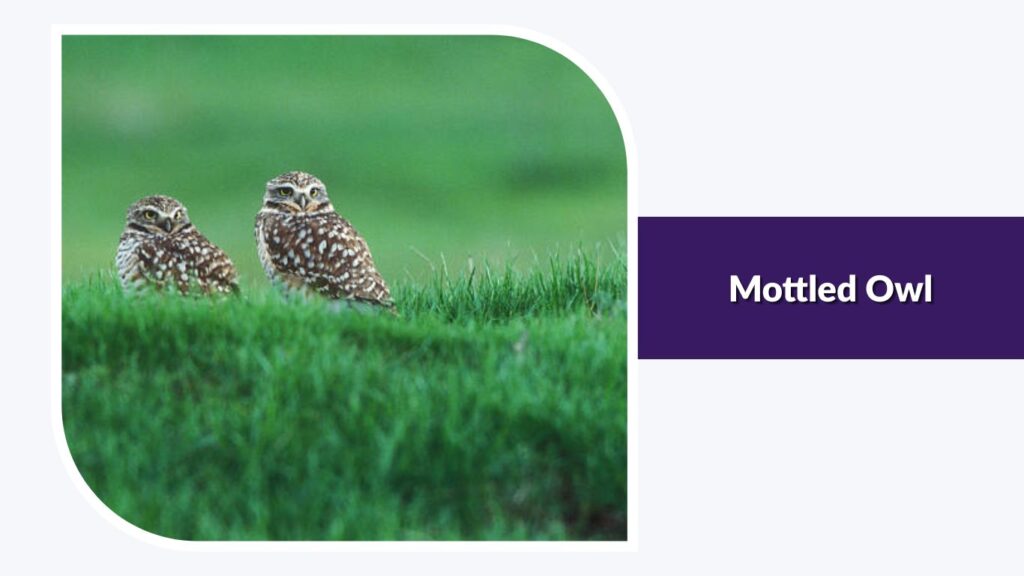
The Mottled Owl is a medium-sized owl found in Central and South America. It has dark eyes, a rounded head, and heavily patterned feathers. This owl is mostly active at night and often lives in forests, plantations, gardens, and wooded areas.
Identification
Mottled Owls have rounded heads with no ear tufts. Their brown feathers are covered with pale spots, bars, and streaks, giving them a mottled appearance. The dark eyes help separate them from many yellow-eyed owls.
Habitat
This owl lives in tropical forests, woodland edges, plantations, parks, gardens, and semi-open wooded areas. It can adapt well if enough trees and prey are available.
Diet
Mottled Owls eat insects, beetles, small mammals, bats, birds, frogs, and reptiles. They hunt from a perch at night and make quick flights to catch prey.
Quick ID Points
- Dark eyes
- Mottled brown body
- Rounded head
- No ear tufts
- Tropical woodland habitat
8. Brown Wood Owl
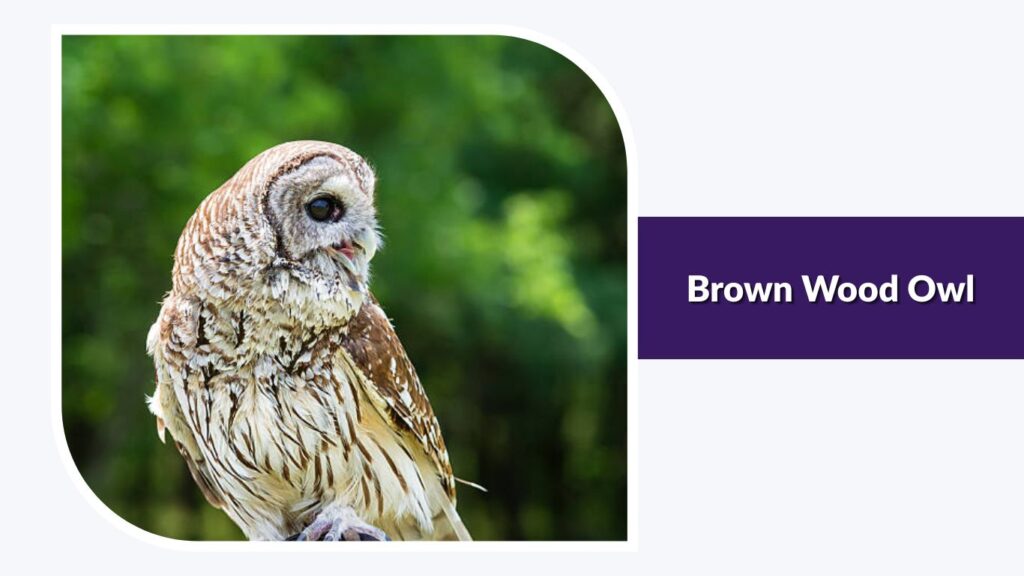
The Brown Wood Owl is a medium-to-large owl found in South and Southeast Asia. It has a rounded head, dark eyes, and rich brown feathers. This owl usually lives in forests and wooded areas, where it stays hidden during the day and hunts at night.
Identification
Brown Wood Owls have a rounded head with no ear tufts. Their body is warm brown with pale markings, and the underparts are streaked. The dark eyes and rounded facial disk help separate them from many yellow-eyed owls.
Habitat
This owl lives in evergreen forests, mixed woodlands, hill forests, plantations, and wooded valleys. It prefers areas with tall trees, thick cover, and quiet roosting places.
Diet
Brown Wood Owls eat rodents, small birds, frogs, lizards, beetles, and other insects. They hunt mostly at night by sitting quietly on a branch and dropping down on prey.
Quick ID Points
- Rounded head
- Dark eyes
- Warm brown body
- No ear tufts
- Forest and woodland habitat
9. African Wood Owl
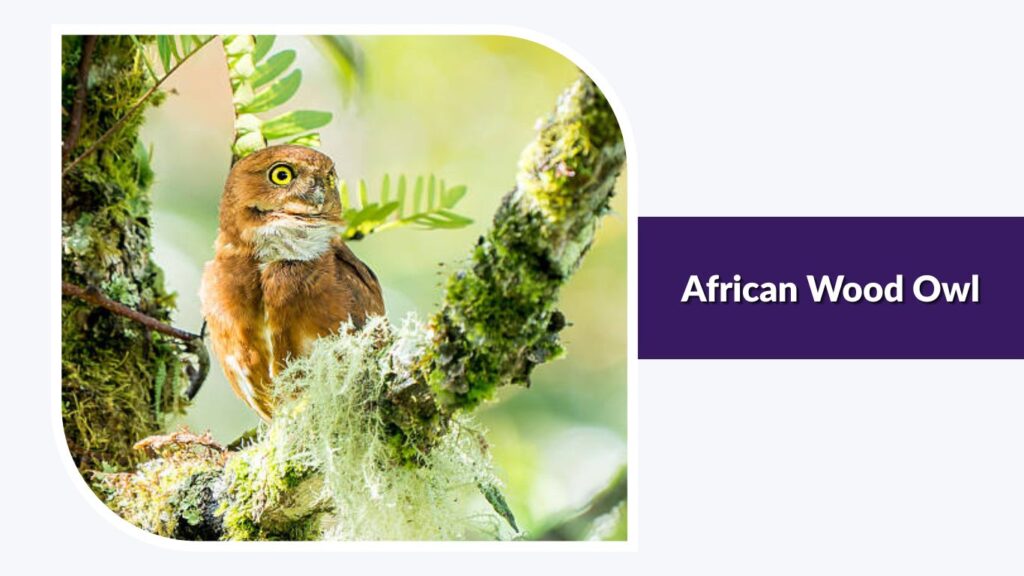
The African Wood Owl is a medium-sized owl found in sub-Saharan Africa. It has a rounded head, dark eyes, and soft brown-gray feathers. This owl is mostly nocturnal and is often heard calling from forests and wooded gardens at night.
Identification
African Wood Owls have dark eyes, a rounded facial disk, and no ear tufts. Their upperparts are brown, while the underparts are pale with streaks and bars. Their gentle rounded face gives them a classic wood owl look.
Habitat
This owl lives in forests, woodland edges, riverine forests, plantations, gardens, and parks. It prefers places with mature trees for roosting and nesting.
Diet
African Wood Owls feed on insects, rodents, small birds, bats, frogs, and reptiles. They usually hunt from a hidden perch and catch prey with quick silent flights.
Quick ID Points
- Dark eyes
- Rounded head
- Brown-gray plumage
- No ear tufts
- Common in African woodlands
10. Rusty-barred Owl
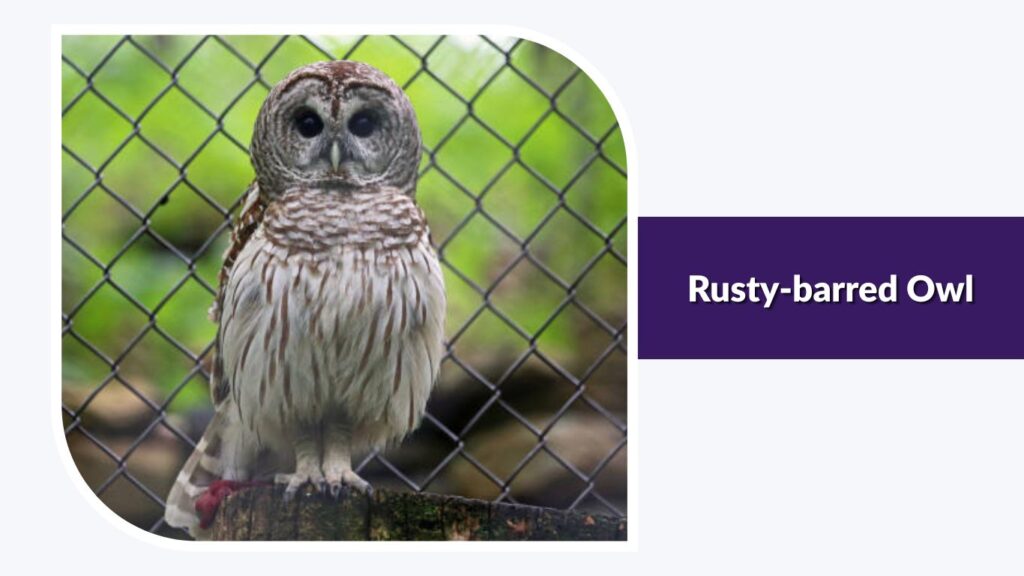
The Rusty-barred Owl is a medium-sized owl found in parts of South America. It has a rounded head, dark eyes, and warm rusty-brown barring on its body. This owl is usually linked with forests, especially moist and mountain woodlands.
Identification
Rusty-barred Owls have dark eyes, a rounded head, and no ear tufts. Their feathers are brown with rusty-orange bars and streaks. The warm barred pattern is one of the best ways to identify this species.
Habitat
This owl lives in Atlantic forests, mountain forests, dense woodlands, and forest edges. It prefers areas with tall trees and thick cover where it can hide during the day.
Diet
Rusty-barred Owls eat small mammals, birds, insects, frogs, and reptiles. They hunt mostly at night from a perch and use silent flight to surprise prey.
Quick ID Points
- Dark eyes
- Rusty barred body
- Rounded head
- No ear tufts
- Forest habitat in South America
11. Chaco Owl
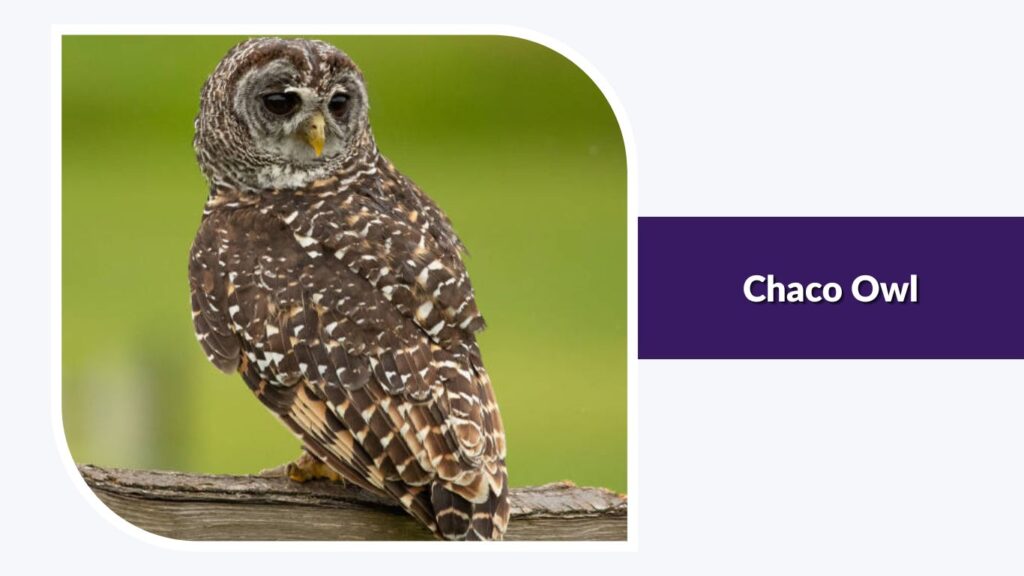
The Chaco Owl is a medium-sized owl found in dry forests and scrublands of South America. It has a rounded head, dark eyes, and brown patterned feathers. This owl is adapted to drier habitats than many other wood owls.
Identification
Chaco Owls have a rounded head, dark eyes, and no ear tufts. Their plumage is brown to gray-brown with pale streaks and bars. The face is rounded, and the body pattern helps it blend into dry woodland.
Habitat
This owl lives in dry forests, thorn scrub, wooded savannas, and Chaco woodland. It often roosts in dense trees or shaded cover during the day.
Diet
Chaco Owls mainly eat rodents, small birds, reptiles, insects, and other small animals. They hunt at night by waiting quietly on a perch before flying down to catch prey.
Quick ID Points
- Dark eyes
- Rounded head
- Brown-gray body
- No ear tufts
- Dry woodland habitat
12. Fulvous Owl
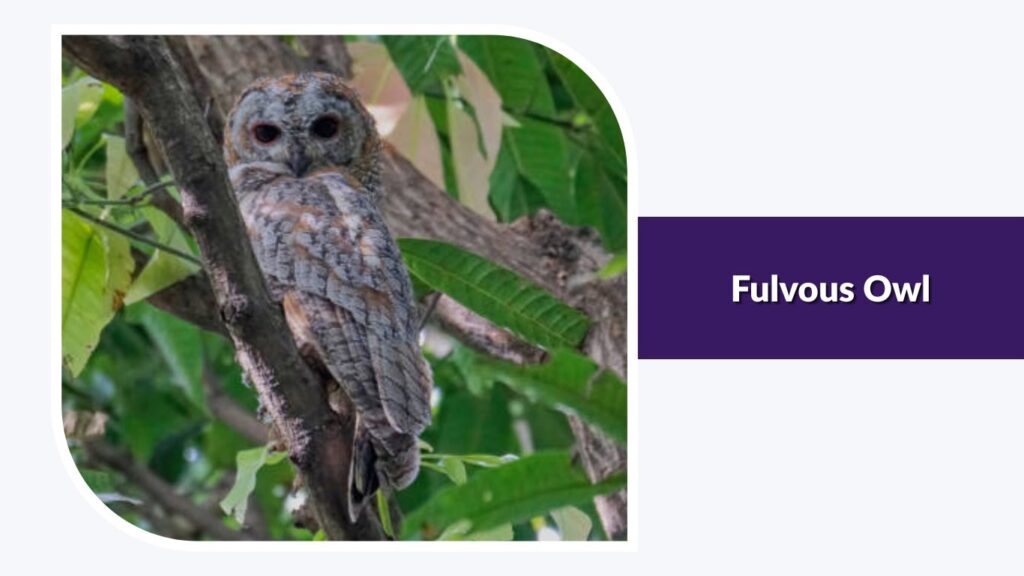
The Fulvous Owl is a medium-sized owl found in Central America. It has warm brown or orange-brown feathers, dark eyes, and a rounded head. This owl is closely linked with mountain forests and cloud forests.
Identification
Fulvous Owls have a rounded head with no ear tufts. Their body is rich fulvous-brown, with pale spotting and streaking. The dark eyes and warm-colored plumage make them stand out from many other forest owls.
Habitat
This owl lives in humid mountain forests, cloud forests, pine-oak forests, and highland woodlands. It prefers cool forest areas with thick trees and good cover.
Diet
Fulvous Owls eat rodents, small birds, insects, bats, frogs, and reptiles. They hunt mainly at night, often from a shaded forest perch.
Quick ID Points
- Warm brown body
- Dark eyes
- Rounded head
- No ear tufts
- Mountain forest habitat
13. Rufous-legged Owl
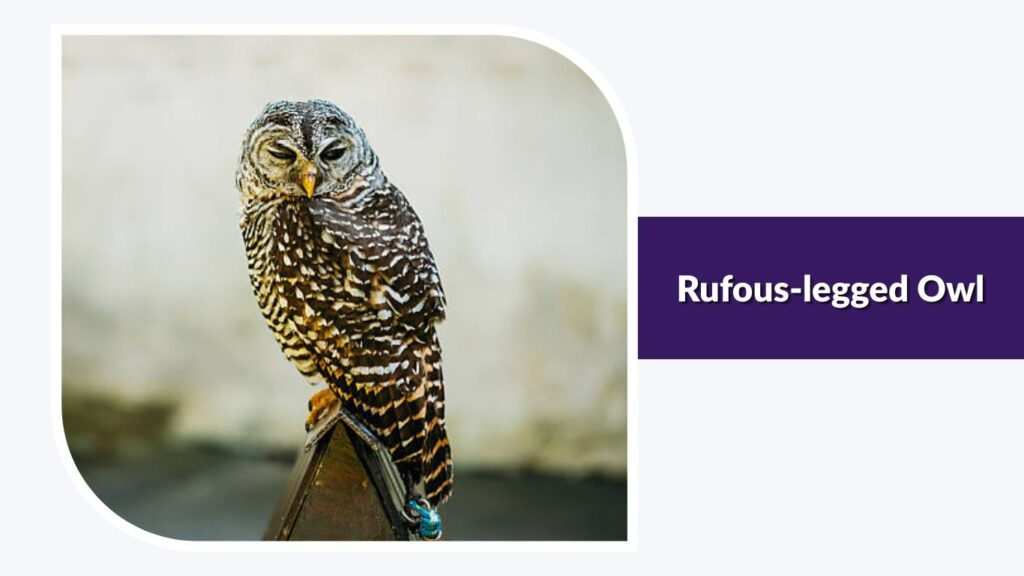
The Rufous-legged Owl is a forest owl found in southern South America. It has dark eyes, a rounded head, and reddish-brown legs. This owl lives mostly in cool forests and is active mainly at night.
Identification
Rufous-legged Owls have a rounded head, dark eyes, and no ear tufts. Their body is brown with pale spots and streaks. The reddish or rufous-colored legs are an important identification feature.
Habitat
This owl lives in temperate forests, southern beech forests, dense woodlands, and forest edges. It prefers cool, moist areas with tall trees and thick cover.
Diet
Rufous-legged Owls eat small mammals, birds, insects, frogs, and reptiles. They hunt from perches at night and fly silently through forest openings.
Quick ID Points
- Dark eyes
- Rufous legs
- Rounded head
- Brown spotted body
- Cool southern forest habitat
14. Desert Owl
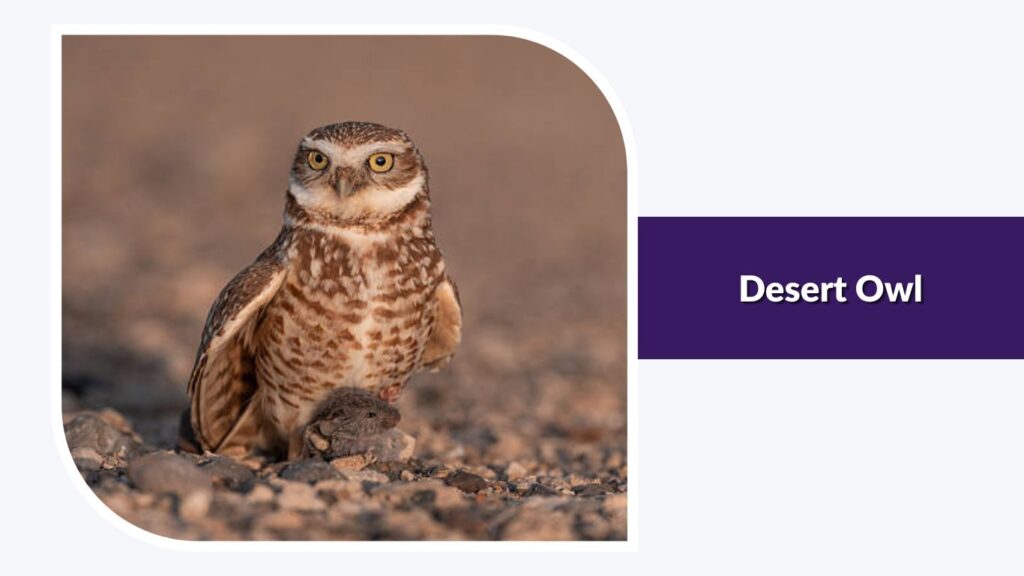
The Desert Owl is a pale owl found in rocky desert regions of the Middle East. It has a rounded head, dark eyes, and sandy-gray feathers that help it blend into cliffs and dry valleys. This owl is mainly nocturnal and secretive.
Identification
Desert Owls have dark eyes, no ear tufts, and pale sandy-gray plumage. Their body is lightly streaked, and their color matches dry rocky landscapes. The rounded head and dark eyes give it a soft but alert look.
Habitat
This owl lives in rocky deserts, cliffs, wadis, dry valleys, and semi-arid hills. It often roosts in caves, rock cracks, or shaded cliff ledges during the day.
Diet
Desert Owls eat rodents, small birds, geckos, lizards, insects, and scorpions. They hunt mostly at night from rocks or low perches, using quiet flight to catch prey.
Quick ID Points
- Pale sandy-gray body
- Dark eyes
- Rounded head
- No ear tufts
- Rocky desert habitat
15. Omani Owl
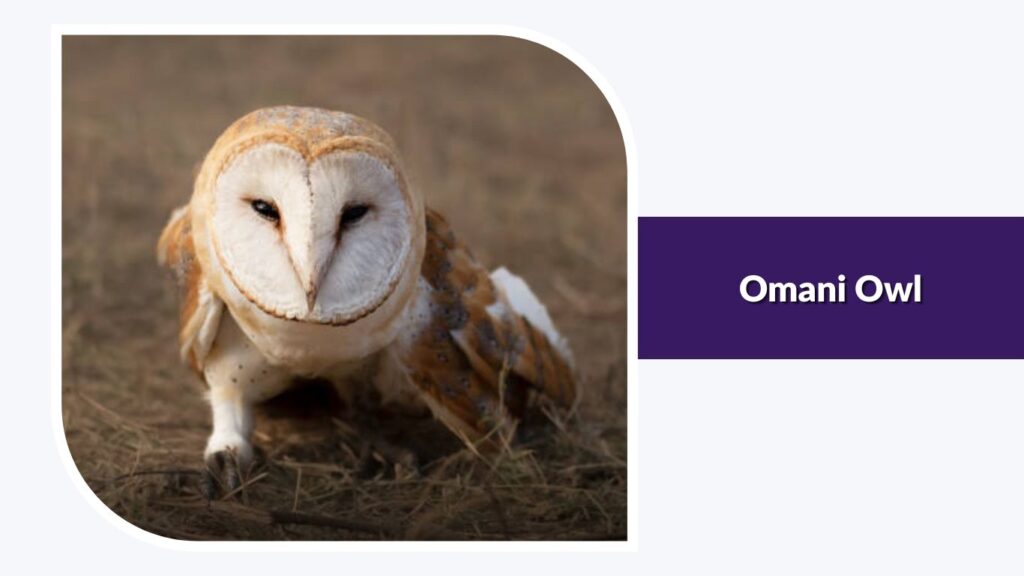
The Omani Owl is a rare owl from rocky desert areas of the Arabian Peninsula. It has a rounded head, dark eyes, and pale gray-brown feathers that help it blend into cliffs and dry mountain landscapes. This owl is secretive and mostly active at night.
Identification
Omani Owls have a rounded head with no ear tufts. Their body is pale gray-brown with fine streaking and barring. The dark eyes, plain face, and desert-colored feathers help separate them from many other owls.
Habitat
This owl lives in rocky mountains, desert cliffs, dry valleys, wadis, and steep canyon areas. It usually stays close to rugged rocky places where it can roost and nest safely.
Diet
Omani Owls likely feed on small mammals, birds, reptiles, insects, and other small desert animals. Like many desert owls, they hunt mainly at night from rocks or hidden perches.
Quick ID Points
- Dark eyes
- Pale gray-brown body
- Rounded head
- No ear tufts
- Rocky desert habitat
16. Little Owl
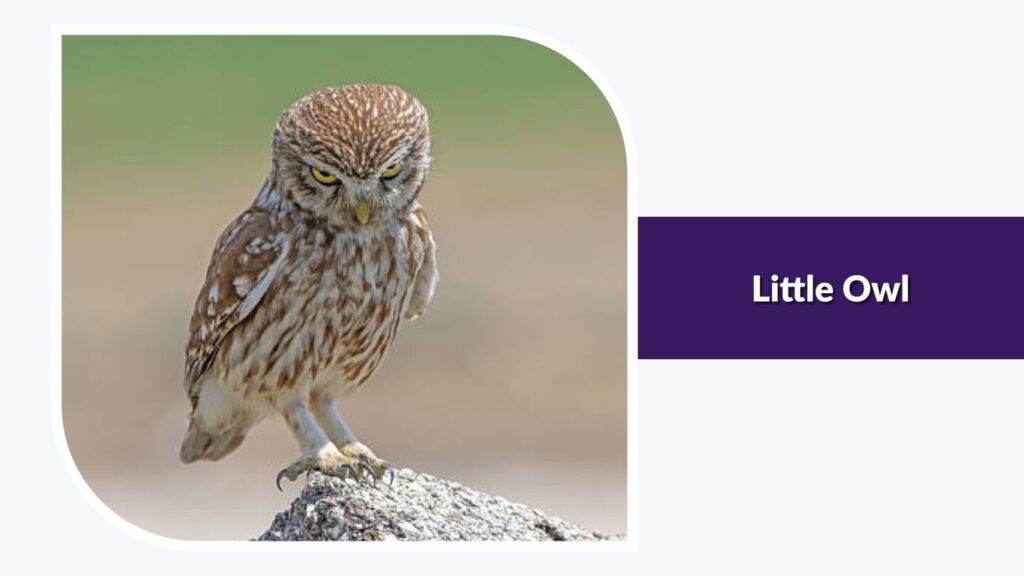
The Little Owl is a small owl with bright yellow eyes, a rounded head, and a bold expression. It is often seen in open country, farmland, orchards, villages, and rocky areas. Unlike many owls, it may also be active during the day.
Identification
Little Owls have compact bodies, short tails, and brown feathers with white spots. Their yellow eyes are very noticeable, and they often bob their head when alert. They do not have long ear tufts.
Habitat
This owl lives in farms, grasslands, orchards, stone walls, old buildings, open woodland, and rocky places. It often nests in holes in trees, buildings, cliffs, or burrows.
Diet
Little Owls eat insects, beetles, worms, mice, small birds, reptiles, and amphibians. They often hunt from low perches, fence posts, walls, or even by running on the ground.
Quick ID Points
- Small body
- Yellow eyes
- White-spotted brown feathers
- Rounded head
- Open-country habitat
17. Jungle Owlet
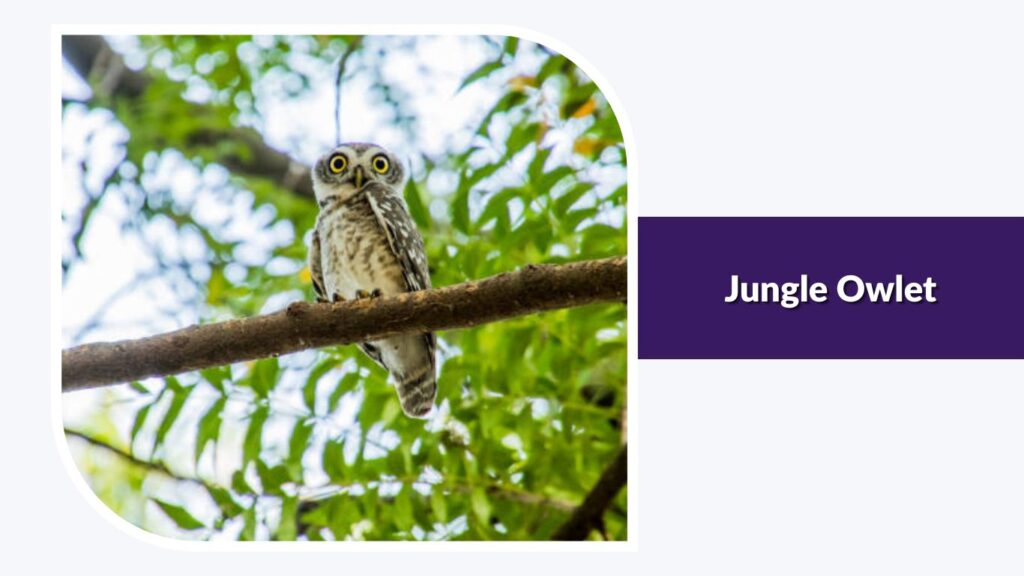
The Jungle Owlet is a small owl found in South Asia. It has a compact body, yellow eyes, and barred brown plumage. This owl is often active during the day and is commonly seen in forests, wooded villages, and dry woodland areas.
Identification
Jungle Owlets have a rounded head, no obvious ear tufts, and bright yellow eyes. Their body is brown with strong barring across the chest and belly. Their small size and bold barred pattern make them easier to identify.
Habitat
This owl lives in dry forests, deciduous woodland, plantations, groves, parks, and wooded villages. It prefers areas with trees, open spaces, and good hunting spots.
Diet
Jungle Owlets eat insects, beetles, grasshoppers, lizards, small birds, mice, and other small animals. They hunt from branches and often make short quick flights after prey.
Quick ID Points
- Small owl
- Yellow eyes
- Barred brown body
- Often active by day
- Found in South Asian woodlands
18. Spotted Owlet
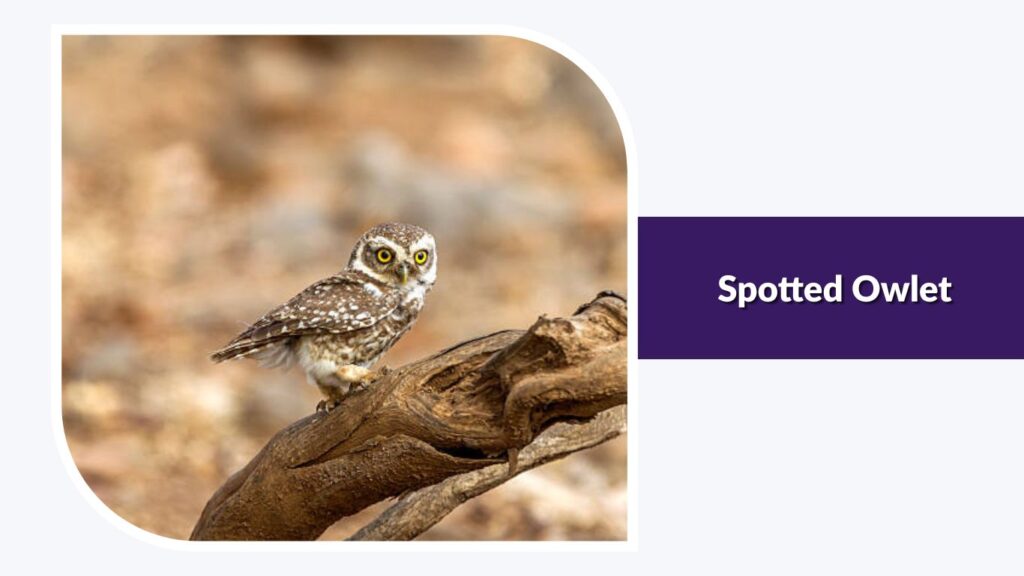
The Spotted Owlet is a small and common owl found in South Asia. It has bright yellow eyes, a rounded head, and white-spotted brown feathers. This owl is often seen near villages, farms, gardens, and old buildings.
Identification
Spotted Owlets have a small body, rounded head, and no large ear tufts. Their brown feathers are covered with white spots, and the face has strong pale markings. The yellow eyes give them a bright, alert look.
Habitat
This owl lives in farmland, villages, gardens, orchards, open woodland, parks, and old buildings. It often nests in tree holes, wall cavities, or building gaps.
Diet
Spotted Owlets eat insects, beetles, moths, small rodents, lizards, frogs, and small birds. They hunt mostly at dusk and night, but they may also be seen during the day.
Quick ID Points
- Small size
- Yellow eyes
- White-spotted brown body
- Common near people
- Tree holes and building nests
19. Brown Fish Owl
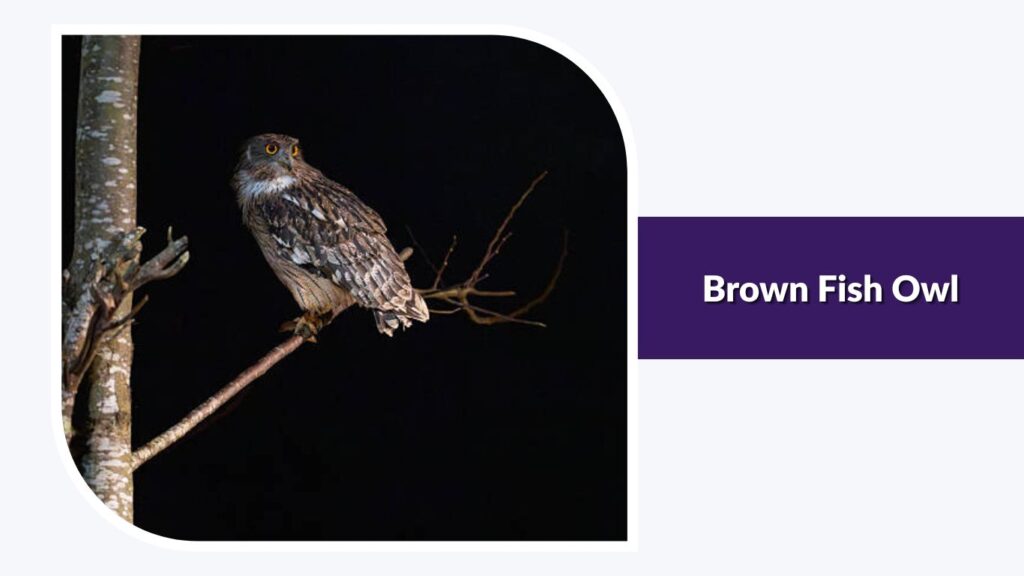
The Brown Fish Owl is a large owl that lives near rivers, wetlands, lakes, and forested water edges. It has shaggy brown feathers, orange-yellow eyes, and strong feet for catching slippery prey. Fish are an important part of its diet.
Identification
Brown Fish Owls have a large body, broad wings, and noticeable ear tufts. Their feathers are brown and buff with heavy dark streaking. The rough, shaggy look helps separate them from smoother-looking forest owls.
Habitat
This owl lives near rivers, streams, lakes, mangroves, wooded wetlands, and forested water areas. It needs trees or rocky perches close to water for hunting and resting.
Diet
Brown Fish Owls mainly eat fish, frogs, crabs, reptiles, rodents, birds, and large insects. They often hunt from a perch above water and drop down to grab prey.
Quick ID Points
- Large brown owl
- Orange-yellow eyes
- Ear tufts
- Shaggy feathers
- Found near water
20. Buffy Fish Owl
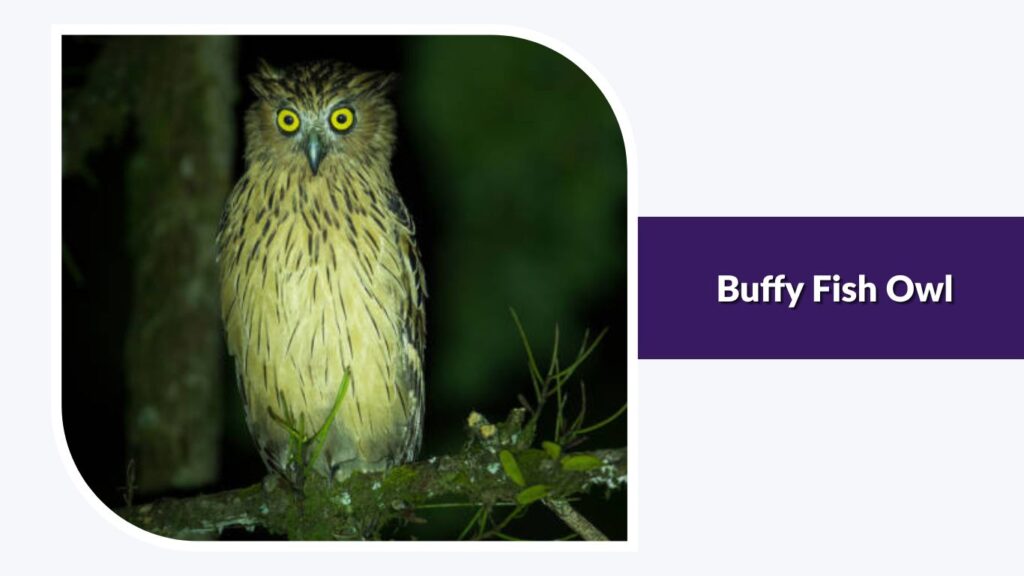
The Buffy Fish Owl is a large owl found in Southeast Asia. It is strongly linked with rivers, mangroves, wetlands, and forest streams. This owl has warm buff-brown feathers, yellow eyes, and strong hunting skills around water.
Identification
Buffy Fish Owls have a large body, long ear tufts, and yellow eyes. Their plumage is buff to brown with darker streaks. The underparts are pale with bold markings, giving the bird a strong patterned look.
Habitat
This owl lives in mangroves, river forests, wooded wetlands, swamps, coastal forests, lakesides, and stream edges. It usually roosts in dense trees close to water.
Diet
Buffy Fish Owls eat fish, frogs, crabs, reptiles, rodents, insects, and sometimes birds. They hunt mostly at night from branches above water or along muddy banks.
Quick ID Points
- Buffy-brown color
- Yellow eyes
- Long ear tufts
- Large body
- Wetland and mangrove habitat
21. Tawny Fish Owl
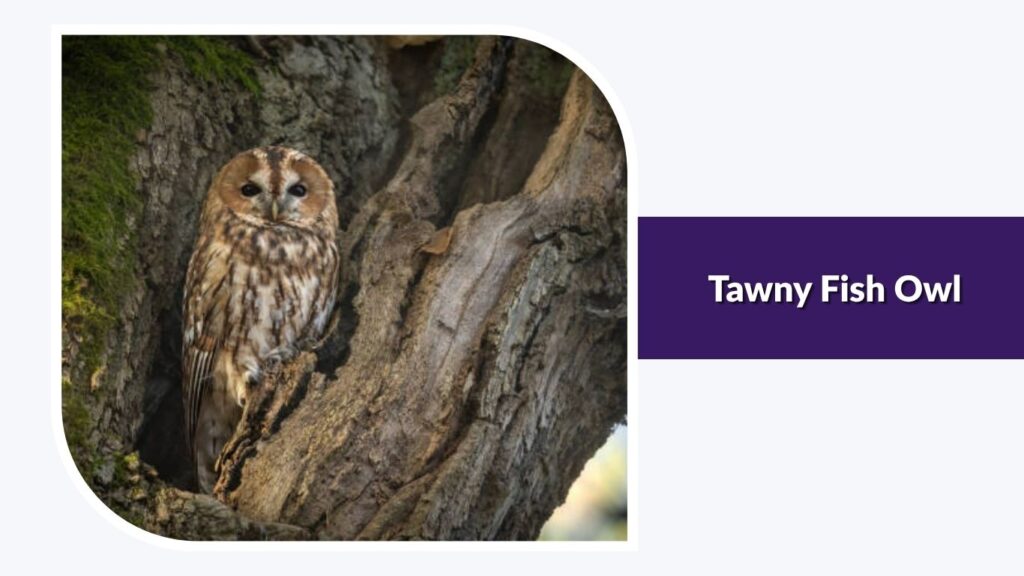
The Tawny Fish Owl is a large fish-eating owl found in parts of Asia. It has warm tawny-brown feathers, strong feet, and a close connection with rivers and forested waterways. This owl is mainly nocturnal and depends on aquatic prey.
Identification
Tawny Fish Owls have a large body, ear tufts, and yellow to orange-yellow eyes. Their feathers are tawny-brown with darker streaks and bars. The legs are less heavily feathered than many forest owls, which helps when hunting around water.
Habitat
This owl lives near rivers, forest streams, lakes, wooded wetlands, and rocky watercourses. It prefers quiet areas with trees, cliffs, or large branches close to water.
Diet
Tawny Fish Owls mainly eat fish, frogs, crabs, reptiles, and other aquatic animals. They may also catch rodents, birds, and insects when available. They usually hunt from a waterside perch.
Quick ID Points
- Large tawny-brown owl
- Ear tufts
- Yellow-orange eyes
- Found near rivers
- Fish and frog diet
FAQs
Are tawny owls true owls?
Yes, tawny owls are true owls. They belong to the family Strigidae, which includes most owl species in the world. True owls usually have rounded heads, sharp talons, strong eyesight, silent flight, and excellent hearing for hunting at night.
Where do tawny owls live?
Tawny Owls mainly live in woodlands, forests, parks, gardens, and farmland with mature trees. Related tawny-like owls may live in many other habitats, including mountain forests, deserts, wetlands, river edges, plantations, and wooded villages.
What do tawny owls eat?
Tawny owls mostly eat small mammals such as mice, voles, rats, and shrews. They also feed on small birds, frogs, insects, beetles, worms, reptiles, and sometimes bats, depending on the species and habitat.
How can you identify a Tawny Owl?
A Tawny Owl usually has a rounded head, dark eyes, no ear tufts, and brown, gray, or reddish-brown mottled feathers. Its soft rounded face and classic nighttime hooting call are also helpful identification clues.
Are tawny owls active during the day?
Most tawny owls are mainly nocturnal, meaning they are active at night. However, some related species, such as the Little Owl, Jungle Owlet, and Spotted Owlet, may also be seen during the day, especially near feeding or nesting areas.